DIY Accounting vs Hiring a Professional in NZ
Published 17 December 2025 · Updated 28 June 2026
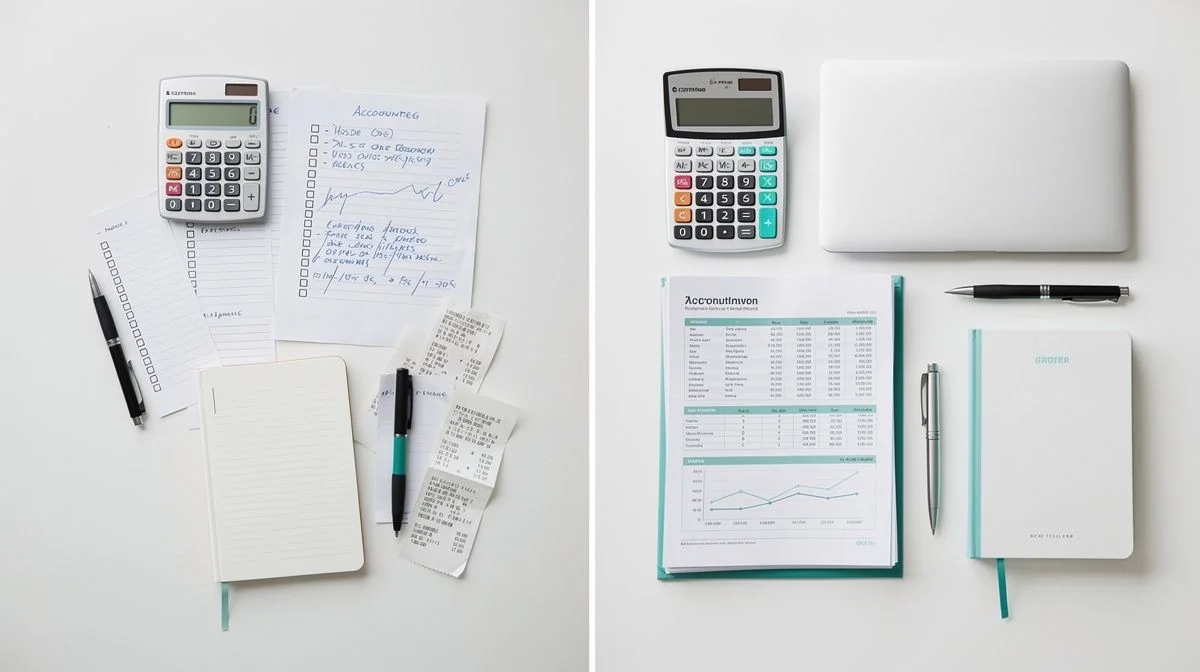
DIY Accounting vs Hiring a Professional in NZ
DIY Accounting vs Hiring a Professional in New Zealand: Which is Right for You?
Whether you're a sole trader, freelancer, or running a small business in New Zealand, managing your finances is one of the most important tasks you'll face. But should you do it yourself or bring in a professional accountant or bookkeeper? The answer depends on your time, budget, and the complexity of your finances.
This guide will walk you through the pros and cons of each approach, help you decide what's best for your situation, and give you practical steps to get started. This is general information only and does not constitute financial advice. Always do your own research before making financial decisions.
What Does DIY Accounting Involve?
DIY accounting means you handle your own financial records, tax returns, and compliance obligations without hiring a professional. In New Zealand, this typically includes:
- Recording income and expenses
- Managing GST returns (if registered)
- Filing your annual tax return (IR3 or IR4)
- Paying provisional tax (if applicable)
- Keeping records for IRD audits
Many small business owners use software like Xero, MYOB, or FreshBooks to simplify the process. Some also use free tools like Hnry for PAYE and GST management.
What Does Hiring a Professional Involve?
A professional accountant or bookkeeper can take over some or all of your financial tasks. In New Zealand, services typically include:
- Setting up your accounting system
- Monthly or quarterly bookkeeping
- GST and tax return preparation
- Tax planning and advice
- Business structuring (e.g., company vs sole trader)
- Audit support
Many accountants also offer cloud-based services, so you can share access to your software remotely.
Pros and Cons of DIY Accounting
| Pros | Cons |
|---|---|
| Lower cost – no monthly or hourly fees | Time-consuming – especially for GST and tax returns |
| Full control over your finances | Risk of errors – IRD penalties can be costly |
| Learn valuable financial skills | Missed tax deductions or credits |
| Flexibility – work at your own pace | Stress around compliance deadlines |
| No dependency on others | Limited access to strategic tax advice |
Pros and Cons of Hiring a Professional
| Pros | Cons |
|---|---|
| Saves time – focus on your business | Ongoing cost – fees vary widely |
| Expert knowledge of NZ tax laws | Less hands-on control |
| Reduces error risk – IRD compliance | May need to share sensitive data |
| Tax planning and business advice | Hard to find the right fit |
| Audit support if needed | Can be impersonal with large firms |
Key Factors to Consider
Your Time and Skill Level
If you're comfortable with spreadsheets and learning software, DIY might work. But if you're constantly behind on invoices or GST returns, a professional could save you stress.
Complexity of Your Finances
Sole traders with simple income and expenses are often fine with DIY. But if you have employees, multiple income streams, or a company structure, professional help is usually worth it.
Budget
DIY costs are limited to software (e.g., $30–$60 per month for Xero) and your time. Professional fees in New Zealand range from $100–$250 per hour for accountants, or $50–$100 per hour for bookkeepers. Many offer fixed-price packages starting around $150–$400 per month for small businesses.
IRD Compliance
New Zealand's tax system is relatively straightforward, but penalties for late filing or incorrect returns can add up. A professional can help you avoid these.
Step-by-Step Guide to Decide
Step 1: Assess Your Situation
List your income sources, expenses, and any employees. Ask yourself: How much time can I realistically spend on accounting each week? Am I confident with numbers?
Step 2: Try DIY First (If You're Unsure)
Start with free or low-cost accounting software. Many offer free trials. Use it for a month to see how much time it takes and whether you enjoy it.
Step 3: Calculate the Cost
Compare the cost of DIY (software + your time) vs hiring a professional. Remember, your time has value – if you earn $100 per hour, spending 5 hours on accounting costs you $500 in lost income.
Step 4: Consider a Hybrid Approach
Many small business owners use a bookkeeper for monthly data entry and an accountant for tax returns and planning. This can be cheaper than full-service accounting.
Step 5: Get Quotes
Contact 2–3 accountants or bookkeepers in your area. Ask about their fees, services, and experience with your industry. Most offer a free initial consultation.
When DIY Makes Sense
- You're a sole trader with simple finances
- You have the time and willingness to learn
- Your annual turnover is under $60,000
- You're comfortable with digital tools
When to Hire a Professional
- You have employees or a company structure
- Your turnover exceeds $60,000
- You're falling behind on GST or tax returns
- You want strategic tax advice
- You're facing an IRD audit
Tips for DIY Accounting in NZ
- Use cloud accounting software (Xero, MYOB, or Hnry) – it automates GST and tax calculations
- Keep all receipts – IRD recommends digital copies
- Set aside money for tax – at least 20-30% of your income
- File GST returns on time – every 1, 2, or 6 months depending on your registration
- Use IRD's online services – myIR makes it easy to file returns and check balances
Tips for Working with a Professional
- Ask about their experience with your industry
- Clarify what's included – some charge extra for tax planning
- Set up a shared accounting system (e.g., Xero) for real-time access
- Schedule regular check-ins – monthly or quarterly
- Don't wait until tax time – involve them early
Our Verdict
For most small businesses in New Zealand, a hybrid approach offers the best balance. Start with DIY using good software, and bring in a professional for tax returns and annual planning. As your business grows, you can shift more tasks to a bookkeeper or accountant.
If you're just starting out, try DIY for the first year – but set aside a budget for professional help if it becomes overwhelming. The key is to stay on top of your records, because IRD compliance is non-negotiable.

The ValueHub Team built this site because finding clear, unbiased financial information in New Zealand was harder than it should be. Every guide is based on real research — we compare the actual fees, terms, and fine print so you don't have to. Our tip: shop around every year, read the policy docs, and never assume loyalty gets you the best deal.— The ValueHub Team
Try our Calculators
Use these free tools to crunch the numbers:
KiwiSaver Fund Comparison
Compare fees, returns, and risk levels across every KiwiSaver fund from all 31 NZ providers.
Currency Converter — USD to NZD
Convert US Dollars to New Zealand Dollars instantly. See the latest exchange rate and 30-day trend.
Mortgage Repayment Calculator
Calculate your weekly, fortnightly, or monthly mortgage repayments. Free NZ mortgage calculator — try different rates, terms, and repayment frequencies.
Compound Interest Calculator
See how your savings grow with compound interest over time. Free NZ compound interest calculator with yearly, monthly, and weekly compounding options.
Term Deposit Calculator
Calculate your term deposit returns before you lock in. Compare interest earned across different terms and rates with ValueHub's free calculator.
Savings Goal Calculator
Calculate how long it will take to reach your savings goal — and what monthly deposit you need to get there. Free NZ savings planner.
Related Articles
Family Lawyers in NZ
Learn when you need a family lawyer in NZ and how to choose one. Covers separation, parenting orders, costs, and key selection tips.
guideEmployment Lawyers in NZ — A Guide for Employees
Navigate NZ workplace disputes with confidence. This guide explains when to hire an employment lawyer and how to handle personal grievances.