How to Hire a Locksmith in New Zealand
Published 12 August 2025 · Updated 14 July 2026
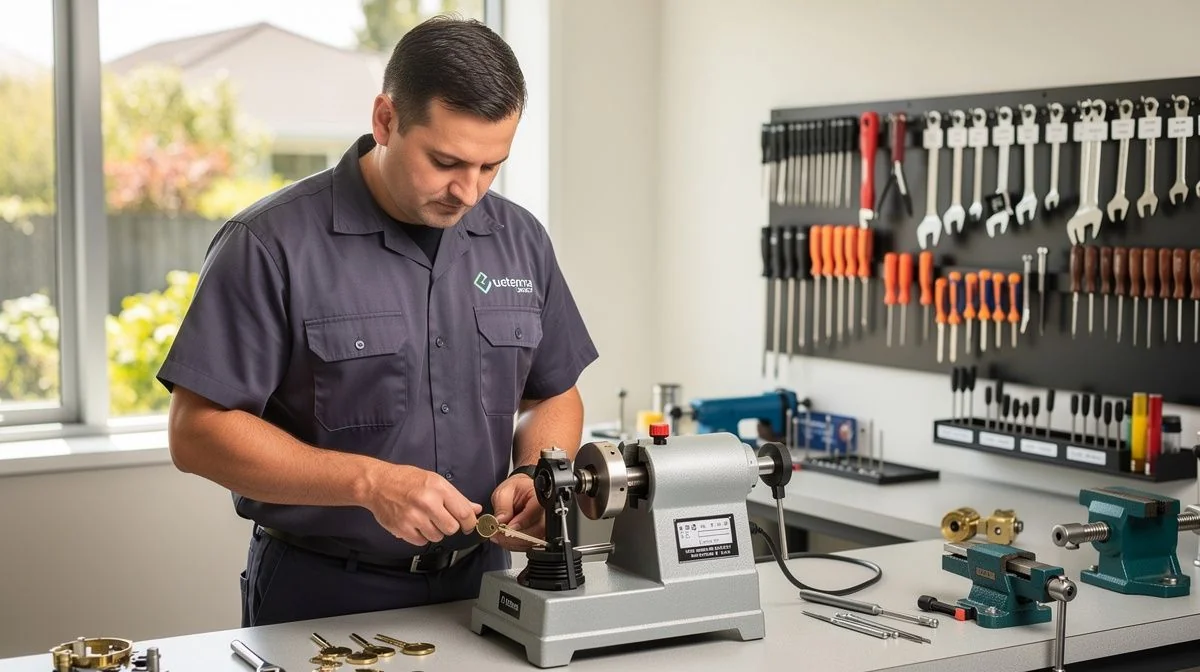
What Does a Locksmith Do and When Might You Need One?
Locksmiths are the professionals who install, repair, and maintain locks, keys, and security systems for homes, businesses, and vehicles. While many people only think of locksmiths in an emergency – like being locked out of a car or home – their skills go much further.
You might need a locksmith for:
- Rekeying or replacing locks after moving into a new house
- Upgrading home or business security with modern locks or electronic access systems
- Creating duplicate keys or master key systems for commercial properties
- Opening safes or filing cabinets when you’ve lost the combination
- Repairing broken locks or damaged door hardware
- Installing security screens, deadbolts, or window locks
- Emergency car unlock services if you’ve locked your keys inside
In New Zealand, most locksmiths also offer services like key cutting, lock picking, and advice on the best security products for your situation. They can inspect your property and identify weak points in your current set-up.
Qualifications, Certifications, and Industry Bodies in New Zealand
Unlike electricians or plumbers, locksmiths in New Zealand are not required to hold a government-issued licence to practise the trade. That means anyone can technically call themselves a locksmith – which makes it even more important to check their credentials.
The main industry body is the New Zealand Locksmiths Association (NZLA). While membership is voluntary, it signals a commitment to professional standards and ongoing training. NZLA members must meet certain experience and skill requirements, and they follow a code of ethics.
Another recognised credential is the Certified Locksmith (CL) designation, offered by the Associated Locksmiths of America (ALOA) but recognised internationally. Some NZ locksmiths also hold certification from the Master Locksmiths Association of Australasia (MLAA). These qualifications show that the tradesperson has passed exams and has proven practical skills.
If the locksmith works with electronic security systems or alarms, they may also hold a certificate of approval (COA) under the Private Security Personnel and Private Investigators Act 2010. This is required for anyone who installs, maintains, or monitors security alarms. For standard lock work, however, no such certificate is needed.
When you contact a locksmith, ask directly:
- Are you a member of the NZLA?
- Do you hold any recognised certifications (CL, MLAA, or similar)?
- Do you have a COA if working with alarm systems?
A reputable locksmith will be happy to answer these questions.
How to Choose and Vet a Locksmith
Hiring the wrong locksmith can lead to poor work, damaged locks, or even security risks. Here’s a step-by-step process to find a trustworthy professional anywhere in New Zealand.
1. Get recommendations – Ask friends, family, or neighbours for names they’ve used. Property managers and real estate agents often have trusted contacts too.
2. Check online reviews – Look on Google, Facebook, or local community pages. Pay attention to how the business responds to negative feedback – that tells you a lot about their customer service.
3. Verify their physical address – Use the NZ Companies Office website (companiesoffice.govt.nz) to check if the business is registered and has a physical address. Avoid operators who only use a mobile number and a generic company name.
4. Confirm NZLA membership – Visit the NZLA website (nzla.org.nz) to see if the locksmith is listed. Alternatively, ask for their membership number and verify it.
5. Ask for a written quote upfront – Legitimate locksmiths will give you a clear estimate before starting any work, even in an emergency. They should explain charges for call-outs, labour, and materials.
6. Request identification – When they arrive, ask for photo ID and a business card. A professional will have both.
Typical Locksmith Pricing in New Zealand
Locksmith costs vary depending on location, time of day, and the complexity of the job. Here’s a general guide to what you can expect to pay in New Zealand.
Call-out fee: Most locksmiths charge a call-out fee that covers travel and the first portion of labour. Expect this to be between $50 and $120. Weekend or after-hours call-outs often attract a surcharge of 50% to 100%.
Labour charges: Hourly rates typically range from $80 to $150 per hour. Simple jobs like key cutting may only take a few minutes, while lock replacements could take an hour or more.
Common job costs (approximate):
- Emergency unlock (home or car): $80 – $200 depending on time and distance
- Rekeying a lock (including new keys): $40 – $80 per lock
- Standard lock replacement (labour + lock): $100 – $250
- Installing a deadbolt: $150 – $350
- Master key system for a small office: $200 – $600
- Safe opening (non-destructive): $100 – $400
Keep in mind that prices in larger centres like Auckland or Wellington tend to be higher than in smaller towns. Always ask for a fixed price quote rather than an estimate if possible.
Red Flags – Warning Signs to Watch For
Unfortunately, there are locksmiths in New Zealand who operate unethically – overcharging, doing poor work, or even creating security vulnerabilities. Look out for these warning signs.
No physical address or vague details – If the business only lists a mobile number and a generic name like “Auckland Locksmiths 24/7”, they might be a fly-by-night operator. Check if they are registered with NZLA or the Companies Office.
Extremely low quoted price – If a quote sounds too good to be true, it often is. Some locksmiths quote a low call-out fee, then charge exorbitant rates for labour or parts once they arrive.
Cash-only payment requests – Reputable locksmiths accept multiple payment methods. Cash-only demands can be a way to avoid tax or hide their identity.
No written quote or invoice – Always insist on a written estimate before work begins, and a detailed invoice after. If they refuse, walk away.
Pressure to drill out locks unnecessarily – Good locksmiths can pick most locks without damaging them. If the locksmith immediately suggests drilling, ask why. Drilling should only be a last resort.
Unmarked vehicle or no uniform – Professional locksmiths typically arrive in a marked van or car with company branding. If the person shows up in a private car with no identification, be cautious.
Tips for Getting the Best Results
To ensure you get top-quality work and value for money, follow these tips:
Plan ahead when possible – Emergency locksmith calls are always more expensive. If you’re moving house, have your locks rekeyed during business hours. If your locks are old, replace them before they break.
Keep proof of ownership ready – For car unlocks or safe openings, the locksmith may ask for identification and proof of ownership. Having your driver’s licence and registration handy speeds things up.
Ask about warranties – Reputable locksmiths offer warranties on both labour and parts. Standard is usually 12 months on labour and the manufacturer’s warranty on locks. Get this in writing.
Consider upgrading your security – When a locksmith is already on site, it’s a good time to discuss security upgrades. Many will offer a free security assessment – ask about deadbolts, smart locks, or security strike plates.
Keep a spare key with a trusted neighbour – This simple step can save you the cost of an emergency call-out. Just make sure the neighbour is reliable and you trust them.
Review your insurance policy – Some home and contents insurance policies cover emergency locksmith call-outs. Check before you c

The ValueHub Team built this site because finding clear, unbiased financial information in New Zealand was harder than it should be. Every guide is based on real research — we compare the actual fees, terms, and fine print so you don't have to. Our tip: shop around every year, read the policy docs, and never assume loyalty gets you the best deal.— The ValueHub Team
Try our Calculators
Use these free tools to crunch the numbers:
KiwiSaver Fund Comparison
Compare fees, returns, and risk levels across every KiwiSaver fund from all 31 NZ providers.
Currency Converter — USD to NZD
Convert US Dollars to New Zealand Dollars instantly. See the latest exchange rate and 30-day trend.
Mortgage Repayment Calculator
Calculate your weekly, fortnightly, or monthly mortgage repayments. Free NZ mortgage calculator — try different rates, terms, and repayment frequencies.
Compound Interest Calculator
See how your savings grow with compound interest over time. Free NZ compound interest calculator with yearly, monthly, and weekly compounding options.
Term Deposit Calculator
Calculate your term deposit returns before you lock in. Compare interest earned across different terms and rates with ValueHub's free calculator.
Savings Goal Calculator
Calculate how long it will take to reach your savings goal — and what monthly deposit you need to get there. Free NZ savings planner.
Related Articles
Hiring a Mortgage Broker in NZ: What to Know
Learn how to hire a mortgage broker in New Zealand. Covers qualifications, industry bodies, costs, red flags, and tips fo...
guideHow to Hire a Naturopath in New Zealand
Learn what to check before hiring a naturopath in NZ: qualifications, costs, red flags, and tips for choosing the right p...