Budgeting 101: A Beginner's Guide to Managing Your Money
Published 22 May 2025 · Updated 18 August 2026
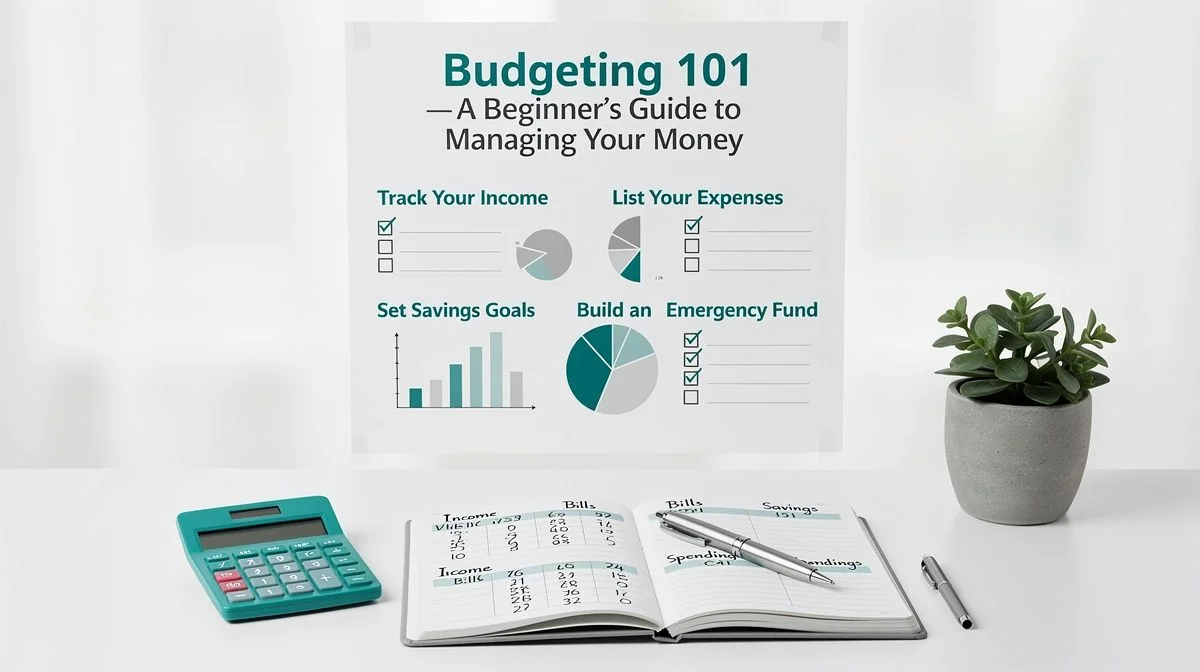
Budgeting 101 — A Beginner's Guide to Managing Your Money
If you're new to managing your own money in New Zealand, budgeting is the single most important skill you can learn. A budget isn't about restriction — it's about giving every dollar a purpose so you can reach your goals, whether that's saving for a house deposit, paying off debt, or simply having enough left over for a weekend getaway.
This guide walks you through everything you need to know as a Kiwi beginner. We'll cover the key concepts, step-by-step instructions, practical tips, and common pitfalls to avoid. By the end, you'll have a simple budget you can start using today.
What is a budget?
A budget is a plan for your money. It shows how much income you expect to receive and how you intend to spend or save it over a set period — usually a week, fortnight, or month. Think of it as a financial roadmap that helps you stay on track.
In New Zealand, most people are paid weekly or fortnightly, so it often makes sense to budget on the same cycle. But monthly budgets also work well if you have regular bills like rent or mortgage payments.
Why budgeting matters
Without a budget, it's easy to lose track of where your money goes. That morning coffee, the takeaway dinner, the streaming subscriptions — they all add up. A budget helps you:
- See exactly where your money is going
- Avoid overspending and debt
- Save for short-term and long-term goals
- Reduce financial stress and gain confidence
- Prepare for unexpected expenses (like car repairs or medical bills)
Key budgeting concepts explained
Income vs expenses
Your income is all the money coming in — wages, salary, government payments like Working for Families, or side hustle earnings. Your expenses are everything going out — rent, groceries, power, transport, entertainment, and savings. The goal is to have more coming in than going out.
Fixed vs variable expenses
Fixed expenses stay the same each month (rent, mortgage, insurance, KiwiSaver contributions). Variable expenses change (groceries, power, petrol, eating out). Both need to be included in your budget.
Needs vs wants
Needs are essentials — housing, food, utilities, transport to work. Wants are nice-to-haves — streaming services, dining out, new clothes, holidays. A good budget covers your needs first, then allocates what's left to wants and savings.
Emergency fund
Financial experts in New Zealand generally recommend having 3-6 months of essential expenses saved in an easily accessible account. This covers you if you lose your job, your car breaks down, or an unexpected bill arrives.
Step-by-step guide to creating your first budget
Step 1: Gather your financial information
Collect your pay slips, bank statements, bills, and any other records of income and spending. Look back at the last 2-3 months to get a realistic picture. If you use online banking, you can usually download statements as a CSV or PDF.
Step 2: List your income
Write down all sources of income after tax (your "take-home" pay). Include:
- Your main job salary or wages
- Any part-time or casual work
- Government payments (e.g. Working for Families, Jobseeker Support, Student Allowance)
- Regular side hustle income
Step 3: List your expenses
Go through your bank statements and write down every expense. Group them into categories like:
| Category | Examples | Fixed or variable? |
|---|---|---|
| Housing | Rent, mortgage, rates, body corporate | Fixed |
| Utilities | Power, gas, internet, water | Variable (but predictable) |
| Food | Groceries, takeaways, coffee | Variable |
| Transport | Petrol, bus fares, WOF, rego | Variable |
| Insurance | Contents, car, health, life | Fixed |
| Debt repayments | Credit card, personal loan, student loan | Fixed |
| Savings | Emergency fund, holiday, house deposit | Flexible |
| Entertainment | Streaming, eating out, hobbies | Variable |
Step 4: Choose a budgeting method
There's no single right way to budget. Here are three popular methods for Kiwis:
- The 50/30/20 rule: 50% of your after-tax income goes to needs, 30% to wants, and 20% to savings and debt repayment. Simple and easy to start.
- Zero-based budgeting: Every dollar of income is assigned a job — bills, savings, spending — until your income minus expenses equals zero. Great for detail-oriented people.
- Envelope system: Withdraw cash for variable categories (groceries, entertainment) and put it in envelopes. When the envelope is empty, you stop spending. Useful if you tend to overspend on cards.
Step 5: Set up your budget
You can use a simple spreadsheet (Google Sheets or Excel), a dedicated budgeting app, or even pen and paper. Many New Zealand banks also offer budgeting tools within their apps. Choose whatever feels easiest for you to stick with.
Step 6: Track your spending
For the first month, track every dollar you spend. This helps you see if your budget matches reality. At the end of the month, compare your actual spending to your planned amounts. Adjust categories that were too high or too low.
Step 7: Review and adjust regularly
Your budget isn't set in stone. Review it monthly or whenever your income or expenses change. Got a pay rise? Update your budget. Moved to a cheaper flat? Adjust your housing category. Regular reviews keep your budget relevant and effective.
Tips for budgeting success in New Zealand
Use Kiwi-specific tools
Several free apps are popular in New Zealand, such as PocketSmith (designed here), Goodbudget, or YNAB (You Need A Budget). Some banks like ASB, Westpac, and BNZ also have built-in budgeting features in their mobile apps.
Automate your savings
Set up an automatic transfer from your main account to a savings account on payday. Even $50 a fortnight adds up. This way, you're paying yourself first before you can spend the money.
Account for irregular expenses
Things like car rego, WOF, annual insurance premiums, and Christmas presents can blow a budget if you forget them. Divide the annual cost by 12 and set aside that amount each month in a separate "sinking fund" account.
Be realistic about variable costs
If you spend $200 a week on groceries, don't budget $150 unless you're genuinely committed to changing your habits. Being overly strict often leads to giving up. Start with realistic numbers and improve over time.
Use the "pay yourself first" rule
Treat savings like a bill. As soon as your income arrives, move your savings amount to a separate account. What's left is what you have to spend on everything else.
Common budgeting mistakes to avoid
- Forgetting irregular expenses — annual bills, birthdays, and car maintenance catch many people out.
- Being too strict — an unrealistic budget is hard to maintain. Allow some fun money.
- Not tracking at all — a budget on paper is useless if you don't check your actual spending.
- Ignoring debt — high-interest debt (like credit cards) should be a priority. Pay more than the minimum.
- Giving up after one bad month — everyone has slip-ups. Just get back on track the next month.
How to handle unexpected expenses
Life happens. Your car needs a new tyre, the washing machine breaks, or you have an unplanned trip to the dentist. This is where your emergency fund comes in. If you don't have one yet, start building it as soon as possible — even $20 a week helps.
For larger unexpected costs, consider whether you can adjust your budget for a month or two (e.g. cut back on eating out and entertainment) before reaching for a credit card or loan.
When to review your budget
Review your budget at least once a month. Also review it whenever:
- Your income changes (new job, pay rise, redundancy)
- Your expenses change (moving house, new baby, paying off a loan)
- You achieve a savings goal and need a new one
- You feel stressed about money — that's a sign something needs adjusting
Getting help with budgeting
If you're struggling to make ends meet or feel overwhelmed, free help is available in New Zealand. You can contact:
- Money Talks — a free, confidential helpline (0800 345 123) run by the Commission for Financial Capability
- Budgeting services — community-based budget advisors, often free or low-cost. Find one through the Federation of Family Budgeting Services (www.familybudgeting.org.nz)
- — a free government website with budgeting calculators, tools, and guides
If You Remember Nothing Else
Budgeting doesn't have to be complicated or boring. The best budget is one you can actually stick with. Start simple, track your spending, and adjust as you go. Over time, you'll build confidence and control over your money — and that's a powerful feeling.
Remember, budgeting is a skill, not a one-off task. The more you practise, the easier it gets. Even small steps — like knowing where your money goes each week — can make a huge difference to your financial wellbeing.
Not sure where you stand? Try our Net Worth Calculator to get a clear picture of your total assets, debts, and how you compare with your age group.

The ValueHub Team built this site because finding clear, unbiased financial information in New Zealand was harder than it should be. Every guide is based on real research — we compare the actual fees, terms, and fine print so you don't have to. Our tip: shop around every year, read the policy docs, and never assume loyalty gets you the best deal.— The ValueHub Team
Try our Calculators
Use these free tools to crunch the numbers:
KiwiSaver Fund Comparison
Compare fees, returns, and risk levels across every KiwiSaver fund from all 31 NZ providers.
Currency Converter — USD to NZD
Convert US Dollars to New Zealand Dollars instantly. See the latest exchange rate and 30-day trend.
Mortgage Repayment Calculator
Calculate your weekly, fortnightly, or monthly mortgage repayments. Free NZ mortgage calculator — try different rates, terms, and repayment frequencies.
Compound Interest Calculator
See how your savings grow with compound interest over time. Free NZ compound interest calculator with yearly, monthly, and weekly compounding options.
Term Deposit Calculator
Calculate your term deposit returns before you lock in. Compare interest earned across different terms and rates with ValueHub's free calculator.
Savings Goal Calculator
Calculate how long it will take to reach your savings goal — and what monthly deposit you need to get there. Free NZ savings planner.
Related Articles
Best Budgeting Apps in NZ Compared
Compare PocketSmith, YNAB, Goodbudget and MoneyBrilliant including NZ bank sync, pricing and features to find the best budgeting app for Kiwis.
guideHow to Build an Emergency Fund in New Zealand
Learn how to build an emergency fund in NZ step by step, including how much to save for 3-6 months of essential expenses and where to keep it.