Hiring an Arborist in New Zealand: A Complete Guide
Published 01 July 2025 · Updated 14 July 2026
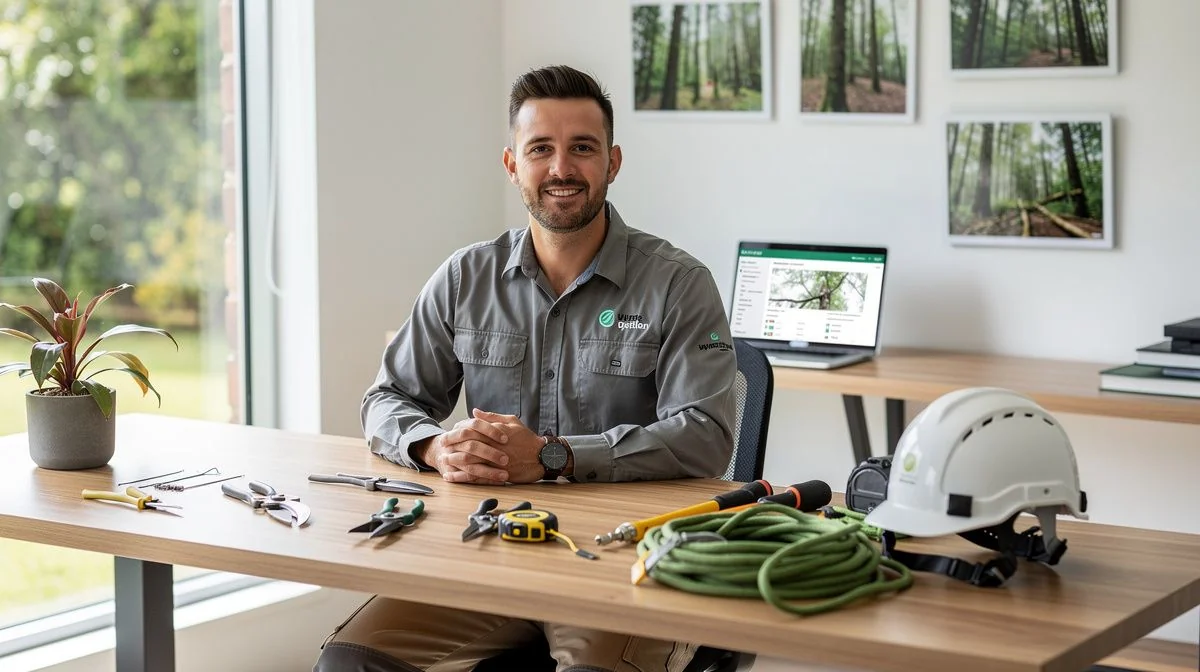
What exactly does an arborist do and when should you call one?
An arborist is a tree care specialist trained in the cultivation, management, and safe removal of trees. Unlike a gardener or a general landscaper, an arborist understands tree biology, risk assessment, and the proper techniques for pruning, cabling, and dismantling trees without causing harm to the tree or property.
You might need an arborist for a range of situations:
- Tree pruning – to improve structure, health, or clearance from buildings and power lines.
- Tree removal – when a tree is dead, diseased, or poses a safety risk.
- Emergency tree work – after storms or wind damage.
- Tree health assessments – diagnosing pests, diseases, or structural weaknesses.
- Land development – protecting trees during construction or removing them before building.
If a tree is near a structure, public footpath, or utility line, it’s best to call a professional rather than attempt DIY work. In New Zealand, many councils also have rules about removing or pruning protected trees, so an arborist can help you navigate those requirements.
Qualifications, certifications, and industry bodies
Unlike some trades in New Zealand, arboriculture is not a licensed profession. However, there are well-recognised qualifications and voluntary certifications that separate a competent arborist from an unskilled operator.
Key industry body: The New Zealand Arboricultural Association (NZ Arb) is the main professional body for arborists. Their website provides a directory of members and lists certified professionals.
Qualifications and certifications to look for:
- NZ Certificate in Horticulture Services (Arboriculture) Level 3 or 4 – these are the standard national qualifications, often completed through polytechnics or industry training organisations like the Primary Industry Training Organisation (PITO). A Level 4 certificate indicates a higher level of skill and knowledge.
- NZ Arb Certified Arborist – a voluntary assessment that demonstrates a level of competence beyond basic qualifications. This is a good indicator of professionalism.
- Tree Risk Assessment Qualification (TRAQ) – offered by the International Society of Arboriculture (ISA) and recognised in NZ. An arborist with TRAQ is trained to assess the likelihood of tree failure.
- Ladder and aerial rescue training – ensuring the arborist can work safely at height.
- First aid certificate – essential for any work at height or with equipment.
What about licensing? While there is no mandatory arborist license, anyone doing tree work near power lines must follow the New Zealand Electricity (Hazards) Regulations. For work on protected trees, council consent is needed – a reputable arborist will know how to apply for this.
When hiring, ask for copies of qualifications and check if the arborist is a member of NZ Arb. Membership means they’ve agreed to a code of ethics and are likely to carry appropriate insurance.
How to choose and vet an arborist
Choosing the right arborist takes more than a quick Google search. Here’s a step-by-step approach to vetting candidates anywhere in New Zealand.
1. Get multiple written quotes – ask at least three arborists to inspect the tree in person and provide a detailed quote. Beware of quotes given over the phone without seeing the tree.
2. Check insurance – arborists should have both public liability insurance (typically $1 million or more) and accident compensation cover for their staff. Ask for a certificate of insurance.
3. Verify qualifications – request to see their NZ Certificate in Horticulture (Arboriculture) or NZ Arb certification. If they can’t produce evidence, move on.
4. Ask about council permits – a good arborist will know if your tree is protected and can help you get a resource consent if needed. If they say no permit is required without checking, that’s a warning sign.
5. Look at their work – ask for photos of recent jobs, especially similar work (e.g., large removals, tight-access pruning). If possible, request references from clients in your area.
6. Ask about their safety plan – tree work is dangerous. A professional will have a Health and Safety plan, use appropriate personal protective equipment (PPE), and follow industry safe practices.
Key questions to ask:
- “Are you a member of NZ Arb?”
- “Do you hold a Level 3 or Level 4 arborist qualification?”
- “Can you provide a copy of your public liability insurance?”
- “Will you apply for any required council permits?”
- “How will you dispose of the wood and green waste?”
Typical costs and pricing structures in New Zealand
Arborist pricing varies across the country, but it generally falls into a few common models.
Hourly rates – many arborists charge $70 to $120 per hour per person. If the job requires a team (e.g., climber, groundie, chipper operator), the total hourly cost can be higher.
Per tree pricing – for straightforward jobs like pruning a single tree, they might quote a flat fee based on tree size, access, and complexity. Small trees (under 6 metres) could be $150–$400, while large trees (over 15 metres) in difficult locations can cost $1,500–$4,000 or more.
Factors that affect the price:
- Tree size and species – large native trees with dense wood take longer to cut and remove.
- Access – trees in backyards with narrow gates or steep slopes require more labour and special equipment.
- Risk and complexity – trees near power lines, buildings, or roads need extra care and may require traffic management or a cherry picker.
- Disposal – including wood chipping, log removal, or stump grinding adds to the cost.
- Location – arborists in larger centres like Auckland, Wellington, and Christchurch tend to charge higher rates than in smaller towns.
It’s always worth getting several quotes because prices can differ significantly for the same job. Don’t automatically choose the cheapest – quality of work and safety are far more important.
Red flags and what to avoid
Unfortunately, the tree care industry has its share of unqualified operators. Watch for these warning signs:
- No qualifications or certifications shown – if they can’t prove their training, they may lack the skills to work safely.
- No insurance – non-negotiable. If they damage your property or someone gets hurt, you could be liable.
- Prices that seem too good to be true – extremely low quotes often mean corners will be cut on safety, equipment, or disposal.
- Door-knocking or unsolicited offers – reputable arborists don’t usually go door-to-door offering tree work.
- Pressure to pay cash or large upfront deposits – a small deposit (e.g., 10–20%) for big jobs is reasonable, but never pay the full amount before work starts.
- Refusal to give a written contract – a professional will provide a clear scope of work and terms.
- Suggesting tree topping or excessive removal – topping (cutting the main trunk to a stub) is bad practice and can kill the tree. A qualified arborist will recommend proper pruning techniques instead.
- Using spikes to climb a tree that you want to keep – climbing spikes damage bark and should only be used on trees being removed.
If you encounter any of these, walk away and find another professional. Your tree and your safety deserve better.
Tips for getting the best results
Once you’ve chosen an arborist, a few simple steps can help ensure the job goes smoothly and the tree stays healthy.
Agree on a clear scope of work – the quote should detail exactly what will be done: which branches pruned, how much of the canopy removed, whether stump grinding is included, and how waste will be handled.
Discuss tree aftercare – after pruning or removal, ask about watering, mulching, or fertilising the remaining tree or new plantings. A good arborist will give follow‑up advice.
Get everything in writing – a written contract protects both parties. It should include the price, timeline, insurance details, and any guarantees. Some arborists offer a one‑year warranty on pruning work.
Check for council consent – if your tree is protected (e.g., a notable tree on a district plan), make sure the arborist has obtained the necessary permit before starting. They should manage this process for you.
Be present during the work – not to supervise (leave that to the arborist), but to ask any last‑minute questions and confirm the final result matches the plan.
Consider ongoing care – regular maintenance by the same arborist helps your trees stay healthy and reduces the risk of needing emergency work later. Building a relationship with a trusted professional pays off.

The ValueHub Team built this site because finding clear, unbiased financial information in New Zealand was harder than it should be. Every guide is based on real research — we compare the actual fees, terms, and fine print so you don't have to. Our tip: shop around every year, read the policy docs, and never assume loyalty gets you the best deal.— The ValueHub Team
Try our Calculators
Use these free tools to crunch the numbers:
KiwiSaver Fund Comparison
Compare fees, returns, and risk levels across every KiwiSaver fund from all 31 NZ providers.
Currency Converter — USD to NZD
Convert US Dollars to New Zealand Dollars instantly. See the latest exchange rate and 30-day trend.
Mortgage Repayment Calculator
Calculate your weekly, fortnightly, or monthly mortgage repayments. Free NZ mortgage calculator — try different rates, terms, and repayment frequencies.
Compound Interest Calculator
See how your savings grow with compound interest over time. Free NZ compound interest calculator with yearly, monthly, and weekly compounding options.
Term Deposit Calculator
Calculate your term deposit returns before you lock in. Compare interest earned across different terms and rates with ValueHub's free calculator.
Savings Goal Calculator
Calculate how long it will take to reach your savings goal — and what monthly deposit you need to get there. Free NZ savings planner.
Related Articles
Hiring a Bathroom Renovator in NZ: Full Guide
Learn how to hire a bathroom renovator in New Zealand. Qualifications, costs, red flags, and tips from local experts. Rea...
guideHow to Hire a Building Inspector in New Zealand
A complete guide to hiring a building inspector in New Zealand. Learn about qualifications, typical costs, red flags, and...