How to Hire a Car Detailer in NZ
Published 04 July 2025 · Updated 27 May 2026 · Written by the ValueHub team · Reviewed by Steve Baron
How to Hire a Car Detailer in NZ
Car detailing is where a service and a product warranty get sold to you in the same sentence, and most people never find out which one they actually bought until something goes wrong.
Here is the trap. You are told the coating "comes with a five-year warranty". You hear five years of protection, from the person holding the polisher. What has usually been described is the coating manufacturer's warranty — conditional on a specified preparation process, an approved applicator, and ongoing maintenance you have to do yourself. Miss a condition and it may not respond at all.
Detailing is not a licensed occupation in New Zealand. There is no register to check, so the checks that matter are about method, product, premises and paperwork. That is what this guide covers.
How We Researched This Guide
We started with the law, because it is the part of this topic that is actually settled. The Consumer Guarantees Act 1993 gives every detailing job a baseline: the service must be carried out with reasonable care and skill. We read the service guarantees set out in full on legislation.govt.nz, along with Consumer Protection's plain-English guidance on what happens when a service goes wrong.
The surprise was how much of the industry's credential talk turns out to be product certification rather than personal qualification. A detailer can be a certified applicator for a coating brand without holding any independently assessed trade qualification, and those are two very different claims. We also confirmed there is no licensing regime for detailing, so we wrote the guide around the things a customer can verify: written scope, product documentation, insurance, and premises.
ValueHub's Trusted Providers
We've researched the providers below — here are our picks for this category.
Auto Steam delivers premium car grooming, detailing and steam‑cleaning across Auckland. Using high‑temperature steam and professional products, they deep‑clean interiors, sanitise surfaces, refresh upholstery, and restore exterior shine. Mobile service, meticulous workmanship and results that make your vehicle feel genuinely new again.
The Quick Summary (60-Second Version)
If you only read one part of this guide, read this:
- Detailing has no NZ licensing regime, so there is no register to check — your protection is a written quote and a written warranty.
- Ask whose warranty applies to any coating: the detailer's own, or the product manufacturer's. They are not the same thing.
- Ask whether the detailer is an approved applicator for that specific product, and get the answer in writing.
- Insist on a paint assessment before quoting. A price given without looking at the paint is a guess.
- Confirm public liability insurance and what happens if your paint or trim is damaged in their care.
- Ask for the aftercare rules in writing — what wash, what chemicals, and what voids the coating.
What You Are Actually Buying
A detailing quote bundles two separate things. The first is labour: washing, decontaminating, correcting paint, sealing, and cleaning the interior. The second is a product — a coating, sealant or paint protection film that usually carries a manufacturer's warranty with conditions attached.
Under the Consumer Guarantees Act, the service must be done with reasonable care and skill. Where the operator supplies materials as part of the job and charges you for them, they are also responsible for faults in those materials. So if paint is burnt through by a machine polisher, trim is discoloured by a chemical, or a coating lifts, that is a service failure rather than bad luck.
The remedy path, briefly
If the problem is minor, the detailer should put it right. If it is serious or cannot be fixed, you have the choice of a refund, replacement, or compensation for the faulty products. Damage the work caused to other property is consequential loss the provider is expected to cover, though loss that could not reasonably have been foreseen may not be recoverable.
One warning worth knowing before you pick up the phone. You must give the original detailer the chance to fix a minor problem first. If you get the paint corrected elsewhere and then send them the bill, you have lost your right to a remedy.
How to Tell a Professional From a Cheap One
The gap between a good detailer and a cheap one is not usually visible in the price. It shows up in what they are willing to put in writing before they start.
What good looks like
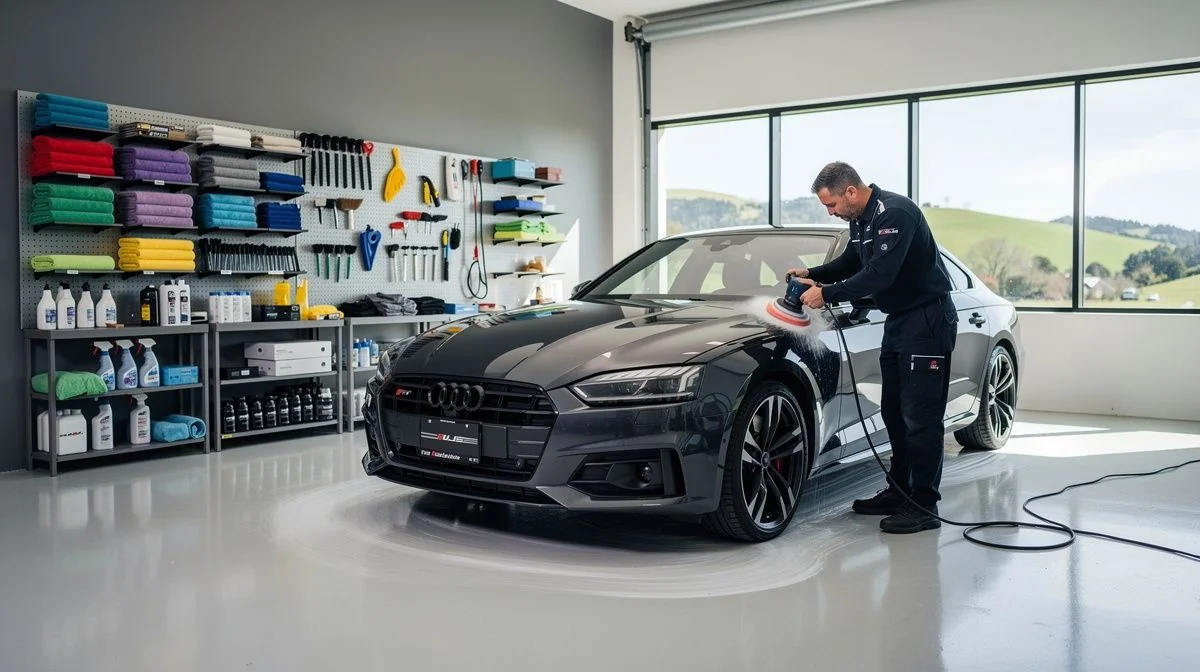
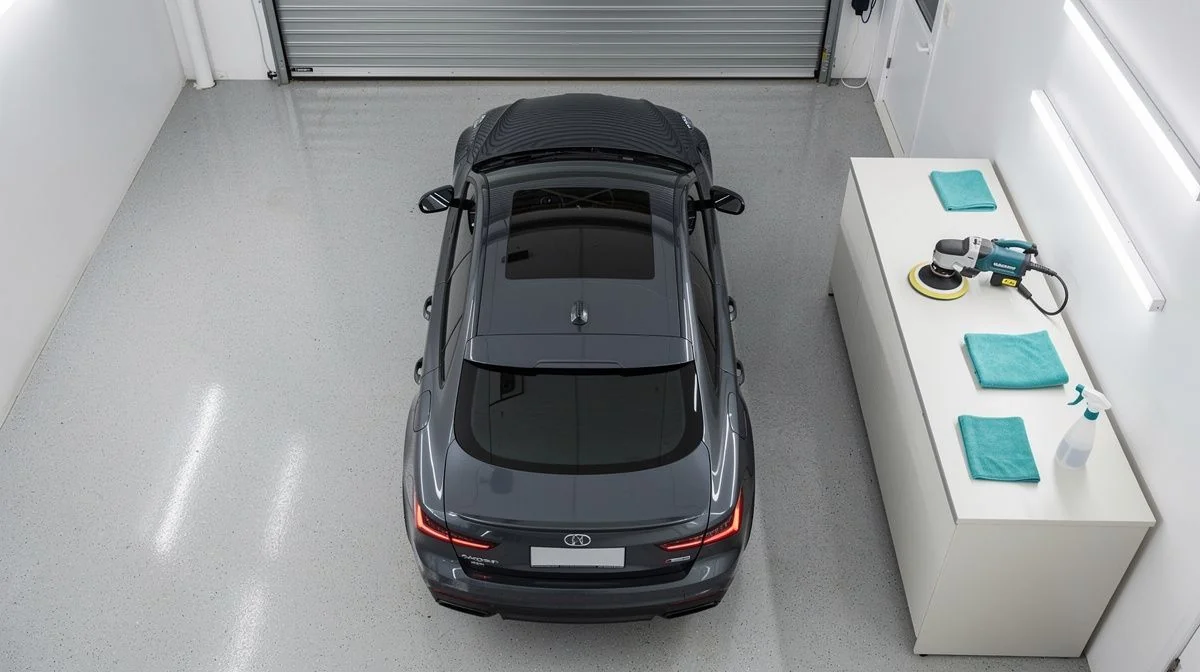
A professional quotes from a written scope that names the process and the products, not a flat price for "a full detail". They assess the paint first — thickness, existing defects, previous repairs — because that is what determines how much material can safely be removed. They explain what correction can and cannot fix, and they work in a controlled space with proper lighting rather than an open car park.
They also hand over product documentation and aftercare instructions at collection. That paperwork is the thing that makes a future warranty claim possible, and it costs them nothing to provide.
Comparing quotes properly
Two quotes at the same price are not comparable if one excludes the decontamination wash, or the paint correction, or the interior. Compare scope, not numbers.
| What to compare | What a professional provides | What to be wary of |
|---|---|---|
| Written scope | Step-by-step process and named products | "Full detail" with no breakdown |
| Paint assessment | Inspection before quoting | Instant price without seeing the car |
| Warranty | Named warranty holder and conditions | "Five-year warranty" with no documentation |
| Insurance | Evidence on request | Vague answer or subject change |
| Aftercare | Written instructions at collection | Nothing handed over |
The questions that separate them
Ask what the price includes, step by step, and which products will be used. Ask whether paint correction is involved and how they decide how much material to remove. Ask whose warranty is attached to the coating, what it covers, and what conditions you must meet to keep it valid. Ask whether they are an approved applicator for that product.
Then ask the one most people skip: what aftercare does the finish need, and what will void it? Particular washes, automatic car washes, or certain chemicals can all end a coating warranty. If the detailer cannot answer that clearly, they are unlikely to have read the warranty conditions themselves.
It also helps to ask how long the car will actually be with them, and where it will be stored overnight. A job that runs over several days means your car sits on their premises, so you want to know it is kept inside, insured, and not moved around the yard between stages. Ask who works on it, too. Some shops bring in subcontracted polishers for bigger correction jobs, and you should know that before you hand over the keys.
Questions You Might Have
Is car detailing regulated in New Zealand?
No. There is no licensing regime, no register, and no protected title for car detailing. Anyone can advertise the service. That is exactly why the written quote, the product documentation and the insurance question carry so much weight here — they are the only verifiable markers you have. It also means two businesses using the same words can be doing very different work, so judge them on what they will commit to in writing rather than the label on the van.
What if the detailer damages my paint?
That is a service failure under the Consumer Guarantees Act, and the remedy framework applies. Tell them in writing, give them the chance to put it right, and keep photographs of the damage. If they refuse or do not succeed within a reasonable time, you can have it remedied elsewhere and recover reasonable costs, or cancel the contract.
How long should a proper detail take?
It depends entirely on the scope. A maintenance wash and interior clean is a short job. A multi-stage paint correction followed by a coating application is measured in days, not hours, because of the preparation, the correction stages and the curing time. Be sceptical of a full correction promised in a couple of hours. If the timeline sounds rushed, ask what steps are being skipped to hit it.
Do I need to do anything to keep a coating warranty valid?
Usually yes, and this is where most claims fail. Manufacturer warranties commonly require a specific preparation process, an approved applicator, and ongoing maintenance by you — often a particular wash method or periodic inspections. Ask for the conditions in writing at collection, and keep them somewhere you will find them again.
What should I do before handing over the keys?
Photograph the car inside and out, including any existing scratches, kerbed wheels and interior marks. It takes two minutes and removes a whole class of argument about what was already there. Then confirm the collection time and what happens if the work runs over.
What Matters Most
The detailer holding the polisher is not the same thing as the warranty on the coating. That single confusion causes most of the disappointment in this trade, and it is entirely avoidable.
Get the scope in writing. Get the warranty conditions in writing. Ask who is responsible if something goes wrong, and confirm they have insurance. Photograph the car before you hand it over. None of that costs anything, and all of it is answerable by anyone who genuinely does this work for a living.
A detailer who welcomes those questions is the one you want. One who deflects them has told you something useful.

The ValueHub Team built this site because finding clear, unbiased financial information in New Zealand was harder than it should be. Every guide is based on real research — we compare the actual fees, terms, and fine print so you don't have to. Our tip: shop around every year, read the policy docs, and never assume loyalty gets you the best deal.— The ValueHub Team
Try our Calculators
Use these free tools to crunch the numbers:
KiwiSaver Fund Comparison
Compare fees, returns, and risk levels across every KiwiSaver fund — the most up to date data in New Zealand.
Currency Converter — USD to NZD
Convert US Dollars to New Zealand Dollars instantly. See the latest exchange rate and 30-day trend.
Mortgage Repayment Calculator
Calculate your weekly, fortnightly, or monthly mortgage repayments. Free NZ mortgage calculator — try different rates, terms, and repayment frequencies.
Compound Interest Calculator
See how your savings grow with compound interest over time. Free NZ compound interest calculator with yearly, monthly, and weekly compounding options.
Term Deposit Calculator
Calculate your term deposit returns before you lock in. Compare interest earned across different terms and rates with ValueHub's free calculator.
Savings Goal Calculator
Calculate how long it will take to reach your savings goal — and what monthly deposit you need to get there. Free NZ savings planner.
Related Articles
How to Hire a Caterer in NZ: A Complete Guide
Learn how to choose, vet, and budget for a caterer in New Zealand. Discover qualifications, industry bodies, pricing, and red flags to e...
guideHow to Hire a Cleaner in New Zealand: A Complete Guide
Learn how to choose, vet, and hire a reliable cleaner in New Zealand. Covers qualifications, pricing, red flags, and tips...