Hiring a Dog Boarding in NZ: Complete Guide
Published 14 July 2025 · Updated 14 July 2026
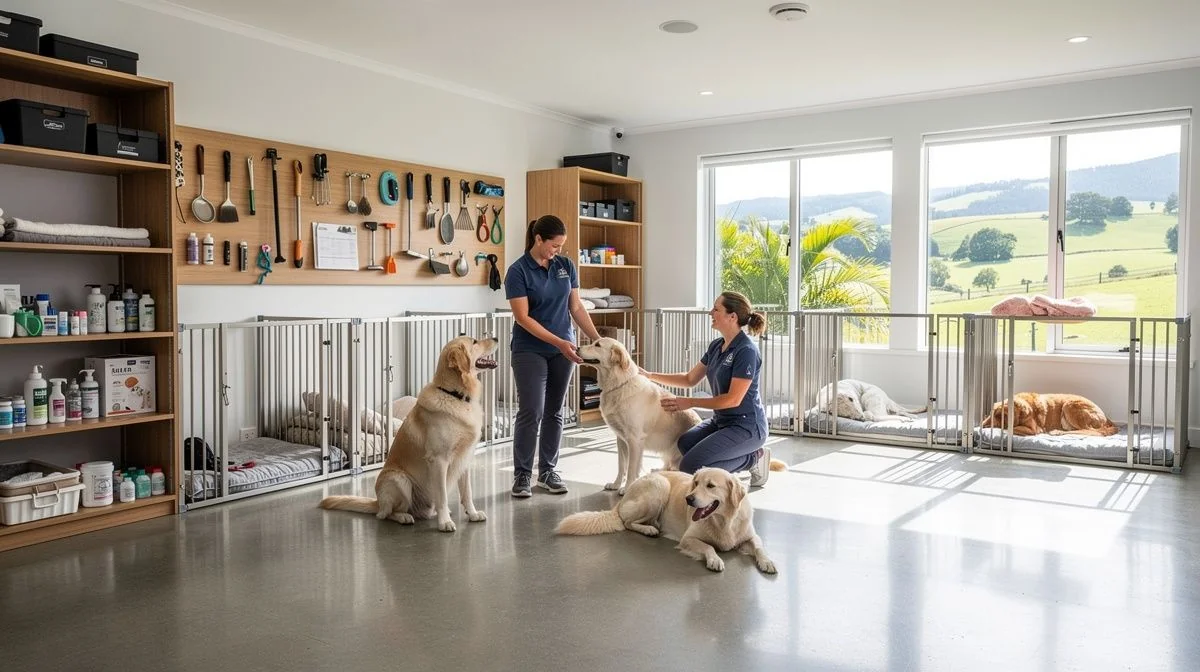
What dog boarding is and when you might need it
Dog boarding provides temporary accommodation and care for your dog when you're away from home. Whether you're heading overseas for a holiday, travelling for work, or dealing with a family emergency, a good boarding facility looks after your pet's welfare while you're absent.
In New Zealand, dog boarding services range from large commercial kennels with full-time staff to smaller home-based operations where dogs stay in a family environment. Some facilities also offer doggy day care, which is a separate service for daytime stays only.
You might need a dog boarder for any of these common situations:
- Holidays or weekend trips where your dog can't come along
- Business travel that keeps you away from home for several days
- Home renovations or moving house, where conditions are unsafe for pets
- Medical stays or hospital visits
- Weddings or other events that don't allow dogs
Many New Zealand dog owners prefer boarding over asking friends or neighbours because professional facilities offer structured routines, supervision, and often socialisation with other dogs. However, not all boarding services are equal, so choosing carefully is essential.
Qualifications, certifications and industry bodies in NZ
Unlike some trades such as electricians or plumbers, dog boarding is not a licensed occupation in New Zealand. There is no single government body that requires dog boarders to hold a specific qualification. However, several standards and voluntary certifications exist.
Key industry bodies
The Pet Boarding Association of New Zealand (PBANZ) is the main industry body representing boarding kennels and catteries. PBANZ sets operational standards and offers a voluntary accreditation programme. Members must undergo regular inspections and adhere to a code of ethics. Choosing a PBANZ-accredited facility gives you some assurance of minimum standards.
The New Zealand Kennel Club (NZKC) also provides guidelines for boarding establishments, particularly those catering to pedigree dogs. While not a regulatory body, NZKC promotes responsible pet care standards.
Local council regulations
Every territorial authority in New Zealand regulates dog boarding under its local by-laws. Most councils require boarding kennels to hold a dog boarding licence or a kennel permit. These licences typically involve inspections by council animal control officers, who check:
- Adequate shelter and sleeping areas
- Sufficient exercise space
- Clean water and food storage
- Waste management and hygiene
- Noise control measures
You can ask your local council whether a boarding facility holds a current licence. This is one of the simplest ways to verify basic compliance.
Animal Welfare Act 1999
All dog boarders must comply with the Animal Welfare Act 1999, which sets minimum standards for the care of animals in New Zealand. This includes providing adequate food, water, shelter, and veterinary care. Breaches can result in prosecution by the Ministry for Primary Industries (MPI).
First aid and animal care qualifications
Many reputable boarders hold certificates in: - Pet First Aid (offered by organisations like St John or the NZ Animal First Aid Association) - Canine behaviour and handling - Animal care from providers such as Open Polytechnic or primary industry training organisations
While not mandatory, these qualifications demonstrate a commitment to professional development.
How to choose the right dog boarding service
Choosing a dog boarder requires more than a quick online search. A thorough vetting process helps ensure your dog stays safe, happy and healthy.
Start with a shortlist
Ask your veterinarian, local pet store, or dog trainer for recommendations. Friends and family who have used boarding services can also point you in the right direction. Online directories and review platforms are useful, but treat anonymous reviews with caution — they can be unreliable.
Check licences and accreditations
Verify that the facility holds a current council licence for dog boarding. If the boarder is a PBANZ member, check their membership status on the PBANZ website. Ask whether they have had any complaints or enforcement actions.
Visit in person
A reputable boarder will happily show you around. During your visit, observe:
- Cleanliness of kennels, runs and communal areas
- Odour levels — some smell is normal, but excessive ammonia suggests poor ventilation
- Condition of bedding, water bowls and food storage
- Size and safety of exercise areas
- Separation of dogs by size, temperament or age
- Your dog's reaction to the environment
Never book a facility sight unseen, no matter how good their website looks.
Ask key questions
Prepare a list of questions before your visit. Consider asking:
- How many dogs do you care for at one time?
- What is the staff-to-dog ratio during the day and overnight?
- Do you require proof of vaccinations? (Most reputable boarders do.)
- What happens if a dog becomes ill or injured? Do you have a relationship with a local vet?
- How do you handle dogs that don't get along or show aggression?
- What is the daily routine — feeding, exercise, playtime, rest?
- Can I bring my dog's own food, bedding or toys?
- Is there 24-hour supervision, or are dogs left alone overnight?
- Do you offer a trial day or overnight stay before a longer booking?
Ask about insurance
A professional boarding facility should have public liability insurance and accident cover for the animals in their care. If they can't provide proof, that's a warning sign.
Typical pricing and what affects costs in NZ
Dog boarding prices in New Zealand vary widely depending on location, facility type, and level of service. Costs typically range from around $30 to $70 per night for standard boarding. However, luxury or boutique facilities may charge $80 to $120 per night or more.
Factors that influence price:
- Location — Boarding in major cities like Auckland, Wellington and Christchurch tends to cost more than in regional areas.
- Type of accommodation — Basic kennels with concrete runs are usually cheaper than indoor suites with heating, bedding and webcam access.
- Size and breed of dog — Larger dogs may cost more because they require more space and food.
- Additional services — Extras such as grooming, training sessions, medication administration, or extra walks incur extra fees.
- Peak periods — Christmas, Easter and school holidays often attract premium rates, sometimes 20–50% above standard.
- Multi-dog discounts — Some facilities offer reduced rates for boarding multiple dogs from the same household.
What's usually included in the nightly rate: - Indoor and outdoor accommodation - Feeding (unless you supply your own food) - Daily exercise and playtime - Fresh water and basic bedding - Supervision and basic care
Always request a written quote that itemises all charges before confirming a booking. Hidden fees can add up quickly.
Red flags and what to avoid
Not all boarding services operate to an acceptable standard. Watch for these warning signs that suggest you should look elsewhere:
- Reluctance to show you around — If a boarder won't let you view the facility, they are likely hiding something.
- No current council licence — Operating without a licence is illegal in most districts and indicates a lack of accountability.
- No vaccination requirements — Reputable boarders require proof of up-to-date vaccinations (especially kennel cough, distemper and parvovirus). If they don't, your dog is at risk.
- Overcrowded or dirty kennels — Excessive waste, strong ammonia smells, or cramped spaces are unacceptable.
- Unsecured fencing or escape risks — Check gates, fences and enclosure doors. Any potential escape route is dangerous.
- Staff with little or no animal experience — Ask about staff training. Boarding requires knowledge of dog behaviour, first aid and conflict management.
- Vague or no emergency plan — If they cannot clearly explain what happens in an emergency (fire, flood, or illness), move on.
- No written contract or terms — A professional boarder will provide a booking agreement outlining fees, cancellation policy, and responsibilities.
- Too-good-to-be-true prices — Extremely cheap rates often mean corners are cut on care, hygiene or supervision.
- Negative reviews with no response — One or two bad reviews aren't a disaster, but repeat complaints about health issues or poor treatment are serious.
Tips for getting the best results
Preparing your dog and planning ahead helps ensure a smooth boarding experience.
Before the stay
- Ensure your dog's vaccinations are current. Most NZ boarders require proof of the C5 vaccine (covering distemper, hepatitis, parvovirus, and two strains of kennel cough). Also check that flea and worm treatments are up to date.
- Arrange a trial visit or short stay if possible. This lets your dog — and you — see how the facility feels before a longer booking.
- Pack familiar items such as your dog's own bed, favourite toys, and a piece of your clothing with your scent. Familiar smells reduce stress.
- Clearly label all belongings with your dog's name and your contact details.
- Provide written instructions for any medications, special diets, or behavioural quirks. Don't rely on verbal handover alone.
During the stay
- Let the boarder know how to reach you while you're away, and provide a backup contact.
- Inform the boarder of your dog's personality — timid, boisterous, anxious, or reactive around other dogs. This helps them manage interactions.
- If you have any concerns about a particular behaviour (e.g. digging, barking, chewing), mention it upfront so the boarder can manage expectations.
After the stay
- Check your dog for any signs of illness, injury, or stress when you pick them up. Some dogs may be tired or unsettled after a boarding stay — this is normal. But persistent lethargy, coughing, or diarrhoea warrants a vet visit.
- Provide feedback to the boarder. Letting them know what worked well (or what didn't) helps them improve.
Insurance and cancellation policies
Many boarding facilities require a deposit to secure your booking. Read the cancellation policy carefully, especially for peak periods. Some boarding services also offer optional pet insurance for the duration of the stay. Ask about this.
If you board your dog regularly, consider taking out your own pet insurance policy that covers boarding-related incidents. Compare policies from NZ providers like Petplan, Southern Cross Pet Insurance, or PD Insurance.

The ValueHub Team built this site because finding clear, unbiased financial information in New Zealand was harder than it should be. Every guide is based on real research — we compare the actual fees, terms, and fine print so you don't have to. Our tip: shop around every year, read the policy docs, and never assume loyalty gets you the best deal.— The ValueHub Team
Try our Calculators
Use these free tools to crunch the numbers:
KiwiSaver Fund Comparison
Compare fees, returns, and risk levels across every KiwiSaver fund from all 31 NZ providers.
Currency Converter — USD to NZD
Convert US Dollars to New Zealand Dollars instantly. See the latest exchange rate and 30-day trend.
Mortgage Repayment Calculator
Calculate your weekly, fortnightly, or monthly mortgage repayments. Free NZ mortgage calculator — try different rates, terms, and repayment frequencies.
Compound Interest Calculator
See how your savings grow with compound interest over time. Free NZ compound interest calculator with yearly, monthly, and weekly compounding options.
Term Deposit Calculator
Calculate your term deposit returns before you lock in. Compare interest earned across different terms and rates with ValueHub's free calculator.
Savings Goal Calculator
Calculate how long it will take to reach your savings goal — and what monthly deposit you need to get there. Free NZ savings planner.
Related Articles
Hiring a Dry Cleaner in NZ: Complete Guide
Learn how to choose a reliable dry cleaner in New Zealand. Covers qualifications, pricing, red flags, and tips for gettin...
guideHiring an Eyelash Extension Specialist in NZ
Learn how to hire a qualified eyelash extension specialist in New Zealand. Find out about qualifications, regulations, co...