How to Hire a Firewood Supplier in NZ
Published 18 July 2025 · Updated 14 July 2026
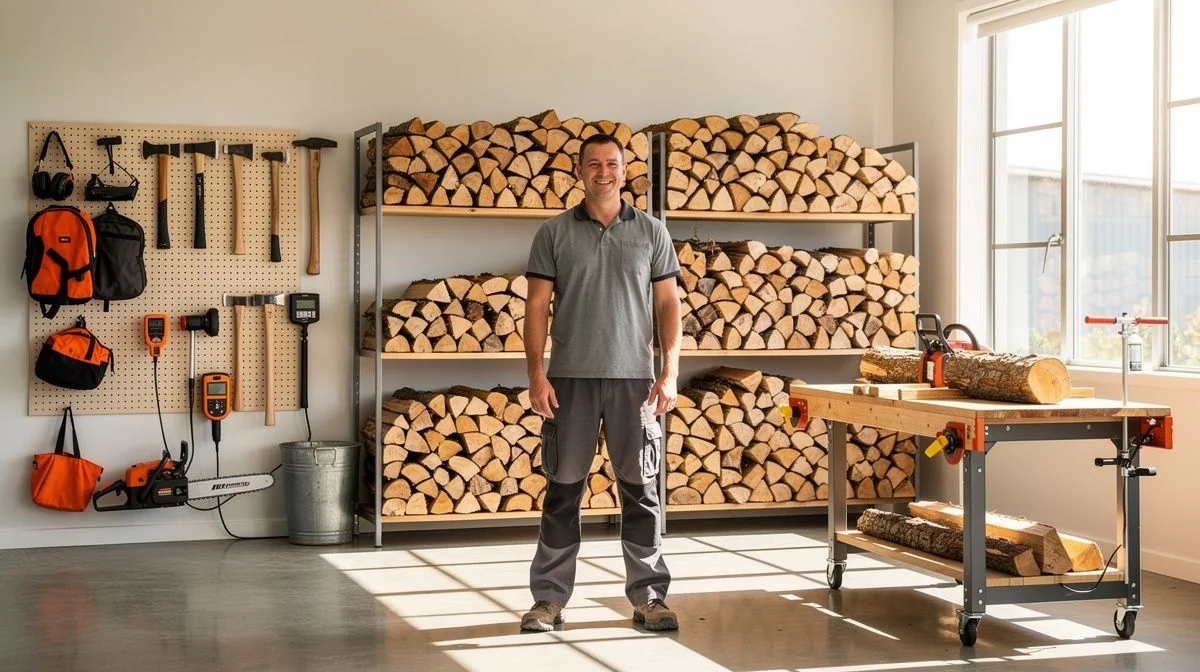
What Firewood Suppliers Do and When You Might Need One
Firewood suppliers in New Zealand are businesses or individuals that harvest, process, season, and deliver firewood for home heating. They typically source logs from sustainably managed forests, orchards, or arborist waste, then cut, split, and dry the wood to an appropriate moisture level. Many also offer kindling, fire starters, and even wood-fired pizza oven packs.
You might need a firewood supplier if you own a wood burner, open fire, pizza oven, outdoor fireplace, or even a traditional hangi or umu. In colder parts of the country, a reliable supply of dry firewood is essential for keeping your home warm through winter. Even with modern heat pumps, many New Zealanders still prefer the cosy warmth of a wood fire.
Good firewood suppliers don't just dump a pile of logs on your driveway. They should provide properly seasoned wood that burns efficiently, produces less smoke, and complies with local council air quality rules. Using wet or unseasoned wood can damage your appliance, create excessive smoke, and pollute your neighbourhood.
Qualifications, Certifications, and Industry Bodies
Unlike electricians or plumbers, firewood suppliers in New Zealand are not required to hold a government licence to operate. However, there are industry standards and certifications that responsible suppliers follow.
The main industry body is the Firewood Association of New Zealand (FANZ). FANZ sets a code of practice for its members, covering sustainable sourcing, moisture content, accurate measuring (by volume or weight), and customer service. If you choose a FANZ-member supplier, you can expect firewood that is:
- Sourced from legal, sustainable sources (not native forests)
- Harvested without damaging soil or waterways
- Seasoned to a moisture content below 25% (ideally below 20%)
- Delivered in clean, standard-sized loads with clear pricing
Check the FANZ website (firewood.org.nz) for a current list of members. Many councils also offer "Good Wood" or "Dry Firewood" initiatives, such as the Enviro-smart programme in Canterbury or the Good Wood Guide in Nelson. These programmes certify that wood has been tested for moisture content and is legal to burn in urban areas. Regional councils regulate what you can burn. For example, the Auckland Council requires wood sold in the region to have a moisture content below 25% (measured by a certified meter) and to come from a permitted source. In Christchurch, only dry wood is allowed for home heating. Always check your local council’s rules before buying, and ask your supplier for a moisture reading if possible. There is no formal training requirement for firewood suppliers, but many belong to the NZ Forestry Industry or Sustainable Forest Management schemes. Some suppliers also hold New Zealand Farm Forestry Association membership. These aren't specific to firewood, but they indicate a commitment to responsible land and resource management.
How to Choose the Right Firewood Supplier
Start by asking friends, neighbours, or local community Facebook groups for recommendations. Then do a bit of research on each supplier before you commit. Key questions to ask before ordering:- What species of wood do you supply? Hardwoods like manuka, kanuka, beech, and gum are ideal. Softwoods like pine are cheaper but burn faster and produce more creosote, which can clog chimneys. Mixed loads are common, but you need to know what you're getting.
- How long has the wood been seasoned? Ideally the wood was cut and stacked at least 12 months ago. Some suppliers kiln-dry wood to speed up the process. Ask for a moisture content reading – it should be under 25%, and preferably under 20%.
- How is the wood measured? Firewood is typically sold by the cubic metre (m³) or by weight (tonne). A standard “one cubic metre” load should be a stack roughly 1m x 1m x 1m. Some suppliers sell “loose” loads and use a truck tray size, which can be inconsistent. Stick to volume or weight with a guaranteed standard.
- Does the price include delivery? Delivery fees vary widely and can add $30–$90 to the cost, especially for rural addresses. Ask for a full breakdown.
- Can you provide a written quote or invoice? Professional suppliers should be happy to provide this. It protects you if there is a dispute.
- Are you a member of FANZ or a council-accredited scheme? This gives you extra peace of mind.
- Do you have a current health and safety policy? For larger deliveries, especially with machinery, it's wise to check that the supplier has basic safety procedures.
If possible, ask to see the wood in person or at least request photos. Look for uniform-sized pieces, clean cut ends, and evidence of cracking on the ends (a sign of dryness). Bark that falls off easily is another good sign.
Typical Costs and Pricing in New Zealand
Firewood prices vary by region, season, species, and delivery distance. As a general guide, expect to pay between $200 and $500 per cubic metre for good-quality, seasoned firewood. Premium species like manuka or black beech sit at the higher end. Mixed or softwood loads can be $150–$300 per cubic metre. Some suppliers sell by the tonne rather than the cubic metre. One cubic metre of dry hardwood weighs roughly 500–600 kg, while softwood is lighter. Pricing by weight can be fairer, but ensure the wood is actually dry – wet wood weighs more, so you might pay for water. Delivery fees: many suppliers offer free delivery within a certain radius (e.g., 20 km). Beyond that, you might pay $20–$80 extra. Some charge a flat rate, others a per-km fee. Always confirm the delivery charge before you order. Bulk discounts are common for larger orders (e.g., 3 m³ or more). Prices often drop by 10–20% for volume. Ordering in late summer or early autumn is cheaper than mid-winter when demand peaks. Be aware that split firewood is often more expensive than unsplit rounds, but it saves you the effort of splitting it yourself. Kindling and fire starters are usually sold separately for around $5–$15 per bag. As with any trade service, get at least three quotes for a comparable volume and species. That way you can spot if one supplier is significantly overpriced.Red Flags and What to Avoid
When hiring a firewood supplier, watch out for these warning signs:- Wet or green wood. Wood that feels heavy, has damp bark, or shows fresh-cut ends with no cracks is likely unseasoned. Burning it wastes money and damages your flue.
- Mixed mystery loads. If the supplier can't tell you what species they are delivering, or they just say "it's all good wood", be cautious. You might get pallets, treated timber, or toxic species that should never be burned indoors.
- No clear measuring standard. "A trailer load" or "a truck load" is too vague. Insist on cubic metres or tonnes.
- Cash-only payments and no invoice. Reputable businesses accept bank transfers or card and provide a receipt. Cash-only suggests they may be dodging tax or have no fixed address.
- Extremely low prices. If it sounds too good to be true, it probably is. Very cheap wood is often wet or mixed with rubbish.
- No contact number or only a mobile phone. A physical business address or office number adds credibility. Be wary of suppliers who only communicate via text message.
- Advertisements that mention "untreated pine" without further detail. While pine is fine for outdoor fires, it burns hot and fast and can leave excessive creosote indoors. If you want pine, ask if it's seasoned and suitable for your type of burner.
- Pressure to buy immediately. "This price is only good today" is a common sales tactic. Good wood is available all year – you don't need to rush.
Also be aware of biosecurity risks. Moving firewood between regions can spread pests like kauri dieback, myrtle rust, or the painted apple moth. Some regions have restrictions on firewood movement. Ask your supplier where the wood was harvested, and consider buying locally to minimise risk.
Tips for Getting the Best Results
Once you've chosen a supplier, follow these tips to maximise the value of your firewood:- Store wood correctly. Stack it off the ground (on pallets or a rack) in a sunny, well-ventilated spot. Cover the top to keep rain off, but leave the sides open for airflow. Never store wood against your house – it attracts termites and rodents.
- Buy early. Order in late summer or early autumn. Suppliers are less busy, and you can stack and dry the wood further. Winter delivery often means wet wood if you have to cover it in the rain.
- Check moisture again at delivery. If you have a moisture meter (available at hardware stores for around $30–$80), test a few pieces. If the reading is above 25%, reject the load or ask for a discount.
- Match wood to your appliance. Closed wood burners work well with dense hardwoods that produce long-lasting heat. Open fires can burn softwood but may need more frequent refuelling. Never burn treated timber, painted wood, or driftwood – they release toxic fumes.
- Ask about kindling. Many suppliers offer a separate bag of small, dry pieces to help start fires. Worth ordering with your main load.
- Build a relationship. A good supplier will remember your preferences and may offer better prices for repeat custom. If you're happy, leave a review and recommend them to others.

The ValueHub Team built this site because finding clear, unbiased financial information in New Zealand was harder than it should be. Every guide is based on real research — we compare the actual fees, terms, and fine print so you don't have to. Our tip: shop around every year, read the policy docs, and never assume loyalty gets you the best deal.— The ValueHub Team
Try our Calculators
Use these free tools to crunch the numbers:
PAYE Calculator
Calculate your take-home pay after PAYE tax, ACC, KiwiSaver, and student loan deductions.
Compound Interest Calculator
See how your savings grow with compound interest over time. Free NZ compound interest calculator with yearly, monthly, and weekly compounding options.
Mortgage Repayment Calculator
Calculate your weekly, fortnightly, or monthly mortgage repayments. Free NZ mortgage calculator — try different rates, terms, and repayment frequencies.
Term Deposit Calculator
Calculate your term deposit returns before you lock in. Compare interest earned across different terms and rates with ValueHub's free calculator.
Savings Goal Calculator
Calculate how long it will take to reach your savings goal — and what monthly deposit you need to get there. Free NZ savings planner.
Credit Card Repayment Calculator
See how long it really takes to pay off your credit card — and how much interest you could save by paying more each month. Free NZ calculator.
Related Articles
Justices of the Peace in NZ
Need a document witnessed in NZ? Learn what JPs do, when you need one, and where to find free services for passports, declarations, and more.
guideConveyancers in NZ — What They Do vs a Property Lawyer
Licensed conveyancer vs property lawyer in NZ: cost, scope, and when to choose each for your home purchase or sale.
guideMigration Advisers in NZ — A Guide for New Migrants
Learn how licensed migration advisers can simplify your New Zealand visa application, save time, and boost approval chances with expert guidance.
guideSecurity Guards in NZ
Learn when to hire a security guard in NZ, from construction sites to events, with tips on licensing and what they do.