Fridge Repair Technician Hiring Guide NZ
Published 22 July 2025 · Updated 14 July 2026 · Written by the ValueHub team · Reviewed by Steve Baron
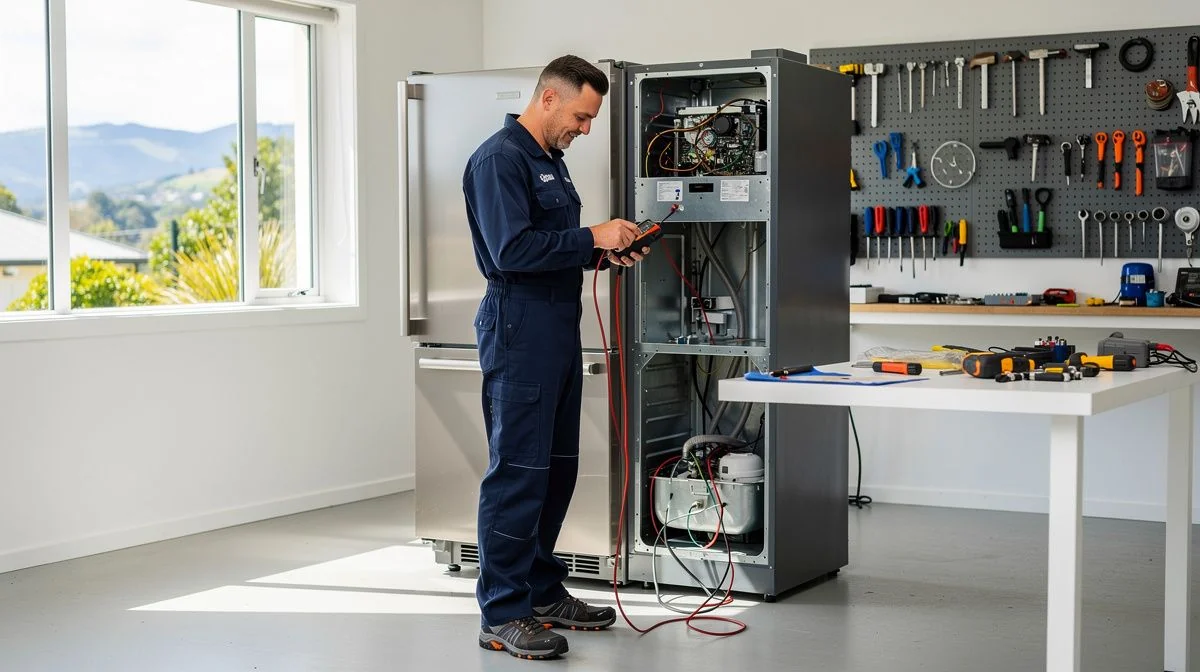
What a Fridge Repair Technician Does and When You Might Need One
A fridge repair technician – sometimes called a refrigeration service technician or appliance repairer – diagnoses and fixes problems with domestic and commercial refrigeration units. This includes fridges, freezers, chillers, and sometimes air conditioners if they share the same gas circuits. In New Zealand, these tradespeople work on everything from the small bar fridge to large walk-in coolers in supermarkets and restaurants.
You’re most likely to call a fridge repair technician when your refrigerator stops cooling properly, starts leaking water, makes unusual noises, or shows error codes on its digital display. Other common issues include frost build-up in a frost-free model, a faulty thermostat, a broken door seal, or the fridge simply not turning on.
Sometimes the problem is simple – a dirty condenser coil or a blocked drain tube – but other times it involves a failed compressor, a refrigerant leak, or a faulty electronic control board. A good technician will diagnose the root cause quickly and explain your options. Calling a technician at the first sign of trouble can save you money by preventing a small fault from becoming a major failure that ruins food and costs hundreds to fix.
Qualifications, Certifications, and Industry Bodies
Fridge repair is a specialised trade that sits under the refrigeration and air conditioning umbrella. In New Zealand, there is no single mandatory licence just for “fridge repair”, but several critical qualifications and registrations apply depending on the work being done.
Handling refrigerants – Any technician who works with refrigeration circuits must have a Refrigerant Handling Licence issued by the Environmental Protection Authority (EPA). This is required under the Ozone Layer Protection Act and Regulations. The licence has three levels: Basic, Intermediate, and Advanced. For most fridge repairs that involve gas, an Intermediate or Advanced licence is needed. Check that your technician can show you their current licence card.
Electrical work – If the technician needs to reconnect wiring, replace a compressor, or work on the mains power supply, they must be a Registered and Licensed Electrical Worker under the Electrical Workers Registration Board (EWRB). In New Zealand, only licensed electricians can carry out prescribed electrical work. Some fridge technicians are also registered electricians; others subcontract the electrical part. Always ask who will do any electrical work.
Industry organisations – The Refrigeration, Heating and Air Conditioning Institute of New Zealand (RHAINZ) is the main industry body for refrigeration professionals. Membership is voluntary but shows a commitment to training and standards. The Motor Trade Association (MTA) also covers some appliance repairers, though it is more focused on automotive and electrical trades.
Apprenticeships and qualifications – Most experienced fridge technicians complete an apprenticeship through the Competenz industry training organisation, or through Te Pūkenga (the NZ Institute of Skills and Technology). They typically gain a National Certificate in Refrigeration and Air Conditioning (level 4) or a New Zealand Certificate in Refrigeration and Air Conditioning (level 4). Some hold a qualification in appliance servicing as well.
Consumer guarantees – Regardless of qualifications, any fridge repair work must comply with the Consumer Guarantees Act and the Fair Trading Act. This means the repair must be carried out with reasonable care and skill, and any parts used must be of acceptable quality. If the repair is faulty, you have legal rights to a remedy.
ValueHub's Trusted Providers
We've researched the providers below — here are our picks for this category.
Appliance Fix provides fast, reliable repairs for washing machines, dryers, dishwashers, ovens, stoves and fridges across Auckland. Their experienced technicians diagnose issues quickly, carry genuine parts, and get your appliances running smoothly again. Honest service, clear communication and dependable results — Appliance Fix keeps your home moving.
How to Choose and Vet a Fridge Repair Technician
Finding the right technician can be the difference between a quick, affordable fix and a frustrating, expensive experience. Here’s a step-by-step approach.
Ask about refrigerant handling licences. Reputable technicians will have no problem showing you their EPA licence. If they shy away or say they don’t need one, walk away. Working with refrigerant gas without a licence is illegal and dangerous.
Check for electrical registration if needed. If the repair involves any hard-wiring or replacement of electrical components, ask for the EWRB registration number. You can verify this on the EWRB online register.
Look for trade association membership. While not mandatory, membership in RHAINZ or similar bodies indicates the technician keeps up with training and industry standards. It also gives you a pathway to lodge a complaint if things go wrong.
Get a written quote. A reliable technician will provide a fixed price for labour and an estimate of parts costs before starting work. Some charge a call-out fee that is then deducted from the total repair cost if you go ahead. Always get the quote in writing, even if it’s by email or text.
Ask about warranties. Most technicians offer a 12-month warranty on parts and labour. Some may offer only 3–6 months, especially on used parts. Clarify this before work begins.
Read online reviews. Look at Google, Facebook, or local community pages for feedback. Pay attention to comments about punctuality, professionalism, and whether the technician fixed the problem on the first visit. A single review can be misleading, but a pattern of complaints about the same issue – like not honouring warranties or overcharging – is a red flag.
Ask for references. A technician who has been in business for years will happily give you contact details of past clients. If they hesitate, it may be because they have poor feedback.
Typical Costs and Pricing in New Zealand
Fridge repair costs vary widely depending on the type of fridge, the fault, and your location. In urban areas, call-out fees typically range from $80 to $150, with labour charged at $80 to $130 per hour. Most technicians charge in 15-minute increments after the first hour.
Common repair costs (labour plus parts) might fall into these ballpark figures:
- Thermostat replacement: $150–$300
- Start relay or overload protector: $100–$250
- Condenser fan motor: $200–$400
- Evaporator fan motor: $250–$450
- Compressor (including gas recharge): $600–$1,200
- Gas leak repair and recharge: $300–$700
- Electronic control board replacement: $350–$600
- Door seal replacement: $100–$300
Parts cost more for imported brands like Samsung, LG, or Fisher & Paykel, and less for standard brands with local supply chains. In rural or remote areas, call-out fees may be higher because of travel time, and some technicians charge a travel surcharge of $1–$2 per kilometre.
Diagnostic fee: Many technicians charge a flat diagnostic fee (often around $100–$150) to assess the problem. If you authorise the repair, this fee is usually waived or deducted from the total. If you decide not to proceed, you still pay the diagnostic fee.
When to say no to repair: As a rule of thumb, if the repair cost is more than half the price of a new fridge of similar quality, it is usually better to replace the unit. For an old fridge (over 10 years) with a failed compressor, replacement is often the smarter option – the energy savings from a modern fridge can offset the cost within a few years.
Red Flags and What to Avoid
Not everyone who calls themselves a fridge technician has the right skills. Watch for these warning signs:
-
No licence or registration. If the technician can’t produce an EPA Refrigerant Handling Licence or an EWRB registration when needed, do not hire them. They may be working illegally and could put your safety at risk.
-
Upfront payments without work. A reputable technician may ask for a deposit on special-order parts, but never the full repair cost before the job is done. If they demand cash upfront and have no physical workshop or online presence, that is a red flag.
-
Vague quotes. A quote that says “labour from $100” without explaining the scope is a recipe for a big surprise bill. Insist on a detailed written quote before work starts.
-
Pressure to use second‑hand parts without proper disclosure. Reconditioned parts can be a good option, but the technician should explain the risks and warranty. If they push cheap used parts with no guarantee, be wary.
-
No warranty. Legitimate tradespeople stand behind their work. If the technician says “no warranty” or offers only a few days, something is off.
-
Inability to provide proof of insurance. A professional should have public liability insurance (at least $1 million coverage). Ask for proof. If they can’t provide it, you could be liable for accidental damage.
-
Over‑diagnosing. Some less scrupulous technicians claim you need a full gas recharge or a new compressor when a simple fix like cleaning the condenser coils would do. Get a second opinion if you are unsure.
Tips for Getting the Best Results
To make sure your fridge repair goes smoothly, follow these steps.
1. Prepare before the technician arrives. Defrost the fridge if it has built up ice – this gives the technician easier access. Clear the area around the fridge so they can pull it out. Label any food you want saved and keep it in a chilly bin with ice packs if the fridge will be off for a few hours.
2. Be clear about the symptoms. Write down exactly what the fridge is doing (or not doing) – temperature readings, error codes, strange noises, dates when the problem started. This helps the technician diagnose faster and reduces time wasted.
3. Ask about parts availability. Some parts for newer or imported models can take weeks to arrive. Check whether the technician stocks common parts or will need to order them. If the part is on backorder, decide whether you can wait or whether a temporary fix is possible.
4. Confirm the warranty terms. Get the warranty details in writing. Keep the invoice and any part receipts. This protects you if the same fault appears again within the warranty period.
5. Insist on a clear invoice. The invoice should list labour hours, parts used (with part numbers), and any refrigerant charges. A detailed invoice makes it easier to check the work and to claim under warranty later.
6. Maintain your fridge after the repair. Clean the condenser coils (usually at the back or bottom) every six months with a vacuum or soft brush. Keep the door seals clean and check them for tears. Ensure proper airflow around the fridge – don’t pack it too tightly against walls or cupboards. These simple steps can extend the life of your fridge and prevent repeat breakdowns.
7. Consider a service plan for older fridges. If your fridge is more than seven years old, some technicians offer annual service checks that clean coils, check gas pressures, and inspect seals. This can catch problems early and cost less than a full repair.

The ValueHub Team built this site because finding clear, unbiased financial information in New Zealand was harder than it should be. Every guide is based on real research — we compare the actual fees, terms, and fine print so you don't have to. Our tip: shop around every year, read the policy docs, and never assume loyalty gets you the best deal.— The ValueHub Team
Try our Calculators
Use these free tools to crunch the numbers:
KiwiSaver Fund Comparison
Compare fees, returns, and risk levels across every KiwiSaver fund — the most up to date data in New Zealand.
Currency Converter — USD to NZD
Convert US Dollars to New Zealand Dollars instantly. See the latest exchange rate and 30-day trend.
Mortgage Repayment Calculator
Calculate your weekly, fortnightly, or monthly mortgage repayments. Free NZ mortgage calculator — try different rates, terms, and repayment frequencies.
Compound Interest Calculator
See how your savings grow with compound interest over time. Free NZ compound interest calculator with yearly, monthly, and weekly compounding options.
Term Deposit Calculator
Calculate your term deposit returns before you lock in. Compare interest earned across different terms and rates with ValueHub's free calculator.
Savings Goal Calculator
Calculate how long it will take to reach your savings goal — and what monthly deposit you need to get there. Free NZ savings planner.
Related Articles
Hiring a Garage Door Repair Specialist in New Zealand
New Zealand guide to hiring a garage door repair specialist: qualifications, industry bodies, costs, and red flags. Get s...
guideHow to Hire a Gardener in New Zealand: A Complete Guide
Learn how to hire the right gardener in New Zealand. We cover qualifications, costs, red flags, and tips for getting a gr...