Hiring a Garage Door Repair Specialist in New Zealand
Published 23 July 2025 · Updated 14 July 2026
What a Garage Door Repair Specialist Does and When You Might Need One
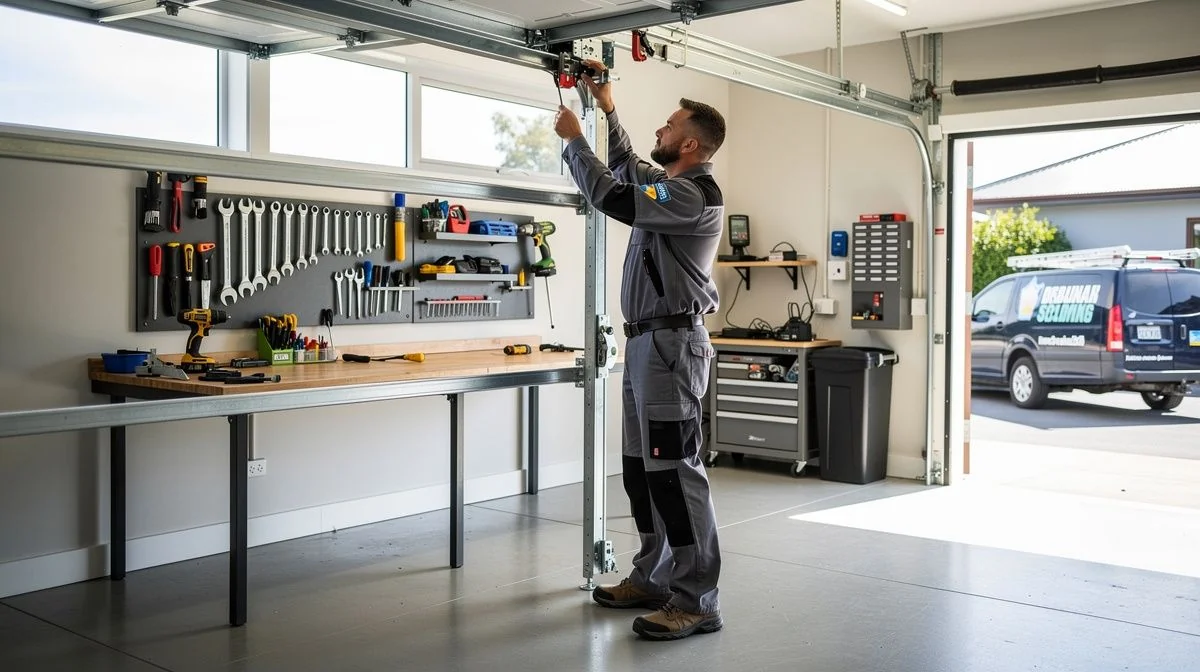
Garage door repair specialists are the tradespeople you call when your garage door jams, the motor stops working, the springs snap, or the tracks go out of alignment. They handle everything from residential tilt and sectional doors to roller doors and automatic openers.
You might need one if your door is making unusual noises, moving unevenly, refusing to open or close fully, or if the remote control stops working. Some jobs are simple fixes – like replacing a sensor or lubricating parts – while others, such as replacing a broken torsion spring, are dangerous and should only be tackled by a professional.
In New Zealand, garage doors are often used daily, so a breakdown can be more than an inconvenience – it can affect security, access to your home, and even your vehicle.
Qualifications, Certifications, and Industry Bodies in NZ
Unlike electricians or plumbers, garage door repair specialists are not required to hold a single, nationwide license. However, several key credentials and industry bodies set professional standards in New Zealand.
Door Industry Association of New Zealand (DIANZ) is the primary trade body for the sector. DIANZ runs a Qualified Technician (QT) programme for garage door installers and repairers. Look for a specialist who is a DIANZ member or who employs QT-certified technicians. This shows they have committed to training and a code of ethics.
Electrical work and the EWRB – If the repair involves wiring the automatic opener, connecting a new motor, or fixing electrical components, the person doing that work must be a registered electrician with the Electrical Workers Registration Board (EWRB). Many garage door repair firms employ their own registered electricians or subcontract the electrical element. Always ask whether the electrical work will be done by a licensed electrician.
Manufacturer certifications – Major brands such as Dominator, Apex, and Merlin run their own training and certification programmes. A specialist certified by the manufacturer of your door (or opener) will have specific product knowledge and access to genuine parts and technical support.
Building consent considerations – If the repair involves structural changes, such as replacing a lintel or altering the opening, you may need a Licensed Building Practitioner (LBP) and a building consent from your local council. This is rare for straightforward repairs but worth knowing if your job is major.
How to Choose and Vet a Garage Door Repair Specialist
Start by looking for specialists who are members of DIANZ and who have Manufacturer Certified Technician (MCT) status for the brand of your door. This gives you a baseline of training and accountability.
Ask these key questions before you commit:
- Are you a DIANZ member? – If yes, they are part of the main industry body with a complaints process and ongoing training requirements.
- Who will do the electrical work? – Confirm that any wiring or motor connections will be carried out by a registered electrician (EWRB registration number available).
- Do you carry public liability insurance? – A professional should have at least $1 million cover. Ask for proof.
- Do you offer a warranty on parts and labour? – Reputable firms typically offer 12 months on parts and at least 3–6 months on labour. Manufacturer-backed warranties are best.
- Can you provide a written quote before any work starts? – A detailed written quote should list the scope of work, parts, labour, and any call‑out fees. Avoid verbal estimates.
- Have you worked on my brand and type of door? – Experience with specific brands (e.g., a Merlin sectional door or a Dominator roller door) can speed up diagnosis and ensure correct parts.
Always check online reviews, but treat them with caution – a pattern of complaints about poor workmanship, hidden charges, or safety issues is a red flag. It is also wise to ask for at least three quotes to compare pricing and scope.
Typical Costs and Pricing in New Zealand
Garage door repair costs vary widely depending on the nature of the fault, geographic location, and the specialist you choose. In general, you can expect costs to fall into the following patterns.
Call‑out fees – Most specialists charge a call‑out fee of between $80 and $150 to come to your property. This fee often covers the first 30 minutes of diagnostic time. Some companies absorb the call‑out if you proceed with the repair.
Hourly labour rates – After the call‑out, labour is typically charged at $80 to $160 per hour. Urban areas like Auckland or Wellington tend to be at the higher end of this range, while regional centres may be more affordable.
Common repair costs (indicative ranges) – These are estimates and can change based on parts and complexity:
- Replacing a broken torsion spring: $250–$500
- Repairing or replacing a garage door motor/opener: $400–$900 (depending on brand and power)
- Fixing a misaligned track: $150–$350
- Replacing remote controls or wall switches: $80–$200
- Replacing cables or drums: $200–$400
Parts costs vary significantly. A basic universal opener might cost around $350, while a premium smart opener with Wi‑Fi and battery backup can exceed $800. Always get the quote in writing, and ask whether GST is included.
Pricing also depends on accessibility – doors in tight spaces, second‑storey garages, or those with unusual dimensions may attract extra charges.
Red Flags – Warning Signs to Watch For
Not every garage door repairer is reliable. Watch for these warning signs:
- No membership or certification – If they cannot point to DIANZ membership, manufacturer certification, or a registered electrician, ask why. It may be a fly‑by‑night operator.
- Cash‑only payments – While some legitimate trades accept cash, a demand for cash‑only with no GST invoice is a red flag. You lose consumer protections and any warranty.
- Vague or verbal quotes – A professional will provide a written quote with itemised costs. Beware of anyone who says “I’ll just see what it needs” without putting numbers on paper before starting.
- Pressure to decide immediately – High‑pressure tactics, such as “I can only do it today” or “the price goes up tomorrow”, are common with less reputable operators.
- No insurance – Ask directly about public liability insurance. If they hesitate or say they don’t need it, walk away. An uninsured repairer leaves you liable for any damage or injury.
- Unusual urgency about replacing the entire door – Some repairers may try to upsell a whole new door when a simple part replacement would do. Get a second opinion if in doubt.
Tips for Getting the Best Results
Once you have chosen a specialist, a few simple steps can help ensure the job is done well and lasts.
Prepare for the visit – Clear the area around your garage door so the technician has easy access. Have the brand name, model number (often on the opener unit or the door edge), and any previous repair details handy. This saves diagnostic time.
Ask about after‑repair maintenance – A good specialist will show you how to lubricate tracks and rollers, check the balance of the door, and test the auto‑reverse safety feature. If they don’t offer this advice, ask.
Get the warranty in writing – Make sure the invoice states the warranty period for both parts and labour. If the opener is replaced, confirm the manufacturer’s warranty (often 2–3 years on motors) and keep the receipt.
Consider a service plan – Many specialists offer annual service contracts for around $100–$200, which cover a thorough inspection and minor adjustments. This can prevent bigger failures down the track.
Test safety features – After the repair, test the door’s auto‑reverse mechanism by placing a solid object (like a block of wood) in the path of the closing door. The door should reverse immediately upon contact. If it doesn’t, ask the technician to adjust the settings – it is a legal requirement under building regulations.
Keep records – File the quote, invoice, warranty information, and any maintenance instructions. If you ever sell the house, these records can add value and reassure a buyer.

The ValueHub Team built this site because finding clear, unbiased financial information in New Zealand was harder than it should be. Every guide is based on real research — we compare the actual fees, terms, and fine print so you don't have to. Our tip: shop around every year, read the policy docs, and never assume loyalty gets you the best deal.— The ValueHub Team
Try our Calculators
Use these free tools to crunch the numbers:
KiwiSaver Fund Comparison
Compare fees, returns, and risk levels across every KiwiSaver fund from all 31 NZ providers.
Currency Converter — USD to NZD
Convert US Dollars to New Zealand Dollars instantly. See the latest exchange rate and 30-day trend.
Mortgage Repayment Calculator
Calculate your weekly, fortnightly, or monthly mortgage repayments. Free NZ mortgage calculator — try different rates, terms, and repayment frequencies.
Compound Interest Calculator
See how your savings grow with compound interest over time. Free NZ compound interest calculator with yearly, monthly, and weekly compounding options.
Term Deposit Calculator
Calculate your term deposit returns before you lock in. Compare interest earned across different terms and rates with ValueHub's free calculator.
Savings Goal Calculator
Calculate how long it will take to reach your savings goal — and what monthly deposit you need to get there. Free NZ savings planner.
Related Articles
How to Hire a Gardener in New Zealand: A Complete Guide
Learn how to hire the right gardener in New Zealand. We cover qualifications, costs, red flags, and tips for getting a gr...
guideHow to Hire a Glazier in New Zealand – Full Guide
Learn how to hire a glazier in New Zealand. From qualifications and costs to red flags and tips, this NZ-wide guide cover...