Hiring a Graphic Designer in NZ: A Complete Guide
Published 28 July 2025 · Updated 14 July 2026 · Written by the ValueHub team · Reviewed by Steve Baron
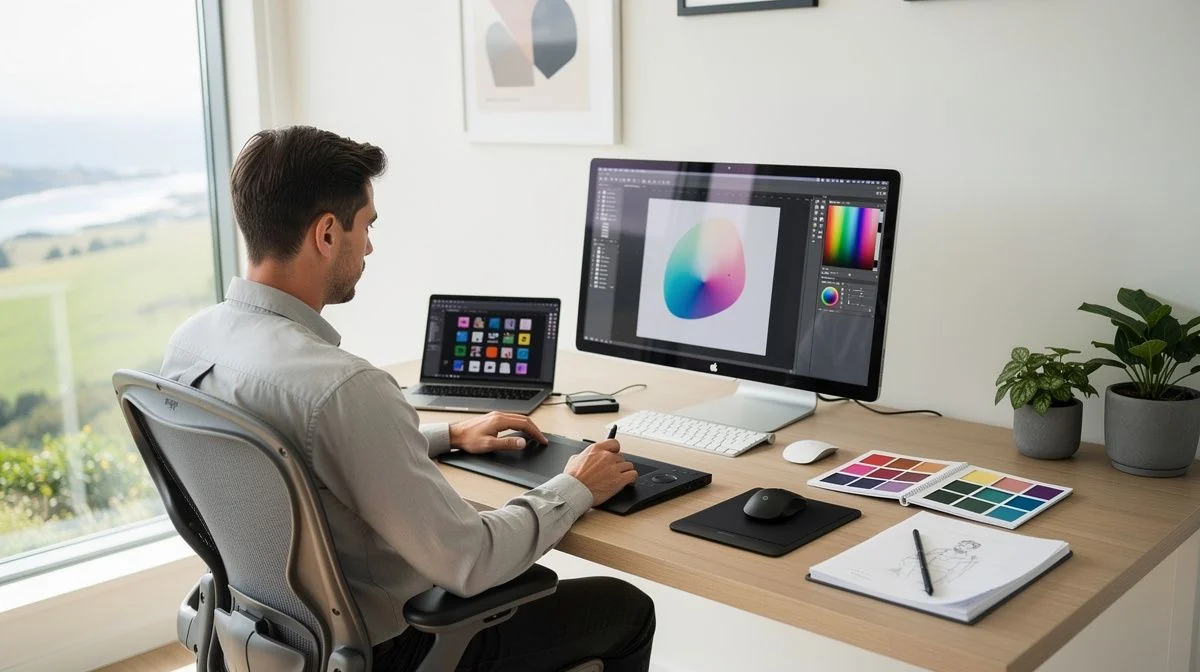
What graphic designers do and when you might need one
Graphic designers are visual problem-solvers. They turn ideas into logos, brochures, websites, social media graphics, packaging, signage, and pretty much anything that needs to look good and communicate clearly. In New Zealand, businesses of all sizes rely on graphic designers to build brand identity, create marketing materials, and give digital or print content a professional edge.
You might need a graphic designer if you're launching a new business and need a logo and brand guidelines, refreshing an existing brand, designing a website (though that often involves a specialist web designer too), putting together a product catalogue, creating advertisements, or designing trade-show banners. Even small jobs like a single social-media post or a business card can benefit from a designer's eye for layout, colour, and typography.
Many Kiwi businesses also turn to graphic designers when they're applying for grants or tenders, because a well-presented proposal can make a real difference. Non-profits and community groups often use designers for fundraising campaigns or event materials. Essentially, if you need any visual communication that represents your organisation, a professional designer can save you time and deliver a much better result than a DIY attempt.
Qualifications, certifications, and industry bodies in NZ
Unlike some trades in New Zealand (like electricians or plumbers), graphic designers do not need a government-issued licence to practice. There is no equivalent of a Licensed Building Practitioner for designers. However, many designers hold tertiary qualifications, and there is a well-respected professional body that offers certification.
Tertiary qualifications – Most professional graphic designers in New Zealand have either a diploma or a degree in graphic design, visual communication, or a related field. Recognised providers include Massey University (Bachelor of Design), Auckland University of Technology (Bachelor of Design), Otago Polytechnic, and the University of Waikato. The New Zealand Qualifications Authority (NZQA) lists numerous Level 5–7 diplomas and degrees. A qualification from a NZQA-accredited provider is a good sign of formal training.
The Designers Institute of New Zealand (DINZ) – DINZ is the leading professional body for designers in New Zealand, covering graphic design, communication design, industrial design, and more. It offers the Registered Designer (RDINZ) certification. To become a Registered Designer, a graphic designer must have at least three years of professional experience, submit a portfolio for peer assessment, and meet ongoing professional development requirements. Hiring an RDINZ gives you a guarantee of competence and ethical practice.
New Zealand Design Assembly (DA) – This is a collective of design professionals. While not a regulatory body, the DA provides networking and professional development. Membership indicates a designer is engaged with the industry.
Other certifications – Some graphic designers also have certifications in specific software (e.g., Adobe Certified Professional), but these are less common. For specialised areas like motion graphics or UX/UI design, designers may have additional qualifications from providers like General Assembly or Coursera – but check if they are recognised by NZ employers.
What to look for when checking credentials – For most projects, a strong portfolio and good communication matter more than a piece of paper. But if you want extra assurance, ask whether the designer is a DINZ member or holds Registered Designer status. For larger corporate or government contracts, having an RDINZ can be a prerequisite.
ValueHub's Trusted Providers
We've researched the providers below — here are our picks for this category.
F Fields Design creates elegant, functional interiors with a focus on timeless style, smart spatial planning and refined detailing. From concept to completion, they deliver bespoke residential and commercial design that balances beauty with practicality. Thoughtful layouts, curated finishes and spaces that feel genuinely lived‑in and loved.
How to choose the right graphic designer
Choosing the right designer is about matching their style and experience to your project. Here are the things to check.
Portfolio review – Look at their recent work, not just stuff from years ago. Does their style suit your industry? A designer who primarily does edgy streetwear branding might not be the best fit for a law firm. But don't be too rigid – a good designer can adapt.
Experience in your sector – If you're in healthcare, a designer who has worked on pharmaceutical packaging or patient information will understand regulatory constraints. Similarly, a designer who has done hospitality branding will know how to create menus and signage that work in busy venues.
Communication style – Do they listen to your brief and ask thoughtful questions? A good designer will want to understand your audience, your competitors, and your budget before they start. If they jump straight into design ideas without asking these questions, it's a warning sign.
References and testimonials – Ask for contact details of previous clients, especially for projects similar to yours. A quick phone call can reveal a lot about the designer's reliability, turnaround times, and how they handle feedback.
Process and timeline – Ask how they work. Most professional designers will provide a brief, initial concepts, feedback rounds, and final deliverables. Clarify how many rounds of revisions are included in the price. Also confirm what file formats you'll receive (e.g., editable source files like Adobe Illustrator or InDesign, as well as high-resolution PNGs and PDFs).
Contract and intellectual property – Always get a written agreement that states what you're paying for, the timeline, and who owns the intellectual property at the end. In New Zealand, copyright of a design typically belongs to the creator unless it's assigned to you in writing. Make sure the contract includes a transfer of copyright or a licence to use the designs for your intended purpose.
Typical pricing structures and what affects costs in NZ
Graphic design pricing in New Zealand varies widely depending on experience, location, and project complexity. Here's a general idea – but always get a detailed quote.
Hourly rates – Junior designers might charge $40–$60 per hour. Mid-level designers $70–$100. Senior or specialist designers (e.g., branding experts) can be $100–$150 per hour or more. Registered designers (RDINZ) often charge on the higher end.
Project-based fees – Most designers prefer a fixed price for a defined scope. For example: - Logo design: $500–$3,000 (simple wordmark up to full brand identity with guidelines) - Brochure or flyer design (single page): $200–$600 per page - Website UI design (homepage + a few inner pages): $1,500–$5,000 - Full brand identity (logo, colours, fonts, business card, letterhead): $2,000–$8,000
Retainers – Some businesses hire a designer on a monthly retainer, say $1,000–$4,000 per month, for ongoing social media graphics, email newsletters, and small campaigns. This can be cost-effective if you have regular needs.
Factors that affect cost: - Complexity – A simple logo is cheaper than a full brand guide with multiple variations. - Revisions – More rounds of changes mean more time. Make sure you know how many are included. - Urgency – Rush jobs often carry a premium (50–100% markup). - Print-ready files – If you need files prepared for a specific printer, that can add time. - Research and strategy – Some designers include market research and competitor analysis in their fee; others charge extra.
Always ask for a written quote that breaks down the scope, revisions, deliverables, and payment schedule. Don't hire anyone who gives only a verbal estimate.
Red flags – what to avoid
No online portfolio – If a designer cannot show you examples of their work (even from personal projects or spec work), that's a major warning sign. In today's world, every professional should have at least a simple website or a Behance/Instagram portfolio.
No contract – A handshake deal is risky. Without a written agreement, you have no guarantee of timelines, ownership, or revision limits. It's also harder to resolve disputes.
Vague or unprofessional communication – Late replies, missed calls, or unclear answers about their process suggest they might be disorganised. If they can't manage their own communication, will they manage your project well?
Unrealistic promises – Beware of designers who say they can "get you to number one on Google" or "go viral" through graphic design alone. Design can help, but it's not magic. Also be wary of extremely low prices – $100 for a full logo and brand identity often means stock templates or poor quality.
Refusal to provide source files – Some designers will only give you final rendered images (JPEGs or PNGs), keeping the editable source files. This locks you into working with them forever. A good designer will provide source files at an agreed price, or include them in the initial fee – make sure this is clear.
Poor reviews or no references – Check Google, Facebook, or directories like NoCowboys. If you can't find any independent reviews, ask for references directly. If they can't provide any, walk away.
Tips for getting the best results
Write a clear brief – Before you approach designers, write down your project's goals, target audience, preferred style (or examples you like), budget, timeline, and what success looks like. A detailed brief saves everyone time and leads to better designs.
Be specific about your brand – If you already have existing brand guidelines (colours, fonts, tone of voice), share them. If not, consider asking the designer to develop simple guidelines. Consistency across all your materials is the sign of a professional brand.
Give constructive feedback – When reviewing designs, avoid vague comments like "make it pop". Instead, say "the headline could be larger" or "can we try a warmer colour on the background?" Be specific about what you like and don't like. Good designers welcome clear feedback.
Respect the design process – Good design takes time. Trust the designer's expertise on layout, typography, and white space. Micro-managing every pixel can frustrate both of you and lead to a poorer result.
Plan ahead – Avoid rush jobs when possible. Designers are often booked weeks in advance. Giving them a reasonable timeline (e.g., two to four weeks for a logo) allows for proper research, drafts, and revisions.
Get everything in writing – We said it before, but it's worth repeating. A contract should cover scope, fees, payment schedule, revision rounds, delivery formats, copyright ownership, and a cancellation policy. Keep all communication (emails, briefs) for reference.
Build a long-term relationship – Once you find a designer whose style and working style you like, consider keeping them for future projects. A designer who knows your brand well can produce better work faster, and may offer loyalty discounts.

The ValueHub Team built this site because finding clear, unbiased financial information in New Zealand was harder than it should be. Every guide is based on real research — we compare the actual fees, terms, and fine print so you don't have to. Our tip: shop around every year, read the policy docs, and never assume loyalty gets you the best deal.— The ValueHub Team
Try our Calculators
Use these free tools to crunch the numbers:
KiwiSaver Fund Comparison
Compare fees, returns, and risk levels across every KiwiSaver fund — the most up to date data in New Zealand.
Currency Converter — USD to NZD
Convert US Dollars to New Zealand Dollars instantly. See the latest exchange rate and 30-day trend.
Mortgage Repayment Calculator
Calculate your weekly, fortnightly, or monthly mortgage repayments. Free NZ mortgage calculator — try different rates, terms, and repayment frequencies.
Compound Interest Calculator
See how your savings grow with compound interest over time. Free NZ compound interest calculator with yearly, monthly, and weekly compounding options.
Term Deposit Calculator
Calculate your term deposit returns before you lock in. Compare interest earned across different terms and rates with ValueHub's free calculator.
Savings Goal Calculator
Calculate how long it will take to reach your savings goal — and what monthly deposit you need to get there. Free NZ savings planner.
Related Articles
How to Hire a Gutter Cleaner in NZ: A Complete Guide
Everything NZ homeowners need to know before hiring a gutter cleaner – qualifications, costs, red flags, and tips for the...
guideHow to Hire a Personal Trainer in NZ
Thinking of hiring a personal trainer in New Zealand? This guide covers qualifications, costs, red flags, and how to choo...