How to Hire a Gutter Cleaner in NZ: A Complete Guide
Published 29 July 2025 · Updated 08 February 2026 · Written by the ValueHub team · Reviewed by Steve Baron
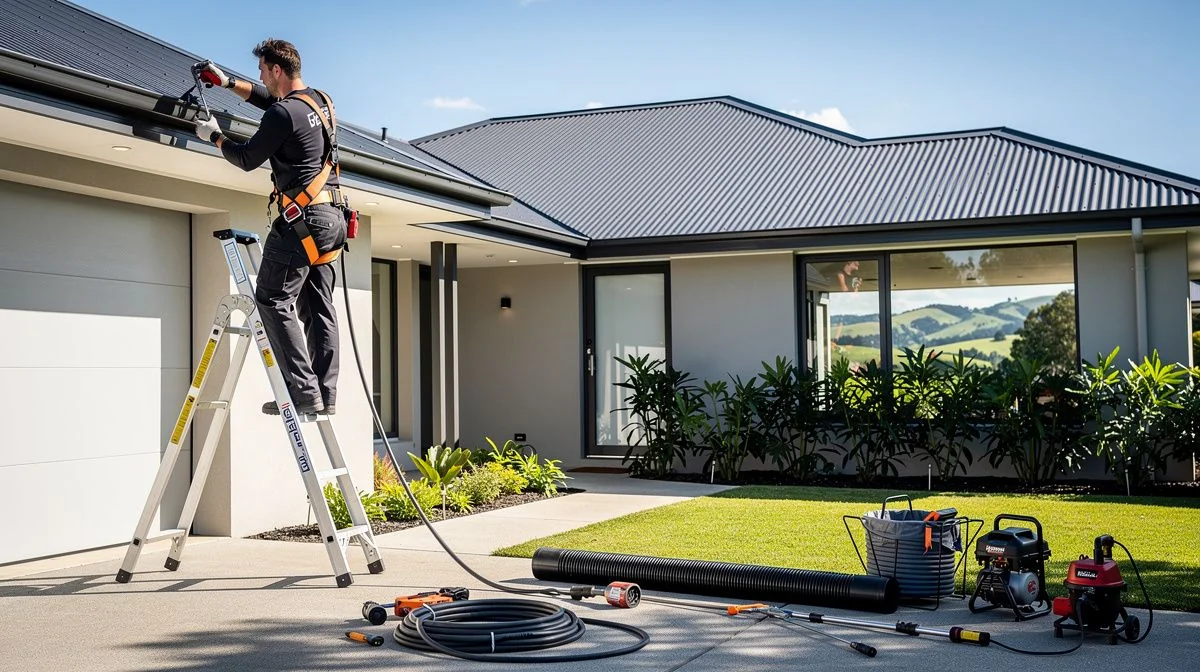
How to Hire a Gutter Cleaner in NZ: A Complete Guide
Most gutter cleaning articles start with a list of questions to ask. We think that misses the point. The genuinely surprising thing about gutter cleaning in New Zealand is not that it's unlicensed — plenty of trades are — but that it is named in WorkSafe's roof maintenance guidance. Removing debris from a roof or gutter is listed right there alongside water blasting roof surfaces. This isn't a side activity nobody thought about. It's regulated work with a specific control hierarchy attached.
That changes the conversation. The question isn't whether your gutter cleaner has a licence, because there isn't one to have. The question is how they reach the gutter — and whether they can tell you why that method is the right one for your roof.
We've also included the two legal points almost every guide gets wrong. One of them is genuinely reassuring.
How We Researched This Guide
We worked from WorkSafe New Zealand's guidance on working on roofs, its roof restoration and maintenance guidance, and its safe ladder guidance. We also read the Health and Safety at Work (General Risk and Workplace Management) Regulations 2016, the Asbestos Regulations 2016, section 317 of the Accident Compensation Act 2001 and the Occupiers' Liability Act 1962 — set out in full on legislation.govt.nz.
One thing surprised us. Regulation 27 of the General Risk and Workplace Management Regulations sets a 2 metre fall threshold that triggers a specific duty — and a single-storey gutter line sits above it. The other surprise was the Occupiers' Liability Act, which inverts the usual fear about hiring contractors. We've explained both below.
ValueHub's Trusted Providers
We've researched the providers below — here are our picks for this category.
Bet big on DIY with Mitre 10 — New Zealand’s home of quality tools, smart home solutions, garden gear, and building essentials. From weekend projects to major renos, get trusted brands, sharp prices, and friendly expert advice. Make it happen with Mitre 10, your local Kiwi hardware powerhouse.
The Quick Summary (60-Second Version)
If you read nothing else, read this.
- Gutter cleaning is not a licensed occupation in New Zealand — there is no register to check and no protected title.
- WorkSafe's roof maintenance guidance explicitly names gutter debris removal, so the working-at-height rules apply.
- Regulation 27 triggers a specific fall-prevention duty at 2 metres, which most single-storey gutter lines exceed.
- The control hierarchy runs eliminate, isolate, minimise — fall arrest is second-to-last, not first.
- Buildings built before 1 January 2000 are likely to contain asbestos, and gutters, fascia and soffits are common locations.
- Ask for public liability insurance, not ACC cover — ACC answers the injury question, insurance answers the damage question.
The Real Issue Is Height, Not Licensing
Gutter cleaning has no licence and no register. That's the honest answer, and we'd rather say it plainly than dress it up. But the absence of a licence is not the absence of law, and this is the article where that lands hardest.
WorkSafe's hierarchy of controls for roof work must be applied in order. Eliminate by working from the ground. Isolate using scaffolding or edge protection. Minimise using a total restraint system. Elimination and isolation take priority, and minimisation controls must not be used without first taking all practicable steps to eliminate or isolate the hazard. Fall arrest is second-to-last, not first.
When you ring around, ask each operator to walk you through their method before you mention price. The ones who lead with how they reach the gutter are usually the ones who have thought about it. The ones who lead with a cheap number and get vague when you push on method are telling you something useful. It's a two-minute conversation that sorts most of the field.
What the 2 Metre Rule Actually Says
Regulation 27 of the Health and Safety at Work (General Risk and Workplace Management) Regulations 2016 requires a fall prevention system, a work positioning system, a fall arrest system, or a compliant ladder where a person could fall 2 metres or more. Below that threshold the risk still has to be managed — 2 metres triggers a specific duty rather than marking the point where safety starts.
Here's the practical version. A single-storey gutter line typically sits above 2 metres. So the reader's real question isn't "is my gutter cleaner licensed" but "is my cleaner working from a ladder, and if so, why". A machine or a telescopic pole from the ground is the acceptable answer. A ladder resting on a gutter on soft ground with nobody footing it is the alarming one.
The Ladder Rules That Get Broken
Ladders are primarily a means of access for light tasks of short duration. They offer no protection from a fall. A ladder should be industrial rated to AS/NZS 1892 with a minimum 120 kg rating, inspected before use, secured at the top and bottom, and set roughly 1 metre out at the base for every 4 metres of height. It should extend a metre above the stepping-off point, and the user should stop at the third step from the top.
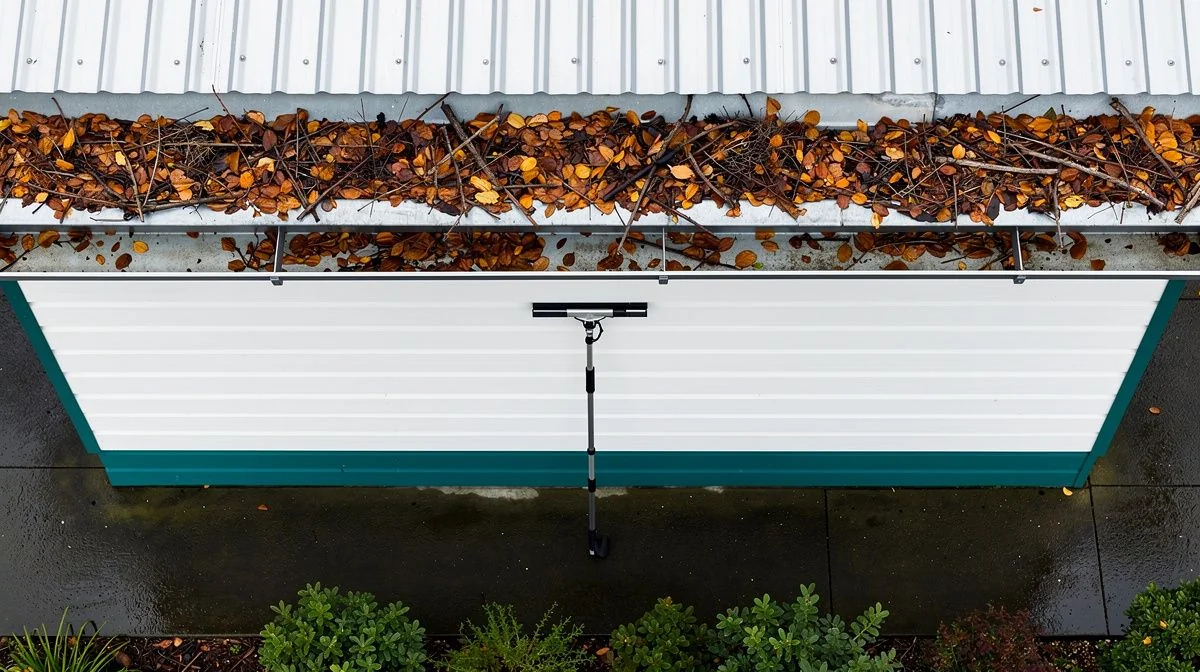
Asbestos, Insurance and the Two Legal Points
Buildings built before 1 January 2000 are likely to contain asbestos-containing materials. Gutters, downpipes, fascia, soffits and roofing on those buildings are among the places asbestos cement appears. WorkSafe's guidance on painting asbestos cement is explicit: do not use overly forceful methods when preparing, repairing or cleaning the surface — no sanding, no wire brushes, no harsh scraping. Low-pressure wet methods only.
The Asbestos Regulations 2016 also restrict power tools on asbestos. Angle grinders, sanders, saws, drills, brushes and brooms may only be used on asbestos if the specific regulatory requirements are met. Ask your gutter cleaner what they do if the fascia looks like asbestos cement. A good answer describes low-pressure wet cleaning and leaving it intact. A bad answer involves a water blaster.
The ACC Bar and Occupiers' Liability
Under section 317 of the Accident Compensation Act 2001, no person may bring proceedings for damages arising directly or indirectly out of personal injury covered by the Act. If a contractor falls off your roof and is injured, their personal injury is covered by ACC and they generally cannot sue you. Property damage claims, and claims under an express contract term, are not blocked.
The Occupiers' Liability Act 1962 covers the rest. Where damage is caused by the faulty execution of work by an independent contractor, the occupier is not answerable for the danger if they acted reasonably in entrusting the work and took reasonable steps to satisfy themselves the contractor was competent and the work properly done.
What Good Looks Like
| What a good gutter cleaner does | What a poor one does |
|---|---|
| Reaches the gutter from the ground with a pole, vacuum or machine | Leans a ladder on the gutter and hopes |
| Clears debris rather than flushing it down the downpipe | Washes everything into the drain and blocks it |
| Checks downpipes actually flow, and checks the gutter fall | Leaves the gutters empty but the downpipes blocked |
| Can show you the debris removed and their public liability certificate | Has no certificate and leaves the debris on the lawn |
Questions You Might Have
How much does gutter cleaning cost in New Zealand?
We don't quote figures, because there's no authoritative NZ price data and we won't invent one. What drives the price is height and storeys, gutter length, access, debris volume and whether downpipes are blocked. A house under trees is a different job from a clean exposure.
Get a written quote rather than a phone number, and make sure it names what's excluded. Access equipment, downpipe clearing and debris removal are the usual extras, and a quote that leaves them vague is the one that grows on the day.
How often should gutters be cleaned?
Once or twice a year suits most homes, timed after autumn leaf fall and again in spring. If you're under pine or pohutukawa, more often. The recurring price is normally lower per visit because the debris load is smaller and the risk is lower.
A simple check between visits: look at the gutter line after heavy rain. If water is sheeting over the front edge rather than running to the downpipe, it's already overdue.
Can I clean my own gutters?
From the ground with a pole or a vacuum system, yes. From a ladder, it's the same hazard your contractor faces, and you don't have their insurance. Never water-blast or wire-brush asbestos cement, and never touch a roof you can't reach safely.
If you do go up a ladder, have someone footing it and keep both hands free for the climb. Carrying a bucket up with you is how most of the avoidable falls happen.
What if the cleaner damages my roof or spouting?
Give them the chance to fix it first. If they refuse or don't succeed within a reasonable time, you can have it remedied elsewhere and recover reasonable costs. Skipping that step can cost you the right to a remedy.
Put the request in writing, with the photos and a date, so there's a clear record of when you raised it. That record is what a disputes process will lean on if it ever gets that far.
What should I check before they start?
Ask for their public liability certificate, agree how they'll reach the gutter, and confirm what happens to the wet debris. Photograph the area beforehand — it's free and it removes a whole class of disputes about pre-existing damage.
What Matters Most
Your gutters are not the risk. The way someone reaches them is. That's the whole decision, and it's why we'd rather you ask about method and control than about qualifications nobody issues.
The other thing worth holding onto is that the paperwork is the protection. ACC covers the injury question. What's left is property damage, and the defence you have is that you reasonably chose a competent contractor and took reasonable steps to check. Asking for insurance and competence isn't a formality — it's the thing that protects you.
Get a written quote that separates labour, materials and exclusions. Confirm whether GST is included. Then get on with your weekend.
Our Recommended Businesses You May Find Helpful
House Painting, Roof Painting, Roof Repairs, Waterblasting, Moss Treatments, Gutter Cleaning & Tree Services & Stump Removal. Services that are essential home maintenance tasks that can help to protect and enhance your property. Give your home a facelift. A fresh coat of paint can transform your home. Improved value, road appeal & longevity.

The ValueHub Team built this site because finding clear, unbiased financial information in New Zealand was harder than it should be. Every guide is based on real research — we compare the actual fees, terms, and fine print so you don't have to. Our tip: shop around every year, read the policy docs, and never assume loyalty gets you the best deal.— The ValueHub Team
Try our Calculators
Use these free tools to crunch the numbers:
KiwiSaver Fund Comparison
Compare fees, returns, and risk levels across every KiwiSaver fund — the most up to date data in New Zealand.
Currency Converter — USD to NZD
Convert US Dollars to New Zealand Dollars instantly. See the latest exchange rate and 30-day trend.
Mortgage Repayment Calculator
Calculate your weekly, fortnightly, or monthly mortgage repayments. Free NZ mortgage calculator — try different rates, terms, and repayment frequencies.
Compound Interest Calculator
See how your savings grow with compound interest over time. Free NZ compound interest calculator with yearly, monthly, and weekly compounding options.
Term Deposit Calculator
Calculate your term deposit returns before you lock in. Compare interest earned across different terms and rates with ValueHub's free calculator.
Savings Goal Calculator
Calculate how long it will take to reach your savings goal — and what monthly deposit you need to get there. Free NZ savings planner.
Related Articles
How to Hire a Personal Trainer in NZ
Thinking of hiring a personal trainer in New Zealand? This guide covers qualifications, costs, red flags, and how to choo...
guideGuide to Hiring a Land Surveyor in NZ
Learn how to hire a land surveyor in New Zealand. Qualifications, costs, red flags, and tips from industry experts. Know...