How to Hire a Heat Pump Specialist in NZ
Published 31 July 2025 · Updated 14 July 2026
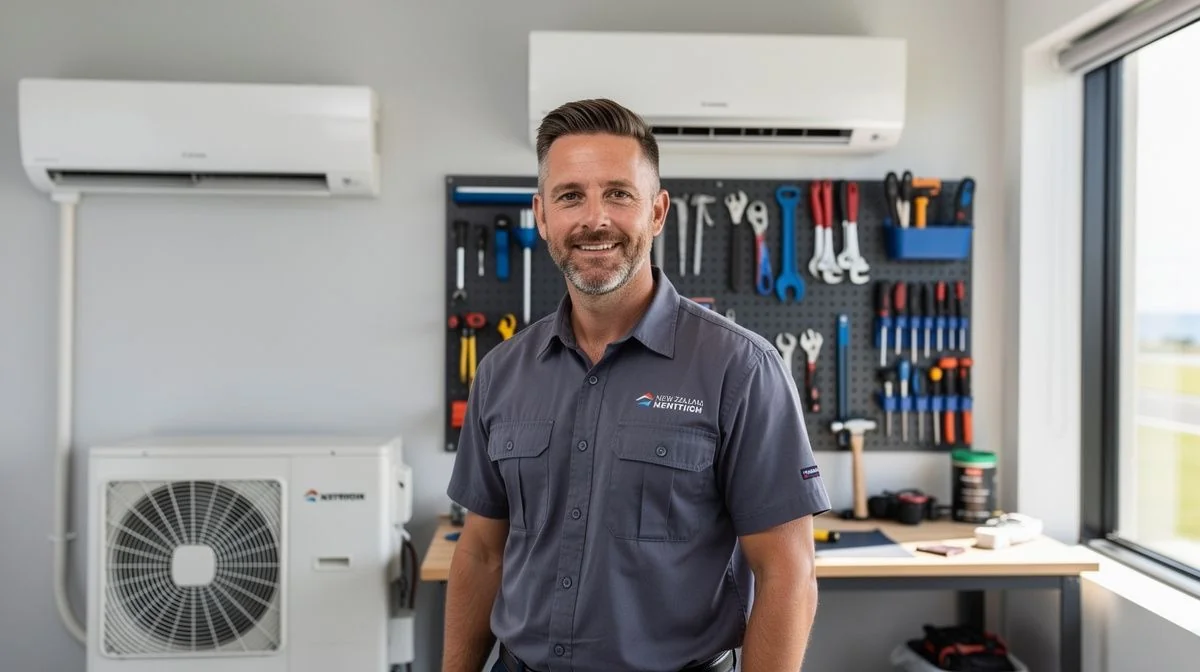
Introduction
A heat pump specialist does more than just sell you a unit – they design, install, and commission a system that keeps your home warm in winter and cool in summer. In New Zealand, where heating can account for up to a third of your power bill, getting the right specialist makes a real difference to your comfort and your wallet.
You might need a heat pump specialist when you’re building a new home, replacing an old system, or simply want to improve energy efficiency in an existing property. They assess your home’s size, insulation, sun exposure, and layout to recommend the correct capacity and type of heat pump – whether that’s a wall-mounted split system, a ducted multi-room setup, or a high-wall unit for a single space.
Qualifications, certifications, and industry bodies
Because heat pump installation involves electrical work and refrigerant handling, the legal requirements are strict. As a homeowner, you should only ever deal with qualified professionals who hold the right credentials.
Electrical registration
Every person doing electrical work in New Zealand must be either a registered electrician or work under the supervision of one. This is enforced by the Electrical Workers Registration Board (EWRB). For heat pump installations, the electrical connection – typically a dedicated circuit and isolator – must be carried out or certified by an EWRB-registered electrician. Some specialists employ their own electricians, while others subcontract the electrical portion.
Refrigerant handling licence
Heat pumps contain refrigerants that are regulated under the Environmental Protection Authority (EPA). Anyone who handles, installs, or services a heat pump must hold a current refrigerant handling licence (often called a “refrigerant handler’s licence”). This licence is issued through an approved training provider and covers the safe recovery, storage, and disposal of refrigerants. Without it, an installer cannot legally work on the refrigeration side of the system.
Manufacturer certifications
Many of the major heat pump brands sold in New Zealand – such as Mitsubishi Electric, Daikin, Fujitsu, and Panasonic – run their own training and certification programmes. A specialist who holds manufacturer-specific certifications has proven they understand that brand’s technology, warranty requirements, and installation standards. You don’t have to choose a certified installer, but it often means better product support and longer warranty periods.
Industry bodies and training
The Heat Pump Association of New Zealand (HPANZ) is an industry body that promotes best practice and provides consumer education. While membership is voluntary, HPANZ members agree to a code of ethics and ongoing training. For broader trade qualifications, organisations like Competenz and Skills oversee apprenticeships and unit standards related to HVAC (heating, ventilation, and air conditioning).
Building consents
In most cases, a heat pump installation does not require a building consent if it’s a straightforward replacement and doesn’t alter the building structure. However, if you’re installing a multi-room ducted system that involves penetrating structural elements or adding new outdoor platforms, a building consent may be needed. Your local council can confirm the requirements, and your specialist should advise you about this before starting any work.
How to choose and vet a heat pump specialist
Taking the time to vet a specialist pays off in system performance, durability, and safety. Here’s a practical checklist.
Check licences and certifications
Ask to see the tradesperson’s EWRB registration card and their refrigerant handling licence. You can also look up individual electricians on the EWRB public register. If the company sends a technician who doesn’t have these documents, ask who will carry out the electrical and refrigeration work – it must be someone properly licensed.
Request a site visit and written quote
A reputable specialist will not quote over the phone or based on photos alone. They should visit your home, measure rooms, check insulation, and consider window orientation and existing heat loss. Only then can they recommend the correct capacity (measured in kilowatts) and the best model. Always get at least two or three written quotes that itemise the unit, labour, electrical work, and any extras like brackets or drainage modifications.
Ask about warranties and after-sales service
Heat pump units typically come with a manufacturer’s warranty of five to seven years on the compressor and three to five years on parts. The installation itself should have its own warranty – usually one to two years. Ask the specialist what happens if something goes wrong after installation. Do they offer ongoing servicing? Many recommend an annual clean and check to keep the system running efficiently.
Read reviews and ask for references
Online reviews on platforms like Google, Facebook, or Neighbourly can give you a feel for a company’s reliability and customer service. But don’t stop there – ask the specialist for contact details of two or three recent clients (preferably with similar installations to yours). A quick phone call can reveal a lot about punctuality, cleanliness, and follow-up support.
Look for membership in HPANZ
While not compulsory, membership in the Heat Pump Association of New Zealand signals that a company has committed to industry standards and ongoing training. You can find a list of HPANZ members on their website.
Typical costs and pricing in New Zealand
Heat pump installation costs vary widely depending on the type of system, the complexity of the installation, and your location. Here’s a general picture of what you can expect.
- Single split-system installation (one indoor unit, one outdoor unit) – costs typically range from $2,500 to $5,000 installed. A basic installation in an easy-access room on a ground floor will be at the lower end; multi-story or difficult wall penetrations push the price up.
- Multi-split system (multiple indoor units connected to one outdoor unit) – usually $6,000 to $12,000 or more, depending on the number of units and the amount of piping.
- Ducted system (single outdoor unit feeding ductwork in the ceiling) – $10,000 to $20,000 is common for a three- or four-room home. Larger homes with extensive ducting can exceed $25,000.
Factors that affect cost include: the brand and model of the heat pump, the distance between indoor and outdoor units, the need for additional structural work (e.g., concrete pads, strengthening walls), and whether the existing electrical wiring needs upgrading. Rural or remote areas may attract travel charges.
Pricing is usually quoted as a single “fully installed” price that includes the unit, all materials, labour, electrical connection, and disposal of the old unit. Always check what is – and isn’t – included.
Red flags and what to avoid
A bad heat pump installation can leave you with a noisy, inefficient system that struggles to heat or cool properly. Watch out for these warning signs:
- No on-site quote: If a company gives you a price over the phone or by email without visiting your home, they can’t properly size the system. That often leads to an undersized or oversized unit.
- “Cash job” pressure: A tradesperson who insists on cash and doesn’t provide a written contract or GST receipt is likely avoiding tax and may not offer any warranty protection.
- Refusal to produce licences: If they can’t or won’t show you their EWRB registration and refrigerant handling licence, walk away. This is a major safety and legal risk.
- Pushy sales tactics: High-pressure salespeople who want you to sign on the day, claiming a “limited-time discount” are rarely offering the best value. A good specialist lets you take time to compare quotes.
- Vague or absent warranties: If the specialist says “it’s all covered by the manufacturer” but doesn’t explain their own installation warranty, that’s a red flag. You need both.
- No insurance: Ask whether the company has public liability insurance and covers accidental damage during installation. A reputable business will have this in place.
Tips for getting the best results
Even the best heat pump specialist can only do so much – your own preparation and decisions matter too.
Choose the right location for the indoor unit
Work with your specialist to place the indoor unit where it can distribute air evenly. Avoid putting it behind furniture, curtains, or above kitchen cooking areas where grease can clog the filter. The outdoor unit should be placed in a sheltered spot away from bedrooms (to minimise noise) and with good airflow.
Understand your heat pump’s running costs
Heat pumps are among the most efficient heating options, but efficiency drops in very cold conditions. If you live in a colder region, look for a model with a high “heating capacity at low ambient temperature” – the specification sheet will show this. A good specialist should explain how the system will perform on the coldest winter mornings and recommend a backup if needed.
Get the right size – not too big, not too small
An oversized heat pump will short-cycle (turn on and off frequently), wasting energy and failing to dehumidify properly. An undersized unit will run constantly and struggle to reach your desired temperature. The specialist should perform a heat-load calculation (using industry software) to determine the correct capacity for your room.
Maintain the system after installation
To keep your heat pump running efficiently, clean the filters every month during heavy use, and arrange a professional service every one to two years. This includes checking refrigerant levels, cleaning the outdoor coil, and inspecting the electrical connections. Many specialists offer service plans that make this easy to remember.
Read the warranty terms carefully
Before you hand over any money, read the manufacturer’s warranty and the installer’s warranty. Note any conditions – for example, some warranties require annual servicing to remain valid. Keep all paperwork, receipts, and the user manual in

The ValueHub Team built this site because finding clear, unbiased financial information in New Zealand was harder than it should be. Every guide is based on real research — we compare the actual fees, terms, and fine print so you don't have to. Our tip: shop around every year, read the policy docs, and never assume loyalty gets you the best deal.— The ValueHub Team
Try our Calculators
Use these free tools to crunch the numbers:
PAYE Calculator
Calculate your take-home pay after PAYE tax, ACC, KiwiSaver, and student loan deductions.
Compound Interest Calculator
See how your savings grow with compound interest over time. Free NZ compound interest calculator with yearly, monthly, and weekly compounding options.
Mortgage Repayment Calculator
Calculate your weekly, fortnightly, or monthly mortgage repayments. Free NZ mortgage calculator — try different rates, terms, and repayment frequencies.
Term Deposit Calculator
Calculate your term deposit returns before you lock in. Compare interest earned across different terms and rates with ValueHub's free calculator.
Savings Goal Calculator
Calculate how long it will take to reach your savings goal — and what monthly deposit you need to get there. Free NZ savings planner.
Credit Card Repayment Calculator
See how long it really takes to pay off your credit card — and how much interest you could save by paying more each month. Free NZ calculator.
Related Articles
Justices of the Peace in NZ
Need a document witnessed in NZ? Learn what JPs do, when you need one, and where to find free services for passports, declarations, and more.
guideConveyancers in NZ — What They Do vs a Property Lawyer
Licensed conveyancer vs property lawyer in NZ: cost, scope, and when to choose each for your home purchase or sale.
guideMigration Advisers in NZ — A Guide for New Migrants
Learn how licensed migration advisers can simplify your New Zealand visa application, save time, and boost approval chances with expert guidance.
guideSecurity Guards in NZ
Learn when to hire a security guard in NZ, from construction sites to events, with tips on licensing and what they do.