Hiring a Home Security Specialist in NZ
Published 1 August 2025 · Updated 14 July 2026
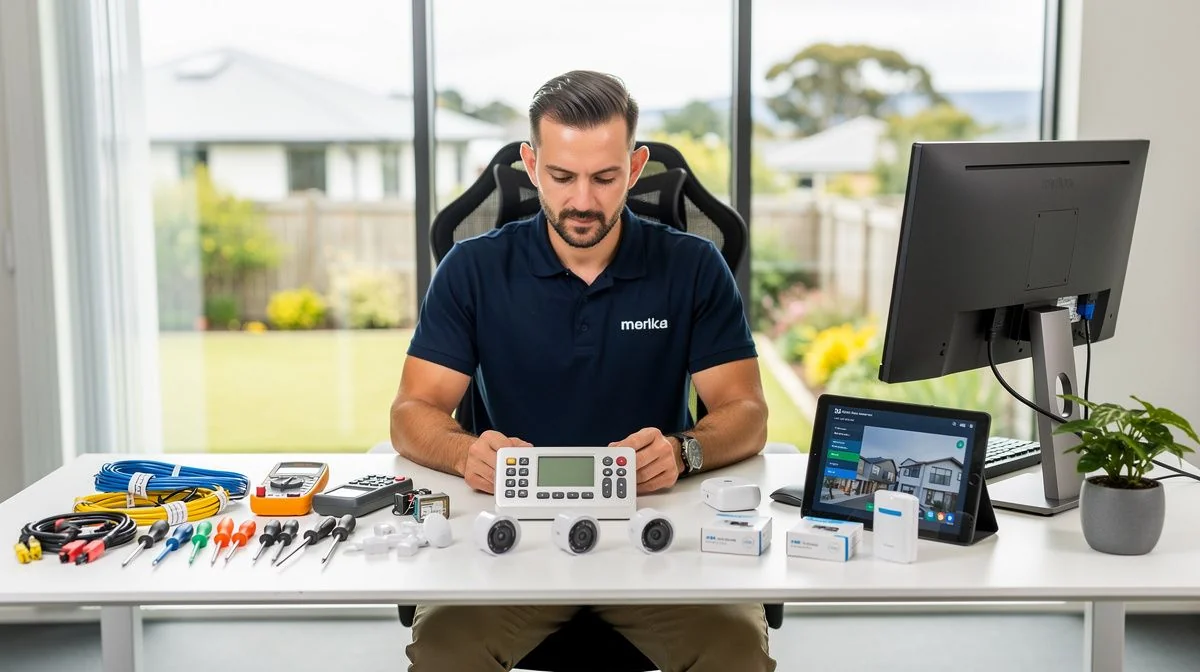
What Home Security Specialists Do and When You Might Need One
A home security specialist in New Zealand is a professional who designs, installs, and maintains security systems for residential properties. Their work goes far beyond simply mounting a camera or keypad – they assess your property’s vulnerabilities, recommend appropriate technology, and ensure everything works reliably.
You might need one if you’re building a new home, renovating, or simply upgrading an outdated alarm system. Perhaps you’ve had a break-in nearby, or you want better peace of mind while on holiday. Many homeowners also call a specialist when they need integration with smart home devices like lighting, door locks, or video doorbells.
Some specialists focus purely on alarms and sensors, while others offer comprehensive security packages including CCTV, access control, and monitored alarm services. The right choice depends on the level of risk and the complexity of your property.
Qualifications, Certifications, and Industry Bodies
In New Zealand, the security industry is regulated under the Private Security Personnel and Private Investigators Act 2010. Anyone who installs, maintains, or monitors security alarms for a fee must hold a security technician’s licence (often called a “keyholder” or “certifier” licence) issued by the Private Security Personnel Licensing Authority (PSPLA). This covers work on alarm systems that are monitored or connected to a response service.
There are different classes of licence: - Class 1 (Keyholding) – allows the holder to carry, store, and use keys to attend alarm activations. - Class 2 (Security Technician) – permits installation, maintenance, and monitoring of security systems. - Class 3 (Consultant) – for those providing security advice without hands-on installation.
Always ask to see their current licence card. You can verify a licence online through the Ministry of Justice’s licensing database.
Beyond the legal requirement, look for membership in the Security Association of New Zealand (SANZ). SANZ is the peak industry body and its members must adhere to a code of ethics and often hold relevant qualifications such as: - Certificate in Security Technology from a tertiary provider (e.g., Te Pūkenga / WelTec) - Manufacturer certifications (e.g., Bosch, DSC, Hikvision, Dahua) – these show they’ve been trained on specific equipment - Electrical Workers Registration Board (EWRB) registration if the installation involves mains-voltage wiring – many security technicians are also registered electricians
For monitored alarms, the monitoring centre must comply with AS/NZS 2201 (Intruder alarm systems) and often hold a Police-approved monitoring contract. Not all specialists offer monitoring; some only install DIY-compatible systems.
How to Choose and Vet a Home Security Specialist
Choosing the right person starts with understanding your own needs. Do you want a basic alarm siren, or a full IP camera system with remote access? Do you require 24/7 monitoring, or just audible deterrence? Write down your must-haves before approaching anyone.
Key questions to ask
- “What licences do you hold?” – Confirm a current security technician licence (Class 2 or Class 1 if keyholding is involved). Check with the PSPLA database.
- “Are you registered with SANZ?” – Membership indicates a commitment to industry standards.
- “Do you have public liability insurance?” – Minimum $1 million is standard. Also check for professional indemnity.
- “What brands do you install?” – Avoid ‘no-name’ products. Established brands like Bosch, Yale, Ajax, or Hikvision have better support.
- “Who will do the monitoring?” – If you want 24/7 monitoring, ask for the monitoring centre’s details and check it follows AS/NZS 2201.
- “What’s the warranty?” – Typically 1–2 years on parts, 1 year on labour.
- “Can you provide written quotes and contracts?” – A detailed scope of work prevents misunderstandings.
What to check
- Online reviews – Search Google and Facebook for recent feedback. Also check the SANZ website for member referrals.
- References – Ask for a couple of recent clients. A reputable specialist will happily provide them.
- Safety compliance – For hardwired systems, ask if they hold an EWRB electrical registration (or subcontract to a registered electrician). This is critical for insurance purposes.
Typical Costs and Pricing in New Zealand
Home security system costs vary widely based on the property size, technology chosen, and whether you need monitoring. Here’s a general range (prices are approximate and subject to change – always get multiple quotes):
- Basic alarm system (control panel, one keypad, two door sensors, one motion detector, siren): $400–$900 installed
- Mid-range system (plus touchscreen keypad, smartphone app, additional sensors, backup battery): $800–$1,800
- Full CCTV system (4–8 cameras, hard drive, monitor or app viewing): $1,200–$3,500 installed
- Video doorbell (wired or wireless): $250–$600 installed
- Monitored alarm monthly fee: $30–$70 per month (depends on response time and monitoring centre)
- Access control (e.g., keypad, fingerprint, or card reader for main door): $500–$2,000
What affects cost: - Wiring vs wireless – Wireless is faster to install and cheaper, but batteries need replacing. Hardwired is more reliable and may cost more initially. - Property size – More sensors, cameras, and longer cable runs add cost. - Monitoring type – Central station monitoring costs more than self-monitoring via app. - Brand and features – Premium brands with cloud storage, facial recognition, or 4G backup cost more. - Installation complexity – Concrete walls, two-storey homes, or older wiring can increase labour time.
Always request an itemised quote showing parts, labour, and any ongoing fees. Be wary of quotes that seem too cheap – they may use substandard equipment or skip critical steps like home security assessment.
Red Flags and What to Avoid
No licence or expired licence – If they can’t produce a current security technician licence, walk away. Operating without one is illegal.
Unusually low price – A quote that’s half the market average likely means inferior gear, no insurance, or rushed installation. Quality systems need proper commissioning.
Pressure to sign immediately – “This offer ends today” is a classic high-pressure tactic. Legitimate specialists let you compare quotes and think it over.
No written contract – Any work should have a signed contract detailing scope, price, payment terms, warranty, and monitoring terms (if applicable). Verbal agreements are risky.
Vague about monitoring centre – If they can’t name the monitoring centre or provide its certification, the system may not be compliant with NZ standards.
No insurance or expired insurance – Without public liability insurance, you could be liable if the technician damages your property or injures themselves.
Refuses to provide references – A common sign of a less-than-reputable operator.
Poor communication – Late responses, unclear explanations, or unwillingness to answer questions can indicate future service issues.
Tips for Getting the Best Results
-
Get three quotes – This gives you a feel for the market and helps identify outliers. Choose the middle-priced option if experience and reputation stack up.
-
Ask for a site assessment – A good specialist will visit your home, walk through every entry point, and discuss your daily routine. Beware of any quote given over the phone without a site visit.
-
Think about future expansion – Choose a system that allows adding sensors, cameras, or smart home integration later. Proprietary systems may lock you in.
-
Check the warranty and service support – Who do you call if something breaks after a year? Some companies offer ongoing maintenance packages; others don’t. Clarify this upfront.
-
Test everything before signing off – After installation, walk through the system with the technician. Test each sensor, camera, and the alarm siren. Make sure the app works on your phone.
-
Protect your privacy – If your system records video or stores data, ask about data security. Check they comply with the Privacy Act 2020 – you should know where footage is stored, who has access, and how long it’s kept.
-
Display your system – Even the best alarm is a deterrent only if people know it’s there. Install a sign or sticker from your security company.
-
Review after installation – A great specialist will follow up after a few weeks to ensure everything is still working. If they don’t, it’s a signal about their after-sales service.
This information is for general guidance only and does not constitute professional or legal advice. Always verify current licensing, insurance, and warranty details directly with the provider. For specific legal requirements, consult the Private Security Personnel Licensing Authority or a qualified professional.

The ValueHub Team built this site because finding clear, unbiased financial information in New Zealand was harder than it should be. Every guide is based on real research — we compare the actual fees, terms, and fine print so you don't have to. Our tip: shop around every year, read the policy docs, and never assume loyalty gets you the best deal.— The ValueHub Team
Try our Calculators
Use these free tools to crunch the numbers:
PAYE Calculator
Calculate your take-home pay after PAYE tax, ACC, KiwiSaver, and student loan deductions.
Compound Interest Calculator
See how your savings grow with compound interest over time. Free NZ compound interest calculator with yearly, monthly, and weekly compounding options.
Mortgage Repayment Calculator
Calculate your weekly, fortnightly, or monthly mortgage repayments. Free NZ mortgage calculator — try different rates, terms, and repayment frequencies.
Term Deposit Calculator
Calculate your term deposit returns before you lock in. Compare interest earned across different terms and rates with ValueHub's free calculator.
Savings Goal Calculator
Calculate how long it will take to reach your savings goal — and what monthly deposit you need to get there. Free NZ savings planner.
Credit Card Repayment Calculator
See how long it really takes to pay off your credit card — and how much interest you could save by paying more each month. Free NZ calculator.
Related Articles
Justices of the Peace in NZ
Need a document witnessed in NZ? Learn what JPs do, when you need one, and where to find free services for passports, declarations, and more.
guideConveyancers in NZ — What They Do vs a Property Lawyer
Licensed conveyancer vs property lawyer in NZ: cost, scope, and when to choose each for your home purchase or sale.
guideMigration Advisers in NZ — A Guide for New Migrants
Learn how licensed migration advisers can simplify your New Zealand visa application, save time, and boost approval chances with expert guidance.
guideSecurity Guards in NZ
Learn when to hire a security guard in NZ, from construction sites to events, with tips on licensing and what they do.