House Washing Services in NZ: Complete Guide
Published 30 July 2025 · Updated 14 July 2026
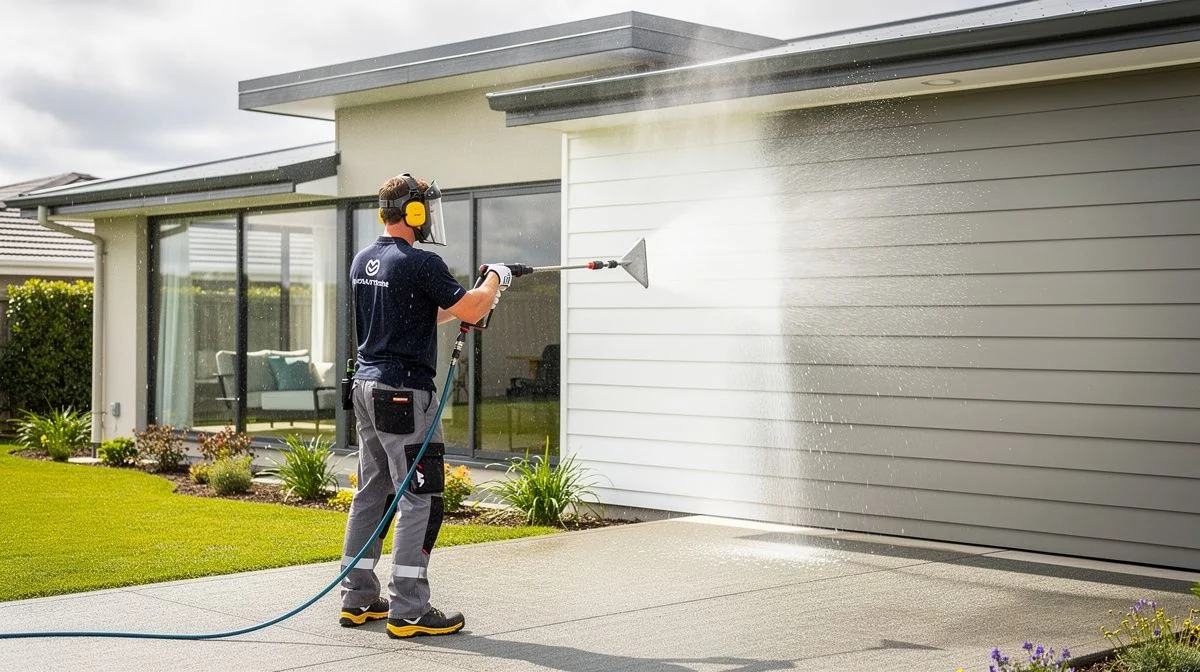
What House Washers Do in New Zealand
House washing services have become increasingly popular across New Zealand as homeowners recognise the benefits of regular exterior cleaning. A professional house washer typically offers a range of services beyond just the walls of your home. These services include roof cleaning, gutter cleaning, driveway cleaning, and often deck or patio washing.
The core of the job is removing dirt, mould, algae, moss, and lichen from building surfaces. Over time, New Zealand’s humid climate and frequent rain mean houses can develop unsightly growth that not only looks bad but can damage paint, roofing materials, and concrete. Regular washing extends the life of exterior finishes and improves curb appeal.
Soft Washing vs Pressure Washing
There are two main methods used in house washing: soft washing and pressure washing. They differ in water pressure and the use of chemicals.
Soft washing uses low water pressure (typically 100–150 psi) combined with specialist cleaning solutions – usually a mix of sodium hypochlorite (bleach) and surfactants. This method is gentle on surfaces like painted timber, plaster, and roof tiles. The chemicals kill mould and algae at the root, so growth stays away longer. Soft washing is the recommended approach for most houses in NZ because it reduces the risk of water damage to seals and windows.
Pressure washing uses high-pressure water (1000–3000 psi) to blast dirt off surfaces. It’s effective for hard, non-porous materials like concrete driveways and brick walls. However, using high pressure on softer surfaces like weatherboard, roofing, or painted timber can cause etching, strip paint, or force water behind cladding. Reputable house washers in NZ tend to use pressure washing only for driveways, patios and paths, while relying on soft washing for the house itself.
Roof cleaning often involves a low-pressure application of specialised moss and lichen killer, sometimes combined with manual scraping for heavy growth. Gutter cleaning may be done with a high-reach vacuum or by hand, and driveway cleaning usually requires a pressure washer with a rotating surface cleaner attachment.
Qualifications and Industry Bodies
New Zealand does not have a mandatory license for house washing. However, there are industry standards and training courses that reputable operators follow. The Water Blast Association of New Zealand (WBANZ) is a key industry body. While membership is voluntary, WBANZ members agree to a code of practice covering safety, environmental protection, and professional conduct. Checking if a house washer is a WBANZ member provides some assurance of quality.
Other relevant qualifications include working at heights training (required for roof and gutter cleaning above 3 metres), and knowledge of hazardous substances under NZ law. Many house washers also hold a NZQA unit standard for water blasting or cleaning, though this is not essential. The most important credentials are valid public liability insurance (at least $1 million) and a clear understanding of chemical handling and disposal rules.
How to Choose and Vet a House Washer
Choosing the right house washer in NZ comes down to asking the right questions and checking documentation. Always start by getting at least three written quotes. A professional will happily provide a clear scope of work and a fixed price. Be wary of anyone who gives a quote without seeing your property in person.
Questions to Ask
- What methods do you use for house washing? Do you soft wash or pressure wash the walls? (You want soft washing for the house.)
- What chemicals do you use, and are they safe for my gardens, pets, and water tank?
- Do you cover gutters and downpipes? Are you able to remove debris, or just flush them?
- Can you provide proof of public liability insurance? (minimum $1 million coverage)
- Do you have any references from recent NZ jobs?
- How do you protect plants and property from overspray and runoff?
Insurance Checks
Public liability insurance is non-negotiable. In NZ, an uninsured house washer could leave you liable if they damage your property, a neighbour’s property, or cause an injury. Ask to see a current certificate of insurance and note the policy number and expiry date. Also confirm that their insurance covers working at heights if they’ll be cleaning roofs or high gutters.
Typical Pricing in New Zealand
House washing costs vary by region, house size, condition, and the level of service. As a rough guide, a single-storey three-bedroom home (approx 150–200m² of wall area) with moderate mould and grime might cost $500–$800. Two-storey homes or larger properties can run $800–$1,200 or more. Roof cleaning separately adds around $300–$600 for an average house, and driveway or path cleaning is typically $150–$400 per area.
Quotes are usually calculated per square metre of wall or roof area, or as a flat fee based on the size and complexity of the job. Factors that affect cost include access difficulties (steep sections, long driveways), the type of growth (heavy lichen needs more chemical treatment), the number of storeys, and whether gutters need clearing. Travel time can also influence pricing, especially in rural parts of the North and South Islands.
Digital quoting platforms like ValueHub let you compare prices from multiple vetted providers, often free. Always get a detailed invoice that itemises the work done rather than a vague lump sum.
Red Flags – What to Avoid
Not all house washers in New Zealand are equal. Watch for these warning signs:
- Extremely low quotes. If a price is significantly below average, the operator may be cutting corners – using substandard chemicals, skipping insurance, or using high pressure on sensitive surfaces.
- No insurance or unable to produce a certificate. This is a major risk. Even minor damage (like a broken window or damaged roof tile) can cost thousands to fix.
- Promises of “no chemicals” pressure washing. Pure pressure washing without soft chemicals can strip paint, etch concrete, and force water into cavity walls. Reputable operators always use appropriate cleaning solutions.
- Vague or verbal quotes. Insist on a written quote that specifies exactly which surfaces are cleaned, the method used, and the total price.
- Pressure washing your roof. High pressure can lift roof tiles or damage tile coatings. A proper roof clean is a low-pressure chemical treatment combined with gentle rinsing.
- Not protecting plants or water tanks. Chlorine runoff can kill garden plants and contaminate drinking water tanks if not managed correctly. A professional will pre-wet foliage and cover sensitive areas.
Tips for Getting the Best Results
To make sure your house washing job goes smoothly, keep these tips in mind:
- Schedule at the right time. Late spring to early autumn (November to March) offers the best weather in most of NZ. Avoid periods of heavy rain or strong wind, as chemicals won’t work effectively and overspray can become a nuisance.
- Prepare your property. Move outdoor furniture, pot plants, and toys out of the way. Close windows and doors, and disconnect any outside electrical appliances. Let the contractor know if you have a water tank – they may need to disconnect the downpipe or use biodegradable chemicals.
- Ask about a clear water rinse. After the cleaning solution has dwelled and done its job, a thorough rinse with low-pressure water removes residue. Ensure this is included in the scope of work.
- Check for after-service guaranteed. Some professional operators offer a limited guarantee – if mould or algae reappears within a few months, they’ll retreat for free. Ask about this before hiring.
- Don’t be tempted to DIY high-pressure washing. Renting a pressure washer from a hardware store may seem cheap, but without proper technique and chemicals you risk damaging your house, voiding your insurance, or hurting yourself. Professional house washers have the training and equipment to do the job safely.
Getting multiple quotes and asking pointed questions will help you find a house washer who cleans thoroughly, respects your property, and meets NZ industry standards. Tools like ValueHub can simplify the comparison process by connecting you with verified local tradespeople.

The ValueHub Team built this site because finding clear, unbiased financial information in New Zealand was harder than it should be. Every guide is based on real research — we compare the actual fees, terms, and fine print so you don't have to. Our tip: shop around every year, read the policy docs, and never assume loyalty gets you the best deal.— The ValueHub Team
Try our Calculators
Use these free tools to crunch the numbers:
KiwiSaver Fund Comparison
Compare fees, returns, and risk levels across every KiwiSaver fund from all 31 NZ providers.
Currency Converter — USD to NZD
Convert US Dollars to New Zealand Dollars instantly. See the latest exchange rate and 30-day trend.
Mortgage Repayment Calculator
Calculate your weekly, fortnightly, or monthly mortgage repayments. Free NZ mortgage calculator — try different rates, terms, and repayment frequencies.
Compound Interest Calculator
See how your savings grow with compound interest over time. Free NZ compound interest calculator with yearly, monthly, and weekly compounding options.
Term Deposit Calculator
Calculate your term deposit returns before you lock in. Compare interest earned across different terms and rates with ValueHub's free calculator.
Savings Goal Calculator
Calculate how long it will take to reach your savings goal — and what monthly deposit you need to get there. Free NZ savings planner.
Related Articles
When to Hire an Accountant for Your Personal...
Wondering when to hire an accountant for personal finances in NZ? Discover key triggers like rental property or self-employment.
guideHow Much Does an Accountant Cost in New Zealand?
Compare accountant fees in NZ with typical costs for tax returns, bookkeeping, and hourly rates to budget wisely for your needs.