How to Hire a Pest Controller in NZ
Published 18 August 2025 · Updated 14 July 2026
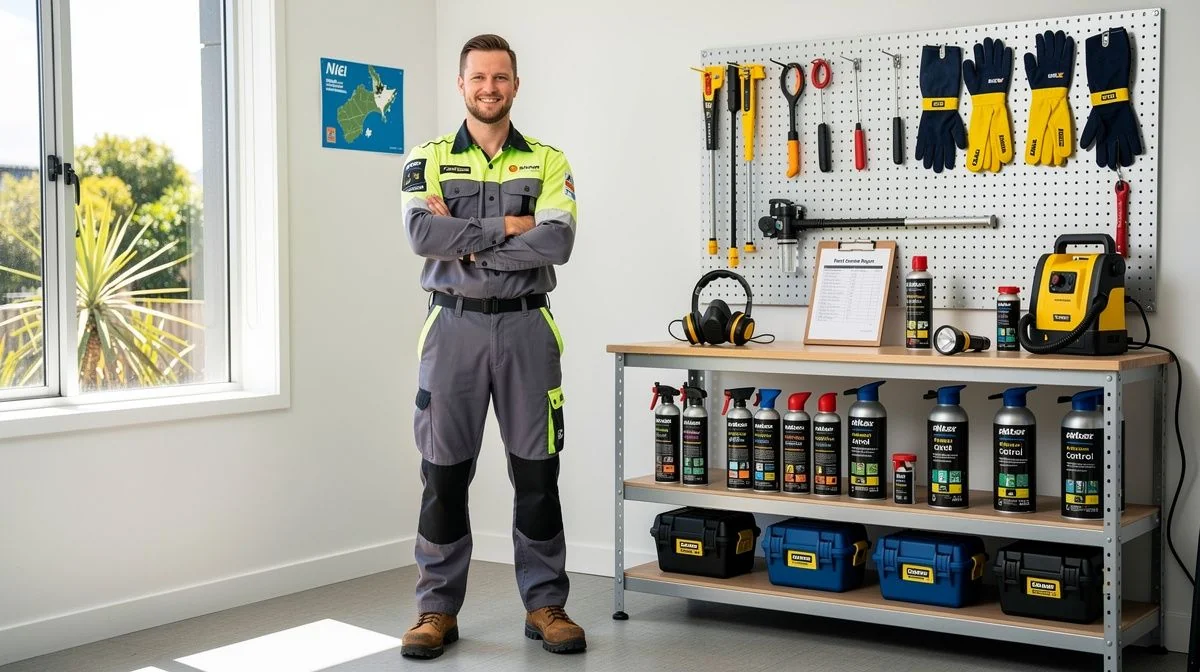
What Pest Controllers Do and When You Might Need One
Pest controllers identify, manage, and eliminate unwanted insects, rodents, birds, and other pests that threaten your property, health, or food supply. In New Zealand, common pests include cockroaches, rats, mice, ants, fleas, wasps, spiders, termites, and — in rural or semi-rural areas — possums, stoats, and rabbits.
You might need a professional if you notice signs of an infestation such as droppings, chewed wiring, gnawed food packaging, or unexplained scratching in walls. A single mouse or cockroach can quickly become an infestation when the conditions are right, so prompt action often saves money and stress.
Pest control also plays a key role in protecting New Zealand’s unique environment. Pests like the Argentine ant, German wasp, and stoat cause serious harm to native wildlife and agriculture. A licensed operator will know how to handle these pests without breaking biosecurity or environmental regulations.
Qualifications, Certifications, and Industry Bodies
Unlike electricians or plumbers, pest controllers in New Zealand are not required by law to hold a single national licence. However, several industry bodies and regulatory frameworks set high standards that consumers should look for.
New Zealand Pest Management Association (NZPMA)
The NZPMA is the main industry body for pest management professionals. It runs a voluntary certification scheme called the Certified Pest Control Operator (CPCO) programme. A CPCO-certified technician has passed assessments on pest biology, chemical safety, application techniques, and environmental best practice. Look for the CPCO logo on a company’s website or van.
Approved Handler Certification (HSNO Act)
If the pest control job involves using vertebrate toxic agents — poisons for possums, rats, or rabbits — the operator must hold an Approved Handler certificate under the Hazardous Substances and New Organisms (HSNO) Act. This is a legal requirement, not optional. Ask your contractor whether they need an Approved Handler for the chemicals they plan to use, and request to see their certificate if so.
Agricultural Compounds and Veterinary Medicines (ACVM) Act
All pesticides and vertebrate poisons sold in New Zealand must be registered under the ACVM Act. A reputable pest controller will only use approved products and will keep up to date with label changes and withdrawal notices. You can check an operator’s knowledge by asking how they decide which product to use for a specific pest.
Health and Safety at Work Act
Pest control chemicals can be hazardous to people, pets, and the environment. A professional operator should have a clear health and safety plan, including how they manage exposure risks, notifying neighbours if necessary, and disposing of waste. Ask for a copy of their safety data sheets if you’re concerned.
Insurance
Always check that the pest controller carries public liability insurance. This protects you if a chemical accidentally damages your carpets, furnishings, or landscaping, or if a pet is accidentally poisoned. Any professional operator will be happy to show you their certificate of insurance.
How to Choose and Vet a Pest Controller
Choosing a pest controller isn’t just about price. The wrong operator can make an infestation worse, misuse chemicals, or cause compliance problems if you run a business such as a café, rest home, or food production facility.
Key Questions to Ask
- Do you hold CPCO certification or are you a member of the NZPMA?
- Do you carry public liability insurance? Can I see the certificate?
- Will you provide a detailed written quote that lists the chemicals to be used, the areas to be treated, and the number of follow-up visits?
- For vertebrate pest work: do you have an Approved Handler certificate?
- What guarantee or warranty do you offer on the treatment? (Many companies offer a re-treatment guarantee if the pest returns within a certain period.)
- How do you prepare my home or business before treatment? (e.g., do I need to cover food, remove pets, or stay away for a few hours?)
- Do you use integrated pest management (IPM) techniques — a combination of baiting, trapping, exclusion, and chemical use — rather than just spraying?
What to Check Online
Look up the company on the NZPMA find-a-member directory. Read recent customer reviews on Google or Facebook, but be wary of fake reviews or a sudden cluster of five-star ratings. Check whether the company has been involved in any enforcement action from organisations like the Environmental Protection Authority (EPA) or WorkSafe NZ.
Typical Costs and Pricing in NZ
Pest control pricing in New Zealand varies widely depending on the type of pest, the size of the property, the severity of the infestation, and the number of visits required. There is no single fee schedule, but patterns are clear.
- One-off standard treatment for common household pests (e.g., spiders, ants, cockroaches): $150–$350 for an average three-bedroom home. This usually includes an inspection, internal spray, and external barrier treatment.
- Rat and mouse control: $200–$500 for the first visit, which includes bait stations and exclusion work. Follow-up visits to replenish bait or remove carcasses cost $80–$150 each.
- Whole-of-property termite inspection and treatment: $400–$800 for an inspection, with treatment costs ranging from $1,500 to $6,000 depending on the size and construction of the house and the method used (e.g., baiting system vs. chemical soil barrier).
- Wasp nest removal: $100–$250 per nest. Hard-to-reach nests (e.g., inside wall cavities or high on a roof) cost more.
- Commercial contracts (e.g., for cafés, hotels, food factories): $150–$400 per visit, with quarterly or monthly arrangements common. A full year contract may cost $600–$2,000.
Costs also depend on your location. Travel fees are more common in rural or remote areas, and some companies add a surcharge for after-hours or weekend work. Always get a written quote that itemises the inspection fee, treatment cost, and any follow-up visits.
Red Flags and What to Avoid
A few warning signs should make you walk away:
- No written quote or contract. Any legitimate operator provides a clear scope of work and a fixed price before starting.
- Unwilling to show insurance or certification. If they dodge the question, find someone else.
- Pressure tactics or “special price today”. Reputable businesses let you take time to decide.
- Vague about chemicals. If they won’t tell you what they’re using or how much, you can’t assess risks to your family or pets.
- Cash-only and no GST receipt. This is a hallmark of unregistered operators who may not have insurance or any qualifications.
- Guarantees that seem too good. Nobody can promise you’ll never see another bug again anywhere. A reasonable guarantee covers re-treatment if the same pest returns within a given timeframe.
- No knowledge of New Zealand’s regulations. If they can’t explain the HSNO Approved Handler requirement or the ACVM product approval, they probably cut corners.
Tips for Getting the Best Results
You have a big part to play in ensuring the treatment works and stays effective.
Prepare Your Property
Follow the contractor’s preparation instructions carefully. This may mean covering or removing food, washing dishes, moving furniture away from walls, and closing windows just before treatment. For flea or bed bug treatments, you may need to vacuum thoroughly beforehand and wash bedding on a hot cycle.
Aftercare
After the initial treatment, don’t immediately clean spray residues from baseboards or entry points — the chemical needs time to work. Ask exactly how long to wait before wiping down surfaces. Keep an eye out for activity and report any signs promptly; early follow-up visits are usually cheaper than a full re-treatment.
Prevention
A good pest controller will also give you tips on preventing future infestations: sealing cracks, fixing leaky pipes, trimming vegetation away from the house, and storing food in airtight containers. If you’re on a regular service plan, use the period between visits to address these maintenance items.
Integrated Pest Management
Ask if the company uses an IPM approach. This means they start with monitoring and non-chemical methods (traps, exclusion) and only use chemicals as a targeted last resort. IPM is often more effective in the long run and safer for children, pets, and the environment.
Keep Records
Save your invoices, service reports, and any product information sheets. If you ever sell your property, these records can reassure potential buyers that pest issues have been professionally managed. For business owners, they are essential for food safety audits or compliance with the Ministry for Primary Industries (MPI) rules.

The ValueHub Team built this site because finding clear, unbiased financial information in New Zealand was harder than it should be. Every guide is based on real research — we compare the actual fees, terms, and fine print so you don't have to. Our tip: shop around every year, read the policy docs, and never assume loyalty gets you the best deal.— The ValueHub Team
Try our Calculators
Use these free tools to crunch the numbers:
KiwiSaver Fund Comparison
Compare fees, returns, and risk levels across every KiwiSaver fund from all 31 NZ providers.
Currency Converter — USD to NZD
Convert US Dollars to New Zealand Dollars instantly. See the latest exchange rate and 30-day trend.
Mortgage Repayment Calculator
Calculate your weekly, fortnightly, or monthly mortgage repayments. Free NZ mortgage calculator — try different rates, terms, and repayment frequencies.
Compound Interest Calculator
See how your savings grow with compound interest over time. Free NZ compound interest calculator with yearly, monthly, and weekly compounding options.
Term Deposit Calculator
Calculate your term deposit returns before you lock in. Compare interest earned across different terms and rates with ValueHub's free calculator.
Savings Goal Calculator
Calculate how long it will take to reach your savings goal — and what monthly deposit you need to get there. Free NZ savings planner.
Related Articles
Complete Guide to Hiring a Real Estate Agent in NZ
Learn how to hire the right real estate agent in New Zealand. Know the qualifications, costs, red flags, and tips for sel...
guideHow to hire a roofer in NZ
Learn what to look for when hiring a roofer in New Zealand. Find out about qualifications, costs, red flags, and tips for...