NZ Solar Installer Hiring Guide
Published 26 August 2025 · Updated 14 July 2026
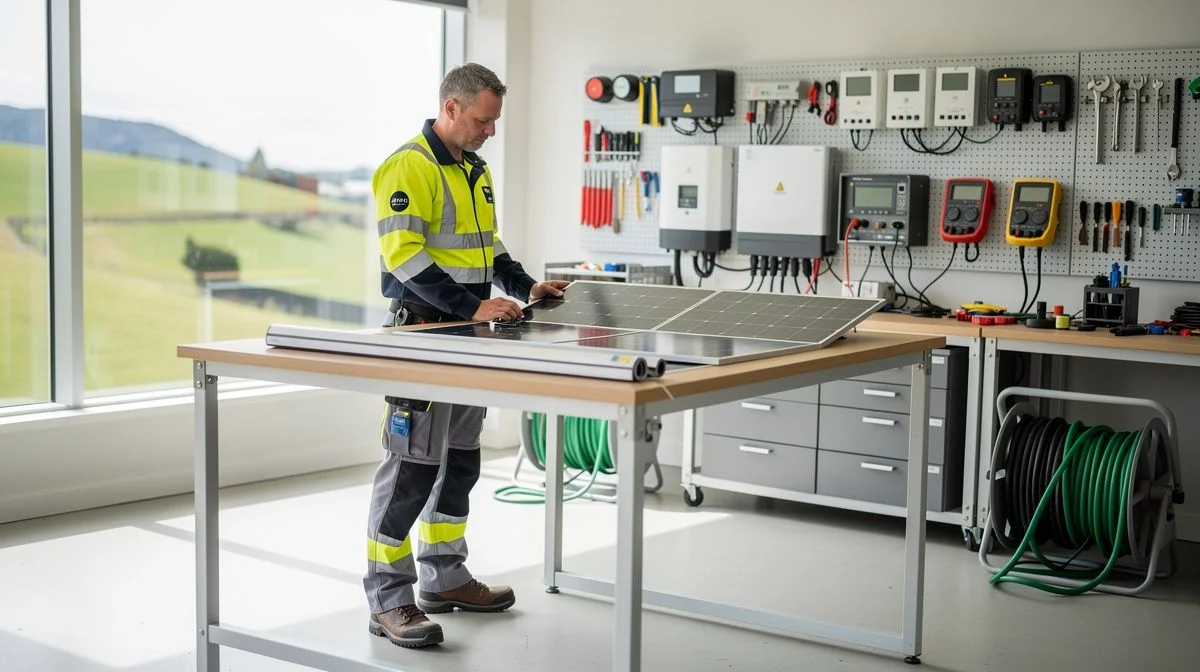
What Solar Panel Installers Do and When You Might Need One
Solar panel installers design, mount, and connect photovoltaic (PV) systems that turn sunlight into electricity. In New Zealand, these professionals typically handle everything from roof assessment and panel placement to electrical wiring and connection to the grid (or battery storage). You might need an installer if you want to reduce your power bills, increase your property’s energy independence, or take advantage of the country’s growing solar-friendly policies.
Most residential systems in New Zealand range from 3 to 6 kilowatts, though commercial installations can be much larger. A good installer will also help you navigate local network distributor requirements and any available government incentives, such as those offered by the Energy Efficiency and Conservation Authority (EECA). Whether you’re building a new home or retrofitting an existing one, a professional solar installer ensures your system is safe, efficient, and compliant with New Zealand’s electrical regulations.
Qualifications, Certifications, and Industry Bodies
Solar installation in New Zealand sits at the intersection of electrical work, construction, and roofing. Because any system connected to the mains supply involves electrical wiring, the person doing that part must be a registered and licensed electrician under the Electrical Workers Registration Board (EWRB). You can verify an electrician’s licence online at the EWRB website.
Beyond the basic electrical licence, look for installers who are members of the Solar Industries Association of New Zealand (SIA NZ) or the Sustainable Energy Association of New Zealand (SEANZ). Both bodies offer voluntary accreditation schemes that require members to follow a code of practice, undertake ongoing training, and maintain public liability insurance. While these accreditations aren’t mandatory by law, they demonstrate a commitment to industry standards.
Another important document is the New Zealand Electrical Code of Practice for Grid-Connected PV Systems (NZECP 35). This code outlines the technical requirements for grid-tied solar installations — from inverter specifications to earthing and labelling. A reputable installer will be familiar with NZECP 35 and ensure your system complies.
For roof penetration work (such as attaching brackets), some installers also hold a Licensed Building Practitioner (LBP) card, especially if the installation affects the building’s weathertightness. While not always required, an LBP certification adds another layer of accountability.
Quick checklist of credentials to ask about: - Current EWRB electrical licence (for the electrician on the job) - Membership of SIA NZ or SEANZ - Public liability insurance (typically $1–2 million cover) - Experience with your roof type (iron, tile, membrane, etc.) - Familiarity with your local network distributor’s connection requirements
How to Choose the Right Solar Panel Installer
Choosing a solar installer isn’t just about the cheapest quote — it’s about finding a company that will stand behind its work for decades. Panels can last 25 years or more, so you need someone who will still be in business and willing to honour warranties.
Start by asking for recommendations from neighbours who already have solar, or search the member directories of SIA NZ and SEANZ. Avoid relying solely on online reviews, as some can be paid or fake. Instead, ask each candidate for at least three recent references from local jobs.
When you speak to potential installers, ask these questions: - What electrical licence do you hold, and can you provide the EWRB number? - Do you subcontract the electrical work, or is it done in-house? (In-house is generally better for accountability.) - What brand of panels and inverters do you use, and why? (Look for Tier 1 manufacturers with proven track records in New Zealand’s climate.) - How do you handle roof penetrations to prevent leaks? (A good installer will explain flashing kits and sealants.) - What warranty do you offer on workmanship, and for how long? (Two to five years is common.) - Will you handle the grid connection paperwork with my electricity distributor? (Most reputable installers do this as part of the service.)
Also request a written site assessment that includes shading analysis (often done with a tool like Solmetric SunEye or a drone), roof orientation and tilt, and estimated annual generation. Beware of anyone who gives you a quote without visiting your property.
Typical Costs and Pricing in New Zealand
Solar system pricing in New Zealand varies widely depending on system size, equipment quality, roof complexity, and location. As a general guide, a typical 3–4 kW residential system costs between $5,000 and $12,000 installed, before any government subsidies or grants. Larger systems (6–8 kW) can range from $10,000 to $20,000.
The main cost components include: - Solar panels – roughly 30–40% of total cost - Inverters – around 15–20% (microinverters cost more than string inverters) - Mounting and racking – 10–15% - Labour and electrical work – 20–30% - Battery storage (optional) – adds $5,000–15,000
Factors that affect pricing: - Roof type: A tile roof is typically easier to work on than a steep iron roof or complex membrane roof. - Access: Difficult-to-reach roofs may require scaffolding, adding cost. - Panel orientation: North-facing roofs are ideal, but east/west split arrays can sometimes be more expensive to install. - Distributor fees: Some network companies charge for meter upgrades or connection approvals ($200–500).
Always get at least three itemised quotes to compare. A very low quote may indicate cheap panels, unlicensed work, or skimped safety — none of which are worth the risk.
Red Flags and What to Avoid
Solar is a long-term investment, so watch for these warning signs:
- High-pressure sales tactics — “Sign today and get 50% off!” or “This offer ends tomorrow.” Reputable companies give you time to compare.
- No physical site visit — A quote based on Google Maps alone cannot account for shading, roof condition, or structural requirements.
- Unlicensed electrical work — If the installer says they don’t need a licensed electrician because “the panels are just DC,” run the other way. Any grid-connected system requires a registered electrician.
- Vague or missing warranties — A workmanship warranty of less than two years is a red flag. Also check that the panel and inverter warranties are from the manufacturer, not just the installer.
- “Free solar” or lease-to-own offers — These contracts can be complex and may lock you into unfavourable terms. Understand exactly what you’re signing.
- No mention of the network distributor — Every grid-connected system must be approved by your local lines company. If the installer doesn’t bring up this requirement, they may be cutting corners.
If you feel pressured, walk away. A trustworthy installer will respect your need to do your homework.

The ValueHub Team built this site because finding clear, unbiased financial information in New Zealand was harder than it should be. Every guide is based on real research — we compare the actual fees, terms, and fine print so you don't have to. Our tip: shop around every year, read the policy docs, and never assume loyalty gets you the best deal.— The ValueHub Team
Try our Calculators
Use these free tools to crunch the numbers:
PAYE Calculator
Calculate your take-home pay after PAYE tax, ACC, KiwiSaver, and student loan deductions.
Compound Interest Calculator
See how your savings grow with compound interest over time. Free NZ compound interest calculator with yearly, monthly, and weekly compounding options.
Mortgage Repayment Calculator
Calculate your weekly, fortnightly, or monthly mortgage repayments. Free NZ mortgage calculator — try different rates, terms, and repayment frequencies.
Term Deposit Calculator
Calculate your term deposit returns before you lock in. Compare interest earned across different terms and rates with ValueHub's free calculator.
Savings Goal Calculator
Calculate how long it will take to reach your savings goal — and what monthly deposit you need to get there. Free NZ savings planner.
Credit Card Repayment Calculator
See how long it really takes to pay off your credit card — and how much interest you could save by paying more each month. Free NZ calculator.
Related Articles
Justices of the Peace in NZ
Need a document witnessed in NZ? Learn what JPs do, when you need one, and where to find free services for passports, declarations, and more.
guideConveyancers in NZ — What They Do vs a Property Lawyer
Licensed conveyancer vs property lawyer in NZ: cost, scope, and when to choose each for your home purchase or sale.
guideMigration Advisers in NZ — A Guide for New Migrants
Learn how licensed migration advisers can simplify your New Zealand visa application, save time, and boost approval chances with expert guidance.
guideSecurity Guards in NZ
Learn when to hire a security guard in NZ, from construction sites to events, with tips on licensing and what they do.