NZX Explained: How the New Zealand Sharemarket Works
Published 16 November 2026 · Updated 17 November 2026 · Written by the ValueHub team · Reviewed by Steve Baron

NZX Explained: How the New Zealand Sharemarket Works
Most people picture a stock exchange as a room full of people shouting at each other. The NZX hasn’t looked like that in a long time. What it actually is, is a rulebook, a matching engine, and a settlement system — and almost everything that matters happens after the trade, not during it.
That distinction is not academic. The part of the NZX that decides whether the shares are really yours, and who carries the risk if the other side of your trade never pays, sits several layers behind the button you tap on your phone.
So this guide follows one ordinary purchase through the whole process. Two thousand dollars, one company, start to finish.
How We Researched This Guide
Everything structural here comes from primary sources rather than secondary summaries. The market descriptions, participant lists and trading sessions are from NZX’s own operator pages and investor FAQ. The clearing and depository structure is from NZX Clearing’s documentation, including its own description of the settlement system and its designation under the Financial Market Infrastructures Act.
The continuous disclosure obligation is quoted from the NZX Listing Rules and its accompanying guidance note. RegCo’s enforcement powers are from NZ RegCo’s published enforcement material.
The index mechanics — float adjustment, the five per cent strategic-holding exclusion, quarterly rebalancing and the liquidity tests — are taken from S&P Dow Jones Indices’ S&P/NZX methodology, not from a fund manager’s summary of it. The CSN and FIN definitions are from the registries’ own investor guidance.
Every figure in the tables comes from NZX’s monthly shareholder metrics, using the October 2026 release as the most recent complete month at the time of writing. Anything we could not trace to an exchange, regulator, registry or index provider source was left out rather than estimated.
ValueHub's Trusted Providers
We've researched the providers below — here are our picks for this category.

Simplicity is a nonprofit KiwiSaver and investment fund manager charging 0.25% p.a. across all six KiwiSaver funds. 100% owned by the Simplicity Foundation, a registered charity. Over 190,000 members. Seven rounds of fee cuts since launch in 2016. 15% of management fees are donated to NZ charities. Founded by Sam Stubbs (ex-Tower Investments CEO, Goldman Sachs).
The Quick Summary (60-Second Version)
If you read nothing else, read this.
- One operator runs four separate markets: the Main Board (NZSX) for equities and funds, the Debt Market (NZDX) for bonds, the Fonterra Shareholders’ Market under its own rulebook, and the derivatives markets.
- Across all of them, market capitalisation was $244,472m — 53.5 per cent of GDP.
- The trading day moves through six states, from a read-only enquiry phase overnight through to a closing auction.
- Eight firms make up the entire cash market clearing panel, and most consumer platforms are either one of those eight or a front end built on top of one.
- Cash trades settle T+2 — trade date plus two business days — through a central counterparty and a central securities depository.
- The NZX 50 is float-adjusted and strips out strategic holdings of five per cent or more, so it measures what can actually be traded rather than what exists.
Following One Order Through the Machine
You decide to buy $2,000 of a company on the Main Board. You tap buy on your platform, and the order disappears into a screen. It has actually entered a chain of four different businesses, each doing a different job.
The first is your broker or platform. If it is an NZX participant in its own right, it is directly answerable to the exchange for how it handles that order. If it is not, it is a client of a participant, and the participant carries the obligation. Either way, a real, named business is on the hook for the order being accurate and for your money being where it should be.
The second is the market itself. Your order joins a queue of bids and offers. It does not trade until someone is willing to sell at your price, or you are willing to lift theirs. When the two meet, a trade prints. That is the moment most people think the transaction is finished.
It is not. The third business is the clearing house, which steps between you and the seller and becomes the counterparty to both sides. The fourth is the depository and the registry, which move the shares and record ownership.
Only after the fourth does the company know your name.
What the NZX Actually Operates
The NZX Limited runs more than a share market. Four separate sets of listing rules sit under one operator.
The NZX Main Board, known as NZSX, is where companies and listed funds quote. The NZX Debt Market, NZDX, is where bonds and other debt securities quote. The Fonterra Shareholders’ Market operates under its own rulebook because Fonterra’s cooperative structure does not fit the standard model.
Then there are derivatives. Equity futures and options trade on the derivatives market, and the dairy derivatives market is the international reference point for milk price risk. Energy and environmental contracts sit alongside them.
Worth saying plainly, because it is widely assumed otherwise: the NZX does run a derivatives market. It is not a share-only exchange.
It is also worth knowing what the exchange is not. In its own words, NZX acts solely as a market operator. It does not vet whether a company is a good investment, does not guarantee a dividend, and does not intervene in your decision. It operates the venue and enforces its rules.
Here is what is actually quoted across those markets, from the exchange’s most recent monthly shareholder metrics.
| Market | Securities quoted | Market capitalisation |
|---|---|---|
| NZX Main Board (NZSX) — equities and funds | 173 | $191,069m |
| NZX Debt Market (NZDX) — retail and wholesale debt | 137 | $53,403m |
| Other securities | 5 | $8m |
| Total, all markets | 315 | $244,472m |
That is 197 unique issuers. Total market capitalisation works out at 53.5 per cent of GDP, which shows how much of the New Zealand economy is priced on this venue every day.
The Trading Day, Session by Session
The market is not simply open or shut. It moves through six states, and the edges of the day are where retail orders behave unexpectedly.
| Time (NZT) | Session | What can happen |
|---|---|---|
| 5:30pm – 8:30am | Enquiry | Read-only. Orders cannot be entered, amended or deleted |
| 8:30am | Pre-open | Orders placed, amended and deleted. No trading. Overlapping bids and offers are normal |
| 10:00am, give or take 30 seconds | Opening auction | A single price prints, chosen to trade the greatest volume |
| 10:00am – 4:45pm | Continuous trading | Trades occur as bids and offers meet. Off-market trades can be reported |
| 4:45pm | Pre-close | Orders managed, no off-market reporting |
| 5:00pm, give or take 30 seconds | Closing auction | Final single-price print, and the day’s official close |
Those two auctions do more work than their brevity suggests. They concentrate a day’s worth of pent-up interest into one price, which is why a large order sent to the closing auction can clear without walking the price down through the afternoon. That is also why the official close—the number every index fund, KiwiSaver scheme and managed fund is priced against—is set at 5pm rather than 4:45pm, when continuous trading stops.
The auction time is deliberately random within a 30-second window. That is an anti-gaming measure. If you knew the exact second, you could position just ahead of it.
Who Is Actually in the Room
NZX accredits market participants in several capacities, and the distinction matters when something goes wrong. An advising participant can give advice on securities. A trading participant can execute. A clearing participant can settle. A depository participant can hold securities in custody. Market makers quote continuously, and sponsors bring issuers to market.
One participant can hold several of those accreditations, or only one.
For cash-market clearing, the panel is short. Eight businesses clear and settle on-market cash trades: ASB Securities, Craigs Investment Partners, Forsyth Barr Capital Markets, Jarden Securities, Macquarie Securities, CMC Markets Stockbroking, Sharesies, and UBS New Zealand.
Eight. That is the whole cash clearing panel for the country.
It explains something that surprises people. Most “brokers” you can open an account with are not separate brokers at all. They are either one of those eight or a front end built on top of one. When you place an order through a smaller platform, a clearing participant somewhere behind it carries your instruction into the market.
Settlement, and the Two Days You Do Not See
New Zealand cash trades settle on a T+2 basis — trade date plus two business days. That has been the cycle since the settlement system was rebuilt around a central counterparty, bringing the local market into line with Australia and the wider Asia-Pacific region.
The structure is two companies working together. New Zealand Clearing Limited operates the central counterparty. New Zealand Depository Limited operates the central securities depository, with a separate nominee company holding legal title to the securities in the depository. Together, they form the settlement system, designated under the Financial Market Infrastructures Act and jointly overseen by the Reserve Bank and the Financial Markets Authority.
This layer makes a share trade with a stranger safe. From the moment your trade matches until it settles, the clearing house is your counterparty, not the person on the other side. If they default, the clearing house must manage it through margin and a default fund, not you.
New Zealand dollar settlement runs through the Reserve Bank’s real-time gross settlement system, and the depository interoperates with NZClear for transfers. None of that is visible to you, and it is all doing the work.
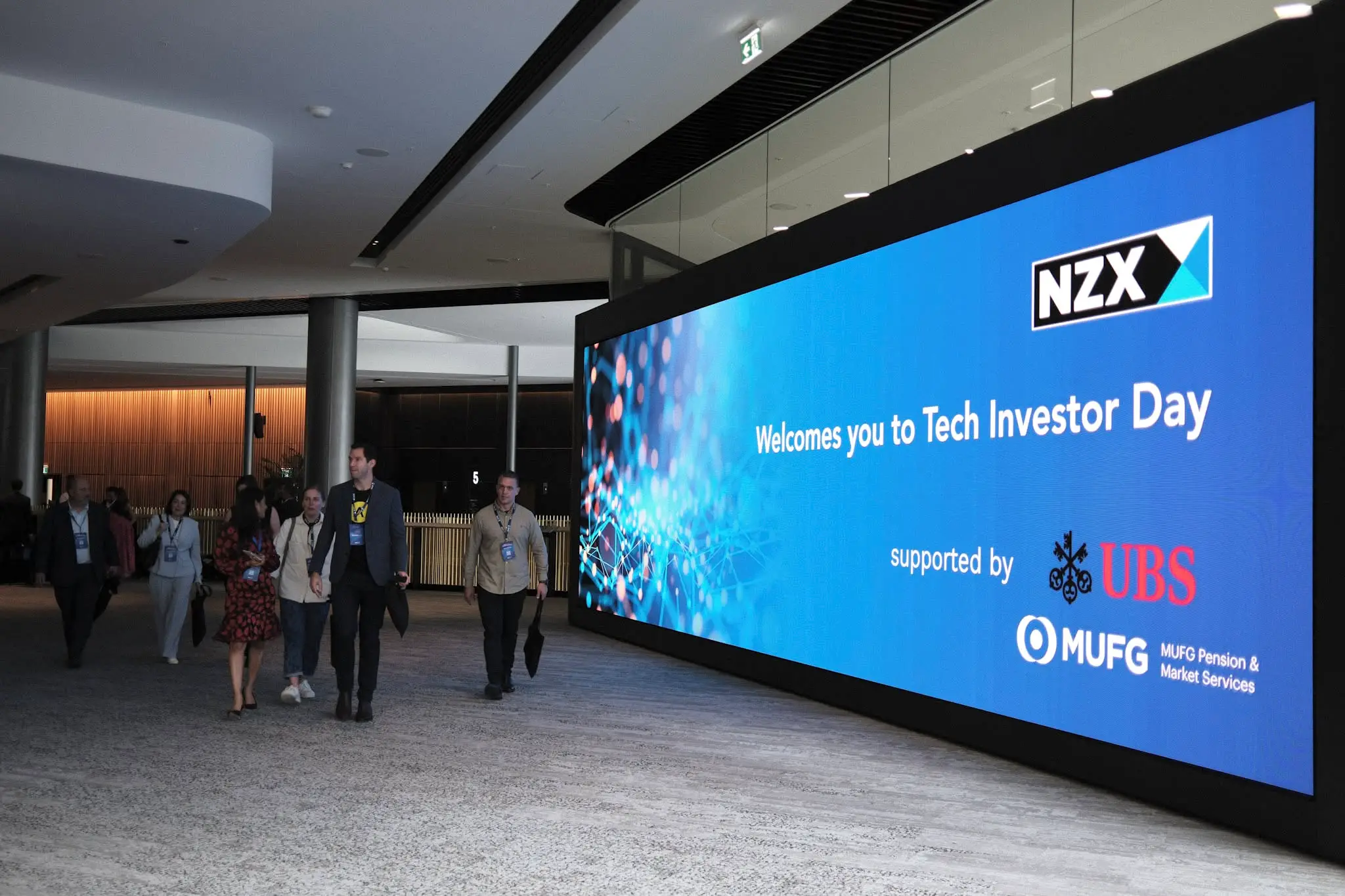
What you do see is the registry. Your holding is recorded on the issuer’s share register, maintained by a registrar — Computershare, Link Market Services and MUFG Pension & Market Services are the main ones in this market. Your identifier is a Common Shareholder Number, a nine-digit number that follows you across every NZX-listed security and every registry. Alongside it is a Faster Identification Number, a four-digit authorisation code you give your broker when you trade.
A CSN and a FIN are not paperwork. They are the evidence that you, specifically, own the shares. Treat them like a bank card and PIN, because functionally that is what they are.
Who Polices the Market
Two regulators, with different jobs.
NZ RegCo is the NZX group’s dedicated regulatory company. It monitors and enforces compliance with the market rules by issuers and by participants — the listing rules on one side, the participant and derivatives rules on the other. Its toolkit runs from an obligations letter for a minor first breach, through infringement notices capped at $10,000, up to additional requirements, trading halts and suspensions, cancellation of a listing, and referral to the NZ Markets Disciplinary Tribunal.
The Financial Markets Authority is the co-regulator under the Financial Markets Conduct Act, covering continuous disclosure, market manipulation and insider trading. Where a matter crosses into that territory, NZ RegCo can refer it.
The rule that does most of the everyday work is Listing Rule 3.1.1. Once an issuer becomes aware of material information about itself, it must release that information promptly and without delay through the market announcement platform, and must not disclose it to anyone else first.
That single rule is why the announcement feed exists, and why it is not a news service. By law, every price-sensitive statement a listed company makes arrives there first, before it reaches a journalist or an analyst.
It is also why a trading halt is usually unremarkable. Usually, a stock stops trading because the company is about to announce something, and the announcement has to land before the shares move. The halt is the system working.
The NZX 50, and What It Actually Measures
The S&P/NZX 50 is the benchmark most people mean when they say “the market”. It includes the fifty largest eligible companies on the Main Board, weighted by float-adjusted market capitalisation.
Two words in that phrase carry all the weight. Float-adjusted means the weighting counts only shares genuinely available to public investors. Strategic holdings above five per cent — founders, directors, corporates, government — are stripped out. Market capitalisation means a company’s influence is proportional to its size, not to its share price.
That last point is the one most often got wrong. The NZX 50 is not price-weighted. A company with a high share price and a small free float carries less weight than one with a low share price and a large float, because what counts is the dollar value of the shares available to the public — not the number printed on the screen.
Constituents are reviewed quarterly, and liquidity tests are in place on the way in. A stock needs relative liquidity above half the market’s, and absolute liquidity above 2.5 per cent, measured over six months. Persistent failure gets a company removed, which is why the index is not simply the fifty biggest names.
There is also a Portfolio version that caps any single constituent at five per cent, so it behaves quite differently from the headline index when the largest few companies run. Beyond those two, the S&P/NZX family includes the 10, the 20, MidCap, SmallCap, All, Real Estate Select and Primary Sector indices, plus an equal-weight real estate series.
For scale on returns, NZX puts the S&P/NZX 50’s annualised return over the past ten years at 7.92 per cent.
The Liquidity Problem, in One Number
The average on-market trade across the NZX cash market is about $1,372. That is a typical trade, not a typical investor’s annual activity — but it tells you what the order book is built to handle.
Daily average value traded sits around $144 million, against a market worth $244 billion. For a venue carrying more than half the country’s GDP in listed value, that is thin.
Three things follow, and all of them cost money if you ignore them.
The first is spread. On a small or mid-sized NZX company, the gap between the best bid and the best offer can be wide enough that you are down on paper the moment you buy. On the largest names, it is trivial; further down the index, it is not.
The second is market impact. An order that is large relative to a stock’s normal daily volume will move the price against you as it fills. That is not manipulation; it is arithmetic.
The third is the exit problem. In a genuine panic, buyers step back before sellers do. A holding you could not sell at a reasonable price is not worth its last quoted price.
The cause is structural rather than a failure of the exchange. New Zealand companies tend to be closely held, many of the largest have small free floats, and the local investor base is heavily weighted towards long-term holders who do not trade. Thin liquidity is the price of a small, concentrated market.
What You Are Actually Buying
Three quite different things are quoted under one roof, and the difference only becomes obvious when a company gets into trouble.
Shares are equity. You own a slice of the business, and you are paid last. Dividends are discretionary, and in a wind-up shareholders rank behind everyone.
Listed funds — including exchange-traded funds (ETFs) — are units in a managed vehicle that holds a basket of assets. You are buying the basket, and the manager’s fee comes out of it whether the basket rises or falls.
Debt securities on NZDX are loans. You are a creditor, ranking ahead of shareholders, and your return is contractual rather than discretionary.
One more piece of housekeeping. NZX Limited is itself listed on its own Main Board under the code NZX, and has been since June 2003. Buying it gives you exposure to the exchange business — its data, its listings, its funds management software — not to the New Zealand sharemarket as a whole. Those are two different investments, and people regularly confuse them.
On dividends, one local detail is worth knowing. New Zealand companies generally attach imputation credits to dividends, which means the company has already paid tax on that money and you get a credit for it. Offshore dividends arrive without that credit. A headline yield from an overseas stock and the same yield from a New Zealand one are not the same after tax, and the gap is not small.
Ways In, and What Each One Costs You
There are two real routes to the Main Board, and they are not competing versions of the same thing.
A full-service broker is normally an advising and trading participant. You get research, someone to talk to, and help with the decision — and you pay for that in brokerage, often with a minimum ticket size that makes small purchases uneconomic.
A platform is execution only. Lower minimums, lower fees, and the entire decision rests with you. If the platform is not itself a participant, it sits on top of one, which is worth knowing but does not change your protections.
Questions You Might Have
Why does a trade take two days to settle?
Because the money and the shares do not move at the same moment as the match. New Zealand cash trades settle on a T+2 basis, trade date plus two business days, and the system sitting between the two sides is two companies working together: New Zealand Clearing Limited runs the central counterparty, and New Zealand Depository Limited runs the central securities depository. That layer is what makes a trade with a stranger safe, because from the moment your trade matches, the counterparty stands between you and the other side.
If my platform is not an NZX participant, am I less protected?
Not in the way that matters here. A platform that is not a participant is a client of one, and the participant carries the obligation for how your order is handled. When you place an order through a smaller platform, a clearing participant behind it carries that instruction into the market, so the accountability sits with a named business either way.
What does the NZX 50 actually measure?
Float-adjusted market capitalisation, not the size of the companies as listed. Strategic holdings of five per cent or more are excluded, the index rebalances quarterly, and it applies liquidity tests. What it reflects is the part of each company that can actually be bought and sold, which is why the index is a trading benchmark rather than a ranking of New Zealand’s largest firms.
Why can I not place an order overnight?
Because the market is in its enquiry state, which runs from 5:30pm to 8:30am. In that state the market is read-only: orders cannot be entered, amended or deleted. The edges of the day are exactly where retail orders behave unexpectedly, which is why the session you are in matters as much as the price you have in mind.
Who polices the market?
NZ RegCo handles market conduct, and its enforcement powers come from its own published enforcement material. Continuous disclosure — the obligation to tell the market promptly about anything that would move the price — is set by the NZX Listing Rules and their accompanying guidance note, not by the regulator acting after the fact.
What Matters Most
The cheaper option is not automatically the better one. If you need someone to tell you what you are buying, a $5 trade fee is not a saving on a decision you got wrong.
For most people, the honest answer is that direct share ownership is the wrong place to start. An NZX 50 index fund or an exchange-traded fund gives you the whole market in one line, for a fraction of the single-company risk. Many New Zealanders already hold it this way through KiwiSaver, without ever having placed an order.
Direct shares make sense when you have a view, a reason, and enough elsewhere that being wrong about one company doesn’t change your plans. This is general information only and does not constitute financial advice. Always do your own research before making financial decisions.

The ValueHub Team built this site because finding clear, unbiased financial information in New Zealand was harder than it should be. Every guide is based on real research — we compare the actual fees, terms, and fine print so you don't have to. Our tip: shop around every year, read the policy docs, and never assume loyalty gets you the best deal.— The ValueHub Team
Try our Calculators
Use these free tools to crunch the numbers:

KiwiSaver Fund Comparison
Compare fees, returns, and risk levels across every KiwiSaver fund — the most up to date data in New Zealand.

Currency Converter — USD to NZD
Convert US Dollars to New Zealand Dollars instantly. See the latest exchange rate and 30-day trend.

Mortgage Repayment Calculator
Calculate your weekly, fortnightly, or monthly mortgage repayments. Free NZ mortgage calculator — try different rates, terms, and repayment frequencies.

Compound Interest Calculator
See how your savings grow with compound interest over time. Free NZ compound interest calculator with yearly, monthly, and weekly compounding options.

Term Deposit Calculator
Calculate your term deposit returns before you lock in. Compare interest earned across different terms and rates with ValueHub's free calculator.
Savings Goal Calculator
Calculate how long it will take to reach your savings goal — and what monthly deposit you need to get there. Free NZ savings planner.
Related Articles
Sharesies Review
Read our 2026 Sharesies review: how fees stack up against Hatch and Interactive Brokers for NZ investors at every stage.

How to Start Investing in NZ
Start investing in NZ with the right platform, fund, and habit. Learn how to open an account in 15 minutes from $50.