Best Arborists in Gisborne
Published 08 January 2025 · Updated 18 August 2026
Finding Arborists in Gisborne
If you own a property in Gisborne, you’ll know how important trees are to the region’s character. From the historic pohutukawa along the coastline to established native bush sections and suburban shelter belts, trees need careful management. When a tree becomes hazardous, overgrown, or simply needs a professional prune, finding a skilled arborist is essential.
Gisborne has a limited number of qualified tree-care specialists, so it pays to do your homework. A good arborist doesn’t just cut branches – they understand tree health, safety standards, and local council rules. Whether you’re dealing with storm damage, planning a new development, or just want your garden trees to look their best, the right person will make all the difference.
Below we’ve put together what to look for, questions to ask, and tips to ensure you get a great result – without any nasty surprises.
What to Look for When Hiring an Arborist in Gisborne
Our Trusted Arborists
We feature businesses that demonstrate strong performance, proven experience, and consistently positive customer feedback. Some of the providers listed may have commercial relationships with us, but all are selected based on quality and reliability.
To begin, reach out to them and speak with them directly — this helps you explain your job, ask questions, and confirm whether they're the right fit.
Professional, courteous, excellent communication and best price in town. Would highly recommend Roberts Tree Surgeons for any tree work in Gisborne. They quoted fairly, were efficient, and left everything super tidy. They removed a large messy phoenix palm from my section and were great to work with from start to finis
Qualifications and industry membership
Not everyone with a chainsaw is a qualified arborist. Look for workers who hold a New Zealand Certificate in Arboriculture (Level 4 or higher). Membership in the New Zealand Arboricultural Association (NZ Arb) is a strong sign they follow industry best practice. Some arborists also carry Engineers Registration Board (ERB) certification for climbing or operating machinery – ask to see their credentials.
Insurance cover
Tree work is inherently risky. Make sure your arborist has public liability insurance (at least $1 million – ask for specifics) and statutory liability insurance for employees. Don’t be shy about asking for a copy of their certificate. If they can’t provide it, walk away.
Local knowledge
Gisborne has its own climate and tree species – from coastal pohutukawa to stringybarks and macrocarpa. An arborist who knows the district will understand how trees respond to the local winds, salt spray, and soil conditions. They should also be familiar with the Gisborne District Council’s rules on notable and protected trees, especially in older suburbs or areas with heritage protection.
Safety and equipment
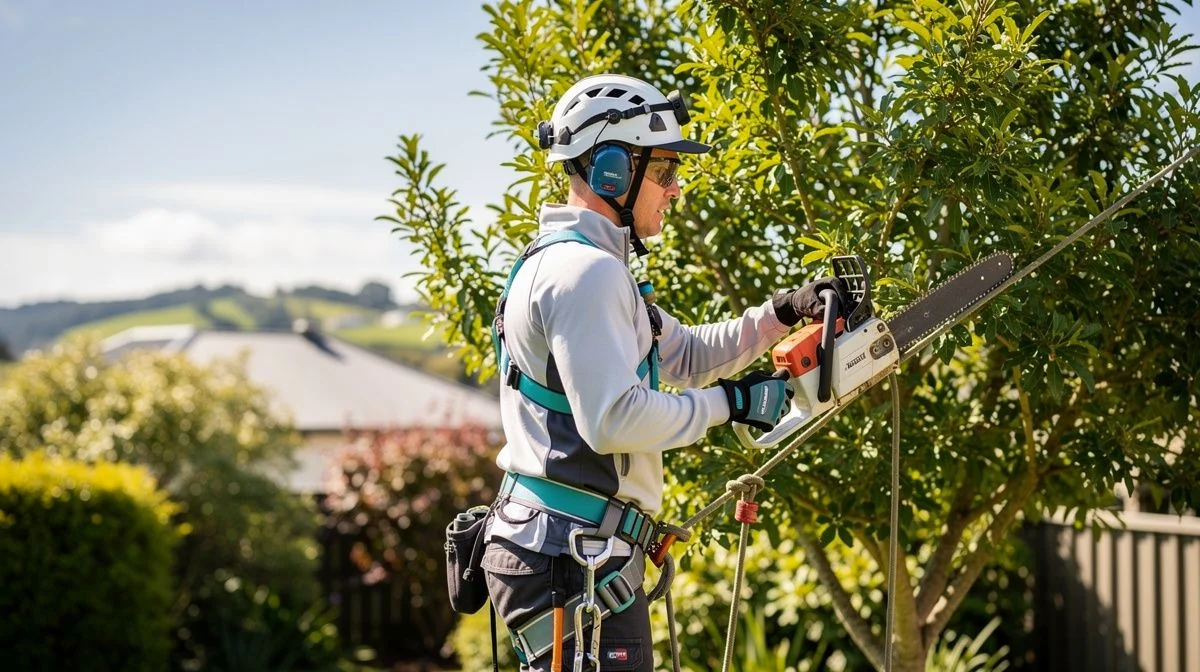
Proper safety gear (hard hat, chainsaw chaps, harness) and well-maintained equipment are non-negotiable. Ask whether they use site-specific safety plans – especially if they’re working near power lines or in confined spaces. A reputable arborist will also have trained first-aid staff on site.
Written quotes and scope of work
Verbal estimates are risky. Insist on a written quote that details exactly what’s included: pruning, removal, stump grinding, debris disposal, and any access requirements. A good quote will also note any potential extra costs (e.g., if the tree is larger than expected or requires a crane).
Key Questions to Ask Before Hiring
- Are you a qualified arborist? Ask for their qualification level and NZ Arb membership number.
- Do you have public liability insurance? Request a copy of the certificate and check the expiry date.
- Can you provide a written quote? Ensure it’s itemised and includes all services.
- Do you have a health and safety plan for the job? Especially for risky tasks like removal near buildings or power lines.
- Will you remove all tree debris? Some arborists leave wood chips; others haul everything away. Clarify upfront.
- Are you familiar with Gisborne council rules? They’ll need to check whether a resource consent is required for pruning or removing certain trees.
- Can you provide references from recent local jobs? A trustworthy arborist will be happy to share client testimonials or photos of past work.
- Do you subcontract any of the work? If they bring in climbers or crane operators, ensure they’re also insured and qualified.
Tips for Getting the Best Results
Get multiple quotes
Because arborist jobs vary so much, it’s wise to collect at least three quotes. Prices can differ significantly based on the arborist’s experience, equipment, and how busy they are. Compare not just the bottom line

The ValueHub Team built this site because finding clear, unbiased financial information in New Zealand was harder than it should be. Every guide is based on real research — we compare the actual fees, terms, and fine print so you don't have to. Our tip: shop around every year, read the policy docs, and never assume loyalty gets you the best deal.— The ValueHub Team
Try our Calculators
Use these free tools to crunch the numbers:
KiwiSaver Fund Comparison
Compare fees, returns, and risk levels across every KiwiSaver fund from all 31 NZ providers.
Currency Converter — USD to NZD
Convert US Dollars to New Zealand Dollars instantly. See the latest exchange rate and 30-day trend.
Mortgage Repayment Calculator
Calculate your weekly, fortnightly, or monthly mortgage repayments. Free NZ mortgage calculator — try different rates, terms, and repayment frequencies.
Compound Interest Calculator
See how your savings grow with compound interest over time. Free NZ compound interest calculator with yearly, monthly, and weekly compounding options.
Term Deposit Calculator
Calculate your term deposit returns before you lock in. Compare interest earned across different terms and rates with ValueHub's free calculator.
Savings Goal Calculator
Calculate how long it will take to reach your savings goal — and what monthly deposit you need to get there. Free NZ savings planner.
Arborists in Other Cities
Latest Guides & Reviews
New Zealand Financial Markets Authority Guide: Investor Protection in NZ
Protect your investments with this practical guide to the FMA — how to check licences, spot scams, and what to do if a provider fails. Verified against...
comparisonEV Home Charger NZ: Costs & Buying Guide
Compare EV home charger costs in NZ — verified prices from $1,299, installation fees, smart features, and what actually matters for your home's power supply.
guideThe Most Popular EVs in New Zealand
The best-selling electric cars in New Zealand, ranked by official registration data. Top BEV and PHEV models and brands, updated monthly.
guideEV Market Stats
New Zealand's EV market in numbers — market share, fleet size, top-selling models and used imports, updated with the latest NZTA and MIA data.