Best Arborists in Upper Hutt
Published 08 January 2025 · Updated 18 August 2026
Best Arborists in Upper Hutt
If you own a property in Upper Hutt — from the bush-clad hills of Maoribank to the established gardens of Totara Park — you’ll know that trees are a big part of the landscape. Whether it’s a giant macrocarpa that’s starting to lean or a native kōwhai that needs a careful prune, finding the right arborist makes all the difference.
Upper Hutt’s windy conditions, combined with its mix of native and exotic trees, mean that tree work here needs local know-how. The wrong cut can damage a tree for years, or worse — create a safety hazard. That’s why choosing a qualified, insured arborist isn’t just about tidying up; it’s about protecting your property and your peace of mind.
This guide will help you find, vet, and work with an arborist in Upper Hutt. We’ll cover what to look for, the questions to ask, and how to get the best results — without the guesswork.
What to Look for When Hiring an Arborist in Upper Hutt
Not everyone with a chainsaw and a ute is a professional arborist. In New Zealand, the industry is largely self-regulated, but reputable arborists hold recognised qualifications and insurance. Here’s what to check.
Qualifications and training
Look for an arborist with a New Zealand Certificate in Horticulture Services (Arboriculture) — Level 4 or higher. Many experienced arborists are also members of the New Zealand Arboricultural Association (NZ Arb). Membership indicates they follow industry best practice and often have ongoing training.
Insurance cover
Tree work is risky. Your arborist should have:
- Public liability insurance (at least $1 million, often $2 million)
- Income protection and accident cover for their staff
Ask to see a current certificate of currency. If they can’t or won’t provide it, walk away.
Local experience
Upper Hutt has specific challenges: strong winds coming down the Hutt Valley, clay-based soils that can affect root stability, and council rules around protected trees (for example, native species in some reserves). An arborist who works regularly in the Hutt region will know the terrain and the local council’s requirements.
Safety equipment and practices
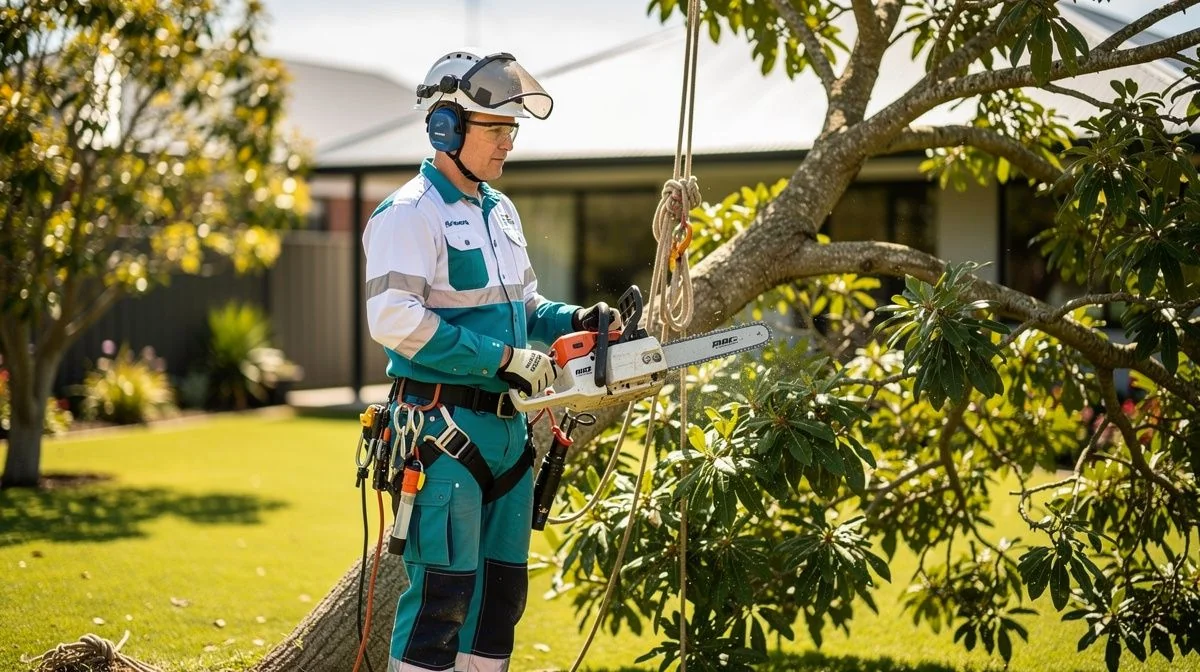
A professional arborist will arrive with proper safety gear — hard hats, harnesses, chainsaw-proof trousers, and first-aid kits. They should also follow basic site safety, like cordoning off work areas and having a spotter for traffic if working near roads.
Written quotes and contracts
Never rely on a verbal quote for significant tree work. A detailed written quote should include the scope of work, disposal of debris, stump grinding (if needed), and a timeline. Reputable arborists provide this without hesitation.
Key Questions to Ask Before Hiring
When you’ve shortlisted a few arborists, ask these questions over the phone or during a site visit. Their answers will tell you a lot about their professionalism.
- “What qualifications do you and your team hold?” – Listen for NZQA-level arboriculture certificates. If they say “we’ve been doing this for 20 years” without mentioning formal training, dig deeper.
- “Can you provide proof of public liability insurance?” – A quick yes and a willingness to email a copy is a green flag.
- “Do you have experience with [your specific tree type]?” – Some trees, like native pōhutukawa or large exotic pines, require different techniques. An arborist who’s worked with them before will give better advice.
- “Will you need a council permit for this work?” – Upper Hutt City Council has rules about removing or pruning trees on private land, especially if they’re protected or near waterways. A good arborist will know when a permit is needed and can often help with the application.
- “How will you dispose of the debris?” – Some arborists chip everything on site and remove it; others leave wood for firewood or mulch. Make sure you’re clear on what’s included.
- “What happens if something goes wrong — damage to my fence or a neighbour’s property?” – They should have a clear process for handling accidental damage and insurance claims.
Tips for Getting the Best Results
Getting the best result isn’t just about choosing the right arborist — it’s about working with them effectively. Here’s how to set yourself up for success.
Be clear about your goals
Before the arborist arrives, decide what you actually want. Do you need the tree trimmed away from your roof? Thinned out to let more light through? Or completely removed? The clearer you are, the more accurate your quote will be.
Get multiple quotes
For any job over a few hundred dollars, get at least three quotes. This helps you understand the market rate and spot any unusually high or low prices. Be wary of quotes that are significantly cheaper than the others — they may cut corners on safety or disposal.
Ask about timing
Tree work can be seasonal. In Upper Hutt, autumn and winter are often quieter for arborists, so you might get a better price. But if you need urgent work after a storm, expect to pay a premium.
Check references
Don’t be shy about asking for recent references from other Upper Hutt clients. A quick call or email can give you confidence — or raise red flags.
Plan for the aftermath
Tree work creates a mess, even with the tidiest arborist. Ask how they’ll clean up. Many will chip branches on site and rake up debris, but you may need to arrange your own disposal for large logs if not included.
Communicate about neighbours
If the tree is close to a boundary, let your neighbours know in advance. It avoids surprises and potential disputes. A professional arborist will also take care to avoid damaging neighbouring fences or gardens.
A Note About Costs and Getting Quotes
Tree work isn’t cheap, and prices vary widely depending on the job. A simple prune of a small tree might cost $200–$400, while removing a large, difficult-to-access tree could run into several thousand dollars. Factors that influence the price include:
- Height and access – Trees near power lines, on steep slopes, or behind garages take longer and require more equipment.
- Complexity

The ValueHub Team built this site because finding clear, unbiased financial information in New Zealand was harder than it should be. Every guide is based on real research — we compare the actual fees, terms, and fine print so you don't have to. Our tip: shop around every year, read the policy docs, and never assume loyalty gets you the best deal.— The ValueHub Team
Try our Calculators
Use these free tools to crunch the numbers:
KiwiSaver Fund Comparison
Compare fees, returns, and risk levels across every KiwiSaver fund from all 31 NZ providers.
Currency Converter — USD to NZD
Convert US Dollars to New Zealand Dollars instantly. See the latest exchange rate and 30-day trend.
Mortgage Repayment Calculator
Calculate your weekly, fortnightly, or monthly mortgage repayments. Free NZ mortgage calculator — try different rates, terms, and repayment frequencies.
Compound Interest Calculator
See how your savings grow with compound interest over time. Free NZ compound interest calculator with yearly, monthly, and weekly compounding options.
Term Deposit Calculator
Calculate your term deposit returns before you lock in. Compare interest earned across different terms and rates with ValueHub's free calculator.
Savings Goal Calculator
Calculate how long it will take to reach your savings goal — and what monthly deposit you need to get there. Free NZ savings planner.
Arborists in Other Cities
Latest Guides & Reviews
New Zealand Financial Markets Authority Guide: Investor Protection in NZ
Protect your investments with this practical guide to the FMA — how to check licences, spot scams, and what to do if a provider fails. Verified against...
comparisonEV Home Charger NZ: Costs & Buying Guide
Compare EV home charger costs in NZ — verified prices from $1,299, installation fees, smart features, and what actually matters for your home's power supply.
guideThe Most Popular EVs in New Zealand
The best-selling electric cars in New Zealand, ranked by official registration data. Top BEV and PHEV models and brands, updated monthly.
guideEV Market Stats
New Zealand's EV market in numbers — market share, fleet size, top-selling models and used imports, updated with the latest NZTA and MIA data.