EV Home Charger NZ: Costs & Buying Guide
Published 25 August 2026 · Written by the ValueHub team · Reviewed by Steve Baron
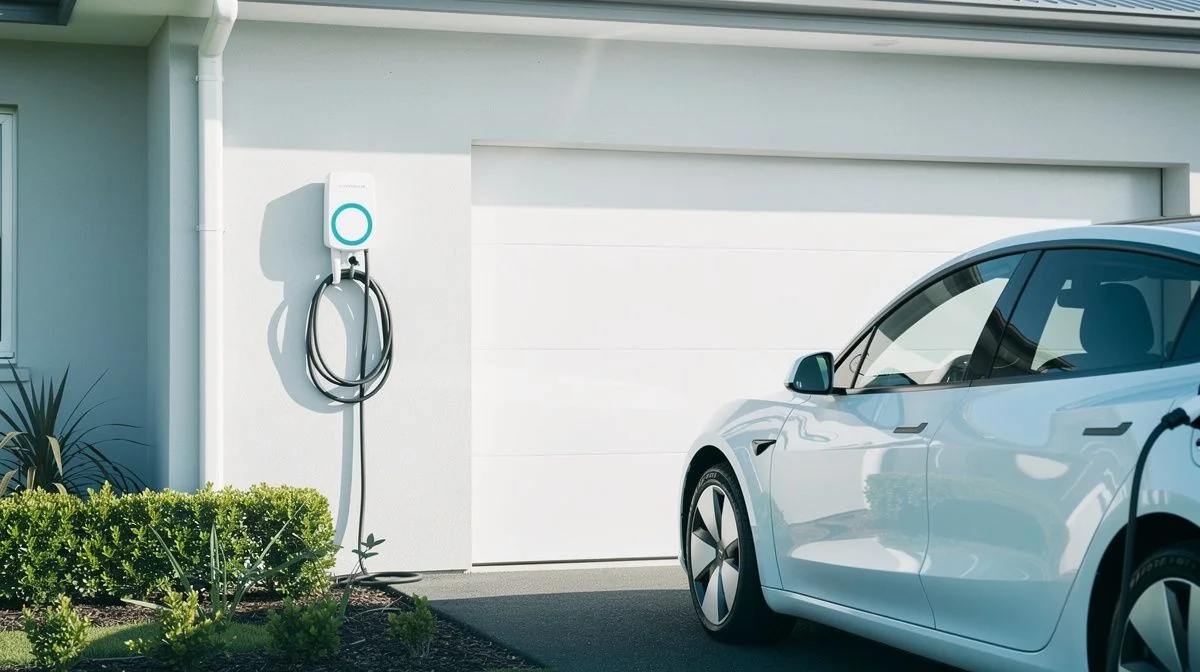
EV Home Charger NZ: Costs & Buying Guide
Why EV Home Chargers Matter for Kiwis
New Zealand has one of the highest rates of home EV charging in the world — roughly 80 per cent of EV owners charge at home, according to the Energy Efficiency and Conservation Authority (EECA). That makes sense when you think about our average commute of around 22 kilometres each way. Plugging in overnight means you start every day with a "full tank" without ever needing to visit a public charger. But here's the catch: the granny cable that comes with your EV is painfully slow.
A Nissan Leaf plugged into a standard 10-amp wall socket adds about 8–10 kilometres of range per hour. If you drive 50 kilometres a day, you need to be plugged in for five to six hours to break even. A proper wall charger at 7.4kW roughly triples that speed. The cost of getting this wrong? Installing a charger that doesn't suit your home's power supply can mean paying for an expensive three-phase upgrade you don't need — or worse, buying a 22kW charger that will only ever run at 7.4kW because your house is single-phase.
That's money down the drain. The other common mistake is skipping load management, which can trip your main breaker every time you run the dryer and charge the car at once.
ValueHub's Trusted Providers
We've researched the providers below — here are our picks for this category.
High-quality solar energy and EV charging systems installed by experts. Whether you are looking to improve your business's sustainability credentials, add value to your house, reduce your carbon footprint, or simply take control of your energy bills, CPS Solar Christchurch will design and install the best system for you, customised to meet your needs.
How We Researched This Guide
We started with the official sources: EECA publishes a list of smart chargers approved for its low-emission vehicle fund, which gave us a baseline for which units are actually available and certified in NZ. We then pulled pricing directly from official NZ supplier websites, including Evnex (evnex.co.nz), Tesla (tesla.com/en_nz), Wallbox (wallbox.com), myenergi (myenergi.com/nz), Fronius (fronius.com), EVPower (evpower.co.nz), and ChargeNet (chargenet.co.nz). We checked installation requirements against the Electricity (Safety) Regulations 2010 and spoke with practising electricians about real-world labour costs — not just brochure prices.
We cross-checked charging speed claims against each unit's actual power delivery, and we read the manuals for load management and solar diversion features to verify that they work as advertised in NZ homes. We also looked at owner forums and community groups for real-world experiences with Japanese-import EVs, rural properties, and older switchboards. All prices in this guide were verified against official NZ provider websites at the time of writing.
The 60-Second Version
Here's what you actually need to know before you start shopping:
- Typical installed cost: $1,500–$3,500 for a 7.4kW smart charger, including a standard installation by a registered electrician.
- Budget option: The EVPower SlimLine Smart 7kW charger lists at $1,299 on evpower.co.nz — one of the most affordable certified smart chargers available.
- How long it takes: A typical install takes 2–4 hours; allow 1–2 weeks from quote to completed job.
- Best-value option: A 7.4kW tethered smart charger with load management — enough for nearly every NZ home.
- What to check: Your switchboard capacity and whether you have single or three-phase power.
- Most important factor: Matching the charger to your home's phase and your EV's maximum AC charging rate.
- One mistake to avoid: Buying a 22kW charger for a single-phase home — it will only ever deliver 7.4kW.
What You Need to Know Before Choosing
Let's start with the basics. Every plug-in EV sold in NZ uses one of two AC charging connections: Type 1 or Type 2. Type 1 is the older Japanese standard, used by the Nissan Leaf and Mitsubishi Outlander PHEV. Type 2 is the European standard, used by Tesla, Hyundai, Kia, BYD, MG, and most other modern EVs. If you're buying a charger for a Japanese import Leaf, you need a Type 1 plug — or a tethered charger with a Type 1 cable. Most NZ chargers come with Type 2 as standard, so check before you buy.
Some chargers are "socketed" — they have a socket built in, and you use your own cable. Others are "tethered" — the cable is permanently attached. Tethered vs socketed is a genuine trade-off. Tethered is more convenient: you unplug and go, no cable to store in the boot. It's also slightly safer because the cable is rated for continuous use. Socketed units are more flexible if you ever change EVs (you can swap from Type 1 to Type 2 by buying a different cable), and they're cheaper to replace if the cable gets damaged.
For most people, tethered wins — unless you have a Leaf now and plan to upgrade to a Type 2 EV later. Single-phase vs three-phase is the other big decision. Most NZ homes are single-phase, which limits you to 7.4kW AC charging. Three-phase homes can run 11kW or 22kW chargers. But here's the thing: most EVs can't actually accept 22kW AC. The Nissan Leaf tops out at 6.6kW. Many newer EVs accept 11kW. The Tesla Model 3 and Model Y sold in NZ accept 11kW on three-phase but only 7.4kW on single-phase. Only a few vehicles accept 22kW AC.
So unless you have a specific EV that needs it, 7.4kW is plenty. Smart chargers add app control, scheduling, and energy monitoring. EECA maintains a list of approved smart chargers — units that can respond to grid signals and shift charging to off-peak times. Being on this list matters if you're applying for any EECA funding or want a charger that can properly handle load management and solar diversion. As of the latest EECA update, approved units include the Evnex E2, Wallbox Pulsar Plus, myenergi Zappi, Fronius Wattpilot, and the EVPower SlimLine.
The rules are straightforward: any hardwired charger must be installed by a registered electrician, and the work needs to comply with the Electricity (Safety) Regulations 2010.
You can't legally install a wall charger yourself, and you shouldn't — the electrical work involves high currents and your switchboard.
| Feature | What it means | Do you need it? |
|---|---|---|
| Load management | Balances power between charger and other appliances | Yes if you have a 60A or smaller main fuse |
| Solar diversion | Charges only from surplus solar generation | Yes if you have solar panels |
| Scheduling | Sets charging times to off-peak tariffs | Nice to have |
| App control | Monitor and control from your phone | Nice to have |
| RFID / PIN lock | Prevents unauthorised use | Useful for shared driveways |
| Type 2 tethered cable | Plug-and-go convenience | Recommended for most |
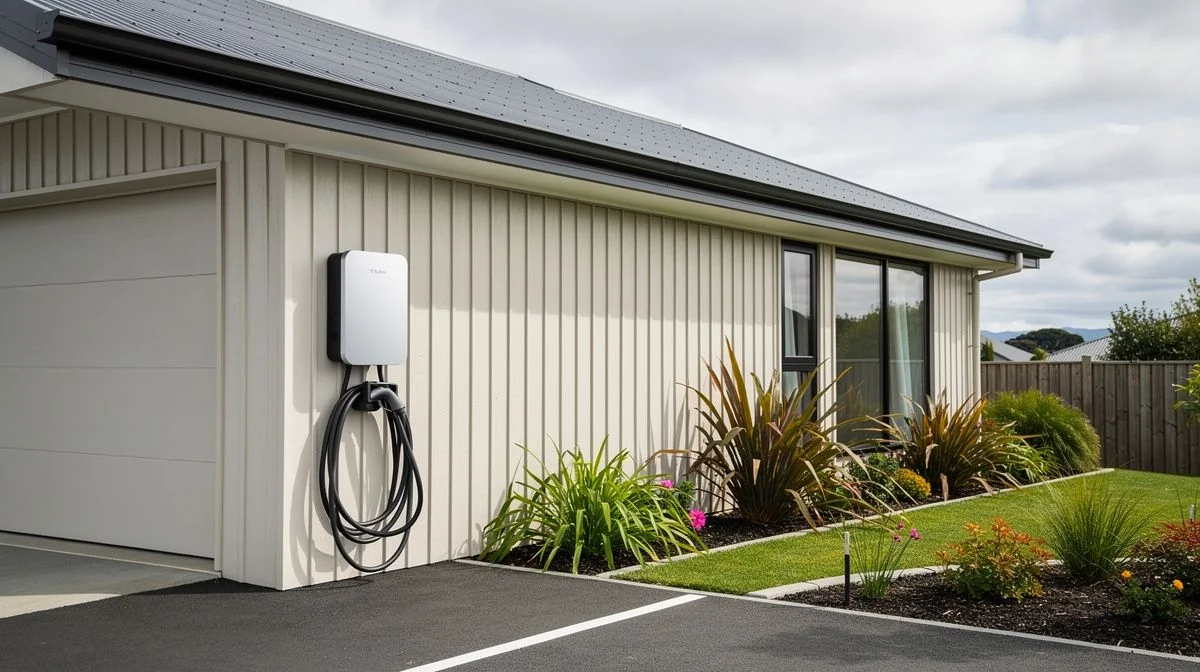
EV Charger Costs — What You Can Expect to Pay
Work out home charging time & cost →
The NZ market for EV chargers is fairly tight on price. The EVPower SlimLine Smart 7kW single-phase charger with RFID is listed at $1,299 on evpower.co.nz — one of the most affordable certified smart chargers available. A basic non-smart 7.4kW charger starts around $850–$1,250. Smart chargers with app control and load management run $1,500–$2,600 for the unit alone. Installation typically adds $550–$1,600 depending on how far the charger is from your switchboard and whether any upgrade work is needed. Electrician labour in NZ typically runs $110–$160 per hour, and a standard install takes 2–4 hours.
Add a dedicated circuit, RCD protection, and possibly a sub-board, and the labour component climbs. Rural properties often cost more due to longer travel times and older switchboards.
Here's a realistic price table covering the common options and edge cases, with unit prices verified against official NZ provider websites:
| Charger type | Unit price (NZD) | Typical installed cost | Notes |
|---|---|---|---|
| Granny cable (included with EV) | $0 | $0 | 2.3kW, adds ~8–10km/hr |
| EVPower SlimLine Smart 7kW | $1,299 | $1,850–$2,400 | RFID, app, EECA-approved |
| Basic 7.4kW single-phase, no smart | $850–$1,250 | $1,400–$2,300 | Simple, no app |
| Smart 7.4kW single-phase (Evnex E2, Wallbox Pulsar Plus) | $1,500–$2,600 | $2,100–$3,600 | App, scheduling, load mgmt |
| Tesla Wall Connector (single-phase) | $1,150–$1,450 | $1,700–$2,700 | Needs Tesla or Type 2 adaptor |
| ChargeNet Home 7.4kW | $1,400–$1,800 | $1,900–$2,900 | NZ-made, app control |
| Smart 11kW three-phase (Zappi, Wattpilot) | $1,900–$2,900 | $2,600–$4,100 | Requires three-phase supply |
| Smart 22kW three-phase | $2,300–$2,600 | $3,100–$4,100 | Only useful if EV accepts 22kW |
| Solar-diverting smart charger (Zappi, Wattpilot) | $2,100–$3,300 | $2,900–$4,600 | Requires CT clamp + solar |
| Commercial / dual-socket unit | $3,500–$5,000 | $4,500–$6,000 | Rare for homes |
*Price ranges verified from official NZ supplier websites. EVPower price confirmed at $1,299 for the SlimLine Smart 7kW as listed on evpower.co.nz. ChargeNet pricing based on chargenet.co.nz home charger listings.* The main price drivers are smart features, three-phase capability, and solar integration. Load management adds $300–$800 to the unit cost but can save you from a switchboard upgrade. Solar diversion adds another $200–$500 and requires a CT clamp installation, which the electrician fits around your main power cable. Fixed vs variable costs matter here. The unit is a one-off purchase, but you'll also face ongoing electricity costs.
Charging at home on a standard residential tariff costs roughly $4–$7 per 100km for a typical EV. On a night-rate or EV-specific tariff — now offered by Genesis, Meridian, and Contact Energy — that can drop to $3–$5 per 100km. A smart charger with scheduling can cut your charging bill by 20–40 per cent if your power company offers off-peak rates. All prices above include GST, which is standard for retail purchases in NZ.
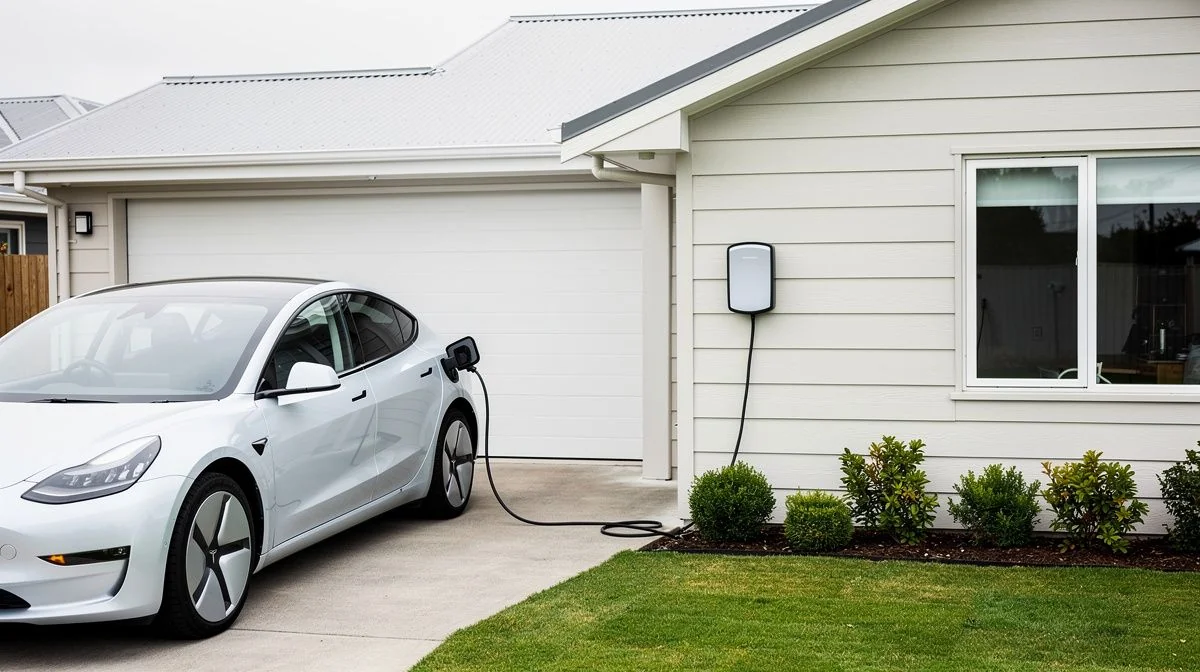
How to Choose — What Actually Matters
Compare EV vs petrol running costs →
Start with your home's power supply. Check your switchboard — if you have a single-phase supply, your maximum charging speed is 7.4kW, full stop. Don't pay extra for a 22kW charger you can't use. If you have three-phase, check what your EV can actually accept. Most EVs top out at 11kW AC, so a 22kW charger is usually a waste of money. Next, match the charger to your EV's connector. Type 1 for Leaf and older Japanese imports, Type 2 for everything else. If you're unsure, check your owner's manual or the car's charging port.
A Type 2 charger won't plug into a Type 1 car without an adaptor, and adaptors for high-power AC charging are rare in NZ. Consider your daily driving. If you drive less than 50km a day, even the granny cable might be enough — but a 7.4kW charger gives you headroom for longer trips and faster top-ups. If you have solar panels, look for a charger with solar diversion so you can charge from surplus generation. If you have a 60A main fuse or an older switchboard, prioritise load management.
Here's a red-flags checklist — if you see any of these, stop and reconsider:
- A quote that doesn't mention your switchboard capacity. Any competent installer will check this first. If they're quoting a charger without inspecting your electrical setup, walk away.
- A 22kW charger on a single-phase supply. This is the most common mistake we see. It will never deliver more than 7.4kW in your home.
- A charger that isn't on the EECA smart charger list (if you want smart features). Some units claim smart functionality but don't meet NZ grid requirements.
- An installer who isn't a registered electrician. A licensed professional must install hardwired chargers. Check they're on the Electrical Workers Register.
- A "cheap" install quote under $300. That usually means they're skipping the dedicated circuit, RCD protection, or consent paperwork.
What to Expect — The Day-to-Day
Before you commit, get a site visit from an electrician. They'll check your switchboard, measure the distance from your meter box to where you want the charger installed, and confirm whether you have single- or three-phase power. This visit typically costs $50–$150, and most installers will deduct it from the final job if you proceed. The installation itself is usually straightforward:
- Site assessment: 30–60 minutes to inspect your switchboard and plan the cable run.
- Quotation: 1–3 days to receive a fixed-price quote.
- Installation: 2–4 hours for a standard install, including mounting the unit, running cable, and fitting a dedicated circuit breaker.
- Commissioning: 30 minutes to set up the app, connect to your Wi-Fi, and test the unit.
- Certification: The electrician provides a Certificate of Compliance (CoC) — keep this for insurance and resale purposes. After installation, the charger should work. Plug in when you get home, and it'll charge at the full rate until your car's battery is full.
If you have a smart charger, set a schedule so it only charges during off-peak hours — most apps make this a two-minute job. Keep an eye on a few things: the app should show your charging history and energy use. If you notice the charger tripping your breaker, that's a sign your load management settings need adjusting. And if you sell your home, the charger stays with the house unless you specify otherwise in the sale agreement — it's considered a fixture.
NZ-Specific Factors — What's Different Here
Japanese Import EVs and Type 1 Connectors
New Zealand has one of the highest rates of Japanese import EVs in the world, particularly Nissan Leafs. These cars use Type 1 connectors, which are rare in Europe and increasingly uncommon in new chargers. If you own a Leaf, you'll need a Type 1 tethered charger or a socketed unit with a Type 1 cable. Brands like Evnex and Wallbox offer Type 1 options, but you often have to ask specifically. The good news is that most Leafs only accept 6.6kW AC, so a 7.4kW single-phase charger is more than enough.
Solar Homes and Surplus Generation
New Zealand has over 100,000 solar installations, and many EV owners want to charge from their own generation. Smart chargers with solar diversion — like the myenergi Zappi, Fronius Wattpilot, and SolarEdge — can monitor your solar production and charging load in real time, adjusting the charge rate to use only surplus power. This means you're not pulling from the grid when the sun isn't shining. The Zappi is particularly popular in NZ because it can operate in eco mode, gently charging at whatever rate your solar system produces.
Rural Properties and Older Switchboards
Rural NZ homes often have older switchboards with smaller main fuses, and the distance from the meter box to the carport can be significant. A 7.4kW charger draws about 32 amps — if your main fuse is only 40 or 50 amps, running the charger plus a heat pump and a dryer will trip the breaker. Dynamic load management solves this by monitoring total house load and throttling the charger when other appliances are running. Brands like Evnex, Wallbox, and EVPower offer CT clamp-based load management that's well-suited to rural NZ setups.
EECA Smart Charger List and Funding
EECA maintains a list of smart chargers that meet its requirements for grid responsiveness and off-peak shifting. This list matters for two reasons: it's a quality signal, and some regional councils and funding programmes require EECA-approved chargers. As of the latest EECA update, approved units include the Evnex E2, Wallbox Pulsar Plus, myenergi Zappi, Fronius Wattpilot, and the EVPower SlimLine.
Note that the Clean Car Discount has been discontinued, so there's no national rebate for charger installation — but some regional councils still offer incentives, so check with your local council.
Questions You Might Have
Do I really need a wall charger, or is the granny cable enough?
If you drive less than 30–40km a day and can charge for 8+ hours overnight, the granny cable might be fine. But it's inefficient: it draws only 2.3kW and isn't designed for daily continuous use. A 7.4kW wall charger is roughly three times faster, and it's safer because it's on a dedicated circuit. If you plan to keep your EV for more than a year, the wall charger is worth it.
What's the difference between a 7.4kW and 22kW charger in practice?
A 7.4kW charger adds about 40–50km of range per hour for a typical EV. A 22kW charger adds roughly three times that — but only if your EV can accept 22kW AC, which almost none can. The Nissan Leaf maxes out at 6.6kW, most modern EVs accept 11kW, and only a handful accept 22kW. For a single-phase home, 7.4kW is your maximum anyway.
Can I install an EV charger myself?
No. A registered electrician must install hardwired EV chargers in accordance with the Electricity (Safety) Regulations 2010. The charger needs a dedicated circuit, RCD protection, and a Certificate of Compliance. Doing it yourself is illegal, voids your insurance, and risks serious injury — the currents involved are lethal.
How does solar diversion actually work?
The charger uses a CT clamp — a sensor that wraps around your main power cable — to measure how much power your home is importing or exporting. If you're exporting surplus solar, the charger increases its charging rate to match the export. If you're importing from the grid, it reduces or stops charging. This means you're only using solar power you'd otherwise send back to the grid for a low feed-in rate.
What happens if I move house — can I take my charger with me?
Technically yes, but it's usually not worth it. The charger is wired into your home's electrical system, and removing it costs $200–$400. Most people leave the charger and either include it in the sale price or negotiate it as a selling point. If you do take it, you'll need an electrician to disconnect it safely and another to install it at your new place.
What Matters Most
The right EV charger comes down to three things: your home's power supply, your car's connector, and whether you need smart features. For most Kiwis, that means a 7.4kW single-phase smart charger with load management — whether it's an Evnex, Wallbox, EVPower, or Zappi. It's fast enough for overnight charging, it won't trip your switchboard, and it can shift to off-peak rates to save you money. Solar households should pay the premium for a smart charger like the Zappi or Wattpilot — the payback from using your own generation rather than selling it at feed-in rates is real.
Rural homeowners and anyone with an older switchboard should prioritise load management above all else. And if you drive a Leaf, remember to ask for the Type 1 cable. The NZ market has matured quickly. Prices have come down, smart features are standard, and there's a charger for every home situation — from the budget-friendly EVPower SlimLine at $1,299 to premium solar-diverting units. Get a site visit, check the EECA list, and match the unit to your actual needs — not the most powerful option on the shelf.
Do that, and you'll be charging at home for years without a second thought.
Disclaimer: The information in this article is for general guidance only and does not constitute financial, electrical, or legal advice. Charger prices and specifications are subject to change — always confirm current pricing and availability directly with the provider or a licensed electrician before making a purchase. Installation must be carried out by a registered electrician in compliance with New Zealand's Electricity (Safety) Regulations 2010.
Our Recommended Businesses You May Find Helpful
Appointed by the NZ Transport Agency - New Zealand's independent vehicle inspection specialists. What sets us apart? Fast, efficient inspections backed by reliable, honest advice and a team that genuinely cares about getting you back on the road safely. We've built our reputation on outstanding customer service, no hidden costs, and the kind of straight-up expertise.

The ValueHub Team built this site because finding clear, unbiased financial information in New Zealand was harder than it should be. Every guide is based on real research — we compare the actual fees, terms, and fine print so you don't have to. Our tip: shop around every year, read the policy docs, and never assume loyalty gets you the best deal.— The ValueHub Team
Try our Calculators
Use these free tools to crunch the numbers:
KiwiSaver Fund Comparison
Compare fees, returns, and risk levels across every KiwiSaver fund — the most up to date data in New Zealand.
Currency Converter — USD to NZD
Convert US Dollars to New Zealand Dollars instantly. See the latest exchange rate and 30-day trend.
Mortgage Repayment Calculator
Calculate your weekly, fortnightly, or monthly mortgage repayments. Free NZ mortgage calculator — try different rates, terms, and repayment frequencies.
Compound Interest Calculator
See how your savings grow with compound interest over time. Free NZ compound interest calculator with yearly, monthly, and weekly compounding options.
Term Deposit Calculator
Calculate your term deposit returns before you lock in. Compare interest earned across different terms and rates with ValueHub's free calculator.
Savings Goal Calculator
Calculate how long it will take to reach your savings goal — and what monthly deposit you need to get there. Free NZ savings planner.
Related Articles
EV Public Charging in NZ: Prices & Networks
Compare EV public charging prices across all NZ networks — ChargeNet, BP, Tesla, Zero, Meridian and more. See verified per-kWh rates, idle fees and smart...
guideThe Most Popular EVs in New Zealand
The best-selling electric cars in New Zealand, ranked by official registration data. Top BEV and PHEV models and brands, updated monthly.