Best Builders in Hastings
Published 10 August 2026 · Updated 18 August 2026
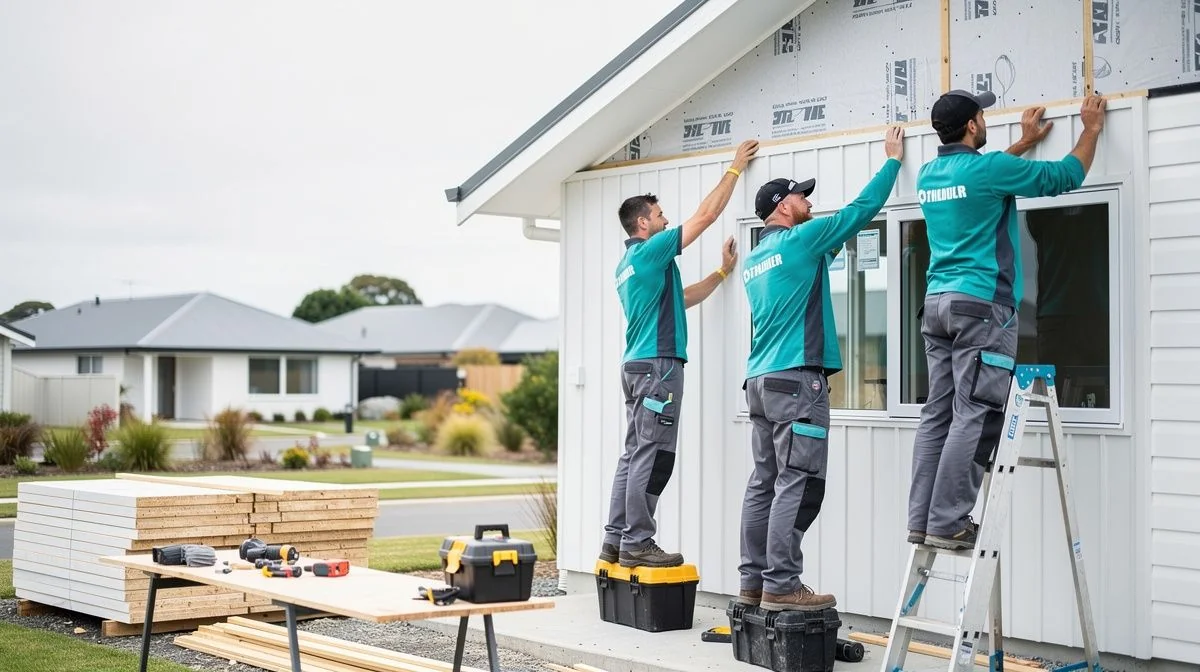
Choosing a Builder in Hastings: Why It Pays to Do This Properly
Let’s be honest. Finding the right builder in Hastings can feel a bit like trying to pick a ripe avocado at the supermarket. You can squeeze a few, check the colour, and hope for the best, but you never really know what you’re getting until you cut it open. The stakes are higher with your home though. A bad builder can turn your dream renovation into a year-long headache, drain your bank account, and leave you with a half-finished extension that the council won’t sign off on.
Hastings is a unique place to build. We’ve got that beautiful Hawke’s Bay sun, but we also get those wild nor’westers that whip through the Heretaunga Plains. The soil here ranges from free-draining gravels to heavy, expansive clays that move and shift with moisture levels. What works on one section might be a disaster on another. Then there’s the council consent process. Hastings District Council has its own quirks, its own timelines, and its own expectations. What sailed through in Napier might get sent back for more information in Hastings.
The local building scene has its own character too. We’ve got a mix of classic 1920s and 1930s villas and bungalows in places like Havelock North and central Hastings, weatherboard homes from the 1950s and 60s across Flaxmere and Mahora, and newer plaster-over-timber builds in the newer subdivisions like Irongate and Brookvale. Each of these has its own set of challenges. Renovating a character villa requires a different skill set to building a modern family home from scratch. Recladding a 1970s bungalow that’s got leaky windows is another beast entirely.
Then there’s the labour market. Hastings has been through a building boom, and while things have eased slightly, good tradespeople are still in high demand. The best builders are booked out months, sometimes over a year, in advance. If you rush into hiring the first available builder without doing your homework, you might end up with someone who’s available because they’re not that good. That’s not a gamble worth taking with your biggest asset.
Doing this properly means understanding what you want, understanding what’s realistic for your property, and understanding what a good builder actually looks like. It means checking credentials, not just taking someone’s word for it. It means talking to past clients, visiting finished projects, and asking the awkward questions about budget and timelines before you sign anything.
The good news is that Hastings has a strong community of skilled, honest builders who take pride in their work. They build homes that stand up to our weather, they communicate clearly, and they deliver what they promise. The trick is finding them. This guide is here to help you do exactly that. We’ll walk through pricing, contracts, consents, and all the practical stuff you need to know, but we’ll also get into the local specifics that make building in Hastings different from anywhere else in New Zealand.
So grab a coffee, settle in, and let’s get you sorted. A bit of time spent now will save you a whole lot of stress later. Trust me on that.
How Builder Pricing Actually Works in Hastings
Right, let’s talk money. Builder pricing is one of those things that seems straightforward until you actually get the quotes and wonder if everyone’s talking about the same project. The truth is, pricing in Hastings is influenced by a bunch of local factors that you need to understand before you can make sense of the numbers on the page.
First, there’s the labour versus materials split. For most renovation and build projects in New Zealand, labour typically makes up around 40 to 50 percent of the total cost, with materials taking the other half. In Hastings, labour rates have crept up over the past few years as demand has outstripped supply. You’re probably looking at somewhere between $65 and $95 per hour for a qualified builder, depending on their experience and the complexity of the work. Larger companies with project managers and admin teams will charge more per hour to cover their overheads, while a smaller independent operator might be a bit cheaper.
For new builds, you’re generally looking at $2,500 to $3,500 per square metre in Hastings, depending on the spec. That’s for a decent quality home with standard fixtures and finishes. If you want high-end joinery, stone benchtops, and designer tapware, you can easily push that up to $4,000 or more per square metre. If you’re building a simple, rectangular, single-storey home with a straightforward roof, you’ll be at the lower end. Add in a complex roofline, multiple levels, or tricky site access, and the price climbs.
Renovations are where it gets interesting. A kitchen renovation in Hastings will typically set you back between $30,000 and $60,000. A bathroom is usually $20,000 to $40,000. A full-house renovation, where you’re updating the kitchen, bathroom, flooring, painting, and maybe moving a wall or two, can easily hit $150,000 to $300,000, depending on the size and age of the home. The age matters a lot. Older homes often hide surprises behind the walls. You might open up a wall to find wiring that needs replacing, or timber that’s been damaged by borer or damp. Good builders will factor some of this into their price, but they can’t know everything until they get in there.
Extensions are priced differently. A single-storey extension in Hastings will usually cost between $3,000 and $4,500 per square metre. That sounds high compared to a new build, but there’s a reason. You’re matching existing rooflines, tying into existing foundations, and often working around an occupied home. There’s more coordination, more risk, and more time involved. The same applies to reclads. Recladding a home in Hastings, whether it’s replacing weatherboard, redoing plaster, or putting up new cladding, typically costs $1,500 to $2,500 per square metre of wall area. It’s a big job, and it’s not cheap, but it can save a home that’s otherwise in good shape.
Local demand plays a big role in pricing. When the region’s economy is booming, builders are flat out and can charge a premium. When things slow down, you’ll find more flexibility in pricing. Right now, Hastings is in a bit of a mixed spot. There’s still plenty of work around, but it’s not as frenetic as it was a couple of years ago. That means you might have a bit more room to negotiate, especially if you’re flexible on timing.
Now, the type of quote matters just as much as the number on it. An estimate is exactly that, a rough guess based on similar projects. It’s not a commitment. A fixed-price quote is a commitment. The builder agrees to do the work described in the scope for a set price, and they wear the cost of any overruns. A cost-plus contract is where you pay the builder’s actual costs plus a margin, usually 10 to 15 percent. This is common for renovations where there’s a lot of unknowns, but it puts the risk on you. You need to understand which one you’re getting and what it means for your budget.
Why do quotes vary so much between builders? It comes down to a few things. Some builders price more accurately because they’ve done similar projects before. Some include more contingency in their price. Some just charge more because they can, based on their reputation. And some lowball you to get the job, then hit you with variations later. The cheapest quote is rarely the cheapest job by the time you’re done. That’s a lesson many Hastings homeowners have learned the hard way.
How to Compare Quotes Properly (Without Losing Your Mind)
Comparing quotes is where a lot of people trip up. You get three quotes that all look completely different, and you have no idea which one is actually the best deal. The trick is to make sure you’re comparing apples with apples. That starts with a clear, detailed scope of work.
Before you even contact builders, write down exactly what you want done. Be specific. Don’t just say “renovate the kitchen.” Say “remove existing kitchen, install new cabinetry, replace benchtop with engineered stone, install new sink and tapware, replace flooring with vinyl plank, repaint walls, update lighting.” The more detail you provide, the more accurate your quotes will be. If you’re vague, builders will make their own assumptions, and those assumptions will differ wildly.
When the quotes come in, don’t just look at the bottom line. Look at the line items. Does one quote include the cost of the skip bin and another not? Does one include painting and another treat it as an extra? Does one include GST and another not? These differences can be huge. Go through each quote line by line and flag anything that’s missing or unclear. Ask the builders to explain their pricing if you’re not sure. A good builder will be happy to walk you through it.
Red flags to watch out for. A quote that’s significantly lower than the others is a warning sign. It might mean they’ve missed something, or they’re planning to cut corners, or they’ll hit you with variations later. A quote that’s significantly higher might mean they don’t really want the job and are pricing themselves out. A quote with vague descriptions like “allowance for electrical work” is a risk. You want specifics, not allowances that could blow out.
Bait-and-upgrade pricing is a real thing. A builder gives you a low quote to win the job, then once you’re committed, they start suggesting upgrades. “You don’t want that standard tapware, do you? For just another two grand, you can get these really nice ones.” Before you know it, your budget has blown out by 30 percent. The way to protect yourself is to have a detailed specification that locks in the fixtures and finishes. If the builder tries to upsell you, you can point to the spec and say no.
Negotiation is fine, but do it respectfully. If you’ve got a quote you’re happy with but you’d like a small discount, ask. The worst they can say is no. If you’re comparing quotes and one is slightly higher but the builder seems more thorough, that might be worth paying for. The cheapest quote isn’t always the best value. You’re paying for competence, reliability, and peace of mind, not just the lowest number.
Finally, don’t rush. Take the time to go through each quote carefully. Ask questions. Get everything in writing. A verbal agreement is worth nothing when things go wrong. And remember, the quote is only as good as the scope behind it. If the scope is vague, the quote is meaningless. Get it right at the start and you’ll save yourself a world of pain later.
How to Choose the Right Builder in Hastings: A Practical Checklist
Here’s a handy checklist to take with you when you’re meeting potential builders. Print it out, tick the boxes, and you’ll be in a much better position to make the right call.
Check their LBP status. Every builder doing residential work in New Zealand must be a Licensed Building Practitioner. Ask to see their licence card, or look them up on the LBP register online. Make sure the licence covers the type of work they’ll be doing. A “Licensed Building Practitioner – Carpentry” is what you want for most residential projects.
View their past work. Ask for addresses of projects they’ve completed in the last few years. Go and have a look. If it’s a renovation, knock on the door and ask the homeowner if they’re happy with the work. Most people are happy to chat about their experience. If the builder can’t give you any references, that’s a big red flag.
Get references and actually call them. Ask about communication, timelines, budget adherence, and how any issues were handled. Don’t just ask if they were happy. Ask what went wrong and how the builder dealt with it. Every project has hiccups. The good builders handle them professionally.
Check their insurance. They should have public liability insurance and, if they have employees, ACC cover. Ask to see their certificates. It’s a simple request and any reputable builder will be happy to show you.
Read their contract carefully. Before you sign anything, understand the payment terms, the timeline, the scope of work, and what happens if things go wrong. If there’s anything you don’t understand, ask. If the contract seems one-sided, that’s a concern.
Trust your gut. If something feels off, it probably is. You’re going to be working closely with this person for months. You need to be able to communicate openly and honestly. If you don’t click with them at the first meeting, that’s not going to improve when you’re three months into a renovation and the kitchen’s been ripped out.
Ask about their current workload. If they’re too busy to start for six months, that might be fine, or it might not. Make sure their timeline aligns with yours. A builder who’s overbooked might rush your job or keep delaying it to fit in other clients.
Check if they’re a member of a professional association like Master Builders or Certified Builders. This isn’t essential, but it can provide extra protection through their guarantee schemes. We’ll get into that more later.
Finally, get everything in writing. A handshake is nice, but a signed contract is essential. Make sure the scope, price, timeline, and payment schedule are all documented. This protects you and the builder.
Builder Availability in Hastings: The Brutal Truth
Let’s not sugar-coat it. Getting a good builder in Hastings takes time. The best ones are booked out months in advance. If you’re planning a renovation or a new build, you need to start looking for a builder well before you’re ready to start. Ideally, you want to have your builder lined up before you even get your consent sorted, because the consent process can take a while, and a good builder will be able to help you through it.
Seasonal demand plays a big role in Hastings. The building industry tends to slow down over the Christmas period, with many tradies taking a break from mid-December to late January. Then there’s a rush of activity from February through to winter. Winter is quieter, but not by as much as it used to be. Many builders now work through winter, especially on interior renovations, which aren’t affected by the weather as much as new builds.
Council bottlenecks are a real issue. Hastings District Council has been under pressure to process consents faster, and things have improved, but it can still take anywhere from 20 to 40 working days for a straightforward building consent. If your project needs an engineering report or a resource consent, add another few months to that. The council’s processing times have a knock-on effect on builder availability. Builders can’t start work without consent, so when consents are delayed, projects get pushed back, and builders’ schedules fill up.
Subcontractor shortages are another factor. Even if you’ve got a great builder, they rely on electricians, plumbers, plasterers, and painters. These trades are in high demand across Hawke’s Bay, and they often juggle multiple projects at once. If your builder’s electrician is busy on another job for three weeks, your project stalls. Good builders have strong relationships with reliable subcontractors, but even they can’t always control the timing.
So what do you do? Start early. If you’re thinking about renovating, start talking to builders now. Even if you’re not ready to start for six months, get on their radar. A good builder will be upfront about their availability and can help you plan your timeline. The earlier you secure a builder, the better your chances of getting your preferred start date.
Be flexible. If you can be flexible about your start date, you’ll have more options. Builders often have gaps in their schedule that they need to fill. If you can slot your project in when it suits them, you might get a better price or a faster start. It’s a bit of a dance, but it can work in your favour.
And be prepared to wait. If you’ve found the right builder, it’s worth waiting a few months for them. A good builder is worth their weight in gold. A bad builder who can start next week is a false economy. You’ll end up paying for it in stress, delays, and potentially shoddy workmanship.
Common Mistakes Homeowners Make When Hiring a Builder
We’ve seen it all over the years. Homeowners making the same mistakes over and over again, and then wondering why their project went sideways. Let’s run through the most common ones so you can avoid them.
Choosing the cheapest quote. This is the big one. I get it, building is expensive, and saving ten grand sounds great. But the cheapest quote is often the cheapest for a reason. Maybe they’ve missed something. Maybe they’re planning to cut corners. Maybe they’ll hit you with variations later. The cheapest quote is rarely the cheapest job in the end. You’re better off paying a bit more for a builder who knows what they’re doing and will do it properly.
Not checking references. A builder can look great on paper, but the proof is in the work they’ve done and what their past clients say about them. If you don’t check references, you’re flying blind. Call them. Ask the hard questions. It takes ten minutes and could save you a world of pain.
Vague scope of work. If you don’t know exactly what you want, the builder can’t price it accurately. You end up with a quote that’s based on assumptions, and those assumptions are usually wrong. Take the time to write down exactly what you want done. Be specific. It’ll make the whole process smoother.
Paying too much upfront. Some builders ask for a deposit to secure the job and buy materials. That’s normal. But if they’re asking for a huge deposit before any work has started, that’s a red flag. A typical deposit is around 10 percent, sometimes up to 20 percent for large projects. Anything more than that, and you should be asking questions. You don’t want to be left out of pocket if the builder goes bust or disappears.
Making assumptions. Don’t assume the builder knows what you want. Don’t assume the price includes everything. Don’t assume the timeline is guaranteed. Ask. Clarify. Get everything in writing. Assumptions are the mother of all stuff-ups, as they say.
Changing your mind mid-project. This is a killer. You decide you want different tiles. You want the window moved. You want an extra power point. Every change costs time and money. It also disrupts the builder’s schedule and can delay your project. If you must change something, do it early, and expect to pay a variation. The more you change, the more your budget blows out.
Skipping a contingency fund. Things go wrong. It’s a fact of building. You open up a wall and find rot. The ground conditions are worse than expected. A material is discontinued. If you don’t have a contingency fund, say 10 to 15 percent of your budget, you’ll be scrambling to find the money. Build it into your budget from the start.
Not getting a written contract. A verbal agreement is worth nothing. If things go wrong, you have no recourse. Always get a written contract that outlines the scope, price, timeline, and payment schedule. It protects you and the builder.
Payment Stages and Financial Protections
Understanding how payments work is essential. You don’t want to be handing over big sums of money without knowing exactly what you’re paying for and when. Let’s break it down.
Most builders use milestone payments. You pay a deposit upfront, then a series of progress payments as the work reaches certain stages. For a new build, that might be: 10 percent deposit, 20 percent when foundations are done, 20 percent when framing is up, 20 percent when the roof is on, 20 percent when the interior is lined, and 10 percent on completion. For a renovation, the milestones might be less structured, but the principle is the same. You pay as the work progresses.
Progress claims are how builders invoice you for the work completed to date. They’ll send you a claim, you check it against the work done, and you pay. It’s important to inspect the work before you pay. If something’s not right, don’t pay until it’s fixed. Once you pay, you’re effectively accepting the work as done.
Retentions are a common practice. This is where a portion of each payment, usually 5 to 10 percent, is held back until the project is complete and you’re satisfied. This protects you if there are defects or unfinished work. Some builders include this in their contracts, others don’t. It’s worth asking for.
Variations are changes to the original scope of work. They should be documented in writing, with a price, before the work is done. If the builder says “that’ll be an extra two grand,” get it in writing before they start. Verbal variations are a recipe for disputes. A good builder will have a variation form and will go through it with you properly.
What’s normal versus risky? A deposit of 10 to 20 percent is normal. Progress payments tied to specific milestones are normal. A retention of 5 to 10 percent is normal. What’s risky is a builder asking for large sums upfront, or progress payments that aren’t tied to any tangible progress, or a contract that doesn’t mention variations or retentions. If something feels off, ask questions. A reputable builder will have nothing to hide.
How do you protect yourself? Get everything in writing. Read the contract before you sign it. Don’t pay cash. Use bank transfers or cheques so you have a record. Take photos of the work at each stage. And don’t be afraid to withhold payment if the work isn’t up to scratch. You’re the customer. You have rights.
Reputable builders handle payments professionally. They’ll have a clear payment schedule in the contract, they’ll send invoices promptly, and they’ll be happy to discuss any concerns you have. If a builder is evasive about money, that’s a red flag. Run for the hills.
Guarantees, Insurance and Compliance: The Legal Stuff
The legal side of building isn’t the most exciting topic, but it’s crucial. You need to know what protections you have and what obligations your builder has. Let’s keep it simple.
Every builder doing residential work in New Zealand must be a Licensed Building Practitioner. This is a legal requirement. The LBP scheme ensures builders have the skills and experience to do the work properly. You can check a builder’s LBP status online. It takes two minutes and could save you a lot of grief.
Many builders are also members of professional associations like Master Builders or Certified Builders. These organisations offer guarantee schemes that provide extra protection for homeowners. The Master Builders Guarantee, for example, covers you for defects in workmanship for up to 10 years after the build is complete. This is a valuable safety net. Not all builders are members, but it’s worth asking about.
Public liability insurance is a must. This covers you if someone is injured on your property during the build, or if the builder damages your property or a neighbour’s property. Ask to see their certificate of insurance. If they don’t have it, don’t hire them. It’s that simple.
Workmanship warranties are another layer of protection. Most builders will warrant their work for a period of time, usually 12 months for minor defects and longer for structural issues. This should be outlined in your contract. Make sure you understand what’s covered and for how long.
Building consent obligations are the legal framework that governs all significant building work. If your project requires a building consent, the builder must ensure the work complies with the consent and passes inspections. The council will issue a Code Compliance Certificate at the end if everything is up to scratch. This is your proof that the work is legal and safe. Don’t skip this. It’s essential if you ever want to sell your home.
There’s also the Consumer Guarantees Act and the Building Act. These provide legal protections for homeowners. The Building Act, for example, requires that all building work be done properly and that the finished building is safe and healthy. If your builder does a dodgy job, you have legal recourse.
The key takeaway is this: don’t cut corners on the legal stuff. Make sure your builder is licensed, insured, and willing to guarantee their work. Get everything in writing. It might seem like a hassle, but it’s your protection if things go wrong. And in the building game, things do go wrong from time to time. It’s how they’re handled that matters.
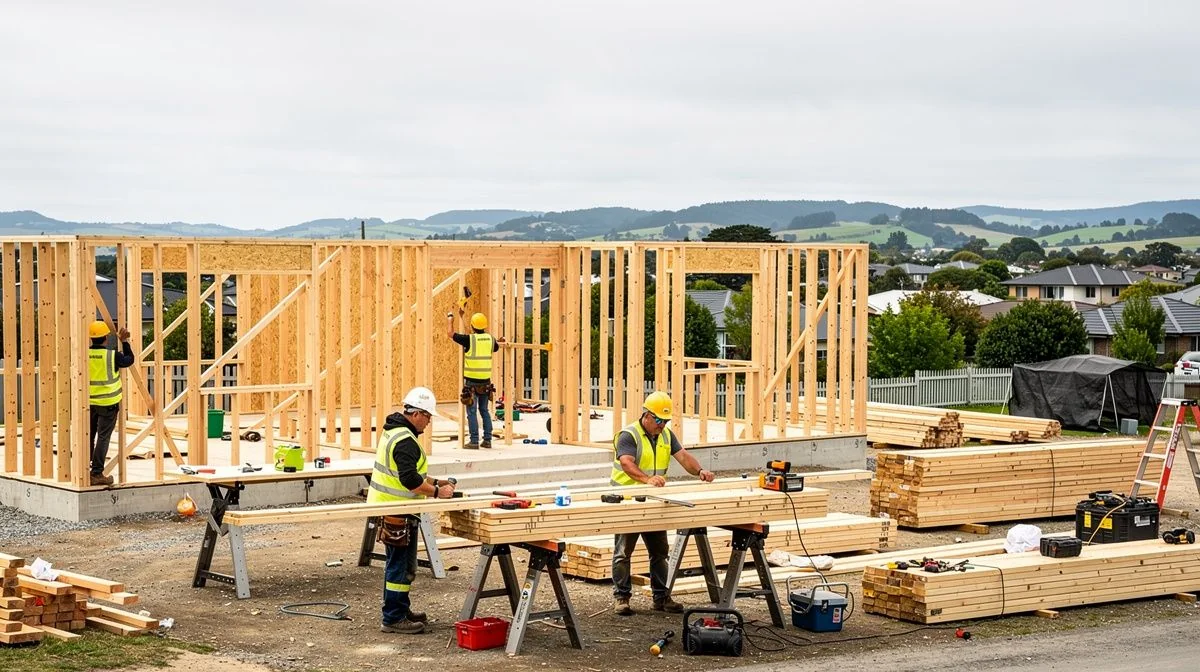
Timeline Expectations: How Long Things Actually Take
Let’s talk timelines. Everyone wants to know how long their project will take, and the honest answer is: it depends. But let’s give you some realistic expectations.
A kitchen renovation in Hastings typically takes 4 to 6 weeks. That includes the demolition, the electrical and plumbing work, the cabinetry installation, the benchtop, and the finishing touches. A bathroom renovation is similar, usually 3 to 5 weeks. A full-house renovation can take anywhere from 3 to 6 months, depending on the scope. A single-storey extension is usually 3 to 4 months. A new build, from breaking ground to handing over the keys, is typically 6 to 12 months, depending on the size and complexity.
These are averages. Your project could be faster or slower, depending on a bunch of factors. Let’s look at what causes delays.
Weather is the big one. Rain stops outdoor work. High winds stop roof work. Frost can stop concrete pours. In Hastings, we get our fair share of weather, and it can throw a spanner in the works. A good builder will plan for this, but you need to be realistic. If you’re building in winter, expect some delays.
Council inspections are another potential bottleneck. Your builder will need inspections at various stages, and if the council is busy, you might have to wait for an inspector to be available. This can add days or even weeks to your timeline. A good builder will book inspections well in advance to minimise delays.
Materials can be a problem. Some materials have long lead times, especially if they’re imported. If you’ve chosen a specific type of cladding or joinery that’s on backorder, your project will stall. The best way to avoid this is to choose materials that are readily available, or to order them well in advance.
Variations are a major cause of delays. Every time you change something, the builder has to stop, rework the plan, and potentially wait for new materials. If you’re going to make changes, do them early and in one batch, rather than dribbling them through the project.
Subcontractor availability is another factor. If your builder’s electrician is busy on another job, your project waits. Good builders have strong relationships with their subs and can usually coordinate things well, but they can’t always control the timing.
Be realistic. Building takes time. It’s a complex process with lots of moving parts. If your builder says the project will take 4 months, expect it to take 4 to 5 months. If it comes in on time, that’s a bonus. If it comes in early, you’ve hit the jackpot. The key is to have a clear timeline in your contract and to hold the builder accountable, but also to be flexible and understanding when things go wrong.
Communication and Project Management: The Glue That Holds It Together
You can have the best builder in Hastings, the best plans, and the best materials, but if communication is poor, the project will suffer. Communication is the glue that holds everything together. It’s what separates a smooth build from a stressful nightmare.
Good builders communicate regularly. They’ll give you updates on progress, flag any issues early, and be upfront about any changes to the timeline or budget. They’ll also listen to your concerns and take them seriously. You should never feel like you’re in the dark about your own project.
Weekly updates are the norm. Most builders will send you a quick summary of what’s been done, what’s happening next, and any issues that have come up. This might be a phone call, an email, or a quick chat on site. The important thing is that you’re kept in the loop. If your builder goes silent for weeks on end, that’s a red flag.
Managing expectations is a big part of the builder’s job. They need to be honest with you about what’s realistic, what’s achievable, and what might go wrong. A good builder will tell you the truth, even if it’s not what you want to hear. They’ll manage your expectations from the start, so you’re not disappointed later.
Avoiding disputes is all about communication. Most disputes arise from misunderstandings, not from malice. If the builder tells you about a problem early, you can work together to find a solution. If they hide it, it becomes a crisis. The best way to avoid disputes is to have open, honest communication from day one.
Here’s a real example. A homeowner in Havelock North was having their bathroom renovated. The builder discovered that the floor joists were rotten and needed replacing. It was an unexpected cost of $5,000. A bad builder would have just done the work and added it to the bill. A good builder called the homeowner, explained the situation, showed them photos, and discussed the options. The homeowner approved the extra work, and the project continued smoothly. That’s how it should work.
Another example. A builder was running behind schedule due to weather. Instead of going silent, they called the client, explained the situation, and gave a revised timeline. The client appreciated the honesty and was happy to wait. If the builder had just gone quiet, the client would have been stressed and angry.
The lesson is simple. Choose a builder who communicates well. Ask them how they handle communication. Do they send weekly updates? Are they available by phone or email? How do they handle issues? If you’re not happy with the answers, look elsewhere. Good communication is worth its weight in gold.
The Consent Pathway: A Simple Overview
Building consent. It sounds intimidating, but it’s really not that complicated once you understand the basics. Let’s break it down in plain English.
First, what needs consent? In New Zealand, most building work requires a building consent. This includes new builds, extensions, renovations that involve structural changes, and some smaller jobs like adding a deck or a carport. There are some exemptions, like small sheds under a certain size, or minor repairs and maintenance. But if you’re doing anything significant, you’ll need consent.
How long does it take? For a straightforward building consent in Hastings, you’re looking at 20 to 40 working days. That’s the statutory timeframe, but it can take longer if the council needs more information or if your project is complex. The clock doesn’t start until the council has all the necessary documentation, so make sure your application is complete.
Resource consent is a different thing. This is about land use and environmental effects. If you’re building on a site that doesn’t comply with the District Plan, like building too close to a boundary or exceeding height limits, you’ll need resource consent. This can take several months and involves a more complex process. Not every project needs it, but it’s worth checking early.
Engineering reports are often required. If you’re building on a sloping site, or if the ground conditions are poor, you’ll need a structural engineer to design the foundations and check the soil. This adds time and cost to your project, but it’s essential for safety. In Hastings, soil conditions vary a lot, so this is common.
Inspections. Once you have consent and work starts, the council will inspect the work at various stages. This includes the foundations, the framing, the insulation, and the final finish. Your builder will book these inspections, and you need to make sure they happen. If you skip an inspection, you could end up with a Code Compliance Certificate being refused.
The Code Compliance Certificate is the final piece of the puzzle. It’s issued by the council when the work is complete and complies with the building consent. It’s your proof that the work is legal and safe. You’ll need it if you ever want to sell your home, and you’ll need it for insurance purposes. Don’t skip this step.
The whole process can seem daunting, but it’s manageable if you take it step by step. The key is to have a good builder who knows the process and can guide you through it. A good builder will handle the consent application, liaise with the council, book inspections, and make sure everything is done properly. That’s part of what you’re paying for.
Hastings-Specific Building Challenges
Building in Hastings comes with its own set of challenges. It’s not like building in Auckland or Christchurch. The local conditions, the council, and the housing stock all have their quirks. Let’s dive into what you need to know.
Weather is a big factor. Hastings gets hot, dry summers and cool, wet winters. The nor’westers can be brutal, with strong winds that can delay roof work and damage materials. The summer heat can be tough on builders, and concrete needs to be kept moist in hot weather to cure properly. The winter rain can turn building sites into mud pits, especially on the heavier clay soils. A good builder will plan for these conditions, but you need to be realistic about weather delays.
Soil conditions are another local issue. The Heretaunga Plains have a mix of soil types. Some areas have free-draining gravels that are great for building. Others have expansive clays that swell and shrink with moisture levels. These clays can cause foundations to shift, so you need proper engineering. In some parts of Hastings, you’ll also find high water tables, which can complicate excavation and foundations. A geotechnical report is often a good investment.
Sloping sites are common, especially in Havelock North and the surrounding hills. Building on a slope adds complexity and cost. You need retaining walls, stepped foundations, and careful drainage. It can also limit your design options. A good builder will have experience with sloping sites and can advise you on the best approach.
Coastal exposure is a factor for homes in places like Haumoana, Te Awanga, and Waimarama. Salt air is corrosive, especially to metal roofing, flashings, and fixings. You need to use materials that can withstand the coastal environment, like stainless steel fixings and treated timber. This adds cost, but it’s essential for the longevity of your home.
Heritage overlays are a consideration in some parts of Hastings. If you’re renovating a character home in a heritage area, you may have restrictions on what you can do. This could include the materials you use, the style of windows, and even the colours you paint. The council’s Heritage New Zealand requirements can add complexity and cost to your project. It’s worth checking if your property is affected before you start planning.
Local building styles are another thing to consider. Hastings has a mix of architectural styles, from classic villas to mid-century modern to contemporary new builds. If you’re renovating a character home, you’ll want to preserve its charm while updating it for modern living. If you’re building new, you’ll want to fit in with the neighbourhood. A good local builder will understand these nuances and can guide you.
Council processing times have been a sore point for many Hastings homeowners. The council has worked to improve, but it can still be slow, especially for complex projects. The key is to make sure your application is complete and accurate. Missing information is the most common cause of delays. A good builder will know exactly what the council wants and will make sure the application is right the first time.
Then there’s the earthquake risk. The whole of Hawke’s Bay is in a seismic zone, and the 1931 earthquake shaped the region’s building codes. Modern builds are designed to be earthquake-resistant, but older homes may need strengthening. If you’re renovating an older home, you may need to factor in seismic work. This can be a significant cost, but it’s essential for safety and insurance.
Finally, there’s the local trades market. Hastings has a limited pool of skilled tradespeople, and they’re in high demand. This means you need to be flexible and patient. It also means you should prioritise quality over speed. A good builder who’s busy is worth waiting for.
Builder Types and Which One You Need
Not all builders are the same. They come in different shapes and sizes, and each type is suited to different projects. Let’s run through the main types so you can figure out which one you need.
Renovation specialists focus on renovations and extensions. They’re experts at working in and around existing homes, dealing with the unexpected, and matching new work to old. If you’re renovating a villa or adding an extension, a renovation specialist is your best bet. They’ll have experience with the quirks of older homes and can handle the surprises that come up.
New-build companies focus on building new homes from scratch. They often have their own plans and specifications, or they work with architects and designers. If you’re building a new home, a new-build company will have the experience and systems to deliver. They’ll be efficient and organised, and they’ll know how to manage the process from start to finish.
Recladding specialists focus on recladding existing homes. This is a niche area, but it’s important, especially in a region with a lot of older homes. Recladding is a complex job that requires careful planning and execution. A specialist will know the best materials for your situation and how to install them properly.
Design-and-build firms offer both design and construction services. You deal with one company for the whole project, from concept to completion. This can be convenient, as you have a single point of contact. It can also be more efficient, as the design and construction teams work together from the start. If you want a seamless experience, a design-and-build firm might be the way to go.
Small independents are usually one-person operations or small teams. They’re often more flexible and personal. You deal directly with the builder, and they’re hands-on with the work. They’re great for smaller projects or for homeowners who want a personal touch. The downside is that they might not have the capacity for large projects.
Large companies have more resources and can handle big projects. They have project managers, admin staff, and a larger team of builders. They’re great for complex projects or for homeowners who want a more managed experience. The downside is that they can be less personal, and you might not deal directly with the person doing the work.
Project-management-led firms are a bit different. They focus on managing the project, rather than doing the physical work. They coordinate the various trades, manage the budget, and keep everything on schedule. This can be useful if you’re not comfortable managing the project yourself, or if you have a complex build. The downside is that it adds another layer of cost.
So which one do you need? It depends on your project. For a small renovation, a small independent or a renovation specialist is probably fine. For a new build, a new-build company or a design-and-build firm is a good choice. For a complex project, a large company or a project-management-led firm might be better. The key is to match the builder to the project.
How to Prepare for Your First Meeting With a Builder
You’ve shortlisted a few builders and you’re ready to meet them. This is your chance to make a good impression and to figure out if they’re the right fit. Preparation is key. Here’s what to bring and what to ask.
Bring your plans. If you have architectural drawings, bring them. If you have a rough sketch, bring that. If you don’t have anything, write down a description of what you want. The more information you can provide, the better the builder can understand your vision and give you an accurate quote.
Bring a list of questions. Write down everything you want to ask, so you don’t forget anything in the moment. Questions like: How long have you been building? Have you done projects like this before? Can I see examples of your work? What’s your availability? How do you handle communication? What’s your payment schedule? What happens if there are delays?
Be clear about your budget. You don’t have to give them an exact number, but you should give them a range. This helps them understand what’s realistic and what might need to be adjusted. If you’re not comfortable sharing your budget, that’s fine, but be aware that it might make it harder for them to give you an accurate quote.
Describe your vision. Tell them what you want to achieve, not just the technical details. Do you want a warm, family-friendly space? A modern, minimalist look? A character-filled renovation that preserves the original features? The more they understand your vision, the better they can help you achieve it.
Ask about their process. How do they manage the project? Who will be on site? How do they handle variations? What happens if something goes wrong? You want a builder who has a clear process and can explain it to you.
Watch for red flags. If they’re vague about pricing, if they’re evasive about insurance, if they don’t want to provide references, if they’re pushy about signing a contract, these are all warning signs. Trust your gut. If something feels off, it probably is.
Finally, take notes. After the meeting, write down your impressions. What did you like? What didn’t you like? This will help you compare builders later. And don’t be afraid to follow up with additional questions. A good builder will be happy to answer them.

Best Builders for Different Project Types in Hastings
Different projects need different skills. Here’s a guide to the types of builders that are best suited to common project types in Hastings. Remember, we’re not naming specific companies here, but describing the characteristics you should look for.
Villa renovations. If you’re renovating a classic 1920s or 1930s villa, you need a builder who understands and appreciates character homes. Look for someone who has experience with rimu floors, native timber joinery, and the unique construction methods of that era. They should be able to preserve the charm while updating the home for modern living. A renovation specialist with a passion for heritage homes is your best bet.
Extensions. Adding an extension to your home requires a builder who can match new work to old. They need to understand rooflines, foundations, and how to blend different styles. Look for a builder who has done similar extensions in the area and can show you examples. A renovation specialist or a builder with a strong portfolio of extension work is ideal.
Recladding. If you’re recladding your home, you need a specialist. This is a complex job that requires careful planning, especially if you’re dealing with leaky building issues. Look for a builder who has specific experience with recladding and can talk you through the options. They should be able to advise on the best cladding materials for your home and budget.
New builds. If you’re building a new home, you want a builder who does this regularly. Look for a new-build company or a design-and-build firm with a strong track record. They should have systems in place to manage the process efficiently. Ask to see examples of their completed homes and talk to past clients about their experience.
Architectural projects. If you’re working with an architect on a unique, high-end home, you need a builder who can handle complex designs. Look for a builder with experience in architectural projects. They need to be able to work with detailed drawings, unusual materials, and tight tolerances. This is not a job for a generalist. You want a specialist who understands the demands of architectural work.
Small jobs. If you’ve got a small job, like a new deck or a carport, you don’t need a big company. A small independent builder is perfect. They’ll be more flexible and personal, and they’ll be happy to take on a smaller project. Just make sure they’re licensed and insured, even for small jobs.
Coastal builds. If you’re building near the coast, you need a builder who understands the challenges of salt air and coastal exposure. Look for someone who has experience with coastal builds and knows which materials are suitable. They should be able to advise on corrosion-resistant fixings, appropriate cladding, and other coastal considerations.
Rural builds. If you’re building on a lifestyle block or a farm, you need a builder who’s comfortable working in a rural environment. This might involve longer commutes, limited access, and different logistical challenges. Look for a builder who has done rural builds before and understands the unique requirements.
What Builders Wish Their Clients Knew
We’ve asked builders in Hastings what they wish their clients understood. Here’s what they said. It’s a valuable perspective that can help you have a smoother experience.
Good work costs more. You’re not just paying for the builder’s time. You’re paying for their experience, their craftsmanship, and their reputation. A builder who charges more might use better materials, take more care, and stand behind their work. The cheapest quote is rarely the best value.
Timelines slip. It’s not because builders are lazy or disorganised. It’s because building is unpredictable. Weather delays, material shortages, and unexpected issues all happen. A good builder will do their best to stay on schedule, but they can’t control everything. Be patient and flexible.
Indecision costs. When you change your mind, it costs time and money. The builder has to stop, rework the plan, and potentially order new materials. If you’re not sure about something, take the time to decide before the work starts. Don’t make decisions on the fly.
Paying on time matters. Builders have bills to pay too. They need to pay their suppliers and their subcontractors. If you delay payments, it puts them under financial pressure, and it can delay your project. Stick to the payment schedule in your contract.
A fixed price needs a full design. If you want a fixed-price quote, you need to have a complete design and specification. If there are unknowns, the builder has to build in a contingency, which means a higher price. If you want the cheapest price, be prepared to be flexible and accept some risk.
Communication goes both ways. It’s not just the builder’s job to communicate. You need to communicate too. If you have concerns, raise them early. If you’re not happy with something, say so. Don’t let issues fester. A good builder wants to know if there’s a problem so they can fix it.
We care about our work. Most builders take pride in what they do. They want to deliver a great result. They want you to be happy. When things go wrong, it’s not because they don’t care. It’s because building is hard, and things happen. Give them the benefit of the doubt, and work together to find a solution.
How to Get the Best Results from Your Build
You’ve chosen your builder, signed the contract, and the work is about to start. Now what? Here’s how to get the best results from your build.
Prepare your brief thoroughly. The more detailed your brief, the better the outcome. Write down exactly what you want, including materials, fixtures, and finishes. The more specific you are, the less room there is for interpretation. A vague brief leads to vague results.
Choose materials early. Don’t leave material selection until the last minute. Some materials have long lead times, and if you wait too long, you could delay your project. Work with your builder to choose materials that are available and within budget. The earlier you decide, the smoother the process.
Avoid indecision. Once you’ve made a decision, stick with it. Changing your mind is costly and time-consuming. If you’re not sure about something, take the time to decide before the work starts. Don’t second-guess yourself mid-project.
Manage variations carefully. If you need to make a change, do it in writing. Get a price before the work is done. And don’t make too many changes. Each variation adds cost and time. The fewer changes you make, the smoother your project will be.
Keep the project moving. Stay on top of decisions. If the builder needs an answer from you, provide it promptly. If you delay, the project stalls. Be proactive about communication and decision-making.
Avoid disputes. The best way to avoid disputes is to communicate openly and honestly. If there’s a problem, raise it early. Don’t let issues fester. Work with your builder to find a solution. A good builder wants to resolve issues quickly and fairly.
Trust your builder. You hired them for a reason. Let them do their job. Don’t micromanage. Don’t second-guess every decision. Trust their expertise and experience. If you have concerns, raise them respectfully, but don’t undermine their authority.
Finally, enjoy the process. Building or renovating is a big undertaking, but it can also be exciting. You’re creating a space that you’ll live in and love. Take photos, document the journey, and celebrate the milestones. Before you know it, it’ll be done, and you’ll have a beautiful new space to enjoy.
Frequently Asked Questions
How much does a renovation cost in Hastings?
Renovation costs in Hastings vary widely depending on the scope of work. A kitchen renovation typically costs $30,000 to $60,000. A bathroom is usually $20,000 to $40,000. A full-house renovation can range from $150,000 to $300,000 or more. The age and condition of your home play a big role. Older homes often need more work, especially if there are hidden issues like wiring or damp. The best way to get an accurate figure is to get a detailed quote from a builder based on a clear scope of work.
How long do building consents take in Hastings?
For a straightforward building consent in Hastings, you’re looking at 20 to 40 working days. That’s the statutory timeframe, but it can take longer if the council needs more information or if your project is complex. The clock doesn’t start until the council has all the necessary documentation, so make sure your application is complete. If you need resource consent, add several months to the timeline. Working with a builder who knows the local council process can help speed things up.
What is the difference between an estimate and a fixed-price quote?
An estimate is a rough guess based on similar projects. It’s not a commitment, and the final price could be higher or lower. A fixed-price quote is a binding agreement. The builder agrees to do the work described in the scope for a set price, and they wear the cost of any overruns. Fixed-price quotes are more common for new builds and projects with a clear scope. Estimates are more common for renovations with a lot of unknowns. Make sure you know which one you’re getting.
How do I avoid budget blowouts?
The best way to avoid budget blowouts is to have a detailed scope of work and a contingency fund. Build a contingency of 10 to 15 percent into your budget for unexpected issues. Make decisions early and stick with them. Changes are the biggest cause of budget blowouts. Get everything in writing, including variations. And choose your builder carefully. A good builder will be upfront about costs and will flag any potential overruns early.
What guarantees should I ask for?
You should ask about workmanship warranties, which typically cover defects for 12 months or more. If your builder is a member of Master Builders or Certified Builders, they may offer extended guarantees of up to 10 years. You should also ask about their insurance, including public liability. Make sure everything is in writing in your contract. A good builder will be happy to discuss guarantees and warranties.
Should I get multiple quotes?
Yes, you should get at least three quotes from different builders. This gives you a sense of the market rate and helps you compare pricing and approaches. But don’t just look at the bottom line. Compare the details of each quote. Make sure they’re quoting on the same scope of work. The cheapest quote isn’t always the best value. Take your time and choose the builder who feels right, not just the one with the lowest price.
What if something goes wrong during the build?
If something goes wrong, the first step is to talk to your builder. Most issues can be resolved through open communication. If you can’t resolve it directly, there are other options. You can contact the Building Disputes Tribunal, which handles disputes up to $350,000. You can also seek legal advice or mediation. If the issue involves defective work, you may be covered by a guarantee or warranty. The key is to act quickly and document everything.

The ValueHub Team built this site because finding clear, unbiased financial information in New Zealand was harder than it should be. Every guide is based on real research — we compare the actual fees, terms, and fine print so you don't have to. Our tip: shop around every year, read the policy docs, and never assume loyalty gets you the best deal.— The ValueHub Team
Try our Calculators
Use these free tools to crunch the numbers:
KiwiSaver Fund Comparison
Compare fees, returns, and risk levels across every KiwiSaver fund from all 31 NZ providers.
Currency Converter — USD to NZD
Convert US Dollars to New Zealand Dollars instantly. See the latest exchange rate and 30-day trend.
Mortgage Repayment Calculator
Calculate your weekly, fortnightly, or monthly mortgage repayments. Free NZ mortgage calculator — try different rates, terms, and repayment frequencies.
Compound Interest Calculator
See how your savings grow with compound interest over time. Free NZ compound interest calculator with yearly, monthly, and weekly compounding options.
Term Deposit Calculator
Calculate your term deposit returns before you lock in. Compare interest earned across different terms and rates with ValueHub's free calculator.
Savings Goal Calculator
Calculate how long it will take to reach your savings goal — and what monthly deposit you need to get there. Free NZ savings planner.
Builders in Other Cities
Latest Guides & Reviews
New Zealand Financial Markets Authority Guide: Investor Protection in NZ
Protect your investments with this practical guide to the FMA — how to check licences, spot scams, and what to do if a provider fails. Verified against...
comparisonEV Home Charger NZ: Costs & Buying Guide
Compare EV home charger costs in NZ — verified prices from $1,299, installation fees, smart features, and what actually matters for your home's power supply.
guideThe Most Popular EVs in New Zealand
The best-selling electric cars in New Zealand, ranked by official registration data. Top BEV and PHEV models and brands, updated monthly.
guideEV Market Stats
New Zealand's EV market in numbers — market share, fleet size, top-selling models and used imports, updated with the latest NZTA and MIA data.