Best Building Inspectors in New Plymouth
Published 03 August 2026 · Updated 18 August 2026
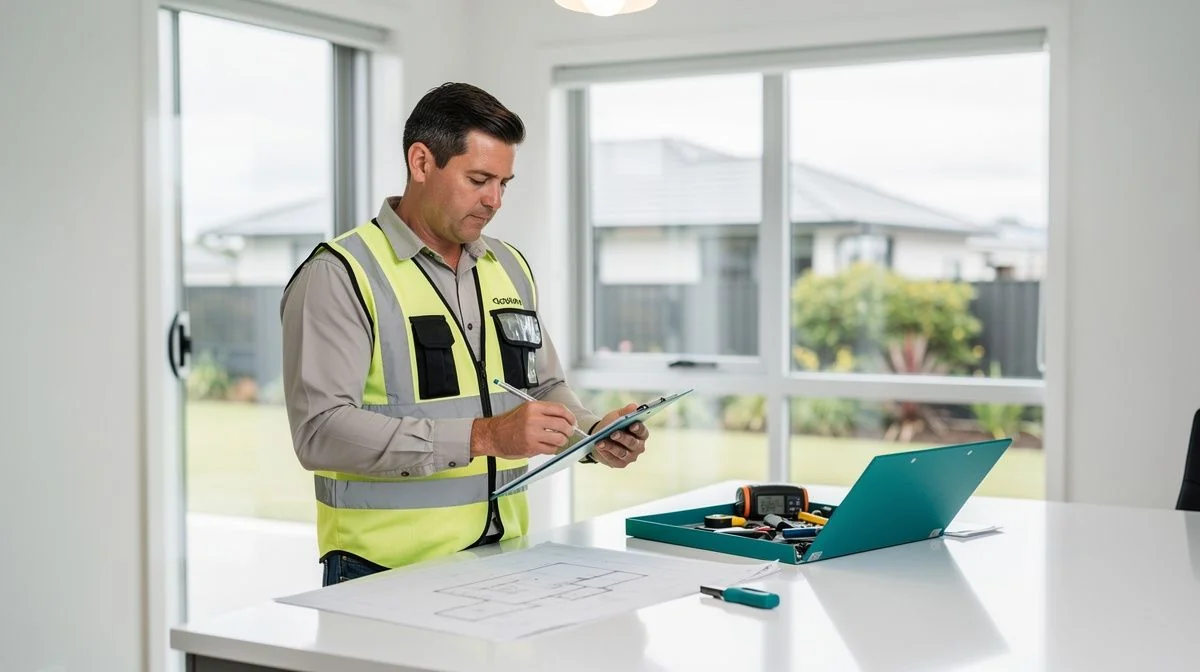
Why a Building Inspection Matters in New Plymouth
New Zealand does not require building inspectors to hold a government licence. Anyone can call themselves a building inspector — there is no mandatory registration, no compulsory qualification, and no central regulator overseeing the profession. That does not mean the industry is the Wild West, but it does mean the responsibility for choosing a competent inspector rests entirely with you.
New Plymouth is a city where the inspection matters more than many buyers realise. The climate is temperate but punishing on buildings — annual rainfall sits around 1,400 millimetres, and the city's exposed western position on the Tasman Sea means gale-force winds and driving rain are a regular feature. Homes here take a beating from wind and water in a way that inland properties simply do not.
Add to that the volcanic soils — deep, fertile loams that drain well on flat ground but become heavy and mobile on slopes — and a housing stock that ranges from 1900s villas and 1950s state houses to mid-century modern homes and recent subdivisions, and the potential for expensive hidden defects is significant. The city also has its share of leaky-era plaster-clad homes, particularly in coastal suburbs where salt spray and wind combine to accelerate cladding failure.
A standard pre-purchase inspection in New Plymouth costs somewhere between $350 and $650 for most homes, with apartments at the lower end and large or complex properties pushing higher. GST is usually additional. That inspection fee is, at worst, a few hundred dollars. The cost of missing a major defect — a rotting subfloor, an unconsented extension, or weathertightness failure driven by wind-blown moisture — can run into six figures.
How We Researched This Guide
We spent time on the websites of New Plymouth building inspectors to understand how they work, what they charge, and where they focus their attention during an inspection. We reviewed the NZS 4306:2005 standard to confirm what a proper inspection actually covers, and we checked the official buyer guidance from settled.govt.nz to make sure we were not passing on anything unverified.
What an Inspection Actually Covers
Every reputable New Plymouth inspection follows NZS 4306:2005, the New Zealand standard for residential property inspections. It is a visual, non-invasive assessment — the inspector examines what they can see and safely reach without moving furniture, lifting floor coverings, or making holes in walls.
| Area | What Gets Checked |
|---|---|
| Roof and roof space | Covering condition, flashings, valleys, gutters, downpipes, penetrations, insulation — inspected from ground level or by ladder where safe access exists |
| Exterior and cladding | Cladding type and condition, joinery, flashings around windows and doors, deck and balcony construction, weathertightness risk indicators |
| Subfloor and foundations | Pile condition and bracing, ground clearance, subfloor ventilation, evidence of moisture, borer, or rot in bearers and joists. Slabs checked for cracking and drainage |
| Interior (room by room) | Walls, ceilings, floors, doors, windows, stairs — signs of movement, cracking, staining, or mould |
| Wet areas | Non-invasive moisture testing around showers, baths, basins, and toilets using a moisture meter |
| Services (visual only) | Electrical switchboard and visible wiring, hot water cylinder (age, condition, safety valve), visible plumbing — obvious defects are flagged; inspectors are not electricians or plumbers |
| Site and drainage | Surface water flow, retaining walls, paths, driveways, fencing, vegetation proximity to the building |
What is not included in a standard inspection unless you specifically request and pay for it: invasive moisture testing (drilling into walls to check framing), specialist weathertightness assessment, methamphetamine testing, asbestos identification, electrical or plumbing compliance certification, structural engineering assessment, and swimming pool or pool-fence compliance. If an inspector spots something concerning in any of those areas, their report will recommend the right specialist.
New Plymouth Pricing — What You Can Expect to Pay
Building inspection prices in New Plymouth sit slightly below Auckland but are comparable to other main centres. Travel distances within the city are shorter than in metropolitan Auckland, which keeps costs moderate, but the mix of property types — from compact units to character villas and sprawling modern homes — still creates a range. The figures below are for a written report meeting NZS 4306:2005. GST is usually additional.
| Property Type | Typical Price (ex GST) |
|---|---|
| Apartment or unit (up to 120 m²) | $300–$450 |
| Standard standalone home (120–200 m²) | $350–$550 |
| Larger home (200–300 m²) | $500–$700 |
| Premium or multi-storey (300 m²+) | $600–$800+ |
| Verbal report only (no written record) | $250–$350 |
| Methamphetamine testing (add-on) | $200–$500 |
| Specialist weathertightness assessment | $400–$800 |
Price ranges verified from provider websites and local industry cost guides. Final quotes depend on property address, age, and complexity.
What drives the price. Property size and age are the biggest factors. Access difficulty — steep sections common in suburbs like Frankleigh Park and Vogeltown, tight subfloor clearances, multi-storey layouts — adds time and therefore cost. Report turnaround speed matters too: some inspectors charge a premium for same-day reports. Specialist equipment such as thermal imaging cameras can push the price toward the higher end, though many inspectors include moisture detection as standard.
A verbal-only report is cheaper, but it leaves you with no written record. For a purchase this size, the written report is almost always the right call — it gives your lawyer something to work with if the inspection reveals problems that affect the sale.
How to Choose an Inspector — What Actually Matters
Since there is no licensing regime, you need to do your own due diligence. Here is what separates a thorough inspector from someone going through the motions.
Trade qualification and experience
A BCITO-qualified builder or Licensed Building Practitioner who has spent years on the tools before moving into inspections brings practical knowledge that no training course can replicate. They have installed flashings, framed subfloors, and fixed leaky decks — they know how a house goes together and, more importantly, how it comes apart. Some of the most thorough New Plymouth inspectors are former builders with no formal accreditation but decades of hands-on trade experience.
Accreditation and professional body membership
New Zealand has three main professional bodies for building inspectors — the Building Officials Institute of New Zealand (BOINZ), the New Zealand Institute of Building Surveyors (NZIBS), and the New Zealand Institute of Building Inspectors (NZIBI). Membership generally signals that an inspector follows a code of ethics, carries professional indemnity insurance, and keeps their skills current through ongoing training. BOINZ-accredited inspectors have completed formal training, passed audits, and undergone peer review of their reports. It is a useful quality signal — but it is not a government licence, and plenty of trade-qualified inspectors do excellent work without formal accreditation.
Professional indemnity insurance
This is non-negotiable. If an inspector misses a major defect, PI insurance is what protects you. Ask to see the certificate. Any inspector who hesitates or deflects is not worth your time.
Moisture detection equipment
A basic pin-type moisture meter is the minimum. Better inspectors use non-invasive capacitance meters that scan behind surfaces without leaving marks. Thermal imaging cameras are the gold standard — they can detect temperature differences that indicate hidden moisture behind walls and ceilings. Ask what equipment they use and whether moisture testing is included in the base price or charged as an extra.
New Plymouth-specific knowledge
An inspector who has worked across the city for years knows what to look for in different eras and suburbs. A 1990s plaster home on the coast at Fitzroy has different risk factors than a 1950s state house on a hill slope in Frankleigh Park or a modern brick-and-tile home in the newer subdivisions near Bell Block. They know which suburbs have the worst wind exposure, which building styles tend to hide moisture problems, and where historic land instability can affect foundations. Ask how long they have been inspecting in New Plymouth specifically — not just how long they have been in the trade.
Red flags
- They will not show you their PI insurance certificate. Walk away.
- They promise a written report within an hour of arriving. A proper inspection takes at least an hour and a half to two hours on site for a standard home, longer for larger or complex properties — plus writing time. Speed is not a virtue here.
- They discourage you from attending. A good inspector welcomes you walking through with them. It is the most valuable part of the process.
- They quote a price without asking the property address, age, or floor area. If they do not know what they are inspecting, the quote means nothing.
- They have no Google reviews or online presence. A service business with zero online footprint is a gamble.
The Inspection Process — What to Expect
On inspection day, the inspector arrives at the property and works through it systematically — exterior first, then interior room by room, then subfloor and roof space where accessible. They take photos of everything, run moisture readings at risk points, and make notes as they go.
How long it takes. A standard three-bedroom home takes roughly one and a half to two hours on site. Larger homes, multi-storey properties, character homes with complex subfloors, and buildings from the leaky era take longer. Commercial properties and multi-unit developments can take half a day or more.
Should you attend? Yes, if you possibly can. Walking through with the inspector lets you see issues with your own eyes, ask questions in real time, and understand the difference between a genuine structural concern and a maintenance item that looks worse than it is. If you cannot attend, a thorough phone debrief after you receive the report is the next best thing — make sure the inspector offers this before you book.
The report. Most inspectors deliver the written report within 24 to 48 hours of the on-site inspection. A good report is photo-heavy, written in plain English, and categorises findings by severity — urgent defects, maintenance items to address within a reasonable timeframe, and minor observations for general awareness. It should include specific recommendations, not vague statements. If the report reads like a tick-box form with no commentary, the inspection probably was not thorough.
New Plymouth-Specific Risks — What Your Inspector Should Know
Wind-driven rain and weathertightness
New Plymouth's exposed western position means homes are subjected to persistent westerly winds and driving rain. This is the single biggest weathertightness risk factor in the region. Properties clad in monolithic plaster without proper cavity drainage systems are particularly vulnerable — wind pushes rain past flashings and into cladding joints far more aggressively than in sheltered inland locations. Even homes built after the Building Code update requiring cavities in the mid-2000s can suffer failure if poor workmanship has left gaps.
A standard inspection will flag visible indicators: cladding type, ground clearances, flashing condition, moisture readings around windows and doors. If the inspector finds concerning signs on a plaster-clad home, the next step is a specialist weathertightness assessment with invasive testing. Full remediation on a two-storey New Plymouth home can easily run between $200,000 and $400,000, depending on the extent of damage and coastal exposure.
Volcanic soils and land stability
The deep volcanic loams that make the Taranaki region so fertile also behave differently under buildings. On flat ground they are generally stable and free-draining, but on slopes — common in suburbs such as Frankleigh Park, Vogeltown, Westown, and parts of Merrilands — these soils can become heavy and mobile when saturated. Seasonal movement can cause foundations to shift, retaining walls to lean, and driveways and paths to crack. A good inspector checks for signs of slip activity, including stepped foundations, cracking in concrete slabs, and misaligned doors or windows. They also look at drainage on sloping sites — downpipes that discharge directly onto the ground rather than into soak pits or stormwater connections can rapidly saturate unstable soils.
Coastal corrosion
Properties within a few kilometres of the coast — particularly in Fitzroy, Moturoa, and the Beach Street area — are exposed to salt-laden air that accelerates corrosion on metal roofs, flashings, gutters, and fixings. Inspectors familiar with the region check for rust on long-run steel roofing, corrosion around exposed nail heads, and degradation of aluminium joinery where protective layers have worn. A coat of marine-grade paint can slow the process, but once corrosion sets in, replacement is the only option.
Ageing housing stock and unconsented work
New Plymouth has a significant number of pre-1970s homes — villas, bungalows, and mid-century modern designs with flat roofs. These often contain original wiring (rubber-insulated cables that become brittle and dangerous), plumbing (galvanised iron pipes in the subfloor), and dated insulation. Flat roofs in particular are a concern in New Plymouth's high-rainfall climate — any failure in the roofing membrane leads quickly to internal damage. Unconsented additions and alterations are also common, especially sunrooms and deck enclosures that lack proper building consent. A LIM report, cross-checked against the physical condition flagged by the inspector, is essential.
Seismic vulnerability
New Plymouth is in a moderate earthquake zone, with active faults in the Taranaki region. Older homes built before the 1970s often lack adequate seismic bracing — timber homes on piles may have insufficient diagonal bracing, and unreinforced masonry chimneys and retaining walls are common. A thorough subfloor inspection checks for pile condition, bracing, and foundation tie-downs. The city also experienced several significant earthquake swarms historically, meaning ground conditions can amplify shaking on softer volcanic soils.
Questions You Might Have
What happens if the report finds major problems?
This is exactly why you got the inspection. If the report flags significant defects — structural issues, extensive moisture damage, unconsented work — you have options. You can negotiate the price down based on estimated repair costs, ask the vendor to fix the problems before settlement, or walk away if your offer was conditional on a satisfactory building report. Your lawyer can advise on the strongest approach for your situation, but the inspection report is your leverage.
Do I need meth testing too?
Methamphetamine testing is not part of a standard building inspection. If the property has been tenanted — or if you simply want certainty — you can add it for roughly $200 to $500. Recent regulation changes have clarified acceptable residue levels for rental properties. A professional lab-analysed test gives you legally defensible results, which matters for insurance and future rental compliance. DIY test kits give you a yes/no but cannot tell you whether the level is barely detectable or dangerously high.
What if I am buying an apartment or townhouse?
You can get a standard inspection on your individual unit — it covers the interior, visible services, and any exclusive-use areas like balconies or courtyards. But you cannot inspect the whole building. For apartment and townhouse buyers, the body corporate's long-term maintenance plan and meeting minutes are just as important as the inspection report. Look for any mention of weathertightness issues, upcoming major maintenance, and the state of the long-term maintenance fund — some body corporates opt out of having one, which means you could face a large special levy with little warning.
Can inspectors check for unconsented work?
Inspectors can identify work that looks recent or does not match the style and era of the rest of the house. An extension with different cladding, a bathroom in an unexpected location, a deck that looks newer than the house — these are all clues. But the inspector cannot definitively confirm whether something was consented. That requires checking the property's LIM report from the council and comparing it against what is physically on site. If the inspection flags something suspicious, the LIM is where you verify it.
Should I get a building inspection on a new build?
Yes. New Zealand's recent construction boom has placed enormous pressure on the building industry, and the pace of development does not always match the quality of workmanship. Inspectors on new builds regularly find incomplete flashings, poorly connected drainage, bathroom extraction ducts venting into roof spaces, and finishing defects that suggest rushed work. The building consent and council inspection process provides a baseline of quality assurance, but it does not catch everything. Identifying issues before settlement gives you the opportunity to have them remedied while they are still straightforward to fix.
What Matters Most
Buying property in New Plymouth means spending hundreds of thousands — often well over half a million — on a building you have probably walked through twice. An inspection costing a few hundred dollars tells you what you are actually buying. In a city with a punishing coastal climate, mobile volcanic soils on slopes, a housing stock spanning more than a century, and moderate seismic risk, skipping the inspection is not saving money — it is gambling.
Spend the time to find an inspector who knows New Plymouth, who is happy for you to walk through with them, and who writes reports in plain English with photos and specific recommendations rather than vague observations. Read the full report, not just the summary. If it flags problems, treat them as information — most issues have a dollar figure attached, and that dollar figure is your negotiating tool.
A clean report gives you the confidence to proceed. A report that catches a serious defect saves you from a money pit. Either way, the inspection fee is the best money you will spend on the whole transaction.

The ValueHub Team built this site because finding clear, unbiased financial information in New Zealand was harder than it should be. Every guide is based on real research — we compare the actual fees, terms, and fine print so you don't have to. Our tip: shop around every year, read the policy docs, and never assume loyalty gets you the best deal.— The ValueHub Team
Try our Calculators
Use these free tools to crunch the numbers:
KiwiSaver Fund Comparison
Compare fees, returns, and risk levels across every KiwiSaver fund from all 31 NZ providers.
Currency Converter — USD to NZD
Convert US Dollars to New Zealand Dollars instantly. See the latest exchange rate and 30-day trend.
Mortgage Repayment Calculator
Calculate your weekly, fortnightly, or monthly mortgage repayments. Free NZ mortgage calculator — try different rates, terms, and repayment frequencies.
Compound Interest Calculator
See how your savings grow with compound interest over time. Free NZ compound interest calculator with yearly, monthly, and weekly compounding options.
Term Deposit Calculator
Calculate your term deposit returns before you lock in. Compare interest earned across different terms and rates with ValueHub's free calculator.
Savings Goal Calculator
Calculate how long it will take to reach your savings goal — and what monthly deposit you need to get there. Free NZ savings planner.
Building Inspectors in Other Cities
Latest Guides & Reviews
New Zealand Financial Markets Authority Guide: Investor Protection in NZ
Protect your investments with this practical guide to the FMA — how to check licences, spot scams, and what to do if a provider fails. Verified against...
comparisonEV Home Charger NZ: Costs & Buying Guide
Compare EV home charger costs in NZ — verified prices from $1,299, installation fees, smart features, and what actually matters for your home's power supply.
guideThe Most Popular EVs in New Zealand
The best-selling electric cars in New Zealand, ranked by official registration data. Top BEV and PHEV models and brands, updated monthly.
guideEV Market Stats
New Zealand's EV market in numbers — market share, fleet size, top-selling models and used imports, updated with the latest NZTA and MIA data.