Best Concreters in Wanaka
Published 23 January 2025 · Updated 18 August 2026
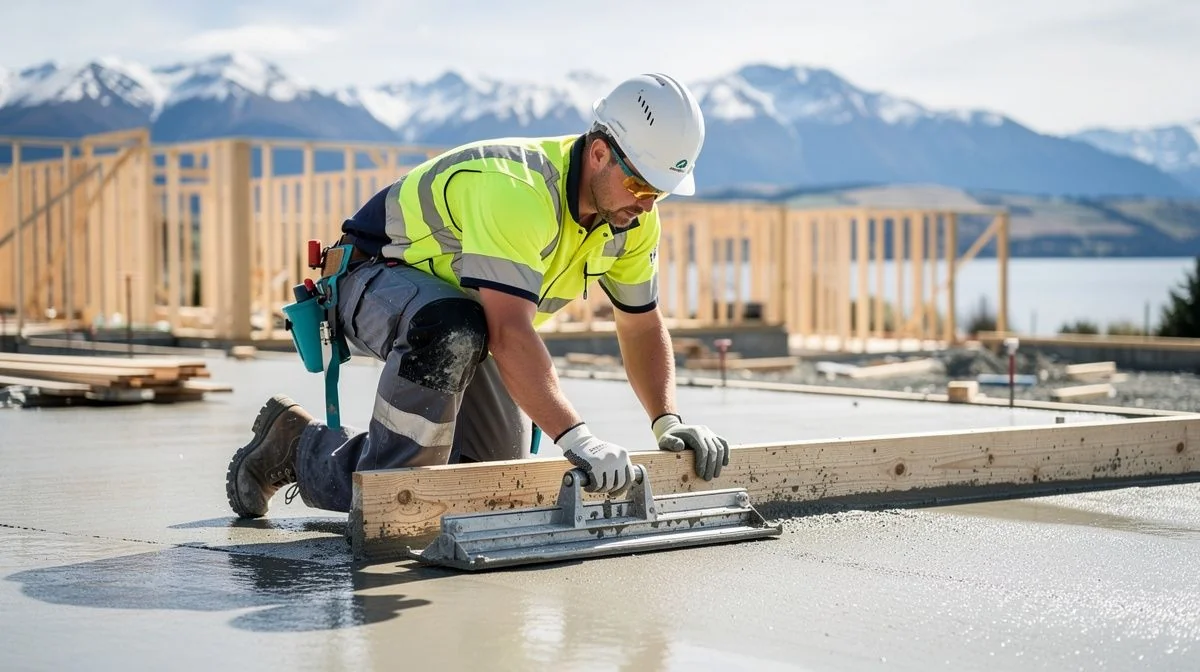
If you’re planning a concrete project in Wanaka — whether it’s a new driveway, a patio for the lake views, or a retaining wall on a sloping section — finding the right concreter is half the job done. Wanaka’s alpine climate, with sharp frosts and hot summers, puts concrete through its paces. That’s why local experience matters just as much as technical skill. Here’s how to find a concreter in Wanaka who will deliver a result that stands up to the conditions.
What to look for when hiring a concreter in Wanaka
Concrete might look straightforward, but the difference between a job that cracks in its first winter and one that lasts decades comes down to proper preparation, reinforcement, and curing. In Wanaka, where the ground can freeze and the UV is intense, you need someone who knows the local rules of thumb.
Licensed Building Practitioner (LBP) status
For any structural concrete work — like foundations, retaining walls, or load-bearing slabs — your concreter should be a Licensed Building Practitioner (LBP) with the relevant class (usually “Concrete” or “Site 2”). Even for non-structural work, hiring an LBP gives you extra assurance they know the Building Code.
Local experience
Ask how many Wanaka jobs they’ve done. Experienced local concreters understand:
- How frost cycles affect curing times
- Why drainage is critical on Wanaka’s clay-heavy soils
- Which concrete mixes handle temperature swings best
- Council consent requirements (especially for driveways crossing footpaths)
Insurance and guarantees
Check they have current public liability insurance (at least $1 million is standard). Also ask about their workmanship guarantee — many reliable concreters offer a two-year or five-year defect guarantee on properly maintained work.
References and photos
A reputable concreter should be happy to show you photos of recent Wanaka projects. Better still, ask for contact details of one or two recent clients. A quick call can tell you a lot about punctuality, cleanliness, and whether they fixed any issues that came up.
Written quote and contract
Never rely on a verbal estimate. A detailed written quote should list materials, dimensions, reinforcement, finishing, curing method, and a clear timeline. A contract protects both you and the concreter.
Key questions to ask before hiring
When you’ve shortlisted a few Wanaka concreters, ask these questions to compare apples with apples:
- What mix design do you recommend for this project? — The right concrete strength (e.g. 25 MPa vs 32 MPa) and air entrainment (for frost resistance) makes a real difference.
- Will you handle council consent? — Some concreters will apply for building or resource consent on your behalf; others expect you to do it.
- How do you prepare the subgrade? — Proper compaction, base layer, and drainage are essential — especially on Wanaka’s variable ground.
- What reinforcement are you using? — Steel mesh or fibre? Ask why they chose that for your job.
- How long will curing take, and what methods do you use? — Slow curing (often with wet hessian, sprinklers, or curing compound) prevents cracking.
- Do you subcontract any of the work? — If so, how do you supervise quality?
- What happens if the weather turns bad during the pour? — Rain or frost can ruin fresh concrete; a good concreter will have a contingency plan.
Tips for getting the best results
Your concreter will do the hard work, but a bit of planning on your side helps ensure a smooth project.
Choose the right time of year
In Wanaka, the best months for concrete pours are typically October to April. That avoids the frost risk and gives warmer conditions for curing. If you have to pour in cooler months, ask about insulated blankets or heated enclosures.
Check drainage before the pour
Wanaka’s rainfall can be sudden and heavy. Make sure the site is graded to direct water away from the concrete. A sump, French drain, or gravel base can prevent water pooling underneath and causing movement later.
Think about control joints
Concrete expands and contracts with temperature changes. Ask your conterter to saw-cut or form control joints at regular intervals (every 2–3 metres for a typical driveway). This stops random cracks from ruining the finish.
Don’t rush the cure
Concrete needs moisture to reach its full strength. Even if it looks dry after a day, the chemical reaction continues for weeks. Follow your conterter’s curing instructions carefully — usually keeping the surface damp for at least 5–7 days in summer, longer in cooler weather.
Seal for longevity
Exposed concrete benefits from a quality sealer — especially in Wanaka’s sunny, UV-rich environment. Sealing helps resist stains, freeze-thaw damage, and dusting. Ask your conterter if they recommend a particular sealer and whether they include it in the quote.
Plan for access and debris
Concrete trucks need a clear, level path. If your site is tight (many Wanaka sections are), discuss access with your conterter. They might recommend a smaller truck or a concrete pump (extra cost). Also, be prepared for some mess — good concreters clean up thoroughly afterwards, but it’s worth confirming that in writing.
A note about costs and getting quotes
Pricing for concrete work in Wanaka varies depending on the size, complexity, finish, and current material costs. Instead of focusing on a price per square metre — which can be misleading — ask for an itemised quote that shows:
- Excavation and removal
- Base layer and compaction</

The ValueHub Team built this site because finding clear, unbiased financial information in New Zealand was harder than it should be. Every guide is based on real research — we compare the actual fees, terms, and fine print so you don't have to. Our tip: shop around every year, read the policy docs, and never assume loyalty gets you the best deal.— The ValueHub Team
Try our Calculators
Use these free tools to crunch the numbers:
KiwiSaver Fund Comparison
Compare fees, returns, and risk levels across every KiwiSaver fund from all 31 NZ providers.
Currency Converter — USD to NZD
Convert US Dollars to New Zealand Dollars instantly. See the latest exchange rate and 30-day trend.
Mortgage Repayment Calculator
Calculate your weekly, fortnightly, or monthly mortgage repayments. Free NZ mortgage calculator — try different rates, terms, and repayment frequencies.
Compound Interest Calculator
See how your savings grow with compound interest over time. Free NZ compound interest calculator with yearly, monthly, and weekly compounding options.
Term Deposit Calculator
Calculate your term deposit returns before you lock in. Compare interest earned across different terms and rates with ValueHub's free calculator.
Savings Goal Calculator
Calculate how long it will take to reach your savings goal — and what monthly deposit you need to get there. Free NZ savings planner.
Concreters in Other Cities
Latest Guides & Reviews
New Zealand Financial Markets Authority Guide: Investor Protection in NZ
Protect your investments with this practical guide to the FMA — how to check licences, spot scams, and what to do if a provider fails. Verified against...
comparisonEV Home Charger NZ: Costs & Buying Guide
Compare EV home charger costs in NZ — verified prices from $1,299, installation fees, smart features, and what actually matters for your home's power supply.
guideThe Most Popular EVs in New Zealand
The best-selling electric cars in New Zealand, ranked by official registration data. Top BEV and PHEV models and brands, updated monthly.
guideEV Market Stats
New Zealand's EV market in numbers — market share, fleet size, top-selling models and used imports, updated with the latest NZTA and MIA data.