Best Dentists in Wellington
Published 21 August 2026 · Updated 20 August 2026
Why a Good Dentist Matters in Wellington
Dental costs in Wellington sit at the higher end of the country, and the biggest trap is not the headline price — it is what is included. A cheap check-up may not cover X-rays or a professional clean, and those get billed separately. Asking exactly what the price covers before you book is the difference between a genuine bargain and a surprise.
A check-up and clean in Wellington runs $80 to $250. There is no general public dental service for adults, only an emergency pathway and subsidies for some, so a dentist you trust is the practical route to ongoing care.
Every dentist must be registered with the Dental Council and hold a current Annual Practising Certificate, so the register is your first check. Beyond that, how they handle anxious patients and explain costs is what separates a good one from a mediocre one.
How We Researched This Guide
We reviewed the Dental Council's registration and practising requirements to explain exactly what a dentist must hold and to confirm how the public register works. For pricing, we looked at what Wellington practices publish on their own sites alongside current cost guides. Where a number wasn't published, we didn't guess at it.
Our Trusted Dentists
We feature businesses that demonstrate strong performance, proven experience, and consistently positive customer feedback. Some of the providers listed may have commercial relationships with us, but all are selected based on quality and reliability.
To begin, reach out to them and speak with them directly — this helps you explain your job, ask questions, and confirm whether they're the right fit.
We have an amazing, caring team of dental professionals and dental specialists waiting to guide you through your dental treatment. Each member on our team is committed to excellence and will give you 100% to create an environment that is positive, encouraging and enjoyable for you and your family. We are dedicated to providing the type of personal service that you deserve.
The Quick Summary (60-Second Version)
In short:
- Typical cost: a Wellington check-up and clean runs $80–$250.
- How long: a check-up takes about half an hour; a filling or crown takes one or two visits.
- Best value for most people: a dentist you can afford to see regularly, not just in an emergency.
- What to check: their Dental Council registration and Annual Practising Certificate.
- The biggest factor: what is included — ask whether the price covers X-rays and cleaning.
- The mistake to avoid: waiting until you are in pain — by then the cheap fix is usually gone.
Dentist Licensing & Regulation — What Actually Matters
Dentistry is tightly regulated in New Zealand. Under the Health Practitioners Competence Assurance Act, every dentist must be registered with the Dental Council, and must hold a current Annual Practising Certificate to practise. It is an offence to practise without one, and the Council exists specifically to protect the public by making sure practitioners meet and maintain standards.
The register is public and free to search. You can look up any dentist's name and confirm they are registered, what their scope of practice is, and whether there are any conditions or history you should know about. It takes about 30 seconds, and it is the single most important check you will make.
| Who | What they must have |
|---|---|
| Every practising dentist | Dental Council registration |
| Every practising dentist | A current Annual Practising Certificate |
| Specialists (orthodontists, oral surgeons, etc.) | Additional specialist registration |
| Public protection | Free searchable register + complaints process |
Beyond registration, there is no additional membership you need to seek — the Dental Council is the regulator, and the register is the source of truth. What you should still check is the practical stuff: the practice's pricing transparency, their approach to payment plans, and how they handle nervous patients if that matters to you.
For children and teenagers, the picture is different and better. Free dental care is available for eligible children, and free care continues for teenagers. If you have kids, enrol them — it is the easiest dental money you will ever save.
Wellington Pricing — What You Can Expect to Pay
Wellington sits at the higher end of the country for dental costs, but prices still vary a lot by practice. The single most important habit is to ask exactly what is included — because a cheap check-up may not include X-rays or cleaning, and those add up.
| Treatment | Typical cost |
|---|---|
| Check-up and clean | $80–$250 |
| X-rays (per film) | $30–$80 |
| White filling | $150–$350 |
| Root canal treatment | $800–$1,500 |
| Simple extraction | $150–$350 |
| Crown | $1,200–$1,800 |
| Emergency appointment | $100–$200 |
Price ranges verified from multiple Wellington dental practice sources as of August 2026. Final quotes depend on the tooth, the complexity, and the materials used, and any good practice will give you a written estimate before starting non-routine work.
The honest framing is that dental care is a pay-for-it model in New Zealand. There is no general public restorative service for adults — publicly funded care is limited to emergency treatment for pain and infection, plus a subsidy for Community Services Card holders and ACC cover for dental injuries from accidents. For everything else, you pay, and the cost rises the longer you put things off.
That is why payment plans matter. Many Wellington practices offer payment plans or partner with finance companies, and some provide WINZ quotes for eligible patients. If cost is a barrier, ask about it up front — a good practice will work with you rather than leave you to choose between a filling and your groceries.
How to Choose a Dentist — What Actually Matters
Check the register first. Confirm the dentist is registered with the Dental Council and holds a current Annual Practising Certificate. It is free, it takes 30 seconds, and it is the one check you cannot skip.
Ask about pricing transparency. Good practice includes providing a written estimate before any non-routine work, explaining what each item costs, and flagging anything that might change. Ask specifically whether the check-up price includes X-rays and a clean, or whether those are billed separately.
Ask how they handle anxious patients, if that matters to you. Sedation, gentle techniques and a dentist who explains as they go are all real, and a good practice will tell you exactly how they look after nervous patients. Do not be embarrassed to ask.
Ask about their approach to preventive care. A good dentist talks about check-ups, cleaning and catching things early, rather than waiting for problems to become expensive. In a pay-for-it system, prevention is the cheapest strategy.
These are the signs to look elsewhere:
- Not on the Dental Council register, or no practising certificate. That is a hard stop.
- Won't give a written estimate before major work. You have a right to know the cost.
- Pushes the most expensive option without explaining alternatives. A filling and a crown are different conversations.
- No answer on how they handle anxious or nervous patients. If it matters to you, it matters.
- No payment plan options when cost is a barrier. Good practices meet you halfway.
What to Expect When You Visit a Dentist
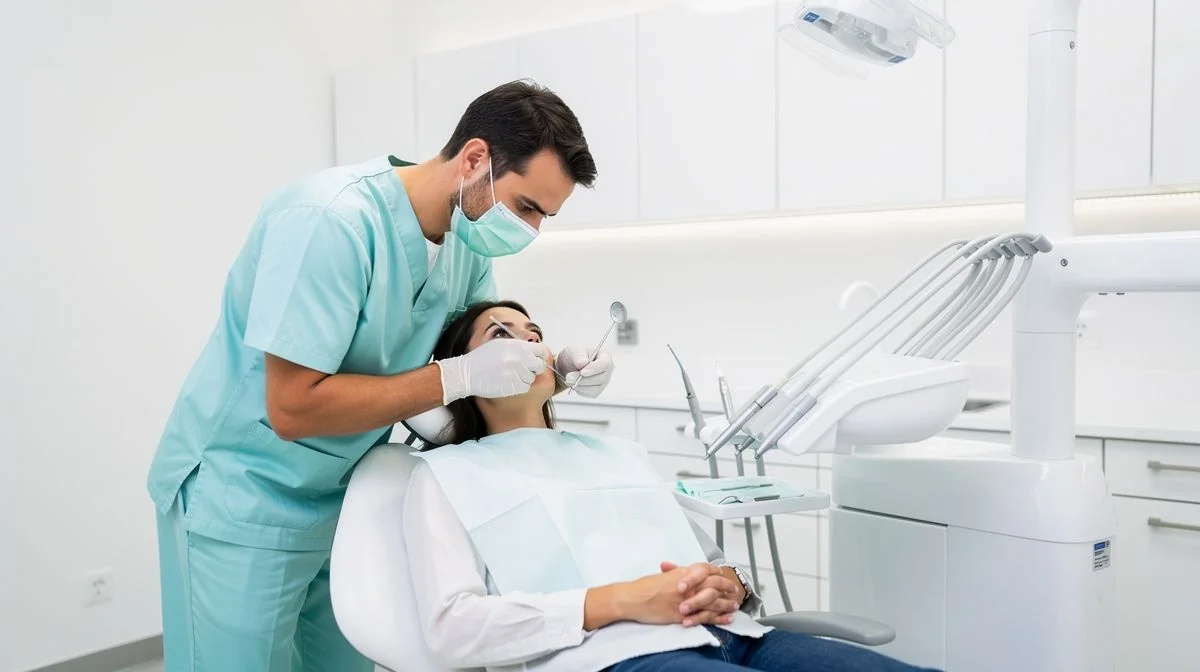
Expect a check-up to start with a look at your teeth and gums, usually with some X-rays if it is your first visit or if something is concerning. The dentist or hygienist will then clean your teeth and talk through anything they have found — what needs to be done now, what can wait, and what it will cost.
If you need treatment, expect a written estimate and a clear explanation of the options. A good dentist lays out the conservative option alongside the more extensive one and lets you decide. For anything more than a routine check-up, you will usually book a follow-up appointment rather than having it all done on the spot.
How long common appointments roughly take:
- Check-up and clean: 30-45 minutes.
- White filling: 30-60 minutes.
- Root canal treatment: one to two visits, each lasting an hour or more.
- Crown: one to two visits, depending on whether it is same-day.
- Simple extraction: 30-45 minutes.
After the appointment, expect clear aftercare instructions and a sense of what comes next. A good practice books your next check-up before you leave — not as a sales tactic, but because regular care is genuinely how you avoid the expensive problems.
Wellington-Specific Risks & Local Factors
Dental care in Wellington is shaped by the cost of living and the range of practices. These are the factors that matter locally.
The higher-cost reality
Wellington sits at the higher end of the country for dental costs, alongside Auckland, driven by higher rents and wages. A check-up and clean here runs $80 to $250, and more in premium city practices. The answer is not to skip the dentist — it is to shop around, because the price gap between practices is genuinely large.
What is included matters
The biggest pricing trap in Wellington is what is included. A cheap check-up may not include X-rays or a professional clean, and those are billed separately. Always ask exactly what the price covers before you book, so you are comparing like with like.
The pay-for-it reality
Like the rest of the country, Wellington has no general public dental service for adults — only emergency treatment, a Community Services Card subsidy and ACC for accidents. That makes an affordable private dentist you can see regularly the single most useful thing you can find, and payment plans a genuine lifeline.
New-patient packages
Many Wellington practices offer promotional new-patient packages, which can be a genuinely cheaper way to get established with a dentist. These are worth asking about if you are new to a practice or have not been for a while — they often bundle the exam, X-rays and clean at a discount.
Questions You Might Have
How do I check a dentist is actually registered?
Search the Dental Council's public register online. It is free, and it tells you whether the dentist is registered, whether they hold a current Annual Practising Certificate, and whether there is anything in their history you should know about. It takes about 30 seconds, and it is the single most important check you can make.
Is dental care free for adults in Wellington?
No, not generally. Publicly funded care for adults is limited to emergency treatment for pain and infection, a subsidy for Community Services Card holders, and ACC cover for dental injuries from accidents. For routine check-ups, fillings and everything else, you pay a private dentist. Children and teens get free care.
Why does the check-up price vary so much?
Because practices set their own fees, and what is included differs. One practice may bundle X-rays and a clean into the check-up price, while another bills them separately. Always ask exactly what the price covers, so you are comparing like with like rather than being surprised by extras.
How often should I get a check-up?
Most dentists recommend a check-up and clean every six to twelve months, depending on your teeth and your risk. Regular visits are how you catch small problems before they become expensive ones — a filling now is far cheaper than a root canal later. In a pay-for-it system, that prevention is the cheapest strategy there is.
What if I cannot afford a dentist?
Do not just avoid it — the problem only gets more expensive. Ask the practice about payment plans, finance options, or WINZ quotes if you are eligible. Free care is available for children and teens. Many practices genuinely want to help patients manage cost, and the earlier you raise it, the more options you have.
What Matters Most
Wellington's dental care has no public safety net for adults, and the biggest trap is a price that looks cheap because it leaves out X-rays or cleanings. Ask exactly what is covered, get a written estimate, and find a dentist you can afford to see regularly.
Check the register and compare like for like. Do that, and your teeth — and your bank account — will thank you for years.

The ValueHub Team built this site because finding clear, unbiased financial information in New Zealand was harder than it should be. Every guide is based on real research — we compare the actual fees, terms, and fine print so you don't have to. Our tip: shop around every year, read the policy docs, and never assume loyalty gets you the best deal.— The ValueHub Team
More Dentists in Wellington
These businesses also operate in this area.
Experience top-quality dental care at Tawa Dental Centre in Wellington. Our team provides personalised treatments for all your dental needs. Your gateway to exceptional dental health and beautiful smiles in Wellington. At Tawa Dental Care, we embrace every patient with open arms. Whether you’re visiting for the first time or are a longstanding member of our family.
Dentists and Dental Hygienists in Willis st, Wellington, we provide a full range of services in a modern restful environment. Cosmetic dentists Wellington. Wellington Dentists is fast becoming known for excellence in cosmetic dentistry in the greater Wellington region. Come and talk to us.
Try our Calculators
Use these free tools to crunch the numbers:
KiwiSaver Fund Comparison
Compare fees, returns, and risk levels across every KiwiSaver fund from all 31 NZ providers.
Currency Converter — USD to NZD
Convert US Dollars to New Zealand Dollars instantly. See the latest exchange rate and 30-day trend.
Mortgage Repayment Calculator
Calculate your weekly, fortnightly, or monthly mortgage repayments. Free NZ mortgage calculator — try different rates, terms, and repayment frequencies.
Compound Interest Calculator
See how your savings grow with compound interest over time. Free NZ compound interest calculator with yearly, monthly, and weekly compounding options.
Term Deposit Calculator
Calculate your term deposit returns before you lock in. Compare interest earned across different terms and rates with ValueHub's free calculator.
Savings Goal Calculator
Calculate how long it will take to reach your savings goal — and what monthly deposit you need to get there. Free NZ savings planner.
Dentists in Other Cities
Latest Guides & Reviews
New Zealand Financial Markets Authority Guide: Investor Protection in NZ
Protect your investments with this practical guide to the FMA — how to check licences, spot scams, and what to do if a provider fails. Verified against...
comparisonEV Home Charger NZ: Costs & Buying Guide
Compare EV home charger costs in NZ — verified prices from $1,299, installation fees, smart features, and what actually matters for your home's power supply.
guideThe Most Popular EVs in New Zealand
The best-selling electric cars in New Zealand, ranked by official registration data. Top BEV and PHEV models and brands, updated monthly.
guideEV Market Stats
New Zealand's EV market in numbers — market share, fleet size, top-selling models and used imports, updated with the latest NZTA and MIA data.