Best Dog Daycares in Upper Hutt
Published 28 January 2025 · Updated 18 August 2026
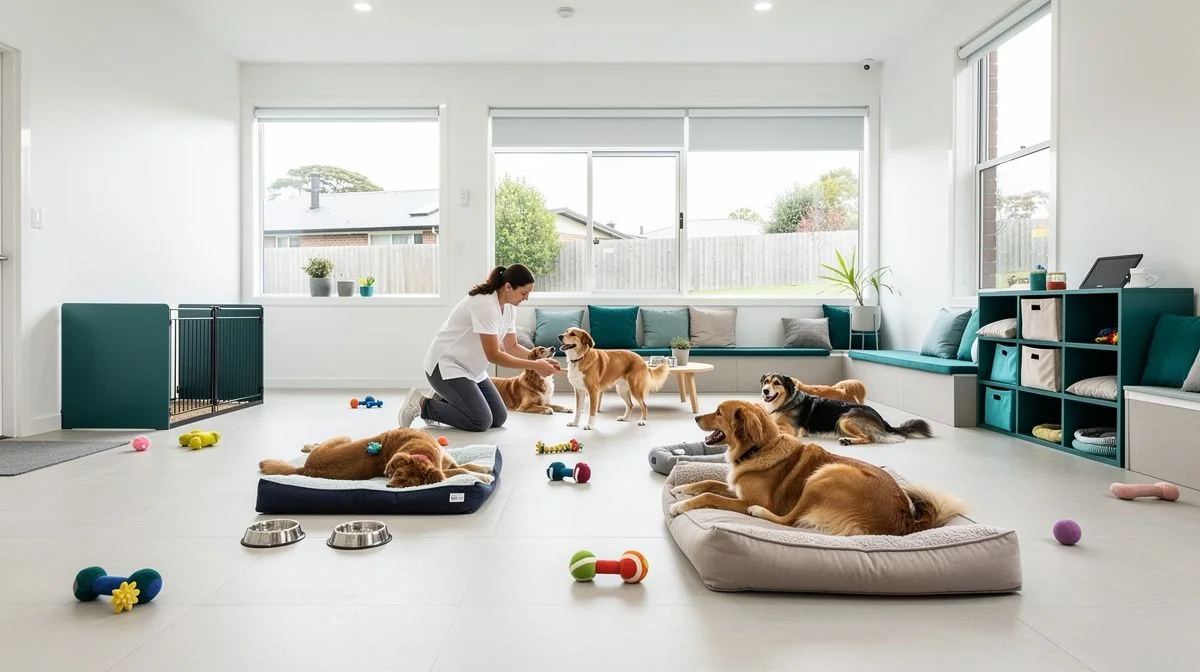
Best Dog Daycares in Upper Hutt
Finding the right dog daycare in Upper Hutt can make all the difference for your pet’s happiness and your peace of mind. Whether you're heading into the office in Wellington city or just need a day to run errands, Upper Hutt has a growing number of daycare options to suit busy dog owners. But not all daycares are created equal — the key is matching your dog’s personality, energy level, and health needs with the right facility.
Upper Hutt’s suburban layout means many daycares are located near major roads like State Highway 2, or tucked away in quieter residential areas. Some offer large outdoor spaces, while others focus on indoor play or even hydrotherapy pools. The best choice depends on your dog's temperament and your own priorities — safety, supervision, and a clean environment should always come first.
This guide covers what to look for, questions to ask, and how to get the best experience for both you and your four-legged friend. We also touch on costs and getting quotes, because transparency around pricing is essential when budgeting for regular care.
What to look for when hiring a Dog Daycare in Upper Hutt
Choosing a daycare isn’t just about location or price. You need to check the facility’s approach to safety, supervision, and welfare. Here are the key factors to assess before you book a trial day.
Licensing and insurance
All reputable dog daycares in New Zealand should hold current public liability insurance and comply with local council regulations. In Upper Hutt, the Upper Hutt City Council sets requirements for commercial dog businesses, including kennels and daycares. Check with your local council for current requirements — and ask the daycare directly for proof of insurance and any relevant certifications.
Staff-to-dog ratio
How many staff members are on duty matters. A lower ratio means more supervision and less chance of problems escalating. Look for at least one staff member per 10–15 dogs for group play, though some premium daycares aim for 1:8 or even 1:6. Ask about their policy during peak times, such as school holidays and summer months.
Enclosure and play areas
Dogs need space to run, explore, and rest. Good Upper Hutt daycares typically offer secure outdoor yards with shade and water, plus indoor areas for napping or quiet time. Check for clean, well-maintained surfaces — no broken fencing, hazardous objects, or piles of waste. A separate area for small or timid dogs is a strong sign that the daycare thinks carefully about group dynamics.
Health and hygiene protocols
A clean facility protects against diseases like kennel cough. Reputable daycares require up-to-date vaccinations (C5 is standard), provide hand-washing stations, and disinfect surfaces regularly. They should also have a clear policy on handling sick dogs — for instance, isolating a dog that starts coughing or showing diarrhoea.
Supervision and temperament testing
Most good daycares conduct a trial day or an assessment before accepting a dog. This lets them see how your dog interacts with other animals and people. During your visit, watch how staff manage play — are they actively redirecting rough behaviour? Do they step in when a dog seems stressed? Passive supervision is a red flag.
Emergency procedures
Ask what happens if a dog gets injured or becomes distressed. A well-run daycare will have a first aid kit on site, a staff member trained in pet first aid, and a clear plan to contact you and the nearest vet. In Upper Hutt, the closest 24-hour vet is the Vetora Upper Hutt clinic on Main Street — but daycares should have their own arrangements.
Socialisation approach
Not every dog enjoys a boisterous group play session. Some daycares offer calm, quiet playgroups for dogs who prefer a gentle pace. Others focus on enrichment activities like puzzle toys or supervised walks. Make sure the daycare’s style matches your dog’s personality — a high-energy herding breed might thrive in active play, while a senior dog may need more downtime.
Key questions to ask before hiring
Before you hand over the lead, ask these questions directly. The answers will tell you a lot about the daycare’s professionalism and suitability for your pet.
- What vaccinations and health checks do you require? Expect C5 vaccination, flea and worm treatment proof, and sometimes a faecal test. Some daycares also require a vet certificate for dogs over a certain age.
- How do you handle dogs that don’t get along? Look for a process involving separation, calming techniques, and possibly a move to a quieter group — not immediate expulsion unless safety is at risk.
- What happens during the trial day? A proper trial is usually half a day or a few hours. Staff should observe your dog’s behaviour and give you a detailed report afterwards.
- How do you manage feeding and medication? Some daycares provide meals or allow you to bring food. They should have a system for storing, labelling, and administering medication — ideally with written instructions.
- What’s your policy on unneutered males and females in season? Many daycares require neutering from 6–12 months and do not accept bitches in heat, to avoid stress and unplanned mating.
- Do you have CCTV or live webcams? While not essential, cameras let you check in on your dog during the day. Some daycares offer app-based viewing for a fee or as a free perk.
- What’s your cancellation policy? Life happens — find out how much notice you need to cancel without penalty, especially during peak holiday periods.
- Are you insured and council-approved? Always ask for proof. A legitimate daycare will be happy to show you.
Tips for getting the best results
Once you’ve chosen a daycare, a little preparation can make the experience smoother for everyone — especially your dog.
Start with a gradual introduction
Even a confident dog can find a full day at a new place overwhelming. Ask if you can bring your dog for a short visit first — 30 minutes or an hour — then gradually build up to a full day. This helps your dog learn the routine without becoming stressed.
Pack a familiar comfort item
A blanket, a favourite toy, or an old t-shirt with your scent can reassure an anxious dog during nap time. Most daycares encourage a comfort item as long as it’s washable and not a choking hazard.
Keep your own routine consistent
Dogs thrive on predictability. Drop off and pick up at roughly the same times each day, and use the same goodbye ritual — a calm pat and a cheerful “see you later” rather than a long, emotional farewell.
Communicate openly with staff
Let the daycare know about any changes in your dog’s health, behaviour, or diet. If your dog had a bad night’s sleep or seems off colour, share that. Staff can then watch more closely and tailor the day accordingly.
Provide proper gear
Send your dog with a well-fitted collar or harness and a lead. Avoid retractable leads — they are not safe in a group environment. Also pack a sturdy water bowl if your dog prefers one from home, and clearly label everything.
Review your dog’s body language
After a few visits, notice how your dog behaves on drop-off mornings. Dogs that are eager to go in — wagging tail, relaxed posture, no reluctance — are likely having a good experience. If your dog seems fearful or tries to hide, talk to the daycare about possible issues.
A note about costs and getting quotes
Dog daycare prices in Upper Hutt vary depending on the facility, the level of service, and any extras. Most daycares charge by the day, with discounts available for multi-day bookings or weekly passes. Expect to pay roughly $25–$45 per day for a standard spot. Premium options — those with web

The ValueHub Team built this site because finding clear, unbiased financial information in New Zealand was harder than it should be. Every guide is based on real research — we compare the actual fees, terms, and fine print so you don't have to. Our tip: shop around every year, read the policy docs, and never assume loyalty gets you the best deal.— The ValueHub Team
Try our Calculators
Use these free tools to crunch the numbers:
KiwiSaver Fund Comparison
Compare fees, returns, and risk levels across every KiwiSaver fund from all 31 NZ providers.
Currency Converter — USD to NZD
Convert US Dollars to New Zealand Dollars instantly. See the latest exchange rate and 30-day trend.
Mortgage Repayment Calculator
Calculate your weekly, fortnightly, or monthly mortgage repayments. Free NZ mortgage calculator — try different rates, terms, and repayment frequencies.
Compound Interest Calculator
See how your savings grow with compound interest over time. Free NZ compound interest calculator with yearly, monthly, and weekly compounding options.
Term Deposit Calculator
Calculate your term deposit returns before you lock in. Compare interest earned across different terms and rates with ValueHub's free calculator.
Savings Goal Calculator
Calculate how long it will take to reach your savings goal — and what monthly deposit you need to get there. Free NZ savings planner.
Dog Daycares in Other Cities
Latest Guides & Reviews
New Zealand Financial Markets Authority Guide: Investor Protection in NZ
Protect your investments with this practical guide to the FMA — how to check licences, spot scams, and what to do if a provider fails. Verified against...
comparisonEV Home Charger NZ: Costs & Buying Guide
Compare EV home charger costs in NZ — verified prices from $1,299, installation fees, smart features, and what actually matters for your home's power supply.
guideThe Most Popular EVs in New Zealand
The best-selling electric cars in New Zealand, ranked by official registration data. Top BEV and PHEV models and brands, updated monthly.
guideEV Market Stats
New Zealand's EV market in numbers — market share, fleet size, top-selling models and used imports, updated with the latest NZTA and MIA data.