Best House Washers in Rotorua
Published 14 February 2025 · Updated 18 August 2026 · Written by the ValueHub team · Reviewed by Steve Baron
Best House Washers in Rotorua
Rain, humidity and the fastest-growing moss in the country
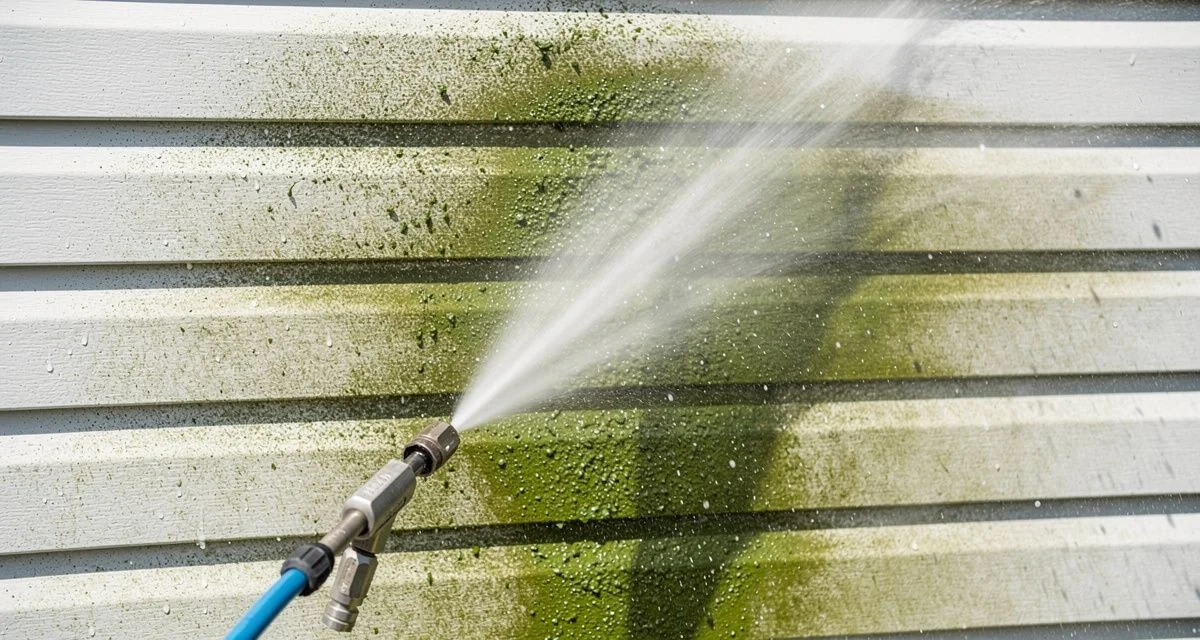
Rotorua has one of the wetter climates in the North Island, and the humidity that comes with it keeps exterior surfaces damp for long stretches. Green algae and moss establish themselves on shaded walls and roofs quickly, and once they are there they hold moisture against the cladding rather than drying off.
The city also has a great deal of housing under mature trees, which drops leaf litter and organic material onto roofs and into gutters and shades the walls that need drying most. A house with a northern aspect will look cleaner for longer than one tucked under a stand of trees, and very little of that is under the owner’s control.
That makes exterior cleaning a maintenance task rather than a cosmetic one. A surface that stays biologically active stays wet, and wet cladding is how paint fails, joints open and timber starts to decay.
The other local factor is property mix. Rotorua has a large number of rental properties and a significant short-stay accommodation market, both of which are cleaned on a schedule rather than when someone notices.
How We Researched This Guide
We used published price lists from New Zealand exterior cleaning companies, several of which publish flat rates by house size. Exterior cleaning is one of the more transparent trades in the country, and the published numbers cluster tightly enough to be useful.
The distinction that mattered most is between soft washing and pressure washing. They solve different problems on different surfaces, and the cheaper option is usually the wrong one on painted cladding. We also read the plain guidance on the two things that come up in this trade more than any other — what waste water may and may not carry, which is covered by the Ministry for the Environment, and the health and safety obligations of anyone working at height, set out by WorkSafe New Zealand. Every figure below came from a live published source.
The 60-Second Version
The short version, before the detail.
- A standard house wash is commonly $249–$450 including GST.
- Larger homes run $400–$700, and heavily contaminated ones $600–$1,000 or more.
- Soft washing uses low pressure and a cleaning solution, and results last twelve to eighteen months.
- Pressure washing alone is cheaper but results last three to six months and it can damage painted surfaces.
- Driveways and paths are usually $99–$199 on top, and bundling work shares the setup cost.
- Ask whether GST is included, because a published price often is not.
Soft Washing, Pressure Washing and Which You Need
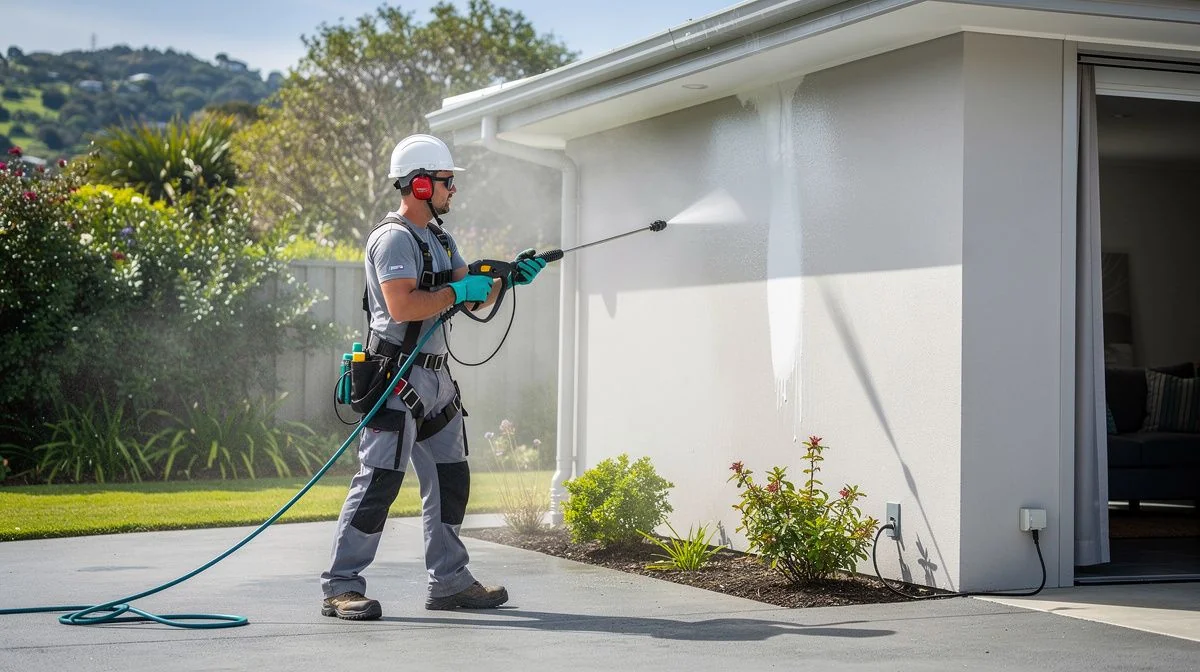
Soft washing applies a cleaning solution at low pressure and lets the chemistry do the work. It kills mould, algae and lichen at the root rather than blasting the surface off the wall, which is why the results last far longer. It is the right method for painted cladding, timber, and roofing.
Pressure washing uses high-pressure water alone. It is effective on concrete, driveways and paths, where the dirt is on the surface and the surface is hard. Used on painted weatherboard it strips coating, drives water into joints and can etch timber, and the clean look is temporary.
Many jobs need both, and a quote should distinguish between them. Beware of a company that offers one method for everything, because the method should follow the surface rather than the equipment the van happens to carry.
There is also the question of surrounding plants. A soft wash uses a diluted treatment, and a careful operator will pre-wet and rinse garden beds. Ask about it, because a green wall is worth less than a dead garden.
Water use is worth a thought too. A full house wash draws a lot of water from your own supply, and on a tank-fed property in the district that is a real consideration. Ask whether the company brings its own water or works from your tap.
What House Washing Costs in Rotorua
Published New Zealand rates, which apply across the region.
| Property or service | Typical price |
|---|---|
| Small single-storey home, up to 120m² | $200–$350 |
| Medium home, 120–200m² | $300–$450 |
| Large or two-storey home | $400–$700 |
| Two-storey with heavy growth | $600–$1,000+ |
| Published flat rate, under 150m² | from $499 incl. GST |
| Published flat rate, 150–240m² | from $599 incl. GST |
| Driveway, small to jumbo | $99–$199 |
| Roof and house wash combined | discounted against separate bookings |
Price ranges verified from published New Zealand exterior cleaning price lists as of September 2026. Some companies advertise prices excluding GST, and steep sites, restricted access and heavy contamination all move the price upward.
How Often a Rotorua House Needs Washing
For most homes in this climate, once every twelve to eighteen months keeps growth from establishing. That aligns with how long a soft wash stays effective, so the practical schedule is to have it done before the surface starts to look tired rather than after.
Shaded walls, south-facing sides and anything under trees need more attention. A single treatment of the worst face of a house every year, plus a full wash every second year, is a reasonable pattern for a property with heavy tree cover.
Roofs are a separate conversation. Moss on a roof holds water against the roofing material, and on an older roof that matters more than appearance. Roof treatments usually last longer than a house wash and are priced separately.
Gutters are worth mentioning while the roof is being considered. A gutter full of leaf litter overflows onto the fascia and the wall beneath it, which is exactly where mould starts, and cleaning them at the same visit costs far less than a separate call-out.
Choosing a House Washer Here
Ask which method will be used on which surface. A company that answers that clearly is one that will not water blast a painted weatherboard wall because it is quicker.
Ask how long the company has worked in the district. Someone who knows which faces of a house grow the worst growth will treat those harder and spend less time on the wall that never sees shade, and that local knowledge is worth more than a slightly lower hourly price.
Ask what they do about plants, water sources and the run-off. Ask whether they use your outdoor tap and whether they need power. And ask whether the price includes windows, because some include an exterior window clean and others do not.
Ask for the price in writing with GST confirmed, and ask what happens if the growth comes back within a few months. A workmanship guarantee is normal in this trade, and a company that offers one is signalling how confident it is in the method. Because exterior cleaning is a service, the ordinary guarantees about reasonable care and skill apply, and Consumer Protection explains what you can rely on.
Local Factors Worth Knowing
Humidity that keeps surfaces damp
A Rotorua wall can stay wet for days after rain, and mould needs nothing more than that to establish. Treating the growth is not just cosmetic; a surface that is biologically active stays damp and that is what shortens the life of the coating underneath.
Tree cover and leaf litter
Mature trees drop material onto roofs and into gutters, and the organic matter that accumulates is where moss gets its start. Properties under heavy cover benefit from a booked clean rather than a reactive one.
Rentals and short-stay accommodation
With a large rental market and a busy visitor accommodation sector, exterior presentation gets noticed. Landlords and hosts in this region generally put exterior cleaning on a maintenance schedule, and it is cheaper to keep a schedule than to recover a surface that has been left for years.
Questions You Might Have
Will soft washing damage my paint?
No, when it is done correctly. Diluted treatment at low pressure is gentler on paint than a water blaster. What damages paint is high pressure applied directly to a coated surface.
Do I need to be home?
Not usually. The work is all exterior, and most companies will confirm the price from the footpath or a quick inspection and get on with it.
How long does it take?
A standard single-storey house is usually a few hours. Larger or two-storey homes take longer, and a roof treatment is normally a separate visit or a longer day.
Can I just use my own water blaster?
On concrete and paths, yes. On painted cladding and roofs, the risk of doing damage is real, and the clean will not last as long because the growth below the surface is not treated.
What Matters Most
Exterior cleaning in a wet climate is maintenance. It protects the coating that protects the cladding, and it is one of the cheaper things a homeowner can do to keep a house in good condition.
In Rotorua, where growth returns faster than in most of the country, the sensible approach is a soft wash on a regular interval, a higher-pressure clean reserved for the driveway, and a method chosen for the surface rather than for speed.

The ValueHub Team built this site because finding clear, unbiased financial information in New Zealand was harder than it should be. Every guide is based on real research — we compare the actual fees, terms, and fine print so you don't have to. Our tip: shop around every year, read the policy docs, and never assume loyalty gets you the best deal.— The ValueHub Team
Try our Calculators
Use these free tools to crunch the numbers:

KiwiSaver Fund Comparison
Compare fees, returns, and risk levels across every KiwiSaver fund — the most up to date data in New Zealand.

Currency Converter — USD to NZD
Convert US Dollars to New Zealand Dollars instantly. See the latest exchange rate and 30-day trend.

Mortgage Repayment Calculator
Calculate your weekly, fortnightly, or monthly mortgage repayments. Free NZ mortgage calculator — try different rates, terms, and repayment frequencies.

Compound Interest Calculator
See how your savings grow with compound interest over time. Free NZ compound interest calculator with yearly, monthly, and weekly compounding options.

Term Deposit Calculator
Calculate your term deposit returns before you lock in. Compare interest earned across different terms and rates with ValueHub's free calculator.
Savings Goal Calculator
Calculate how long it will take to reach your savings goal — and what monthly deposit you need to get there. Free NZ savings planner.
House Washers in Other Cities
Latest Guides & Reviews
PAYE in New Zealand — How Tax Comes Out of Your Pay
PAYE in New Zealand explained: the income tax brackets, the ACC levy, KiwiSaver and student loan deductions, and what actually lands in your pay.

Income Tax Brackets and Rates in New Zealand
The New Zealand income tax brackets explained, with worked examples showing marginal and effective rates at common salary levels.

GST in New Zealand — The Complete Guide
How GST works in New Zealand: the 15 per cent rate, the $60,000 registration threshold, what is exempt, filing dates and what you can claim back.

Student Loans in New Zealand — Repayments, Thresholds and Interest
How student loan repayment works once you are earning: the pay-period thresholds, why a second job repays from the first dollar, and the frozen threshold.