Best Land Surveyors in Whanganui
Published 06 March 2025 · Updated 18 August 2026
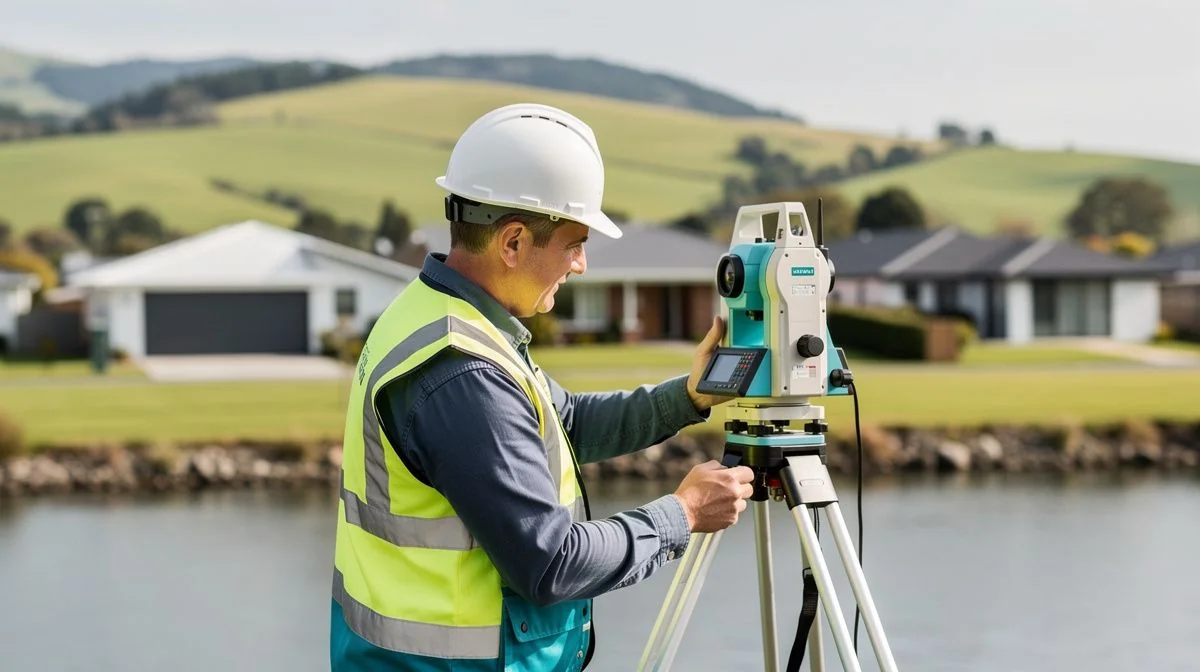
Finding a reliable land surveyor in Whanganui is essential whether you’re subdividing a section, building a new home, or just need to confirm your property boundaries. The right surveyor helps you avoid costly disputes and planning delays, especially when dealing with council requirements in the Manawatū-Whanganui region.
Whanganui has its own mix of rural, coastal, and urban properties, each with unique challenges. A local surveyor who knows the lay of the land and the Whanganui District Council’s processes can save you time and stress. Here’s what to keep in mind as you look for the best surveyor for your project.
What to look for when hiring a Land Surveyor in Whanganui
Not every surveyor handles every job. For most property work in New Zealand, you need a Licensed Cadastral Surveyor (LCS) — that’s the person legally able to define boundaries and prepare plans for titles. Check that the surveyor holds a current licence from the Cadastral Surveyors Licensing Board of New Zealand.
Also look for membership in the New Zealand Institute of Surveyors (NZIS). While not mandatory, it signals a commitment to professional standards and ongoing education. Experience with projects similar to yours — whether it’s a simple boundary mark or a complex multi-lot subdivision — matters too.
Local knowledge counts. A surveyor who regularly works in Whanganui will understand the council’s subdivision rules, flood zones, and any historical boundary quirks. They’ll also know which contractors (for pegging, fencing, or earthworks) are reliable.
Make sure the surveyor has public liability insurance and professional indemnity cover. This protects you if something goes wrong — for example, a boundary error that shows up years later. Ask for proof before you engage them.
Finally, check reviews or ask for references. Past clients in Whanganui can tell you whether the surveyor communicated well, met deadlines, and stayed on budget.
Key questions to ask before hiring
When you’ve narrowed down a few candidates, ask these questions to compare them properly:
- Are you a Licensed Cadastral Surveyor? If the job involves boundaries or title work, this is non-negotiable.
- How many similar projects have you done in Whanganui? Look for recent experience with your type of property — rural lifestyle blocks, infill subdivisions, or riverside sections.
- What will the survey include? Clarify whether they’ll provide marked pegs, a plan, a report, and any council lodgement support.
- What’s your timeline? Ask how long the fieldwork, processing, and council approvals usually take. Surveyors can get busy in spring and summer.
- Do you handle council consents? Some surveyors also manage resource consent applications. If yours doesn’t, ask if they work with a planner or consultant.
- Can you provide a fixed-price quote? Some tasks (like a straightforward boundary survey) can be quoted upfront. More complex jobs may be hourly or on a fee estimate.
- What happens if the survey uncovers issues? For example, an encroachment or an old easement. A good surveyor will explain your options.
Tips for getting the best results
Once you’ve chosen a surveyor, a few simple steps help the job run smoothly:
- Be clear about your goals. Tell them exactly what you want to do — build a shed, subdivide, plant a boundary hedge — so they can recommend the right type of survey.
- Share any existing plans or documents. Title deeds, earlier survey plans, and LIM reports all help the surveyor understand your property’s history.
- Mark visible boundaries yourself. If there’s an old fence line or a row of trees, show the surveyor where you think the boundary lies. It gives them a starting point.
- Keep communication open. If you’re unsure about anything in the survey plan or report, ask. Surveyors expect clients to have questions.
- Plan for council time. If your project needs a subdivision consent, factor in council processing time (often several weeks for standard applications). Ask the surveyor if they can help track progress.
- Don’t delay using the survey. Once you get the final plan and pegs, move ahead with your building or fencing plans. Boundaries can shift if left unchecked for years due to natural changes or new developments.
A note about costs and getting quotes
Land surveying costs in New Zealand vary widely depending on the job. A simple boundary re-peg on a flat urban section in Whanganui might cost a few hundred dollars, while a full topographical and cadastral survey for a subdivision can run into several thousand. Factors that affect price include:
- The size and shape of the property
- Terrain and vegetation (thick bush or steep slopes take longer)
- How many boundary marks need to be found or set
- Whether you need council lodgement and consent processing
- How far the surveyor has to travel from their base
The best way to gauge a fair price is to get quotes from at least three surveyors. Make sure each quote lists what’s included — fieldwork, plan preparation, council fees, GST

The ValueHub Team built this site because finding clear, unbiased financial information in New Zealand was harder than it should be. Every guide is based on real research — we compare the actual fees, terms, and fine print so you don't have to. Our tip: shop around every year, read the policy docs, and never assume loyalty gets you the best deal.— The ValueHub Team
Try our Calculators
Use these free tools to crunch the numbers:
KiwiSaver Fund Comparison
Compare fees, returns, and risk levels across every KiwiSaver fund from all 31 NZ providers.
Currency Converter — USD to NZD
Convert US Dollars to New Zealand Dollars instantly. See the latest exchange rate and 30-day trend.
Mortgage Repayment Calculator
Calculate your weekly, fortnightly, or monthly mortgage repayments. Free NZ mortgage calculator — try different rates, terms, and repayment frequencies.
Compound Interest Calculator
See how your savings grow with compound interest over time. Free NZ compound interest calculator with yearly, monthly, and weekly compounding options.
Term Deposit Calculator
Calculate your term deposit returns before you lock in. Compare interest earned across different terms and rates with ValueHub's free calculator.
Savings Goal Calculator
Calculate how long it will take to reach your savings goal — and what monthly deposit you need to get there. Free NZ savings planner.
Land Surveyors in Other Cities
Latest Guides & Reviews
New Zealand Financial Markets Authority Guide: Investor Protection in NZ
Protect your investments with this practical guide to the FMA — how to check licences, spot scams, and what to do if a provider fails. Verified against...
comparisonEV Home Charger NZ: Costs & Buying Guide
Compare EV home charger costs in NZ — verified prices from $1,299, installation fees, smart features, and what actually matters for your home's power supply.
guideThe Most Popular EVs in New Zealand
The best-selling electric cars in New Zealand, ranked by official registration data. Top BEV and PHEV models and brands, updated monthly.
guideEV Market Stats
New Zealand's EV market in numbers — market share, fleet size, top-selling models and used imports, updated with the latest NZTA and MIA data.