Best Lawn Mowing Services in Christchurch
Published 16 September 2026 · Written by the ValueHub team · Reviewed by Steve Baron
Best Lawn Mowing Services in Christchurch
Big flat sections, and a nor’westerly that stops grass dead
Christchurch has a lawn problem that is really a geometry problem. The city is flat, the sections are generous by modern standards, and a great many homes have lawns that would be a genuine afternoon’s work with a push mower. That combination is why ride-on mowing is far more common here than in the northern cities, and why a mowing quote in Christchurch is often based on how long a machine runs rather than a fixed small-lawn price.
The climate adds a pattern that can surprise new residents. Canterbury’s dry nor’westerly can brown a lawn off in a matter of days over summer, and once grass stops growing, mowing stops too. Then the first decent rain brings a growth spurt that leaves the same lawn looking shaggy within a fortnight. A Christchurch lawn doesn’t grow at a steady rate; it grows in bursts, and a mowing arrangement that assumes even growth will miss the weeks that matter.
Winter flips it entirely. Hard frosts shut growth down for weeks, so a fixed weekly or fortnightly contract through the cold months means paying for visits where very little is being cut. Discuss that with a contractor before you sign up, because the sensible arrangement in this city changes with the season.
Our Trusted Lawn Mowing Services
We feature businesses that demonstrate strong performance, proven experience, and consistently positive customer feedback. Some of the providers listed may have commercial relationships with us, but all are selected based on quality and reliability.
To begin, reach out to them and speak with them directly — this helps you explain your job, ask questions, and confirm whether they're the right fit.
Jim's Mowing NZ is your go-to local lawn care and maintenance service experts for homes and commercial spaces. We offer everything from gardening to rubbish removal. Call 0800-454-654 today. We offer a complete range of services to maintain and enhance your outdoor spaces.
How We Researched This Guide
We began with price, because that is the first question and the easiest one to answer with a number that turns out to be wrong. That meant collecting published rate cards from mowing businesses around the country, including providers who price by lawn size band and those who charge hourly, then working out where the two methods produce quite different answers for the same section.
Then we looked at what moves a quote away from the advertised rate: overgrown grass, slopes, tight access, travel distance, and whether clippings are taken away. Those are the differences between the price on a website and the price on an invoice. We also checked what a contractor should be able to demonstrate before working on your property. We checked every dollar figure on this page against a live source rather than estimating it.
The 60-Second Version
If you only read one section of this page, read this one.
- A small lawn costs about $30–$55 per mow, medium $45–$75 and large $75–$120.
- Sections over 600 square metres commonly run $120–$300 or more.
- An overgrown first cut costs substantially more than the same lawn on a regular schedule.
- Regular visits are cheaper per mow than one-off bookings.
- Ask whether clippings are removed, because a mulch-and-leave cut is a different service.
- Winter visits can be thinned out in Christchurch, because frosts stop growth.
What You Should Check Before Hiring
Lawn mowing is not a licensed trade, so there is no registration to look up and no qualification that proves competence. What you are really assessing is a small business’s professionalism, and there are four things worth confirming.
The first is insurance. A contractor working on your property with a mower, a trimmer and possibly a ride-on machine can damage a fence, a window, a letterbox or a parked car. Public liability cover backs that up, and an uninsured operator cannot put it right.
The second is health and safety practice. Mowing involves machinery with exposed blades, and the hazards are real: slopes, thrown debris, noise, and fuel handling. WorkSafe New Zealand’s health and safety guidance is what a competent operator should follow, and you will notice the difference in how they behave on site. Do not let children or pets out while a mower or trimmer is running.
Third, ask where the clippings go. Some contractors mulch them back into the lawn, which is good for the soil, and some take them away, which costs more but suits certain lawns. Both are legitimate, but they are different services and should be priced as such. If they remove green waste, ask that they dispose of it properly rather than dump it.
Fourth, confirm the certificate of incorporation or trading name and get the quote in writing. A text message saying “about eighty” is not a quote.
What Lawn Mowing Costs in Christchurch
Two pricing models are common. Size bands suit a straightforward residential lawn, while an hourly rate suits a section that is awkward, overgrown or partly planted. For a large, flat Christchurch section, ask which model they use, because it can produce very different numbers.
| Lawn size | Regular mow, per visit | Overgrown first cut |
|---|---|---|
| Small, under about 100 m² | $30–$55 | From about $95 |
| Medium, about 100–300 m² | $45–$75 | From about $160 |
| Large, about 300–600 m² | $75–$120 | From about $220 |
| Extra large, 600 m² and over | $120–$300+ | Quoted on inspection |
| Hourly rate, any size | $40–$90 per hour | |
| Hedge trimming or garden tidy | Quoted separately | |
Ranges verified from published New Zealand mowing price guides as of September 2026. Whether GST is included varies between providers, so ask. Slopes, tight access, travel distance and overgrown grass all move a quote above these bands.
For a large Christchurch section, the useful comparison isn’t the per-visit price, but the annual cost at different frequencies. A weekly visit through the growing season costs far more per year than a fortnightly one, and on a big lawn the difference is substantial. The honest question is how often the lawn actually needs cutting in the months when it is growing, which for most Canterbury lawns is less often than a northern contractor would assume.
How to Choose a Mowing Contractor
Ask for a quote based on your actual address rather than a size band alone, because travel and access change the number more than you would expect. A contractor working your street already will usually be cheaper than one crossing town.
Then ask what happens if it rains on your scheduled day. Reliability matters more than price in this trade, because a missed cut in a growth spurt means the next visit is longer and more expensive.
Five things worth walking away from:
- No insurance. Ask directly and expect a straightforward answer.
- A price that changes between the quote and the invoice with no explanation of what changed.
- No answer about clippings. Mulching and removal are different services at different prices.
- Mowing a wet lawn. Cutting wet grass tears it and clumps the clippings, and on a ride-on,n it is a safety risk on slopes.
- No stated frequency. A per-visit price without a schedule tells you nothing about annual cost.
What Happens on a Visit
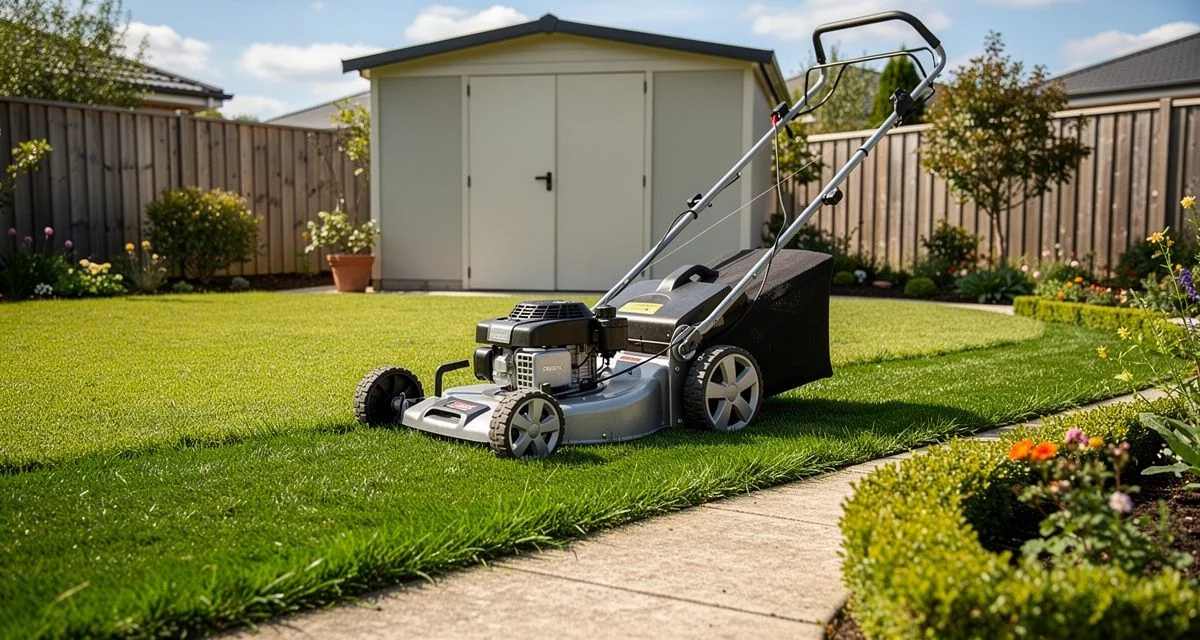
A regular mow on a standard section usually takes between twenty minutes and an hour, depending on size, access and how much trimming is involved. Most contractors work to a run of neighbouring properties, so they will usually offer a set day rather than a time.
A standard visit typically includes:
- Mowing the main lawn at an appropriate height for the season.
- Line trimming around fences, posts, trees and garden edges.
- Edging hard surfaces where the service includes it.
- Blowing or sweeping clippings off paths and driveways.
- Removing clippings, if that is part of the agreed service.
What is usually excluded and worth confirming: hedge trimming, weed spraying, garden beds, and green waste removal, as they aren’t in the base price. Those extras can turn a $70 visit into a $150 one, and there is nothing wrong with them being extras as long as you know in advance.
What Christchurch Adds to the Job
Flat, generous sections
Christchurch’s sections are larger and flatter than in most New Zealand cities, which makes ride-on mowing practical and often cheaper per square metre than a push mower. It also means you can mow a lawn quickly, so the time-based part of a quote is smaller here than you might expect for the same area.
The nor’westerly and burst growth
Canterbury’s dry wind can brown a lawn off quickly in summer, and growth stops while it is dry. When rain returns, the grass responds fast. A mowing schedule based on a fixed calendar, rather than how the lawn is actually growing, will either miss busy weeks or waste money on quiet ones.
Frosts and a slow winter
Hard frosts stop growth for weeks at a time, and mowing frozen grass does damage rather than good. Most contractors will move to a longer interval or pause altogether over the coldest period, and a sensible arrangement factors that in rather than charging for visits that achieve nothing.
Questions You Might Have
How often should a lawn be mown?
Mow weekly or fortnightly through the main growing season, and much less often over winter. The guiding rule is never to remove more than about a third of the leaf blade in one cut, because taking more stresses the grass and leaves it vulnerable to weeds and disease. If your lawn is growing faster than your schedule, shorten the interval rather than asking for a lower cut.
Should I leave the clippings on the lawn?
Mulching them back returns nutrients and is good practice when cuts are frequent and the clippings are short. If the grass has grown long between visits, clippings will clump and smother the lawn underneath, so removal is the better choice. A good contractor will tell you which applies.
Is a ride-on mower worth it for my section?
On a flat section of a few hundred square metres or more, generally yes, because it cuts the time and therefore the labour cost. On a small or heavily planted section, a push mower is quicker, because a ride-on cannot get into corners. Ask what the contractor intends to use and why.
What Matters Most
For a large Christchurch section, the number that matters is the annual cost at a sensible frequency, not the per-visit price. A reliable contractor on a schedule matched to how your lawn actually grows will cost less across a year than a cheaper one who turns up irregularly and inherits long grass every time.
Ask two or three local contractors for a written quote based on your address, and ask what frequency they would recommend for your section through the growing season.

The ValueHub Team built this site because finding clear, unbiased financial information in New Zealand was harder than it should be. Every guide is based on real research — we compare the actual fees, terms, and fine print so you don't have to. Our tip: shop around every year, read the policy docs, and never assume loyalty gets you the best deal.— The ValueHub Team
Try our Calculators
Use these free tools to crunch the numbers:
KiwiSaver Fund Comparison
Compare fees, returns, and risk levels across every KiwiSaver fund — the most up to date data in New Zealand.
Currency Converter — USD to NZD
Convert US Dollars to New Zealand Dollars instantly. See the latest exchange rate and 30-day trend.
Mortgage Repayment Calculator
Calculate your weekly, fortnightly, or monthly mortgage repayments. Free NZ mortgage calculator — try different rates, terms, and repayment frequencies.
Compound Interest Calculator
See how your savings grow with compound interest over time. Free NZ compound interest calculator with yearly, monthly, and weekly compounding options.
Term Deposit Calculator
Calculate your term deposit returns before you lock in. Compare interest earned across different terms and rates with ValueHub's free calculator.
Savings Goal Calculator
Calculate how long it will take to reach your savings goal — and what monthly deposit you need to get there. Free NZ savings planner.
Lawn Mowing Services in Other Cities
Latest Guides & Reviews
SuperLife KiwiSaver Scheme Review
SuperLife KiwiSaver review: 65 open funds, fund charges from 0.20 to 1.30 per cent, and net returns to 30 June 2026.
reviewSuperEasy KiwiSaver Scheme Review
SuperEasy KiwiSaver review: 8 open funds, a 0.32 per cent fund charge, and net returns to 31 March 2026.
reviewWestpac KiwiSaver Scheme Review
Westpac KiwiSaver review: 8 open funds, fund charges from 0.25 to 0.70 per cent, and net returns to 30 June 2026.
reviewANZ KiwiSaver Scheme Review
Review of ANZ KiwiSaver. Three schemes, fees from 0.22 per cent, the closed Default scheme, OneAnswer and the Lifetimes option.