Best Locksmiths in Dunedin
Published 24 August 2026
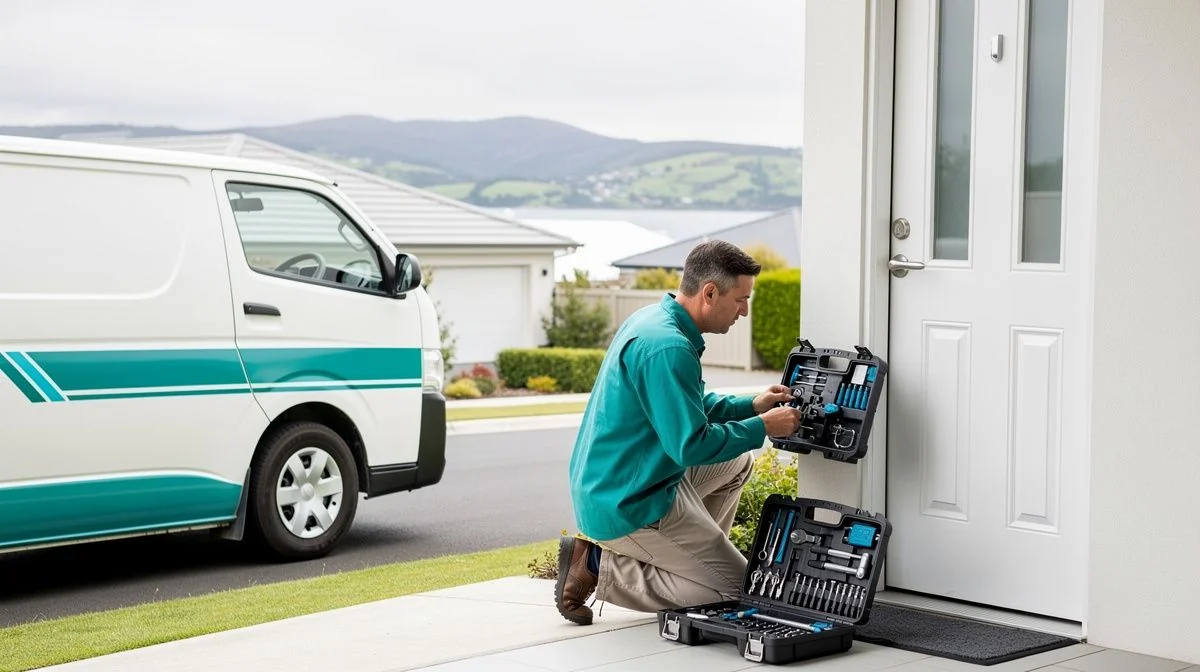
Why a Good Locksmith Matters in Dunedin
Dunedin's student population keeps its locksmiths busy in a way most cities never see. Students locked out of flats, landlords rekeying between tenancies, and the churn of keys at the start of every academic year all drive steady demand — and the older Victorian and Edwardian homes those flats sit in have locks that need a careful hand. A locksmith who knows older Dunedin homes will fix a seized lock without wrecking the door.
The trade has no barrier to entry — there is no government licence and no compulsory qualification — so the person who turns up could be a trained professional or someone who watched a few videos and bought some tools. The difference is entirely on you to work out.
A standard home lockout in Dunedin typically costs $80 to $180 during business hours. It is a modest price for getting back into your own home, and a small fraction of what a forced or botched entry can cost you.
How We Researched This Guide
We read what the Master Locksmiths Association of Australasia requires of its members so we could explain what membership actually means. For pricing, we looked at what Dunedin and Otago locksmiths publish on their own sites. Where a number wasn't published, we didn't use it.
The Quick Summary (60-Second Version)
Six quick points before the detail:
- Typical cost: a home lockout in Dunedin runs $80–$180 during business hours; after-hours adds $50–$150.
- How long: a simple lockout is usually sorted within the hour, once the locksmith arrives.
- Best value for most people: a Master Locksmith for anything security-critical, even if they cost a little more.
- What to check: MLAA membership and a police check — there is no government licence to fall back on.
- The biggest factor: whether the person knows older character-home hardware.
- The mistake to avoid: moving into a flat or home without rekeying the external locks.
Locksmith Licensing & Regulation — What Actually Matters
There is no statutory licence for locksmiths in New Zealand, and the word itself carries no legal protection — so the law does not require a locksmith to hold a specific qualification before they trade. The responsibility for checking who you let near your locks — and your home — rests with you.
The nearest thing to a credential is the Master Locksmiths Association of Australasia (MLAA). Membership is not automatic: to join, a locksmith business must employ fully trade-qualified locksmiths, pass police checks, be vetted by their peers, hold proper insurance, and commit to a code of ethics. In a trade with no government licence, that membership is the closest thing to a guarantee of competence.
There is one exception worth knowing. If a locksmith installs or repairs alarms and certain electronic security systems, that work may fall under the Private Security Personnel and Private Investigators Act, which requires a government-issued certificate. A standard door lockout or key cutting does not, but a full security installation might.
Checking is quick. Ask if they are an MLAA member, confirm it in the association's directory, and ask whether they have passed a police check. A locksmith who is evasive about either is not someone you want inside your home.
Dunedin Pricing — What You Can Expect to Pay
Dunedin locksmith rates are among the most affordable in the country, and the local market is competitive. Prices still move with the clock — the same job costs more late at night than it does mid-morning.
| Job | Typical cost |
|---|---|
| Home lockout (business hours) | $80–$180 |
| Car lockout | $100–$200 |
| Key cutting (standard key) | $10–$25 |
| Rekeying a lock | $60–$120 |
| New lock supply and fit | $150–$350 |
| Car key replacement (transponder) | $200–$500 |
| After-hours surcharge | +$50–$150 on top |
Price ranges verified from multiple Dunedin locksmith rate cards as of August 2026. Final quotes depend on the time of day, your location, the lock type, and whether the lock can be picked or has to be drilled.
The single biggest driver is timing. A lockout at 2 pm on a Tuesday is cheap; the same lockout at 2 am on a Sunday carries an after-hours surcharge because you are paying for a tradesperson to be available at short notice. Ask for the surcharge up front, because that is where the bill quietly grows.
Then there is the lock itself. A simple keyed door lock can usually be picked or opened without damage. A high-security or electronic lock might require drilling and replacement, which can push the bill up. A good locksmith tells you the likely cost before they start, not after.
Rekeying is the under-appreciated money-saver. If the lock is in good shape, rekeying changes the pins inside so old keys no longer work, at roughly $60 to $120 per lock — far cheaper than replacing the whole lock. It is almost always the right call after moving in or losing a key.
How to Choose a Locksmith — What Actually Matters
Check the credentials before you are locked out, not during. Ask whether they are an MLAA member, confirm it in the association's directory, and ask about police checks. In a trade with no licence, these two checks are your whole safety net.
Ask about experience with older homes. A Dunedin locksmith needs to handle everything from a decades-old keyed deadbolt on a character villa to a modern lock on a newer build. A locksmith who only knows one end of that spectrum is going to struggle with the other.
Ask for the full price up front, including the call-out fee and any after-hours surcharge, and get it in writing or over text. A reputable locksmith quotes a clear range over the phone and confirms whether it includes GST. Anyone who will not discuss price before arriving is a risk.
Be wary of unusually low advertised call-out fees. A tiny "call-outs from $59" often becomes a much larger final bill once the lock is off. The honest operators quote a realistic total and stand by it.
These are the red flags:
- Won't confirm they are an MLAA member or police-checked. There is no licence to fall back on.
- A suspiciously low call-out fee with vague "plus labour". That is a bait price.
- Pressure to replace the lock when a rekey would do. Some charge for hardware you do not need.
- No clear answer on the after-hours surcharge. That is where the bill balloons.
- Arrives without proof of who they are. A genuine locksmith is happy to identify themselves.

What to Expect When You Call a Locksmith
When you call, be ready to say where you are, what kind of door or lock you are dealing with, and whether it is a home, car or business. For a car, have the make and model handy — it changes the tools and the price. If you are locked out, stay somewhere safe and wait rather than forcing the door yourself.
Expect a clear price before they start. A good locksmith quotes a range over the phone, confirms it on arrival, and tells you if the job turns out to be bigger than expected — before they drill anything. For a simple lockout, they will usually try a non-destructive opening first.
How long common jobs roughly take:
- Home or car lockout: usually open within minutes of arrival, once the travel is done.
- Key cutting: a few minutes on the spot.
- Rekeying a lock: 15 to 30 minutes per cylinder.
- New lock supply and fit: 30 to 60 minutes depending on the door.
- Smart lock installation: one to two hours including setup.
After the job, ask for a receipt and any warranty on the hardware and artistry. If a lock was replaced, keep a note of the new key numbers or access codes. And if you were locked out because keys went missing, that is the moment to make a spare — not next week.

Dunedin-Specific Risks & Local Factors
Locksmith work in Dunedin is shaped by the student population and the city's older housing. These are the factors a local locksmith should recognise immediately.
The student flats belt
North Dunedin's student flats create a particular kind of demand. Students locked out, landlords rekeying between tenancies, and the constant churn of keys at the start of each academic year all keep local locksmiths busy. If you are a student or a landlord, saving a reliable locksmith's number before Orientation Week — not during it — is genuinely good advice.
Rekeying between tenancies
For landlords managing student rentals, rekeying between tenancies is a basic security step, not an optional extra. You have no way of knowing how many copies of the old key are circulating after a year of flatmates and subletters. Rekeying is cheap — usually $60 to $120 per lock — and it is the cheapest peace of mind you will ever buy for a rental.
Older character homes
Dunedin has a high proportion of Victorian and Edwardian homes, and many still carry decades-old keyed hardware — some original, some patched over the years. An old lock that has seized, a door that has shifted in its frame, a key that turns but will not engage: these are common. A locksmith who knows older Dunedin homes will fix the lock without wrecking the door.
The unlicensed-operator problem
Because there is no government licence, any city attracts its share of unqualified operators, and Dunedin is no exception. Some do fine work; others overcharge, damage doors or leave locks insecure. The fix is the same as before: check MLAA membership and a police check before you hand over your address, especially for anything after hours.
Questions You Might Have
Do I need to prove I own the property before they unlock it?
Yes, and you should welcome that. A reputable locksmith will ask for proof that you are entitled to be let in — ID and, often, something linking you to the address, like a bill or tenancy agreement. If a locksmith opens a door without any checks, that is a red flag about how seriously they take security.
Can they open my door without damaging it?
Usually, for a standard keyed lock. A skilled locksmith can pick or bypass most common locks non-destructively. The exceptions are high-security locks, some electronic locks, and cases where the lock is already broken — those may need drilling and replacement. A good locksmith tells you before they reach for the drill.
Is rekeying better than replacing my locks?
Almost always, if the locks are in good condition, rekeying changes the pins inside so old keys no longer work, then cuts you new keys — at roughly $60 to $120 per lock. Replacing swaps out the whole unit and is more expensive. Rekeying is usually all you need after moving in or losing a key, unless the lock itself is worn or damaged.
Should I go with a smart lock or stick with a key?
It depends on how you live. A smart lock suits anyone who wants keyless entry, remote access, or the ability to hand out and revoke codes without cutting keys. But it is only as secure as its installation and your own habits. A traditional deadbolt remains a solid choice, and the two are not mutually exclusive.
I'm a landlord — should I rekey between tenants?
Yes, always. You have no way of knowing how many copies of the old key are circulating after a tenancy, and rekeying is cheap — usually $60 to $120 per lock. It is a small cost for the security of your property and the peace of mind of your next tenant. A locksmith who works with landlords can usually do it quickly between tenancies.
What Matters Most
Dunedin's student flats and older character homes keep a locksmith busy, and in a trade with no licence, the difference between a good one and a bad one is on you. Get it right, and a lockout is a minor inconvenience; get it wrong, and you could be left with a damaged door, an insecure home, or a bill far bigger than it needs to be.
Check the MLAA membership and police check, get the full price up front, and pick someone who knows older Dunedin homes. Do that, and the next time you are locked out, the only thing you will lose is a few minutes — not your peace of mind.

The ValueHub Team built this site because finding clear, unbiased financial information in New Zealand was harder than it should be. Every guide is based on real research — we compare the actual fees, terms, and fine print so you don't have to. Our tip: shop around every year, read the policy docs, and never assume loyalty gets you the best deal.— The ValueHub Team
Try our Calculators
Use these free tools to crunch the numbers:
KiwiSaver Fund Comparison
Compare fees, returns, and risk levels across every KiwiSaver fund from all 31 NZ providers.
Currency Converter — USD to NZD
Convert US Dollars to New Zealand Dollars instantly. See the latest exchange rate and 30-day trend.
Mortgage Repayment Calculator
Calculate your weekly, fortnightly, or monthly mortgage repayments. Free NZ mortgage calculator — try different rates, terms, and repayment frequencies.
Compound Interest Calculator
See how your savings grow with compound interest over time. Free NZ compound interest calculator with yearly, monthly, and weekly compounding options.
Term Deposit Calculator
Calculate your term deposit returns before you lock in. Compare interest earned across different terms and rates with ValueHub's free calculator.
Savings Goal Calculator
Calculate how long it will take to reach your savings goal — and what monthly deposit you need to get there. Free NZ savings planner.
Locksmiths in Other Cities
Latest Guides & Reviews
New Zealand Financial Markets Authority Guide: Investor Protection in NZ
Protect your investments with this practical guide to the FMA — how to check licences, spot scams, and what to do if a provider fails. Verified against...
comparisonEV Home Charger NZ: Costs & Buying Guide
Compare EV home charger costs in NZ — verified prices from $1,299, installation fees, smart features, and what actually matters for your home's power supply.
guideThe Most Popular EVs in New Zealand
The best-selling electric cars in New Zealand, ranked by official registration data. Top BEV and PHEV models and brands, updated monthly.
guideEV Market Stats
New Zealand's EV market in numbers — market share, fleet size, top-selling models and used imports, updated with the latest NZTA and MIA data.