Best Music Teachers in Upper Hutt
Published 19 March 2025 · Updated 18 August 2026
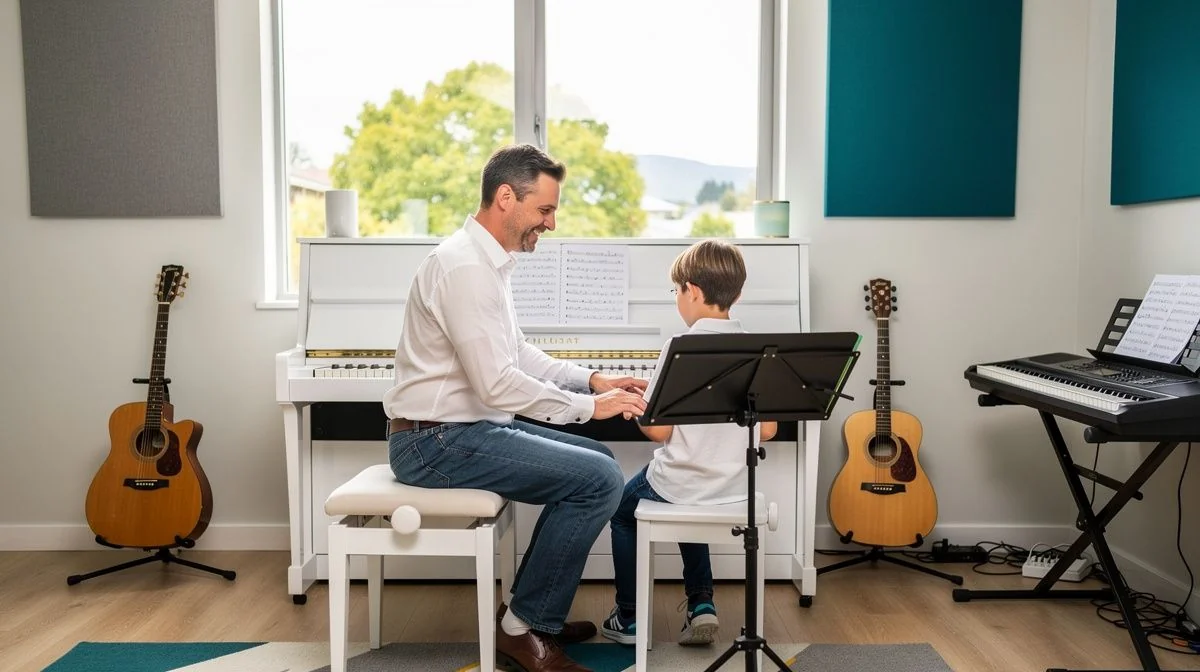
Best Music Teachers in Upper Hutt
Upper Hutt has a lively music community, with plenty of talented teachers ready to help you or your child learn an instrument. Whether you're picking up a guitar for the first time, brushing up on piano scales, or preparing for a grade exam, finding the right teacher makes all the difference.
This guide covers what to look for in a music teacher in Upper Hutt, the questions you should ask before signing up, and how to get the most out of your lessons. We'll also touch on costs and the value of comparing quotes — so you can find a teacher who fits your style and budget.
What to look for when hiring a Music Teacher in Upper Hutt
Not every teacher is the same, and the best fit depends on your goals, age, and preferred learning style. Here are the key things to consider when choosing a music teacher in Upper Hutt.
Qualifications and experience
A formal qualification — like a music degree or diploma — shows a teacher has solid training. But experience teaching real students matters just as much. Ask how long they've been teaching and whether they've worked with beginners, children, or adult learners like yourself.
Some teachers specialise in exam preparation (like Trinity or ABRSM grades), while others focus on playing for fun. Make sure their experience lines up with what you want to achieve.
Teaching style and personality
Every teacher has their own approach. Some are strict and methodical; others are laid-back and encouraging. The best style for you is one that keeps you motivated. If you're a nervous beginner, a patient, supportive teacher is worth its weight in gold.
Consider a trial lesson or a short chat before committing. That'll give you a feel for their personality and whether you click. For children, a teacher who makes lessons fun can be the difference between a child sticking with it or giving up.
Location and lesson format
Many Upper Hutt teachers offer lessons from their home studio, while others travel to yours. Some also teach online via video call. Think about what suits your schedule and comfort level.
- Home studio: You travel to the teacher's place — usually cheaper and more consistent.
- Travel to you: Convenient but may cost extra for travel time.
- Online: Flexible and wide choice of teachers, but less personal interaction.
Check whether the teacher is located close to public transport or has parking if you're driving. Upper Hutt is spread out, so a teacher in central Trentham might not suit someone in Maoribank.
Instrument specialisation
Most music teachers specialise in one or two instruments. Make sure they teach the instrument you want to learn — piano, guitar, voice, drums, violin, or something else. Some also cover music theory, composition, or songwriting. If you're interested in multiple areas, look for a teacher who can cover them.
Key questions to ask before hiring
Before you book a lesson, ask these questions to make sure the teacher is a good match.
- What are your qualifications and teaching experience? — Look for formal training and a track record with students similar to you.
- What age groups do you teach? — Some teachers only take children; others specialise in adults.
- What teaching methods do you use? — Do they follow a syllabus, use sheet music, or teach by ear? Make sure it aligns with your goals.
- How long are lessons and how often? — Typical lessons are 30, 45, or 60 minutes, once a week. Ask about frequency options.
- Do you offer a trial lesson? — A discounted or free first lesson lets you test the waters without a big commitment.
- What are your policies on cancellations and make-up lessons? — Life happens; know what happens if you need to reschedule.
- Do you prepare students for exams or performances? — If that's your aim, make sure the teacher has relevant experience.
These questions will help you avoid surprises and find a teacher who genuinely suits your needs.
Tips for getting the best results
Once you've chosen a music teacher, how you approach lessons can make a huge difference to your progress. Here are some practical tips.
Set clear goals
Tell your teacher what you want to achieve — whether it's playing your favourite songs, passing grade 5 piano, or just having fun. Clear goals help the teacher tailor lessons to you and keep you motivated.
Practise regularly
Short, consistent practice is far more effective than long, irregular sessions. Aim for 15–30 minutes most days, depending on your level. Your teacher will give you specific exercises to work on between lessons.
Communicate openly
If something isn't working — too fast, too slow, boring pieces — speak up. Good teachers want your feedback and can adjust their approach. Also let them know if you've had a busy week; they can adapt the lesson accordingly.
Be patient and have fun
Learning an instrument takes time. Celebrate small wins, like mastering a tricky chord or playing a new song. Keeping the joy in music will help you stick with it long-term.
A note about costs and getting quotes
Music lesson costs in Upper Hutt vary depending on the teacher's experience, the instrument, lesson length, and whether you travel to them or they come to you. While we don't list specific prices here (they change and differ between teachers), you can expect to pay anywhere from around $30 for a student teacher up to $80 or more per half-hour for an experienced professional.
Longer lessons (45 or 60 minutes) cost more per session but often work out better value for intermediate and advanced students. Some teachers offer discounts if you pay for a block of lessons upfront, or a reduced rate for siblings.
The best way to find the right teacher at the right price is to get multiple quotes. Compare a few options in Upper Hutt before deciding. Many teachers list their rates on their website or social media, or will happily give you a price over the phone or email. Don't be shy to ask about trial lessons too — they're a great way to see if a teacher is worth your time and

The ValueHub Team built this site because finding clear, unbiased financial information in New Zealand was harder than it should be. Every guide is based on real research — we compare the actual fees, terms, and fine print so you don't have to. Our tip: shop around every year, read the policy docs, and never assume loyalty gets you the best deal.— The ValueHub Team
Try our Calculators
Use these free tools to crunch the numbers:
KiwiSaver Fund Comparison
Compare fees, returns, and risk levels across every KiwiSaver fund from all 31 NZ providers.
Currency Converter — USD to NZD
Convert US Dollars to New Zealand Dollars instantly. See the latest exchange rate and 30-day trend.
Mortgage Repayment Calculator
Calculate your weekly, fortnightly, or monthly mortgage repayments. Free NZ mortgage calculator — try different rates, terms, and repayment frequencies.
Compound Interest Calculator
See how your savings grow with compound interest over time. Free NZ compound interest calculator with yearly, monthly, and weekly compounding options.
Term Deposit Calculator
Calculate your term deposit returns before you lock in. Compare interest earned across different terms and rates with ValueHub's free calculator.
Savings Goal Calculator
Calculate how long it will take to reach your savings goal — and what monthly deposit you need to get there. Free NZ savings planner.
Music Teachers in Other Cities
Latest Guides & Reviews
New Zealand Financial Markets Authority Guide: Investor Protection in NZ
Protect your investments with this practical guide to the FMA — how to check licences, spot scams, and what to do if a provider fails. Verified against...
comparisonEV Home Charger NZ: Costs & Buying Guide
Compare EV home charger costs in NZ — verified prices from $1,299, installation fees, smart features, and what actually matters for your home's power supply.
guideThe Most Popular EVs in New Zealand
The best-selling electric cars in New Zealand, ranked by official registration data. Top BEV and PHEV models and brands, updated monthly.
guideEV Market Stats
New Zealand's EV market in numbers — market share, fleet size, top-selling models and used imports, updated with the latest NZTA and MIA data.