Best Music Teachers in West Coast
Published 19 March 2025 · Updated 18 August 2026
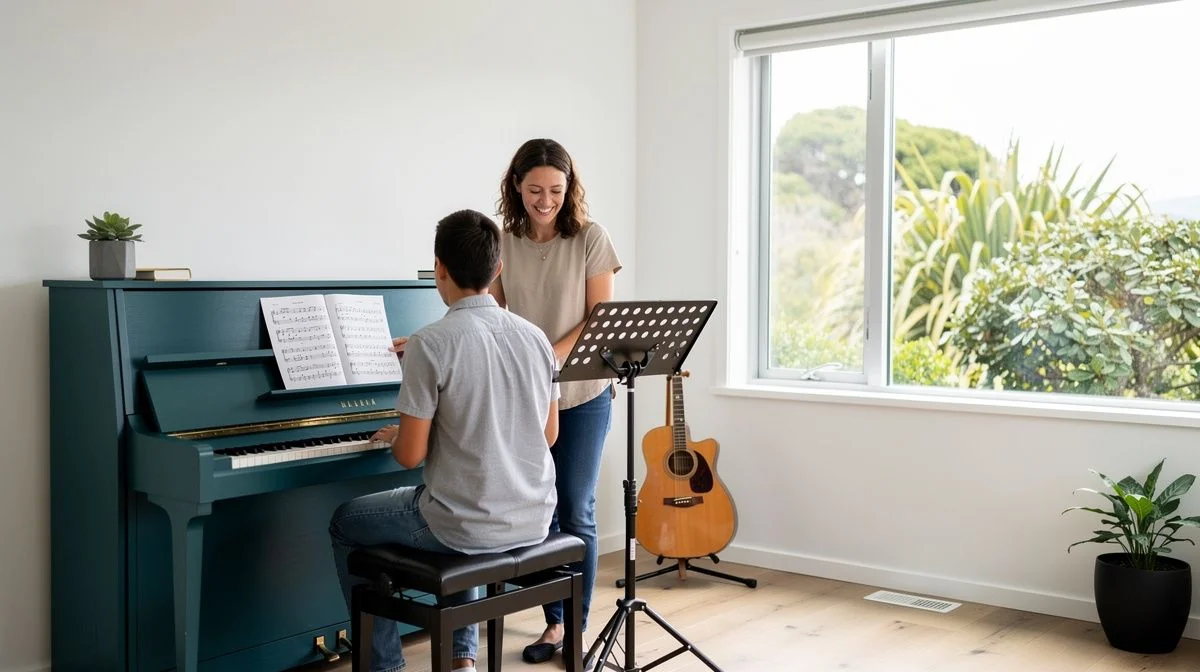
Best Music Teachers in West Coast
Whether you’re picking up an instrument for the first time or looking to take your skills to the next level, finding the right music teacher makes all the difference. The West Coast has a strong community feel, and music teaching here often happens in small studios, community centres, or even at the teacher’s home. Because the region is spread out from Karamea down to Haast, your choice may depend on where you live and what style of music you want to learn.
This page will help you find and choose a music teacher on the West Coast who suits your goals, your budget, and your schedule. We’ll cover what to look for, the questions you should ask, and how to get the most out of your lessons.
What to Look for When Hiring a Music Teacher in West Coast
Not all music teachers are the same. Some specialise in classical piano, others in contemporary guitar or voice training. Here’s what to keep in mind when you’re searching on the West Coast.
Qualification and experience
A good music teacher usually has formal training — such as a diploma or degree in music — but experience matters just as much. Many teachers on the Coast have years of performance or teaching background even if they don’t hold a university qualification. Ask about their teaching history and whether they’ve worked with students of your age and skill level.
Teaching style and personality
Some teachers are strict and structured; others are more relaxed and flexible. Think about what suits you or your child. If you’re a beginner, you might prefer someone patient who breaks things down clearly. For more advanced students, a teacher who challenges you and pushes your technique might be a better fit.
Location and availability
On the West Coast, travel distances can be significant. Check if the teacher offers lessons at a studio near you, or if they’re willing to travel to your home. Some teachers also offer online lessons via video calls, which can be a great option if you live in a more remote area.
Instrument and genre specialisation
Not every teacher teaches every instrument. Make sure the teacher has expertise in the instrument you want to learn — whether it’s piano, guitar, drums, violin, or voice. Similarly, if you’re into jazz, rock, or Māori music, look for a teacher who works in that style.
References and reviews
Word of mouth is powerful on the Coast. Ask the teacher for references from current or past students. You can also check local community Facebook groups or ask at the local music shop for recommendations.
Key Questions to Ask Before Hiring
Before you commit to a series of lessons, it pays to have a chat with the teacher. Here are the questions that will help you decide if they’re the right fit.
- What experience do you have teaching my instrument and level? — A teacher who mainly teaches advanced students might not have the patience for a complete beginner, and vice versa.
- Can we do a trial lesson? — Many teachers offer a discounted or free first lesson. This gives you a chance to see if their style clicks with you.
- What’s your approach to practice and progress? — Do they set weekly goals? Do they expect you to practise a certain amount each day?
- Do you prepare students for exams or performances? — If you want to sit graded exams (like ABRSM or Trinity) or perform in local events, make sure the teacher supports that.
- What’s your cancellation policy? — Life happens. Know whether you’ll be charged for missed lessons and how much notice you need to give.
- Do you have insurance and a police check? — This is especially important if the teacher works with children. Reputable teachers will have both.
Tips for Getting the Best Results
Once you’ve chosen a music teacher, here’s how to make the most of your lessons.
Set clear goals
Tell your teacher what you want to achieve. It could be as simple as “I want to play three songs by Christmas” or as ambitious as “I want to pass Grade 5 piano.” Clear goals help the teacher plan lessons that move you forward.
Practise regularly, even if it’s short
Fifteen minutes of focused practice every day beats two hours once a week. Build a routine — same time, same place — so it becomes a habit. Your teacher can give you specific exercises to do between lessons.
Ask questions during lessons
Don’t be shy. If you don’t understand something, say so. Good teachers love curious students. Asking “why does this chord sound different?” or “how do I get my fingers to move faster?” helps you learn faster.
Record your practice sessions
Use your phone to record yourself playing. Listen back — you’ll often hear mistakes or timing issues that you didn’t notice while playing. You can also share the recording with your teacher for feedback.
Be patient with yourself
Learning music takes time. You’ll hit plateaus and frustrating moments. Trust the process and keep showing up. The best results come from steady, consistent effort over months and years.
A Note About Costs and Getting Quotes
Music lesson rates on the West Coast vary depending on the teacher’s experience, the instrument, and the lesson length. As a general guide, expect to pay anywhere from $40 to $80 per hour for a private lesson. Group lessons or shorter sessions (30 minutes) may cost less. Younger students or beginners often start with half-hour lessons.
Some teachers offer a discount if you pay for a block of lessons upfront, say a term of ten weeks. Others charge per session with no long-term commitment. Always ask about payment terms before you start.
To get the best deal, it’s wise to compare a few options. You can request quotes directly from teachers on the Coast, or use a comparison service like ValueHub to see what’s available in your area. Keep in mind that the cheapest teacher isn’t always the best — value comes from results and a good learning fit.
If you’re on a tight budget, consider community music groups or local polytechnic courses, which sometimes offer lower-cost lessons. Another option is to find a student teacher from a music programme who charges less while completing their training.
Whichever teacher you choose, the most important thing is that you feel comfortable, motivated, and supported. The West Coast music community is small but passionate — once you find the right teacher, you’ll be making music in no time.

The ValueHub Team built this site because finding clear, unbiased financial information in New Zealand was harder than it should be. Every guide is based on real research — we compare the actual fees, terms, and fine print so you don't have to. Our tip: shop around every year, read the policy docs, and never assume loyalty gets you the best deal.— The ValueHub Team
Try our Calculators
Use these free tools to crunch the numbers:
KiwiSaver Fund Comparison
Compare fees, returns, and risk levels across every KiwiSaver fund from all 31 NZ providers.
Currency Converter — USD to NZD
Convert US Dollars to New Zealand Dollars instantly. See the latest exchange rate and 30-day trend.
Mortgage Repayment Calculator
Calculate your weekly, fortnightly, or monthly mortgage repayments. Free NZ mortgage calculator — try different rates, terms, and repayment frequencies.
Compound Interest Calculator
See how your savings grow with compound interest over time. Free NZ compound interest calculator with yearly, monthly, and weekly compounding options.
Term Deposit Calculator
Calculate your term deposit returns before you lock in. Compare interest earned across different terms and rates with ValueHub's free calculator.
Savings Goal Calculator
Calculate how long it will take to reach your savings goal — and what monthly deposit you need to get there. Free NZ savings planner.
Music Teachers in Other Cities
Latest Guides & Reviews
New Zealand Financial Markets Authority Guide: Investor Protection in NZ
Protect your investments with this practical guide to the FMA — how to check licences, spot scams, and what to do if a provider fails. Verified against...
comparisonEV Home Charger NZ: Costs & Buying Guide
Compare EV home charger costs in NZ — verified prices from $1,299, installation fees, smart features, and what actually matters for your home's power supply.
guideThe Most Popular EVs in New Zealand
The best-selling electric cars in New Zealand, ranked by official registration data. Top BEV and PHEV models and brands, updated monthly.
guideEV Market Stats
New Zealand's EV market in numbers — market share, fleet size, top-selling models and used imports, updated with the latest NZTA and MIA data.