Best Painters in Lower Hutt
Published 11 September 2026 · Written by the ValueHub team · Reviewed by Steve Baron
Weatherboard Villas and Mid-Century State Housing
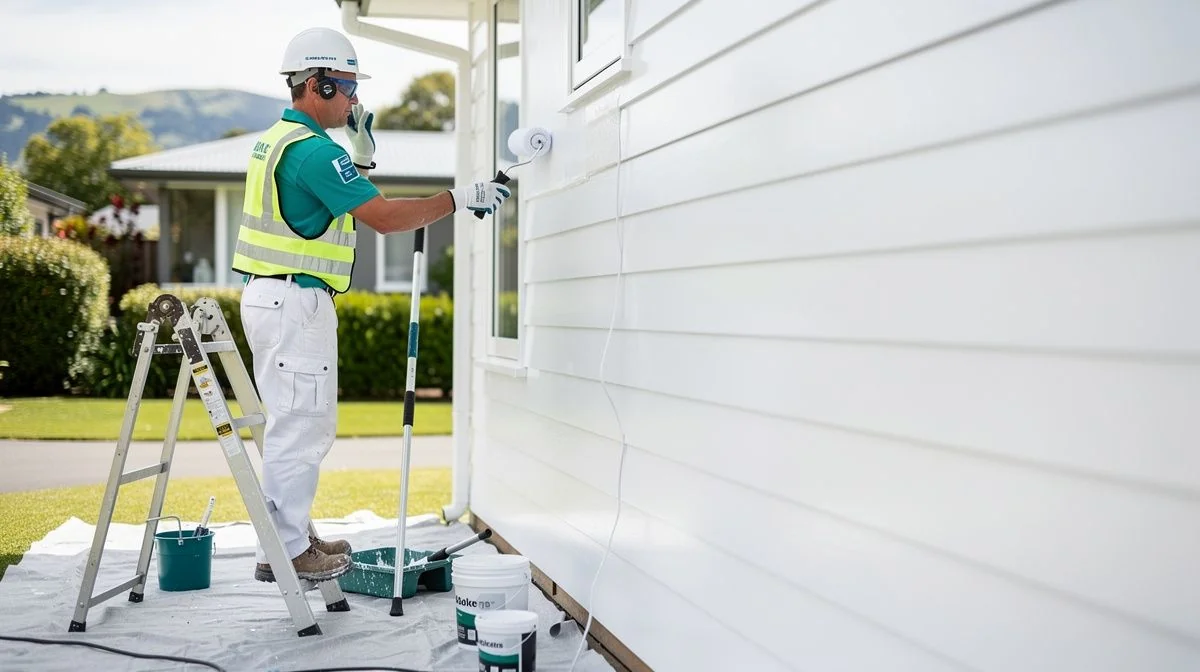
Lower Hutt's painting work is split between two kinds of houses, and each needs different things. Around the older suburbs and the hills, timber villas with wide weatherboards and detailed trim. Across the valley floor sit large numbers of modest mid-century state houses, many still carrying their original weatherboard cladding under several decades of paint.
The second group is where most of the peeling happens. These homes were built quickly and economically, and many have been repainted on tight cycles rather than properly stripped and re-prepared. By the time paint lifts off in sheets, the boards underneath have usually been taking on water for a while, and the repair bill reflects that.
The valley's climate is unforgiving on coatings. The floor is damp, and wind funnelling in from the harbour keeps moisture on exposed elevations longer than elsewhere in the region. Any bare or cracked board becomes an entry point, which is why sealing joints and priming bare timber matter as much as the topcoats. Planned repairs should also come before painting, not after.
How We Researched This Guide
We used current New Zealand painter pricing guides and published trade cost data, then checked the rates against the housing types common in the valley. Peeling coatings, exposed weatherboards and roughcast systems all behave differently, and each demands a different preparation method at a different cost.
For local context, we used Wellington region and Hutt Valley property data, plus the area's industrial employment base around Petone, Seaview and Gracefield. Where sources give a range, we use the range, and we verified every figure quoted against a live source.
Our Trusted Painters
We feature businesses that demonstrate strong performance, proven experience, and consistently positive customer feedback. Some of the providers listed may have commercial relationships with us, but all are selected based on quality and reliability.
To begin, reach out to them and speak with them directly — this helps you explain your job, ask questions, and confirm whether they're the right fit.
Solutrades Painters are a high-quality house painting team providing a range of residential and commercial painting and decorating services in the Wellington region. Solutrades Builders are “Solutions Tradespeople” you can rely on for quality managed building services in the Wellington region.
The 60-Second Version
If you read only one section, read this.
- Preparation, not paint, drives the highest cost. Sound weatherboards run $60–$80 per m²; boards needing full stripping run $105–$145 per m².
- Peeling paint on older weatherboards is a preparation problem, not a paint problem.
- Roughcast and plaster cladding costs up to 20 per cent more because of extra primer and filling.
- Two-storey homes cost far more on the exterior because of scaffolding and a larger façade.
- A three-bedroom interior repaint typically runs $8,000–$12,500.
- Quotes that skip stripping and sealing are the reason the paint peels again within a few winters.
What Painting Costs in Lower Hutt
Interiors are quoted per square metre of floor area and exteriors per square metre of façade. On a weatherboard house, the exterior number moves most, because it depends almost entirely on the condition of the boards.
| Work | Typical cost |
|---|---|
| Interior repaint | $35–$55 per m² of floor area |
| Interior including walls, ceilings and trims | $60–$85 per m² |
| Exterior basic finish | $45–$65 per m² of façade |
| Exterior premium finish | $65–$95 per m² of façade |
| Timber weatherboards in sound condition | $60–$80 per m² |
| Weatherboards needing full stripping | $105–$145 per m² |
| Smooth plaster cladding | $32–$48 per m² |
| Medium-textured plaster | $40–$60 per m² |
| Rough-textured plaster | $58–$80 per m² |
| Interior plasterboard walls and ceilings | $20–$30 per m² |
| Skirtings and window or door liners | $12–$22 per linear metre |
| Standard interior door | $320–$420 each |
Ranges drawn from published New Zealand painter pricing guides and trade cost data. Actual quotes vary with access, surface condition and whether GST is included.
What a Whole House Costs
A three-bedroom interior repaint commonly runs $8,000–$12,500. A single-storey exterior usually costs $8,500–$15,000, and a two-storey exterior $15,000–$22,000. Roof painting is a separate line at roughly $5,000–$11,000, and a full repaint of interior, exterior and roof lands between $25,000 and $45,000.
As a cross-check, multiply the exterior façade area by $70–$140 per m² (depending on cladding) and the interior floor area by $35–$55 per m² for a standard repaint. On a mid-century state house, the low end of that exterior band is realistic only if the existing coating is sound. If the paint is peeling across more than a few boards, expect to sit nearer $105–$145 per m².

Preparation Is Where the Money Goes
Two houses of the same size can be quoted 80 per cent apart, and the difference is rarely the paint. It is how much preparation the boards need. Sound weatherboards that are washed, sanded and spot-primed sit at the bottom of the range; boards with flaking, chalked or built-up coatings that have to be stripped back to bare timber sit at the top.
Peeling paint is the key signal in this city. When coating lifts in sheets, it usually means moisture has got behind it, often through failed joints, cracked putty or bare patches that were never sealed. Painting over the top traps that moisture and guarantees the same failure again.
Cheap quotes cut preparation because none of it is visible once the job is finished. Stripping, sanding, filling, sealing, and priming are all labour, all expensive and all hidden under the topcoats. On a valley house, the shortcut shows up as another round of peeling within a few winters.
Lower Hutt Factors That Change the Job
Peeling Exterior Paint on Older Homes
Mid-century state housing was built economically and often maintained on short repaint cycles. When coatings are applied over failing layers, the whole system can lift at once. The right fix is to strip back to sound timber, seal the joints, and prime properly — a bigger job than a straightforward recoat, but the only one that lasts.
Valley Damp and Weather Exposure
The valley floor is damp, and the wind funnelling through from the harbour keeps moisture on exposed elevations longer than elsewhere in the region. That is hard on coatings and on timber. Any bare or cracked board is an entry point, which is why sealing and priming matter as much as the topcoats on this housing stock.
River Flood and Fault Considerations
The Wellington fault runs through the valley, and parts of the city are exposed to river flooding. Those factors affect insurance and how much owners want to invest. If remediation or repair work is planned, painting should follow it, so you are not recoating surfaces about to be opened up.
Commuter Households and Timing: Many households here commute to Wellington, leaving limited time to manage a project. That makes a clear written scope more valuable, and staged work more sensible: exterior one season, interior the next.
How to Choose a Painter in Lower Hutt
Ask what they will do about the peeling, specifically. A good answer describes stripping back to sound timber, treating and sealing the joints, priming the bare areas and then coating — not just sanding the edges and painting over. Ask whether rotten boards and failed putty are included.
Then ask for the number of coats, the products by name, and how they'll handle access on your section. Ask for references from older weatherboard homes rather than new builds, because that is the surface most of the work here involves.
Warning Signs
- Painting straight over peeling paint with no stripping.
- No mention of sealing joints or priming bare timber.
- No preparation detail, only a total.
- No scaffolding in the quote for a two-storey home.
- A price far below the bands above with no exclusions explained.
- No written scope and no product names.
Reading a Quote Without Getting Burned
Ask for the scope in writing: elevations, preparation method (including stripping and sealing), number of coats, product names, access arrangement, and a start date. On a peeling house, the preparation section is what you are actually paying for.
Confirm whether GST is included, because 15% turns $10,000 into $11,500, and painting quotes are commonly given before GST. Confirm the exclusions as well: rotten board replacement, putty repairs, pre-paint repairs and waste disposal are frequent additions.
Questions You Might Have
Why does my paint keep peeling after repainting?
Almost always preparation. If the old coating wasn't stripped, joints weren't sealed, and bare timber wasn't primed, moisture gets behind the new paint and lifts it. Repeating the same shortcut produces the same result.
Does my state house need full stripping?
Not necessarily. If the coating is sound and only faded, a wash, sand and recoat is entirely appropriate. Where it is flaking in sheets, stripping is the only reliable option, and the price difference between $60–$80 and $105–$145 per m² reflects exactly that.
Can I paint the exterior in stages to spread the cost?
Yes, and on a single-level weatherboard home it works well: do the most exposed elevations first, then the sheltered ones in a later season. Ask the painter to document what was done and which products were used so the next stage matches.
Should I fix the section or the flood risk before painting?
Any planned building, drainage or remediation work should happen before the painting, not after. It makes no sense to coat walls that are about to be opened up, and repainting twice costs far more than waiting.
What Matters Most
Lower Hutt's housing stock makes peeling paint the defining issue, and peeling paint is a preparation failure rather than a paint failure. The gap between a sound weatherboard at $60–$80 per m² and one needing full stripping at $105–$145 per m² is entirely surface work, and on a mid-century home that has been recoated too often, it is the work that actually solves the problem.
In a market that has fallen sharply, the temptation is to accept the cheapest quote and hope. That is how the same house ends up being repainted twice. Spend the money on preparation, get the scope in writing, and stage the interior if the budget is tight. To compare firms across the valley, see our painters directory.

The ValueHub Team built this site because finding clear, unbiased financial information in New Zealand was harder than it should be. Every guide is based on real research — we compare the actual fees, terms, and fine print so you don't have to. Our tip: shop around every year, read the policy docs, and never assume loyalty gets you the best deal.— The ValueHub Team
Try our Calculators
Use these free tools to crunch the numbers:
KiwiSaver Fund Comparison
Compare fees, returns, and risk levels across every KiwiSaver fund — the most up to date data in New Zealand.
Currency Converter — USD to NZD
Convert US Dollars to New Zealand Dollars instantly. See the latest exchange rate and 30-day trend.
Mortgage Repayment Calculator
Calculate your weekly, fortnightly, or monthly mortgage repayments. Free NZ mortgage calculator — try different rates, terms, and repayment frequencies.
Compound Interest Calculator
See how your savings grow with compound interest over time. Free NZ compound interest calculator with yearly, monthly, and weekly compounding options.
Term Deposit Calculator
Calculate your term deposit returns before you lock in. Compare interest earned across different terms and rates with ValueHub's free calculator.
Savings Goal Calculator
Calculate how long it will take to reach your savings goal — and what monthly deposit you need to get there. Free NZ savings planner.
Painters in Other Cities
Latest Guides & Reviews
KiwiSaver and Tax — PIR, ESCT and What You Actually Pay
KiwiSaver is taxed twice — ESCT on your employer's contribution and your PIR on the fund's returns. How each rate is set, and the two most members never check.
reviewInvestNow KiwiSaver Scheme Review
InvestNow KiwiSaver review: 45 open funds, fund charges from 0.03 to 1.38 per cent, and net returns to 30 June 2026.
reviewKernel KiwiSaver Scheme Review
Kernel KiwiSaver review: 25 open funds, fund charges from 0.25 to 0.45 per cent, and net returns to 30 June 2026.
guideTax Debt in New Zealand — The Numbers
Official figures on New Zealand's overdue tax debt: the total, the collectable share, which customer groups hold it, and how much is repaid or written off.