Best Puppy Schools in Kapiti
Published 01 April 2025 · Updated 18 August 2026
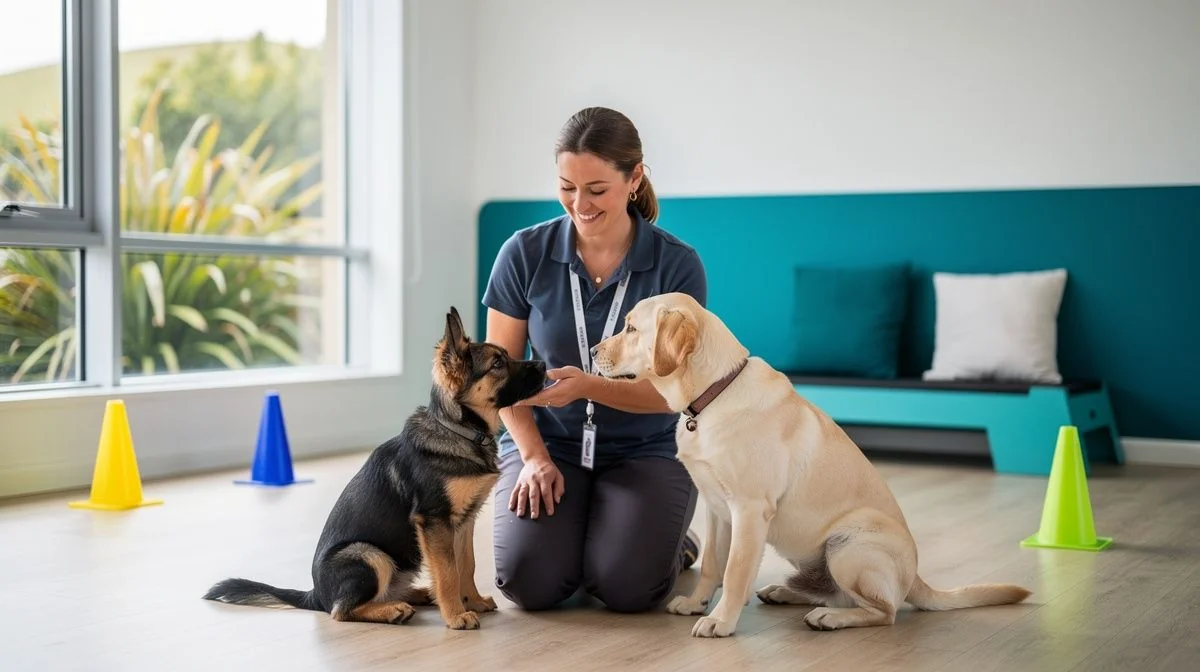
Best Puppy Schools in Kapiti
Bringing a new puppy home is exciting – and a bit overwhelming. You’ve got the chewed shoes, the puddles on the floor, and a little bundle of energy who needs to learn the ropes. That’s where a good puppy school comes in.
If you live in Kapiti – from Paraparaumu down to Ōtaki and the surrounding areas – you’re in luck. There are several well-regarded puppy schools and trainers who can set your pup up for success. This page will help you sort through your options, know what to look for, and ask the right questions before you sign up.
What to Look for When Hiring a Puppy School in Kapiti
Not all puppy schools are the same. Some focus heavily on socialisation, others on basic obedience, and a few offer a mix of both. Here are the key things to check when you’re comparing options in the Kapiti region.
Qualified and experienced trainers
A trainer’s background matters. Look for someone who uses positive reinforcement methods (treats, praise, toys) rather than punishment or dominance-based techniques. Many local trainers are members of organisations like the New Zealand Professional Dog Trainers Association (NZPDTA) or hold certifications through the Animal Behaviour and Training Council (ABTC). Ask about their experience with puppies – especially with the breed or temperament of your dog.
Age-appropriate socialisation
Puppy school is as much about social skills as it is about sit and stay. The best classes provide a safe, controlled environment where pups can interact with other dogs and people. Look for classes that separate puppies by size or energy level, and that ensure all puppies are up-to-date with their first vaccinations. Most reputable Kapiti schools will request a vet certificate before your pup starts.
Small class sizes
Too many dogs in a class means less individual attention. Aim for groups of no more than six to eight puppies. This gives the trainer time to help each owner work through specific challenges – like pulling on the lead or jumping up.
Clear structure and curriculum
A good puppy school will have a set plan. Over four, six, or eight weeks they’ll cover non-negotiable skills: recall (coming when called), loose-lead walking, settle on a mat, handling exercises (for vet visits and grooming), and impulse control. If a school can’t tell you exactly what they teach in each session, that’s a red flag.
Support beyond class
Life with a puppy doesn’t stop when the session ends. Find out if the trainer offers email or phone support between classes. Some Kapiti trainers also provide online resources or follow-up sessions for common issues like separation anxiety or mouthing.
Location and timing
Kapiti stretches from Raumati South to Ōtaki. Choose a school that’s convenient for you – whether that’s near the Coastlands shopping centre, in Waikanae, or closer to home. Also check class times: evening and weekend sessions are common, but some weekday daytime classes exist if you work from home or have flexible hours.
Key Questions to Ask Before Hiring
Before you commit to a puppy school in Kapiti, take time to have a chat with the trainer. Here are questions to ask:
- What training methods do you use? – Listen for positive reinforcement, treats, clicker training. Avoid any mention of “alpha rolls”, “corrections”, or “dominance”.
- How many puppies are in a class? – Ideally no more than 6–8 dogs to ensure individual attention.
- Do you accept puppies that haven’t completed all vaccinations? – Most schools require at least the first two rounds. They’ll also need proof from your vet.
- Can I watch a class first? – Many trainers allow you to observe a session (without your pup) to see the style and atmosphere.
- What age range do you take? – Typical puppy school runs from 8 weeks (after first vaccination) up to about 5 months. Older pups may need a “teenager” class.
- Does the class include off-lead playtime? – Supervised play is vital for socialisation. Make sure it’s structured and safe.
- What happens if my puppy is sick or nervous? – Good schools have a plan for shy or reactive pups – often a separate calm-down area or a slower introduction.
- Do you provide homework or practice tips? – Consistent practice at home makes all the difference. You want a trainer who sets clear tasks between classes.
- Are you insured? – Professional trainers should have public liability insurance. It’s a sign they take their business seriously.
- What’s your refund or cancellation policy? – Life happens – puppies get sick, you get busy – know the policy upfront.
Tips for Getting the Best Results
Puppy school is only the start. The real work happens every day in your living room, on your walks, and at the park. Here’s how to make the most of it.
Go in with realistic expectations
Puppies learn at different rates. Your 12-week-old lab might master “sit” in one session, while your border collie cross is still figuring out what treats have to do with anything. Be patient. The goal isn’t a perfect dog after six weeks – it’s a confident, well-mannered adolescent who knows the basics.
Practice every day – but keep it short
Five minutes of training twice a day beats one long session. Puppies have short attention spans. Use meal times as training opportunities: ask for a “sit” before putting the bowl down, practice “wait” at the door, reward “drop” when they let go of a toy.
Use high-value rewards
Treats matter. In a new environment like puppy school, your usual dog biscuits might not cut it. Save something extra special – small bits of cheese, boiled chicken, or liver treats – for class and for tough exercises like recall. But keep the pieces tiny; you don’t want a chubby pup.
Socialise broadly, not just at school
Puppy school introduces your dog to other dogs, but socialisation covers more than that. Expose your pup to different surfaces (grass, gravel, sand), sounds (traffic, kids playing), and people (with hats, sunglasses, walking sticks). Do this gradually and always pair new experiences with treats so your pup builds positive associations.
Stay consistent with cues
Everyone in the household should use the same words and hand signals. If you say “down” for lying down and your partner says “drop” for the same thing, your puppy gets confused. Agree on your cues before you start the course.
Communicate with your trainer
If you’re struggling with a particular behaviour – mouthing, house training, jumping up – tell the trainer. They can offer specific strategies. Don’t wait until the last session to mention that recall isn’t working. Most Kapiti trainers are happy to give extra advice between classes if you ask.
Don’t skip the “settle” exercises
It’s tempting to focus on the flashy tricks, but learning to relax on a mat or in a crate is one of the most valuable skills for a puppy. It helps with calmness at home, in cafes, and at the vet. Practice this every day.
Make it fun
If training feels like a chore, your puppy will pick up on that energy. Keep sessions playful, end on a positive note (a simple “sit” followed by a jackpot of treats), and take breaks when needed. The bond you build now will last a lifetime.
A Note About Costs and Getting Quotes
Puppy school in Kapiti typically costs between $150 and $350 for a 4–8 week course. The price depends on the trainer’s experience, class size, and whether the course includes

The ValueHub Team built this site because finding clear, unbiased financial information in New Zealand was harder than it should be. Every guide is based on real research — we compare the actual fees, terms, and fine print so you don't have to. Our tip: shop around every year, read the policy docs, and never assume loyalty gets you the best deal.— The ValueHub Team
Try our Calculators
Use these free tools to crunch the numbers:
KiwiSaver Fund Comparison
Compare fees, returns, and risk levels across every KiwiSaver fund from all 31 NZ providers.
Currency Converter — USD to NZD
Convert US Dollars to New Zealand Dollars instantly. See the latest exchange rate and 30-day trend.
Mortgage Repayment Calculator
Calculate your weekly, fortnightly, or monthly mortgage repayments. Free NZ mortgage calculator — try different rates, terms, and repayment frequencies.
Compound Interest Calculator
See how your savings grow with compound interest over time. Free NZ compound interest calculator with yearly, monthly, and weekly compounding options.
Term Deposit Calculator
Calculate your term deposit returns before you lock in. Compare interest earned across different terms and rates with ValueHub's free calculator.
Savings Goal Calculator
Calculate how long it will take to reach your savings goal — and what monthly deposit you need to get there. Free NZ savings planner.
Puppy Schools in Other Cities
Latest Guides & Reviews
New Zealand Financial Markets Authority Guide: Investor Protection in NZ
Protect your investments with this practical guide to the FMA — how to check licences, spot scams, and what to do if a provider fails. Verified against...
comparisonEV Home Charger NZ: Costs & Buying Guide
Compare EV home charger costs in NZ — verified prices from $1,299, installation fees, smart features, and what actually matters for your home's power supply.
guideThe Most Popular EVs in New Zealand
The best-selling electric cars in New Zealand, ranked by official registration data. Top BEV and PHEV models and brands, updated monthly.
guideEV Market Stats
New Zealand's EV market in numbers — market share, fleet size, top-selling models and used imports, updated with the latest NZTA and MIA data.