Best Puppy Schools in Masterton
Published 01 April 2025 · Updated 18 August 2026
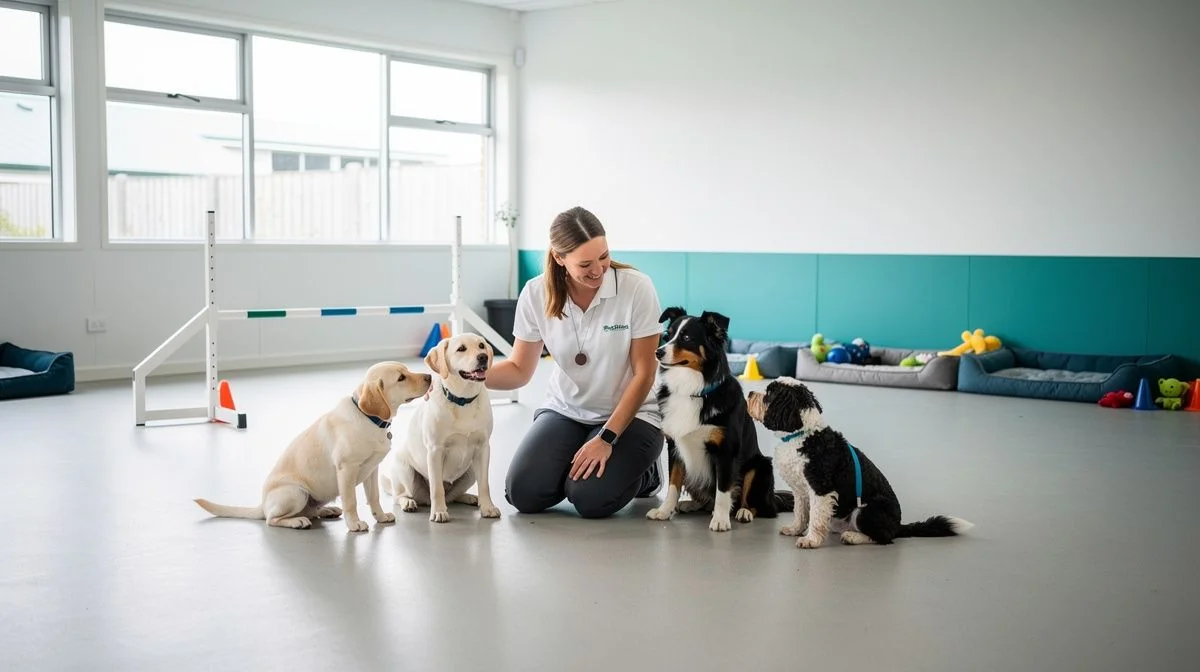
Finding a Puppy School in Masterton That Suits Your Dog
Bringing a new puppy into your Masterton home is exciting — but it also comes with a fair bit of responsibility. Getting the basics of training right early on makes life easier for both you and your pup. A good puppy school gives your dog a solid foundation in socialisation, manners, and basic commands, all while helping you learn how to communicate effectively.
Masterton has a handful of options when it comes to puppy training, from group classes run by experienced trainers to one-on-one sessions that cater to specific needs. But not all puppy schools are the same. Knowing what to look for — and what questions to ask — will help you choose a programme that sets your puppy up for success.
What to Look for When Hiring a Puppy School in Masterton
Qualified and Experienced Trainers
The trainer's background matters. Look for someone who holds a recognised qualification in animal behaviour or dog training — for example, through organisations like the New Zealand Dog Trainers Association (NZDTA) or the International Association of Animal Behaviour Consultants (IAABC). Many trainers also have practical experience working with puppies and their owners in a class setting.
A trainer who keeps up with modern, reward-based methods is preferable. Avoid anyone who promotes punishment-based techniques, like choke chains or shouting. Positive reinforcement — rewarding good behaviour with treats, praise, or play — is widely accepted as the most effective and humane approach.
Class Size and Structure
Smaller classes often mean more individual attention for your puppy. A typical puppy school might have 4–8 dogs per session, with at least one assistant if numbers are higher. Ask how many puppies are in each class and whether there is more than one trainer present.
Also check the structure of the programme. Many puppy schools run a set number of weekly sessions (say, 4–6 weeks), covering topics like sit, stay, loose-lead walking, and socialisation. Some also include off-leash play time under supervision, which is valuable for building confidence around other dogs.
Clean and Safe Environment
The venue matters. Puppies are still building their immune systems, so the training space should be clean, well-ventilated, and free from hazards. Ask whether the training area is disinfected between classes. Outdoor spaces should be securely fenced.
If classes are held indoors, check that the flooring provides good grip for puppy paws and that the temperature is comfortable. A good puppy school will also have a clear policy on vaccinations — most require that puppies have had their first two vaccinations before attending.
Socialisation Opportunities
One of the main benefits of puppy school is socialisation — exposing your pup to different people, dogs, sights, and sounds in a controlled setting. Ask how the trainer facilitates socialisation. Do they include structured play sessions? Are the puppies matched by size and temperament?
A good puppy school will also help you understand signs of stress or fear in your dog, so you can intervene appropriately. Socialisation done poorly — for example, overwhelming a shy puppy — can do more harm than good.
Key Questions to Ask Before Hiring a Puppy School in Masterton
- What methods do you use? Look for positive reinforcement only. Avoid trainers who use aversive tools or techniques.
- What is your vaccination policy? Most require first two vaccinations. Also ask about worming and flea prevention.
- Can I observe a class first? Many trainers allow you to watch a session before committing. This gives you a sense of the atmosphere and the trainer's style.
- What age range do you accept? Puppy schools generally cater to dogs between 8 and 16 weeks old. Some also offer classes for older pups.
- How long are the sessions and how many are included? Typical programmes run 4–6 weeks, with weekly sessions of 45–60 minutes.
- Do you offer follow-up support? Some trainers include a private session or phone support after the course ends.
- What happens if my puppy is scared or not coping? A good trainer will have a plan for nervous dogs, such as working at a distance or offering one-on-one support.
- Are you insured and registered? Ask for proof of public liability insurance and any relevant certifications.
Tips for Getting the Best Results from Puppy School in Masterton
Start Early, But Not Too Early
The ideal window for puppy socialisation is between 8 and 16 weeks of age. Most puppy schools accept pups from 8 weeks, provided they've had their first vaccination. Starting within this timeframe gives your dog the best chance to develop confident, friendly behaviour.
If your puppy is older than 16 weeks, don't worry — many trainers offer classes for adolescent dogs that cover similar ground. It's never too late to learn, but early training does tend to stick better.
Practice at Home Between Sessions
A weekly class on its own won't be enough. The real learning happens when you reinforce those skills at home every day. Spend 5–10 minutes twice a day practising the commands and exercises you covered in class. Keep sessions short and fun — end on a high note with a game or a treat.
Consistency is key. Use the same cues (words like "sit" or "down") and hand signals your trainer uses. If everyone in the household uses the same approach, your puppy will pick it up much faster.
Manage the Environment
Puppies are easily distracted. When practising at home, start in a quiet room with minimal distractions. Once your dog has the hang of a command, gradually add challenges — the backyard, a park bench, or a walk past another dog. This builds reliability in real-world situations.
Your trainer can advise on how to set up a calm training environment and when to increase difficulty. Many also offer tips for managing common challenges like toilet training or chewing.
Stay Positive and Patient
Puppy training can be frustrating, especially when your dog seems to forget everything overnight. That's normal. Avoid punishment — shouting or scolding will only make your puppy anxious and less willing to try. Instead, take a deep breath, go back to basics, and reward even small successes.
Celebrate the little wins. Every time your puppy chooses to sit instead of jump, or walks past a tempting distraction without pulling, that's progress. Over the course of a few weeks, you'll see real improvement.
Get the Whole Family Involved
If possible, have everyone who lives with the puppy attend at least some of the classes. Consistency between family members is vital. Children can learn safe ways to interact with the puppy — like gentle handling and not disturbing them during meals or rest.
Trainers often have tips for including kids in training sessions. Make it a team effort, and your puppy will benefit from clear, consistent expectations from everyone.
A Note About Costs and Getting Quotes for Puppy Schools in Masterton
The cost of puppy school in Masterton varies depending on the trainer's experience, the length of the programme, and whether it's a group class or private session. Group classes are generally more affordable, with prices typically ranging from $100 to $250 for a 4–6 week course. Private sessions may cost $50–$100 per hour, with some trainers offering packages that work out cheaper per session.
Before you book, it pays to ask exactly what's included. Does the fee cover handouts, a graduation certificate, or follow-up support? Are there extra costs for things like a private session or online resources? Getting a clear breakdown upfront helps you compare quotes fairly.
We recommend contacting two or three puppy schools in Masterton to ask about their programmes, methods, and pricing. Most trainers are happy to chat on the phone or by email. Many also offer a free initial consultation or a chance to watch a class before you commit.
At ValueHub, we aim to make it easy for you to compare local services. While we don't provide specific trainer recommendations, we encourage you to use the questions and tips on this page to find a puppy school that feels right for you and your dog.
A well-chosen puppy school in Masterton can be one of the best investments you make in your dog

The ValueHub Team built this site because finding clear, unbiased financial information in New Zealand was harder than it should be. Every guide is based on real research — we compare the actual fees, terms, and fine print so you don't have to. Our tip: shop around every year, read the policy docs, and never assume loyalty gets you the best deal.— The ValueHub Team
Try our Calculators
Use these free tools to crunch the numbers:
KiwiSaver Fund Comparison
Compare fees, returns, and risk levels across every KiwiSaver fund from all 31 NZ providers.
Currency Converter — USD to NZD
Convert US Dollars to New Zealand Dollars instantly. See the latest exchange rate and 30-day trend.
Mortgage Repayment Calculator
Calculate your weekly, fortnightly, or monthly mortgage repayments. Free NZ mortgage calculator — try different rates, terms, and repayment frequencies.
Compound Interest Calculator
See how your savings grow with compound interest over time. Free NZ compound interest calculator with yearly, monthly, and weekly compounding options.
Term Deposit Calculator
Calculate your term deposit returns before you lock in. Compare interest earned across different terms and rates with ValueHub's free calculator.
Savings Goal Calculator
Calculate how long it will take to reach your savings goal — and what monthly deposit you need to get there. Free NZ savings planner.
Puppy Schools in Other Cities
Latest Guides & Reviews
New Zealand Financial Markets Authority Guide: Investor Protection in NZ
Protect your investments with this practical guide to the FMA — how to check licences, spot scams, and what to do if a provider fails. Verified against...
comparisonEV Home Charger NZ: Costs & Buying Guide
Compare EV home charger costs in NZ — verified prices from $1,299, installation fees, smart features, and what actually matters for your home's power supply.
guideThe Most Popular EVs in New Zealand
The best-selling electric cars in New Zealand, ranked by official registration data. Top BEV and PHEV models and brands, updated monthly.
guideEV Market Stats
New Zealand's EV market in numbers — market share, fleet size, top-selling models and used imports, updated with the latest NZTA and MIA data.