Best Puppy Schools in Upper Hutt
Published 01 April 2025 · Updated 18 August 2026
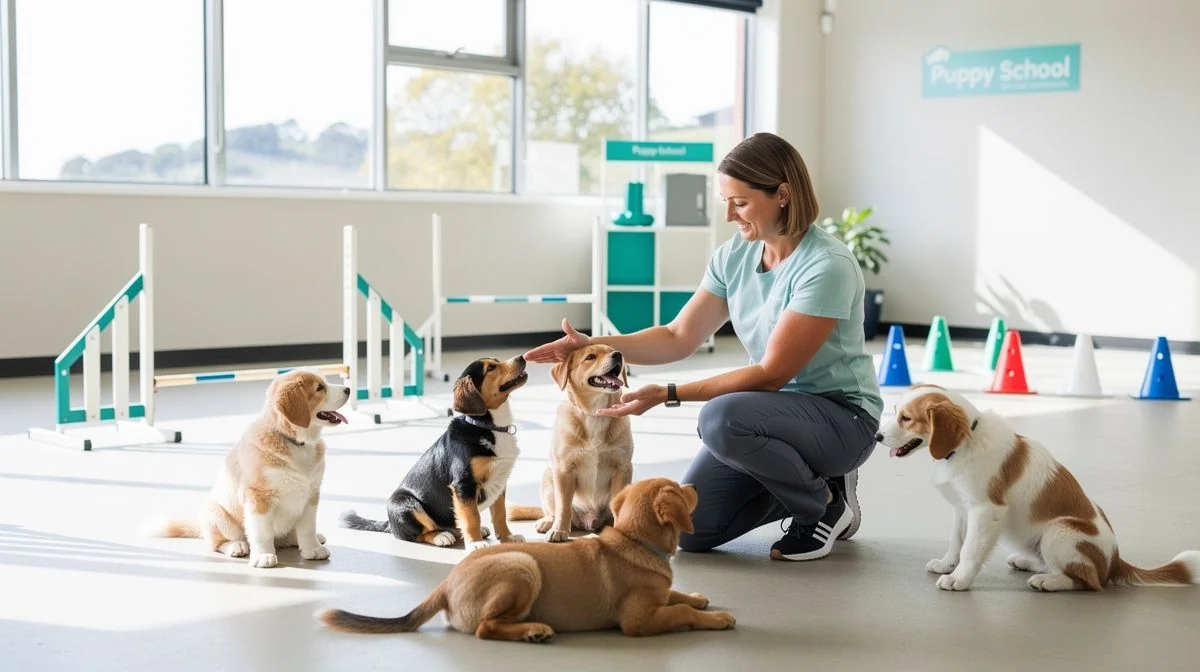
Best Puppy Schools in Upper Hutt
Bringing a new puppy home is an exciting time, but it also comes with the responsibility of setting them up for a well-behaved, happy life. Puppy school is one of the best investments you can make, giving your dog a head start on socialisation, basic manners, and confidence. In Upper Hutt, there are several options for puppy training, but finding the right school for your pup takes a bit of know-how. This guide will help you understand what to look for, what to ask, and how to get the most out of puppy school in Upper Hutt.
Whether you live in central Upper Hutt, Trentham, Pinehaven, or out towards Akatarawa, the principles of good puppy training stay the same. A quality puppy school focuses on positive reinforcement, socialisation in a safe environment, and setting both you and your puppy up for success.
What to Look for When Hiring a Puppy School in Upper Hutt
Not all puppy schools are created equal. Here are the key things to check when choosing a class for your pup.
Positive Reinforcement Methods
The best puppy schools in Upper Hutt use force-free, reward-based training methods. Look for trainers who use treats, praise, and play to encourage good behaviour, not methods that rely on punishment, choke chains, or aversive techniques. A good trainer will explain why they use certain methods and will be happy to answer questions about their philosophy.
Puppy Socialisation Opportunities
Puppy school should include safe, supervised playtime with other puppies of similar age and size. This helps your puppy learn bite inhibition and appropriate dog communication. The trainer should manage play carefully, ensuring no puppy is overwhelmed or bullied. Ask if the school separates puppies into groups based on temperament, not just age.
Experienced and Qualified Trainers
While there is no single mandatory certification in New Zealand for dog trainers, many reputable trainers have completed courses through organisations like the New Zealand Dog Trainers Association (NZDTA) or the Association of Pet Dog Trainers (APDT). A trainer who regularly undertakes professional development shows they are serious about their craft. You can also ask how long they’ve been running puppy classes in the Upper Hutt area.
Small Class Sizes
A good puppy school will limit class numbers to ensure each pairing gets individual attention. Typically, 6–8 puppies is a manageable size. If the class is too large, the trainer cannot effectively manage socialisation or address specific questions. Ask about the maximum number of puppies per class.
Clean and Safe Environment
The venue should be clean, secure, and free from hazards. Indoor venues should have easy-to-clean floors, and outdoor spaces should be fenced and safe. A good school will have a clear hygiene policy, including regular cleaning between classes, to prevent the spread of illness among young puppies.
Focus on Owner Education
Puppy school is as much about training you as it is about training your pup. Look for a school that teaches you how to handle common behaviours like biting, jumping, and toilet training. The trainer should explain why a technique works and give you exercises to practise at home. Good schools provide handouts or online resources to reinforce learning between sessions.
Key Questions to Ask Before Hiring
When you’ve found a couple of potential puppy schools, give them a call or send an email. Here are some questions to ask to help you decide.
- What is your training philosophy? Listen for words like “positive reinforcement,” “force-free,” and “reward-based.” If a trainer talks about “dominance” or “correction,” that’s a red flag.
- What vaccinations does my puppy need before starting? Most reputable schools require at least the first vaccination (and sometimes the second) to reduce health risks. Always check with your vet, but a good school will have a clear policy.
- How do you handle a puppy that is scared or reactive? A skilled trainer will have a plan for building confidence at the puppy’s own pace, not forcing them into situations that cause fear.
- Can I watch a class first? Many schools allow you to observe a session before committing. This gives you a feel for the trainer’s style and the class atmosphere.
- What is the age range for puppies? Puppy school usually suits pups from 8 weeks up to around 16 weeks (or until they’ve had their second vaccination). After that, many schools offer adolescent classes.
- What happens after the puppy course? Some schools offer follow-up classes or referrals to intermediate training. A good school will help you continue your training journey beyond the initial course.
Tips for Getting the Best Results
Puppy school is just the start. Here’s how to make the most of it once you’ve chosen a class.
- Start early. The critical socialisation window for puppies is roughly 8 to 16 weeks. Enrolling early gives your pup the best chance to learn good habits before fear periods set in.
- Practise daily. Short, fun training sessions (2–5 minutes) at home reinforce what you learn in class. Consistency matters more than long sessions.
- Manage the environment. Use baby gates, crates, and tethers to prevent your puppy from rehearsing unwanted behaviours. Puppy school teaches you how to set up your home for success.
- Socialise outside of class. Puppy school is great, but your pup also needs positive experiences with different people, dogs, surfaces, and sounds. Ask your trainer for a safe socialisation list – places where you can expose your puppy to new things without risking illness.
- Be patient. Every puppy learns at their own pace. There will be good days and bad days. Stay calm, use high-value treats, and celebrate small wins.
- Ask questions. If something isn’t working at home, tell the trainer. They can give you alternative techniques or adjust the exercise to suit your puppy’s personality.
Also, keep in mind that puppy school is a partnership. The time you put in directly impacts the results. A good trainer will guide you, but the real work happens in your living room and on walks around Upper Hutt.
A Note About Costs and Getting Quotes
The price of a puppy school in Upper Hutt typically ranges depending on the number of sessions, the class size, and the trainer’s experience. Standard puppy courses often run for 4 to 6 weeks, with one session per week. Expect to pay anywhere from around $150 to $350 for a full course. Some schools also offer one-off workshops or private lessons, which are priced differently.
Because costs can vary, it pays to get quotes from a few different providers. Ask exactly what’s included: are the sessions hour-long? Do you get handouts or access to online materials? Is there a free introductory session? Are there any extra costs for graduation certificates or follow-up support? Comparing quotes helps you find a school that offers good value, not just the cheapest price.
Remember that puppy school is an investment in your dog’s future. A well-socialised, well-trained dog will be a joy to live with, saving you time and stress down the track. If you’re on a tight budget, some trainers in the Wellington region offer group classes at lower rates, but always check that the quality of training is still high.
For the most current pricing and availability, we recommend contacting a few local Upper Hutt trainers directly. They will be happy to discuss their courses and give you a clear idea of what to expect. Good luck with your puppy training journey – you’re doing a great thing for your new best friend.

The ValueHub Team built this site because finding clear, unbiased financial information in New Zealand was harder than it should be. Every guide is based on real research — we compare the actual fees, terms, and fine print so you don't have to. Our tip: shop around every year, read the policy docs, and never assume loyalty gets you the best deal.— The ValueHub Team
Try our Calculators
Use these free tools to crunch the numbers:
KiwiSaver Fund Comparison
Compare fees, returns, and risk levels across every KiwiSaver fund from all 31 NZ providers.
Currency Converter — USD to NZD
Convert US Dollars to New Zealand Dollars instantly. See the latest exchange rate and 30-day trend.
Mortgage Repayment Calculator
Calculate your weekly, fortnightly, or monthly mortgage repayments. Free NZ mortgage calculator — try different rates, terms, and repayment frequencies.
Compound Interest Calculator
See how your savings grow with compound interest over time. Free NZ compound interest calculator with yearly, monthly, and weekly compounding options.
Term Deposit Calculator
Calculate your term deposit returns before you lock in. Compare interest earned across different terms and rates with ValueHub's free calculator.
Savings Goal Calculator
Calculate how long it will take to reach your savings goal — and what monthly deposit you need to get there. Free NZ savings planner.
Puppy Schools in Other Cities
Latest Guides & Reviews
New Zealand Financial Markets Authority Guide: Investor Protection in NZ
Protect your investments with this practical guide to the FMA — how to check licences, spot scams, and what to do if a provider fails. Verified against...
comparisonEV Home Charger NZ: Costs & Buying Guide
Compare EV home charger costs in NZ — verified prices from $1,299, installation fees, smart features, and what actually matters for your home's power supply.
guideThe Most Popular EVs in New Zealand
The best-selling electric cars in New Zealand, ranked by official registration data. Top BEV and PHEV models and brands, updated monthly.
guideEV Market Stats
New Zealand's EV market in numbers — market share, fleet size, top-selling models and used imports, updated with the latest NZTA and MIA data.