Best Puppy Schools in Whanganui
Published 01 April 2025 · Updated 18 August 2026
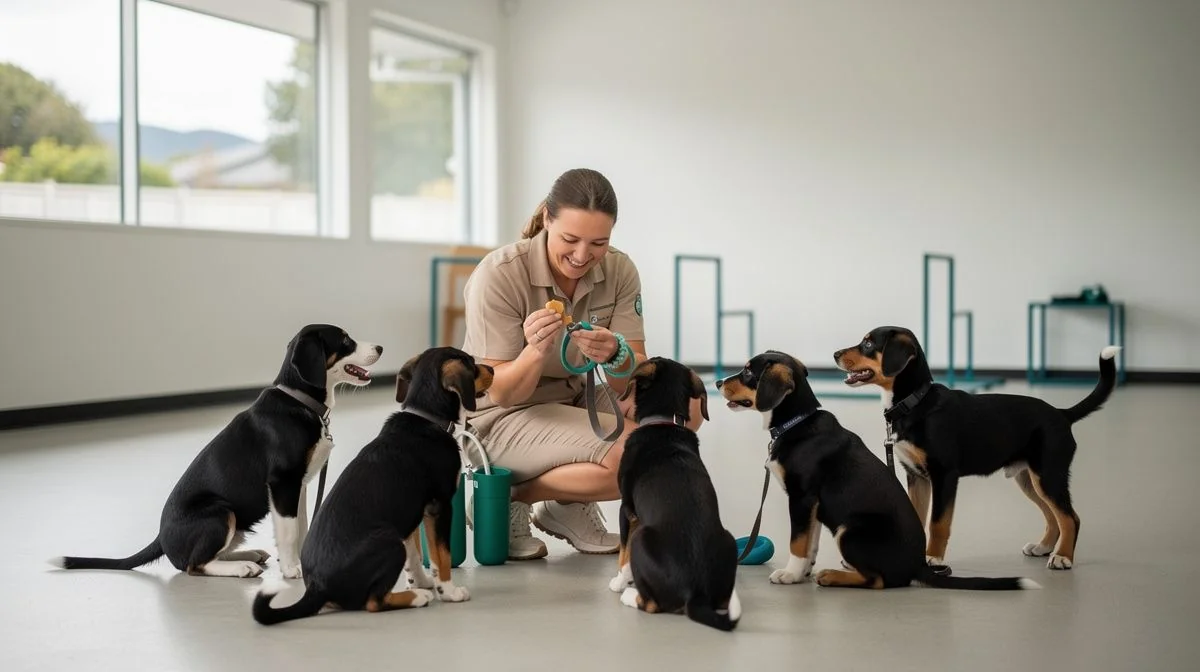
Bringing a new puppy into your Whanganui home is an exciting time. Whether you live near the river, out towards Gonville, or closer to Castlecliff, one thing most owners quickly realise is that a little bit of early training goes a long way. Puppy schools aren’t just about teaching your pup to sit — they’re about building confidence, social skills, and a strong bond that lasts their whole life.
Whanganui has a laid-back, community-focused vibe, and the same goes for its puppy training scene. The best puppy schools here blend positive reinforcement with real-world experience, so your dog learns calmly and happily. But with several options around, how do you pick the right one? This guide covers what to look for, questions to ask, and how to get the best results for your pup.
What to look for when hiring a puppy school in Whanganui
Not all puppy schools are the same. Some focus heavily on obedience drills, while others prioritise socialisation and play-based learning. The right choice depends on your puppy’s temperament, your goals, and your training philosophy. Here’s what to keep an eye on when looking around Whanganui.
Qualified and experienced instructors
Look for trainers who have recognised qualifications. In New Zealand, many instructors are certified through organisations like the New Zealand Association of Dog Obedience Instructors or the Association of Pet Dog Trainers (APDT). Experienced trainers will also have a solid understanding of puppy development and modern, force-free training methods. Avoid any school that relies on punishment or dominance-based techniques — these are outdated and can harm your puppy’s confidence.
Positive reinforcement methods
The best puppy schools in Whanganui use reward-based training. This means praising good behaviour with treats, toys, or play, rather than scolding or correcting mistakes. Positive reinforcement builds trust and makes learning fun. If a trainer seems heavy-handed or too strict during a demo class, that’s a red flag.
Small class sizes
A good class size is usually six to eight puppies. Any more than that, and your puppy might not get the individual attention they need. Smaller groups also mean the instructor can tailor exercises to suit each dog’s personality — whether you have a shy Cavoodle or an energetic Border Collie.
Clean and safe facilities
Check that the training space is clean, secure, and well-ventilated. Puppies have developing immune systems, so cleanliness matters. Look for a non-slip floor (puppies slip easily) and safe barriers to separate classes if needed. Some Whanganui trainers operate from indoor halls, others from private properties — either is fine as long as it’s clean and calm.
A focus on socialisation, not just obedience
Socialisation during the first 16 weeks is crucial. A great puppy school will let your pup interact with other puppies in a controlled, supervised way. This helps prevent fear and aggression later in life. The best schools balance structured training with free play time.
Flexible scheduling and location
Whanganui isn’t huge, but think about what suits your routine. Some puppy schools hold classes on weeknights or weekend mornings. Check the location — is it easy to get to from your side of town? Also consider whether they offer a pre-school consultation or a trial class.
Key questions to ask before hiring a puppy school in Whanganui
Before you hand over your money, pick up the phone or send an email. These questions will help you sort the good from the average.
- What training methods do you use? Listen for keywords like “positive reinforcement”, “reward-based”, and “force-free”. Avoid trainers who talk about “pack leadership” or “alpha rolls”.
- What qualifications do you hold? Ask for specifics — are they certified through a recognised New Zealand body? Have they completed any ongoing education?
- How many puppies are in a typical class? A good answer is “no more than eight”. If they say “up to 15”, that’s too many for quality attention.
- Can I watch a class first? A reputable school will be happy to let you observe. This is a great way to see the atmosphere and the trainer’s style.
- What is the policy on vaccinations? Puppy schools typically require first vaccinations and a health check. Ask about their cleaning protocol between classes.
- What happens after puppy school ends? Some schools offer follow-up classes or a clear path to more advanced training. That continuity can be very helpful.
- Do you offer support between classes? It’s a bonus if the trainer sends home notes, offers email support, or runs a Facebook group for owners.
- What is your cancellation policy? Life happens — make sure you understand the terms if you need to miss a class.
Tips for getting the best results from puppy school
Training doesn’t end when the one-hour class finishes. To get the most out of puppy school in Whanganui, you need to be consistent at home. Here’s how to set your pup (and yourself) up for success.
Practice daily, but keep sessions short
Puppies have short attention spans. Five minutes of training two or three times a day is far more effective than one long session. Work on the skills you’ve learned in class — “sit”, “down”, “come”, and loose-leash walking. Keep it fun and always end on a positive note.
Use high-value rewards
Find out what really motivates your puppy. For some, it’s small pieces of cooked chicken or cheese. For others, a squeaky toy or a game of tug works better. Save these special treats for training time only.
Set your puppy up for success
If your puppy is overtired, hungry, or overstimulated, they won’t learn well. Make sure they’ve had a nap and a toilet break just before class. During training at home, start in a quiet room with few distractions, then slowly add challenges.
Be consistent with cues
Use the same words and hand signals every time. If the trainer says “sit” with a hand signal, don’t switch to “sit down” or a different gesture. Consistency helps your puppy learn faster and reduces confusion.
Socialise outside of class
Puppy school is a controlled environment. To really cement social skills, introduce your puppy to different people, places, and experiences around Whanganui. Take them to the beach at Castlecliff, walk along the river path, or pop into a pet-friendly café. Always supervise and go at your puppy’s pace.
Stay calm and patient
Puppies have good days and bad days. If your puppy isn’t picking up a new skill, don’t get frustrated — take a step back. Training should be a positive experience for both of you. Celebrate small wins, and remember that every dog learns

The ValueHub Team built this site because finding clear, unbiased financial information in New Zealand was harder than it should be. Every guide is based on real research — we compare the actual fees, terms, and fine print so you don't have to. Our tip: shop around every year, read the policy docs, and never assume loyalty gets you the best deal.— The ValueHub Team
Try our Calculators
Use these free tools to crunch the numbers:
KiwiSaver Fund Comparison
Compare fees, returns, and risk levels across every KiwiSaver fund from all 31 NZ providers.
Currency Converter — USD to NZD
Convert US Dollars to New Zealand Dollars instantly. See the latest exchange rate and 30-day trend.
Mortgage Repayment Calculator
Calculate your weekly, fortnightly, or monthly mortgage repayments. Free NZ mortgage calculator — try different rates, terms, and repayment frequencies.
Compound Interest Calculator
See how your savings grow with compound interest over time. Free NZ compound interest calculator with yearly, monthly, and weekly compounding options.
Term Deposit Calculator
Calculate your term deposit returns before you lock in. Compare interest earned across different terms and rates with ValueHub's free calculator.
Savings Goal Calculator
Calculate how long it will take to reach your savings goal — and what monthly deposit you need to get there. Free NZ savings planner.
Puppy Schools in Other Cities
Latest Guides & Reviews
New Zealand Financial Markets Authority Guide: Investor Protection in NZ
Protect your investments with this practical guide to the FMA — how to check licences, spot scams, and what to do if a provider fails. Verified against...
comparisonEV Home Charger NZ: Costs & Buying Guide
Compare EV home charger costs in NZ — verified prices from $1,299, installation fees, smart features, and what actually matters for your home's power supply.
guideThe Most Popular EVs in New Zealand
The best-selling electric cars in New Zealand, ranked by official registration data. Top BEV and PHEV models and brands, updated monthly.
guideEV Market Stats
New Zealand's EV market in numbers — market share, fleet size, top-selling models and used imports, updated with the latest NZTA and MIA data.