Best Screen Printers in Whanganui
Published 08 April 2025 · Updated 18 August 2026
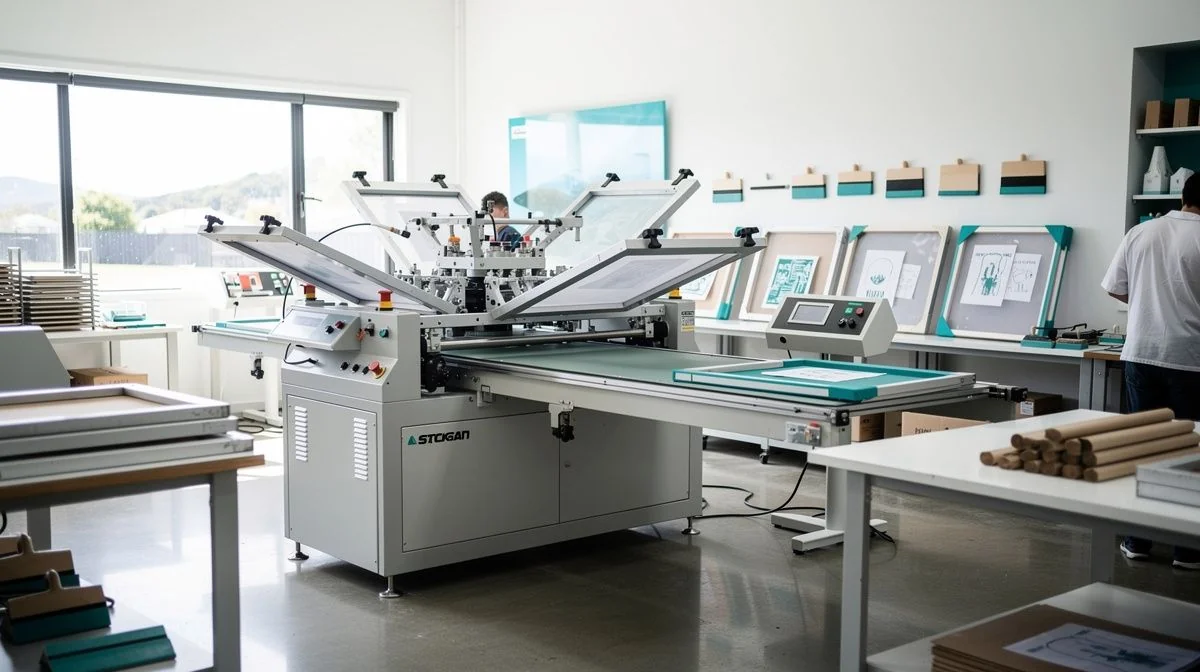
Finding Reliable Screen Printers in Whanganui
If you're looking for high-quality custom apparel, signage, or promotional materials in Whanganui, screen printing is a tried-and-true method that delivers vibrant, long-lasting results. Whether you need branded work uniforms for a local business, event t-shirts for a community group, or merchandise for a sports club, finding the right screen printer makes all the difference.
Whanganui has a small but skilled set of screen printing businesses. Many operate from the central city or nearby industrial areas, offering everything from one-colour designs on single garments to full-colour runs on hundreds of items. The trick is knowing what to look for and how to ask the right questions so you end up with exactly what you need, without any nasty surprises.
What to Look for When Hiring a Screen Printer in Whanganui
Experience and Equipment
The best screen printers have solid experience with different fabric types, ink formulations, and design complexities. Ask how long they've been in business and whether they use modern automated presses or manual ones. Newer equipment often means better registration – that's the alignment of colours – and a faster turnaround.
Check if they can handle your specific garment style, like polo shirts, hoodies, or heavy-duty workwear. Some printers specialise in cotton, while others are more comfortable with polyesters or blended fabrics. A printer who understands fabric behaviour will ensure your prints stay crisp after many washes.
Portfolio and Past Work
A reputable screen printer should be happy to show you examples of their recent work. Look for sharp edges, no ink bleeding, and consistent colour across multiple prints. Ask about similar projects they've done – for example, school uniforms or event merchandise. If they have experience in your industry, that's a good sign.
Many Whanganui printers have photos on their websites or social media pages. Give them a good look before you make contact. If you can't find any images of actual finished products, treat that as a red flag.
Turnaround Times
Screen printing takes time – especially if you need multiple colours or a large quantity. A typical turnaround in Whanganui might be anywhere from 5 to 15 working days, depending on the print shop's workload and the complexity of your order. Be upfront about your deadline. If a printer says they can guarantee a 24-hour turnaround on a complex multi-colour job, ask how. It might be possible with a rush fee, but quality can suffer.
Minimum Quantities
Unlike digital printing, screen printing has setup costs. Most Whanganui printers will have a minimum order quantity – often around 10 to 20 items per design. If you only need a handful of t-shirts, look for a printer who offers small-run services or consider digital transfer methods as an alternative. Some screen printers will do small runs if you're happy to pay the setup fee.
Communication and Customer Service
Good communication is essential. The printer should listen to your ideas, offer practical suggestions, and give clear advice on file formats, colour matching, and garment choices. Avoid anyone who seems rushed or dismissive. A printer who takes the time to understand your project will almost always deliver better results.
Key Questions to Ask Before Hiring a Screen Printer
- What file format do you prefer for artwork? Most printers need high-resolution vector files (like AI, EPS, or PDF). If you only have a low-res JPEG, ask if they can recreate it – and if there's an extra charge.
- How many colours can you print, and what are the costs for each extra colour? The more colours in your design, the higher the setup and per-print cost. Many printers charge per colour per screen.
- What inks do you use? Water-based inks are softer and more eco-friendly, while plastisol inks are more durable and vibrant. Your choice depends on the garment and feel you want.
- Can you provide a proof or mockup before printing? A digital proof lets you see how the design will look on the garment. Good printers always offer this as part of the quote.
- What is your policy on colour matching? Will they match a specific Pantone colour, or are they using standard ink colours? Ask for a physical colour sample if accuracy is critical.
- Do you offer garment sourcing? Many Whanganui printers can order blank garments in bulk, often at better prices than you'd pay retail. Ask which brands and styles they recommend for your use.
- How do you handle defects or mistakes? A reliable printer will replace any items with print errors, misregistration, or poor ink coverage – within reason. Clarify their quality control process.
Tips for Getting the Best Results
Start with Good Artwork
The quality of your printed product starts with the design. For screen printing, vector artwork works best. It scales without losing quality and allows the printer to separate colours easily. If you're not a designer, invest a small amount in having a professional prepare the artwork. It's much cheaper than fixing a bad print later.
Choose the Right Garment
Not all t-shirts or hoodies are created equal. A cheap, thin garment will show ink bleed and might shrink unevenly. Ask the printer for recommendations based on your budget and use. For work uniforms, look for heavy-duty cotton or cotton-poly blends that hold shape and colour. For event giveaways, a lighter-weight tee might be fine.
Always request a sample garment in the exact style you want before placing a large order. Feel the fabric, check the stitching, and wash it according to care instructions to see how it holds up.
Think About Practical Design Choices
Screen printing works best with bold, solid colours and limited numbers of colours in the design. Very fine details, tiny text, or photographic images don't screen-print well. If your design is intricate, talk to the printer about alternative methods – like simulated process printing – that can handle more detail.
Order a Sample Run
If you're ordering a large quantity – say, 100 or more items – ask if you can purchase a few sample prints first. This lets you check colour, placement, sizing, and overall quality before committing to the full production run. Most printers will agree to this if you pay for the samples.
Plan Ahead for Deadlines
Screen printing has several stages: artwork prep, screen creation, colour mixing, printing, and curing (drying). Each step takes time. Add in any garment ordering delays, and you can easily be waiting two or three weeks. Give yourself at least a month for complex jobs, especially if you're ordering during peak seasons like before Christmas or school sports events.
A Note About Costs and Getting Quotes
Screen printing costs in Whanganui vary depending on the number of colours, garment type, quantity, and any specialty finishes (like metallic inks or puff prints). Generally, you'll pay a one-off setup fee per colour per design, plus a per-print cost. The more items you order, the lower the per-unit price becomes because the setup is spread across a larger run.
As a rough guide, a single-colour design on a basic t-shirt in a run of 50 might cost anywhere from $10 to $20 per shirt. A four-colour design on the same quantity could be $20 to $30 each. These are ballpark figures – always ask for a detailed written quote that breaks down setup fees, per-print charges, garment costs, and any extras like artwork preparation or shipping.
Get quotes from at least three different screen printers in the Whanganui area. Compare not just the price but also what's included: Are proofs free? Is the garment cost separate? Do they offer discounts for repeat orders? Don't choose the cheapest option automatically – the lowest price often means rushed work or lower quality materials.
When you request a quote, be specific about the following:
- Design complexity – number of colours, size, placement

The ValueHub Team built this site because finding clear, unbiased financial information in New Zealand was harder than it should be. Every guide is based on real research — we compare the actual fees, terms, and fine print so you don't have to. Our tip: shop around every year, read the policy docs, and never assume loyalty gets you the best deal.— The ValueHub Team
Try our Calculators
Use these free tools to crunch the numbers:
KiwiSaver Fund Comparison
Compare fees, returns, and risk levels across every KiwiSaver fund from all 31 NZ providers.
Currency Converter — USD to NZD
Convert US Dollars to New Zealand Dollars instantly. See the latest exchange rate and 30-day trend.
Mortgage Repayment Calculator
Calculate your weekly, fortnightly, or monthly mortgage repayments. Free NZ mortgage calculator — try different rates, terms, and repayment frequencies.
Compound Interest Calculator
See how your savings grow with compound interest over time. Free NZ compound interest calculator with yearly, monthly, and weekly compounding options.
Term Deposit Calculator
Calculate your term deposit returns before you lock in. Compare interest earned across different terms and rates with ValueHub's free calculator.
Savings Goal Calculator
Calculate how long it will take to reach your savings goal — and what monthly deposit you need to get there. Free NZ savings planner.
Screen Printers in Other Cities
Latest Guides & Reviews
New Zealand Financial Markets Authority Guide: Investor Protection in NZ
Protect your investments with this practical guide to the FMA — how to check licences, spot scams, and what to do if a provider fails. Verified against...
comparisonEV Home Charger NZ: Costs & Buying Guide
Compare EV home charger costs in NZ — verified prices from $1,299, installation fees, smart features, and what actually matters for your home's power supply.
guideThe Most Popular EVs in New Zealand
The best-selling electric cars in New Zealand, ranked by official registration data. Top BEV and PHEV models and brands, updated monthly.
guideEV Market Stats
New Zealand's EV market in numbers — market share, fleet size, top-selling models and used imports, updated with the latest NZTA and MIA data.