Best SEO Companies in Lower Hutt
Published 11 September 2026 · Written by the ValueHub team · Reviewed by Steve Baron

Lower Hutt Businesses Sell Into Two Cities at Once
Your customers are probably in two places. Commuter households work in the capital, while the industrial belt through Petone, Seaview and Gracefield trades into the wider region. Search work has to respect that split. It is not enough to appear for searches near your address if half your best customers are typing from a different suburb, and it is not enough to chase Wellington terms if you have local proof worth protecting.
The industrial corridor is a market of its own. Businesses there sell to other businesses, and the searches are fewer in volume but worth far more per enquiry. That kind of buyer wants specifications, capability, lead times and evidence of past jobs, not consumer marketing copy. A handful of well-written technical pages will beat a high-volume content schedule every time.
Expect competition from outside the valley. Wellington firms target Lower Hutt searches, and national lead-generation companies buy their way into local results. The part of your position they cannot copy quickly is genuine local proof: an address people drive past, reviews from nearby customers, and pages that describe the work you have actually done.
How We Researched This Guide
We started with published New Zealand pricing for monthly retainers and one-off audits, then asked what those engagements realistically produce for a business with one location and a customer base that crosses a city boundary.
For Lower Hutt we looked at the industrial corridor, the commuting pattern and the household mix, because those decide whether local visibility or broader regional reach deserves the larger share of a budget. Where sources disagree, we give the range rather than a single figure.
Our Trusted SEO Companies
We feature businesses that demonstrate strong performance, proven experience, and consistently positive customer feedback. Some of the providers listed may have commercial relationships with us, but all are selected based on quality and reliability.
To begin, reach out to them and speak with them directly — this helps you explain your job, ask questions, and confirm whether they're the right fit.
The Web Guys build fast, modern, high‑performing websites that help Kiwi businesses grow. From smart design to SEO, hosting, and ongoing support, their team delivers clean code, sharp branding, and real results. Whether you need a fresh site or a full digital upgrade, The Web Guys make your online presence work harder.
The 60-Second Version
If you read only one section, read this.
- Local SEO for one location runs $1,000–$2,200 per month excluding GST.
- A competitive retainer for a national market runs $1,500–$3,500 per month.
- Retainers for small and medium businesses commonly range from $1,000 to $5,000.
- Packages under about $700 per month are usually automated, and the tactics that pad them are the ones search engine updates penalise.
- No provider can guarantee a ranking. A credible one promises work, timing and measures.
- Walk away from any contract that keeps your accounts in the provider's name.
A Month of Real SEO Work, Step by Step
It helps to know what a legitimate month looks like, because it is less glamorous than the sales pitch. A good provider can tell you which categories apply and why.
Technical work comes first: site speed, mobile layout, broken links, page structure, indexing and the small faults that quietly stop pages from ranking. Much of it is invisible when it is done well, which is exactly why a weak provider can skip it.
Content comes next — new pages for the services you want to be found for, and improvements to the ones you already have. A page that doesn't answer the searcher's question will not convert, even if it ranks.
Link acquisition means earning mentions from other reputable sites: suppliers, industry bodies, local media, community organisations. It should be gradual and explainable. If it is not, it is probably being bought in bulk, which is the fastest way to damage a site.
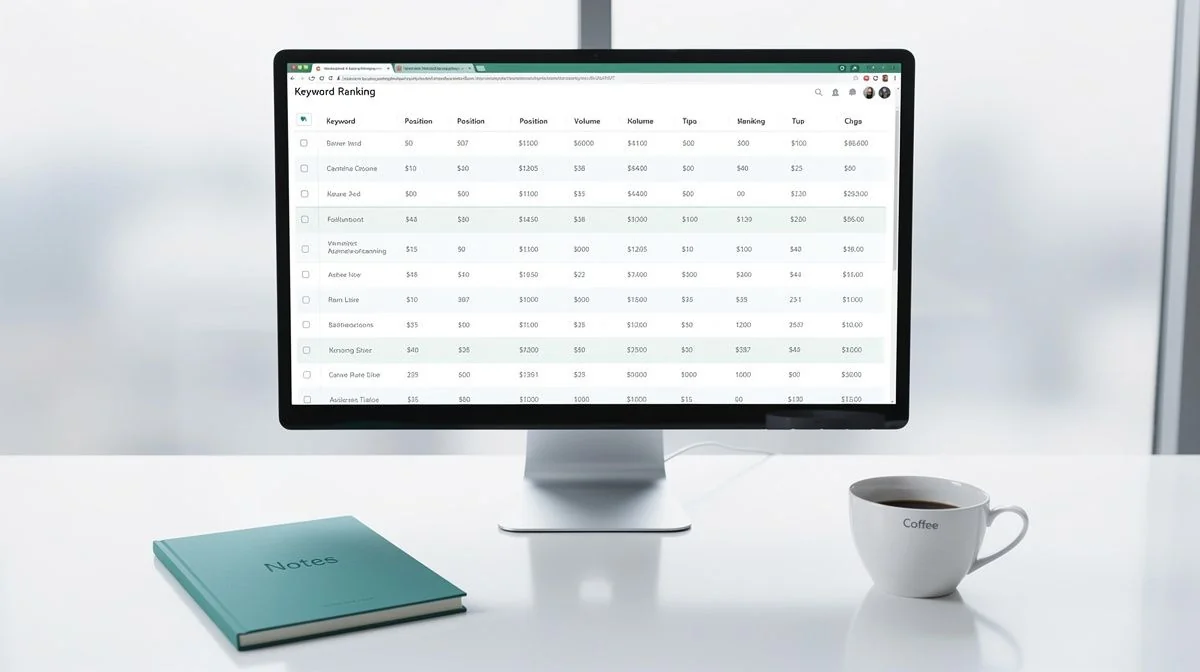
Reporting closes the loop: what was done, what changed and what comes next, in plain language. If the report is a screenshot with no commentary, you are not being told what you are paying for.
What It Costs
Pricing depends on how competitive your searches are, not on how large your business is. A single-location service business and a national retailer buy very different amounts of work.
| Engagement | Typical cost |
|---|---|
| Local SEO, single location | $1,000–$2,200 per month excluding GST |
| Competitive retainer, national market | $1,500–$3,500 per month |
| National or online retail campaign | $3,500–$8,000 or more per month |
| Freelancer, basic on-page work | $500–$1,500 per month |
| One-off SEO audit | $500–$2,000 |
| Extended audit engagement | $2,000–$6,000 |
| Site migration or launch project | $3,000–$8,000 |
Figures from published New Zealand pricing guides, excluding GST unless stated. Monthly retainers for small and medium businesses commonly fall between $1,000 and $5,000.
Retainer or Project — Buy the One You Need
A project has an end. You commission it, you receive something specific—an audit, a migration, a set of rebuilt service pages—and the relationship ends. A retainer has no natural end; it continues as the work is produced.
A business with a modest website often needs the project first. Structural problems may make monthly content spending pointless until they are fixed. Selling a retainer into a broken site is one of the most common ways small businesses lose money on search.
Once the foundations hold, a retainer makes sense, because search is a moving target. Competitors publish, search engines update, and your best pages slowly lose position. Keeping them there is the honest case for a monthly fee.
Why a Guarantee Is a Red Flag
A guarantee of a number one position is not ambitious; it is unenforceable. The provider does not run the search engine and cannot control what competitors publish or how the ranking system changes.
The usual workaround is to guarantee a phrase so specific that nobody searches it. The provider meets the guarantee, sends you a certificate, and your enquiry count does not move. Ask which phrase is being guaranteed and roughly how many searches it receives each month.
What you should hear instead is a description of the work, the timing, and the measures they'll track. A good provider will also name the risks: thin search volume, established competitors, or a site that needs rebuilding first. Honesty about the limits is the strongest signal you will get.
Lock-In Contracts and What They Really Cost
Long minimum terms are common in this trade and rarely in your interest. The cost isn't just the fees. It is the months you spend unable to act while a competitor takes the positions you wanted.
Ask for the notice period in writing and check whether you keep your accounts when you go. Your domain, website, analytics and business listings should be registered to you from day one. If they sit in the provider's name, you do not control your own marketing.
Lower Hutt Factors That Change the Plan
The Industrial Corridor Is a Separate Market
Petone, Seaview and Gracefield hold a substantial industrial and commercial base, and businesses there sell to other businesses. That search demand is smaller in volume but worth far more per enquiry, and it rewards different content: specifications, capability, lead times and proof of past jobs.
Commuter Households Search From Elsewhere
A large share of local households travel out of the valley for work. Many searches for a Lower Hutt service are made from Wellington, or from a phone on the train. If your visibility is anchored only to your street address, you miss people passing your door on the way home.
Cautious Budgets When Trading Is Quiet
When trading is quiet, marketing budgets get cut first. That is understandable, but a quieter period is also when a steady presence is easiest to notice, because fewer competitors are making noise.
Competitors You May Not Have Noticed
Your competition is not only the firm down the road. Wellington businesses target Lower Hutt searches, and national lead-generation companies buy their way into local results. Genuine local proof is the part of your position they cannot copy quickly.
How to Check a Provider's Own Results
Look at their website the way a customer would. Search for the service they sell and see where they appear. Then read the pages they have written. If their pages are thin and their blog hasn't been touched in months, expect the same standard on yours.
Ask for two or three local clients and permission to contact them. Then check those clients yourself: search the service and the city, and look at what they publish. Generic template pages across every client show volume, not results.
Warning Signs
- Any promise of a specific ranking position.
- A contract of twelve months or longer with no early exit.
- Your domain, site or business listing held in the provider's name.
- Reports showing rankings but never enquiries.
- A monthly fee under about $700 with no detail about the work.
- Content that repeats the same pages across many clients.
- Pressure to sign before you see a written scope and fee.
Questions Lower Hutt Owners Ask
Should I target Lower Hutt or Wellington searches?
Usually both, with different pages. If you have a physical location, local searches are the most likely to turn into a visit. Broader terms matter when your service area covers the wider region.
Is a smaller monthly budget worth it?
A modest but properly done engagement beats a cheap automated package every time. The problem with very low monthly fees isn't the amount; it is that the work required cannot be delivered for that price, so something is being faked or skipped.
Do I need to rebuild my website first?
Not always, but if the site is slow, awkward on a phone, or missing pages for your main services, those problems will cap whatever else is done. That is why an audit before a retainer is often the better first step.
What Matters Most
Lower Hutt rewards businesses that serve two audiences honestly. Be findable for people searching locally, and reachable for customers who search from across the region. Then insist on the boring protections: a written scope, your own accounts and a fair exit.
To compare how this works in other centres, start with our SEO companies hub.

The ValueHub Team built this site because finding clear, unbiased financial information in New Zealand was harder than it should be. Every guide is based on real research — we compare the actual fees, terms, and fine print so you don't have to. Our tip: shop around every year, read the policy docs, and never assume loyalty gets you the best deal.— The ValueHub Team
More SEO Companies in Lower Hutt
These businesses also operate in this area.
DigitalxMarketing is a leading AI Marketing agency in New Zealand helping businesses grow through SEO, Google Ads, Facebook Ads, AI-powered marketing, web design, email marketing, and lead generation strategies. NZ's Leading AI Marketing Agency More Traffic. More Leads. More Sales.
Try our Calculators
Use these free tools to crunch the numbers:
KiwiSaver Fund Comparison
Compare fees, returns, and risk levels across every KiwiSaver fund — the most up to date data in New Zealand.
Currency Converter — USD to NZD
Convert US Dollars to New Zealand Dollars instantly. See the latest exchange rate and 30-day trend.
Mortgage Repayment Calculator
Calculate your weekly, fortnightly, or monthly mortgage repayments. Free NZ mortgage calculator — try different rates, terms, and repayment frequencies.
Compound Interest Calculator
See how your savings grow with compound interest over time. Free NZ compound interest calculator with yearly, monthly, and weekly compounding options.
Term Deposit Calculator
Calculate your term deposit returns before you lock in. Compare interest earned across different terms and rates with ValueHub's free calculator.
Savings Goal Calculator
Calculate how long it will take to reach your savings goal — and what monthly deposit you need to get there. Free NZ savings planner.
SEO Companies in Other Cities
Latest Guides & Reviews
Kōura KiwiSaver Scheme Review
Kōura KiwiSaver review: 13 open funds, fund charges from 0.63 to 1.10 per cent, and net returns to 30 June 2026.
reviewMaritime KiwiSaver Scheme Review
Maritime KiwiSaver review: 3 open funds, fund charges from 0.61 to 0.76 per cent, and net returns to 31 March 2026.
reviewMAS KiwiSaver Scheme Review
MAS KiwiSaver review: 7 open funds, fund charges from 0.25 to 0.98 per cent, and net returns to 30 June 2026.
reviewArotahi KiwiSaver Scheme Review
Arotahi KiwiSaver review: 1 open fund, a 0.77 per cent fund charge, and net returns to 31 March 2026. What the Government register shows you pay and get back.