Best Web Designers in Dunedin
Published 26 August 2026 · Updated 25 August 2026
Why a Good Web Designer Matters in Dunedin
Dunedin's web design market is among the most affordable in the country, with entry-level options starting at around $500. But a site that looks professional is not the same as one that works hard — and in a city anchored by the University of Otago, healthcare and tourism, most businesses need the latter.
What matters more than the design, though, is ownership. Under New Zealand copyright law, the creator of a website owns it by default unless the contract transfers it to you — and a designer who registers your domain under their own account is renting you your own site.
A professionally built small business website in Dunedin typically costs $1,600 to $9,000. Own the domain, hold the admin access, and get the copyright in writing — that is the part that matters more than the pixels.
How We Researched This Guide
We read up on copyright and ownership rules, because who actually owns a website after it is built is the single thing most business owners never ask about. For pricing, we looked at what Dunedin and Otago designers publish on their own sites alongside current cost guides. Where a number wasn't published, we didn't use it.
The Quick Summary (60-Second Version)
Six quick points before the detail:
- Typical cost: a Dunedin small-business site runs $1,600–$9,000; entry-level starts at around $500.
- How long: a standard site takes four to six weeks.
- Best value for most businesses: a good local studio with transparent pricing.
- What to check: you own the domain, the code and the copyright in writing.
- The biggest factor: ownership — if it is not yours in the contract, it is not yours.
- The mistake to avoid: letting the designer register your domain under their own account.
Web Designer Licensing & Regulation — What Actually Matters
There is no web design licence in New Zealand, nor a regulator. The industry is largely unregulated, which means the protection you have is whatever you put in the contract. That makes the legal basics more important than any credential a designer might show you.
The single most important thing is copyright. Under the Copyright Act, copyright in a website belongs to the creator by default — the designer, not you — unless the contract explicitly assigns it to you upon payment. A proper contract includes a clause transferring ownership of the design, code, and content to you upon payment. Without it, you have a licence to use the site, not ownership of it.
Closely tied to that is domain ownership. Your domain is your most important online asset, and it should be registered in your own name, under your own account, with you holding full access to the DNS and hosting. It is surprisingly common for designers to register a client's domain under their own account, which creates a dependency that bites you later.
The practical checks are simple. Confirm that the domain is in your name, that you hold the main admin access to the site, and that the contract transfers copyright to you upon payment. A designer who hesitates on any of these is telling you something important.
Dunedin Pricing — What You Can Expect to Pay
Dunedin is one of the more affordable cities in the country for web design, with a competitive local market. The spread between providers is wide, and the gap is often overhead, not quality.
| Project | Typical cost |
|---|---|
| Single-page or starter site | $500–$1,600 |
| Small business site (around 5 pages) | $599–$2,000 |
| Professional business site | $1,600–$9,000 |
| Custom or premium site | $3,990–$15,000 |
| Small eCommerce store | $2,500–$10,000+ |
| Hosting (ongoing, per month) | $30–$50 |
| Domain (per year) | $35–$50 |
Price ranges verified from multiple Dunedin web design cost guides as of August 2026. Final quotes depend on the number of pages, the complexity of the design, and any integrations.
The market spans a wide range. At one end, local providers offer a five-page brochure site for a few hundred dollars, with straightforward pricing. At the other, custom studios charge more for bespoke work with proper SEO built in. For most small businesses, a professional site in the $1,600 to $9,000 range is the sweet spot.
Dunedin's affordability is a genuine advantage, but it does not change the fundamentals. A website still needs to be yours, mobile-friendly, and built to generate enquiries. A good local studio that includes SEO foundations and hands you full ownership is worth more than a cheap template that locks you in.
Ask whether the price is GST-inclusive, and separate the one-off build cost from the ongoing costs — hosting, domain renewal and any maintenance plan. The build is a one-time expense; the hosting is a recurring one you should understand from day one.
How to Choose a Web Designer — What Actually Matters
Ask about ownership first, before anything else. Confirm that the domain will be in your name, that you will hold admin access to the site, and that the contract transfers copyright to you upon final payment. These three things matter more than any design decision, because they decide whether the site is actually yours.
Ask who is doing the work. Some "local" agencies are sales fronts — you talk to a Dunedin account manager, but the actual design and build is quietly outsourced. There is nothing wrong with subcontracting if it is disclosed, but you deserve to know who is actually building your site.
Look at their portfolio, and actually click the sites. Do not judge by screenshots. Open a few of their client sites on your phone, check how fast they load, and whether they are easy to use. A pretty screenshot tells you they can design; a fast, usable live site tells you they can build.
Ask about what happens after launch. Who handles updates, backups and fixes, and what does it cost? A designer with a clear support plan is planning to be around; one with no answer is likely to vanish the moment the site goes live.
These are the red flags:
- They want to register your domain under their own account. That is how lock-in starts.
- No copyright transfer clause in the contract. If it is not in writing, you do not own it.
- Vague quotes with no deliverables or milestones. "We will figure it out" is not a plan.
- Won't say who is actually doing the build. You have a right to know.
- A "free website" bundled into a long marketing contract. Nothing is free — you are paying for it monthly.
What to Expect When You Hire a Web Designer
Expect discovery questions before any design. A good designer asks about your business, your customers and what the website needs to achieve before they sketch anything. If the first conversation is about colours and fonts rather than goals and customers, you are talking to someone who thinks of a website as an art project, not a business asset.
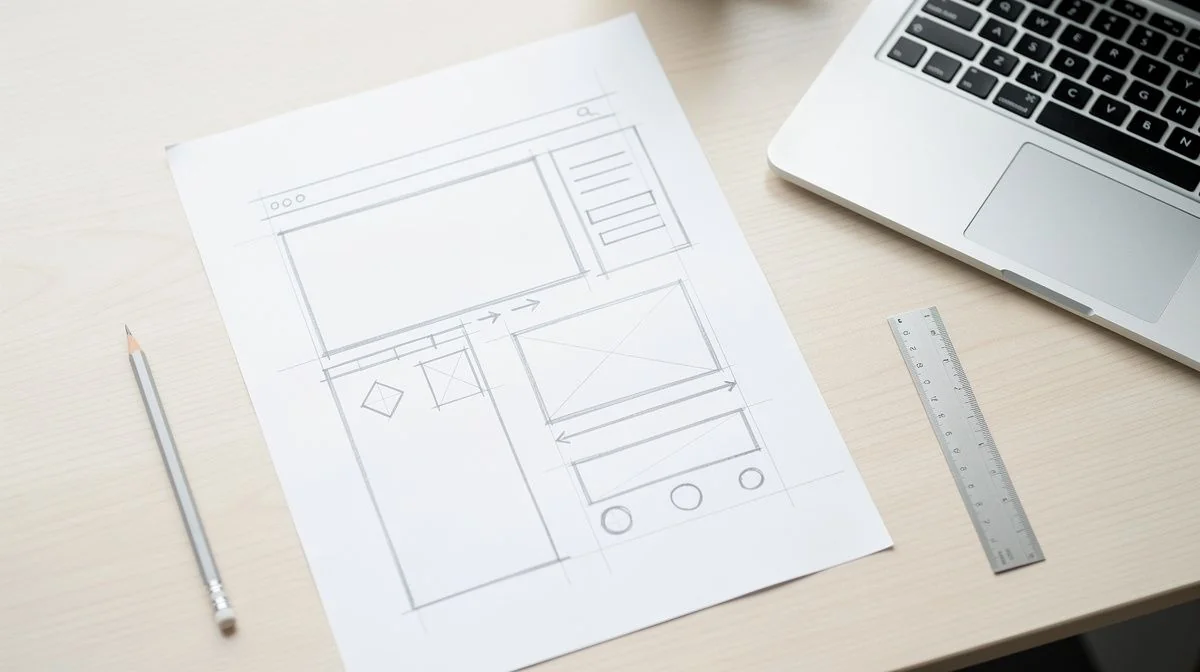
The process then runs in stages: discovery, wireframes or a draft design, your feedback, the build, and finally launch. Expect to be asked for content — your words, your photos, your pricing — and know that getting this from you is often what holds a project up.
How the timeline roughly runs:
- Discovery and planning: a few days.
- Design and your feedback: one to two weeks.
- Build and content loading: two to three weeks.
- Testing and launch: a few days to a week.
- Full small business site, start to finish: four to six weeks.
At handover, you should receive your admin logins, confirmation the domain is in your name, and a clear note of what was delivered. A good designer walks you through updating the site yourself for everyday tasks, so you are not on the phone with them every time you need to change a phone number.
Dunedin-Specific Risks & Local Factors
Web design in Dunedin is shaped by the city's affordability and its student and tourism economy. These are the factors a local business owner should have in mind.
The student and tourism economy
Dunedin's economy is anchored by the University of Otago, healthcare and a steady flow of tourism, and those businesses need websites that work hard for them — from student services to tourism operators on the Otago Peninsula. A designer who understands the local market can target the right audience rather than building a generic site.
The affordable local market
Dunedin's web design market is competitive and affordable, with entry-level options starting around $500. That is a genuine advantage, but it does not change the fundamentals — a website still needs to be yours, mobile-friendly, and built to convert. Check the ownership and quality, not just the price.
Ownership lock-in
The most common web design problem is not a bad website — it is a website you do not fully own. Designers who register your domain under their account, or build on a closed platform you cannot export from, are effectively renting you your own site. The fix is simple: own the domain, hold the admin access, and get the copyright in writing.
Mobile-first expectations
Most of your Dunedin customers will find you on a phone, and a site that is clumsy on mobile is quietly costing you business. The best local designers build mobile-first as a default. When you review a portfolio, open the sites on your phone — that is where the real test happens.
Questions You Might Have
Do I need a licence to be a web designer in NZ?
No. Anyone can set up as a web designer — there is no register to check and no qualification required. That means the protection you have is the contract itself, which is why ownership, domain control, and copyright transfer matter so much more than any badge a designer might show you.
Who owns my website after it is built?
By default, under New Zealand copyright law, the creator owns the design and code — not you — unless the contract explicitly assigns it to you on payment. So the answer depends entirely on what the contract says. Make sure it includes a clause that transfers ownership to you upon payment, and confirm the domain is registered in your name.
Should I use a freelancer or an agency?
For most small businesses, a good independent designer or a small studio offers better value. They typically charge less than an agency for equivalent work, and you usually deal directly with the person doing the job. An agency makes more sense when you need a bigger team and ongoing strategy — but you will pay a premium for that overhead.
What should be included in a web design quote?
At minimum: the number of pages, the design and build work, mobile responsiveness, basic search-engine setup, and a clear list of what is not included. The quote should also separate the one-off build from ongoing costs like hosting and domain renewal, and state whether it is GST-inclusive. A quote with no line-item breakdown is a warning sign.
What happens if I want to leave my designer later?
If you own the domain, hold the admin access and have the copyright in writing, you can take your site elsewhere. If any of those are missing, leaving becomes difficult or impossible. That is why the handover process should be agreed up front — in writing — before you sign, not discovered when the relationship has soured.
What Matters Most
Dunedin's affordable web design market makes it easy to get a site up — and easy to end up not owning it. The design, the speed and the mobile experience all matter, but none of it is worth anything if the domain is in someone else's name and the code is not yours.
Own the domain, hold the admin access, get the copyright in writing, and pick a designer who shows you fast, usable live sites rather than pretty screenshots. Do that, and your website becomes a genuine business asset — not a monthly payment that owns you.

The ValueHub Team built this site because finding clear, unbiased financial information in New Zealand was harder than it should be. Every guide is based on real research — we compare the actual fees, terms, and fine print so you don't have to. Our tip: shop around every year, read the policy docs, and never assume loyalty gets you the best deal.— The ValueHub Team
Try our Calculators
Use these free tools to crunch the numbers:
KiwiSaver Fund Comparison
Compare fees, returns, and risk levels across every KiwiSaver fund from all 31 NZ providers.
Currency Converter — USD to NZD
Convert US Dollars to New Zealand Dollars instantly. See the latest exchange rate and 30-day trend.
Mortgage Repayment Calculator
Calculate your weekly, fortnightly, or monthly mortgage repayments. Free NZ mortgage calculator — try different rates, terms, and repayment frequencies.
Compound Interest Calculator
See how your savings grow with compound interest over time. Free NZ compound interest calculator with yearly, monthly, and weekly compounding options.
Term Deposit Calculator
Calculate your term deposit returns before you lock in. Compare interest earned across different terms and rates with ValueHub's free calculator.
Savings Goal Calculator
Calculate how long it will take to reach your savings goal — and what monthly deposit you need to get there. Free NZ savings planner.
Web Designers in Other Cities
Latest Guides & Reviews
New Zealand Financial Markets Authority Guide: Investor Protection in NZ
Protect your investments with this practical guide to the FMA — how to check licences, spot scams, and what to do if a provider fails. Verified against...
comparisonEV Home Charger NZ: Costs & Buying Guide
Compare EV home charger costs in NZ — verified prices from $1,299, installation fees, smart features, and what actually matters for your home's power supply.
guideThe Most Popular EVs in New Zealand
The best-selling electric cars in New Zealand, ranked by official registration data. Top BEV and PHEV models and brands, updated monthly.
guideEV Market Stats
New Zealand's EV market in numbers — market share, fleet size, top-selling models and used imports, updated with the latest NZTA and MIA data.