Best Window Tinting Specialists in Queenstown
Published 25 April 2025 · Updated 08 October 2026 · Written by the ValueHub team · Reviewed by Steve Baron
Best Window Tinting Specialists in Queenstown
Altitude here means some of the most intense ultraviolet light in the country, and thin air filters less of it than most drivers expect. Snow on the ground bounces a second dose back up through the glass, which is why sunburn inside a car is a genuine problem here in both summer and winter.
Tint is the cheapest fix for both heat and glare, but the limits on how dark you can go are tighter than most people assume. We have set out what a tint actually costs, what the law permits on each window, and how to tell a film that will last from one that bubbles within two summers.
How We Researched This Guide
We read the Land Transport Rule that governs vehicle glazing and the inspection standard inspectors work from, because together they set the light-transmission limits any tint must meet. Both are published and are the only authorities on what is legal on New Zealand roads.
The prices come from the published price lists of tinting businesses across the country, compared by film grade. A tint is quoted either per vehicle or per window, and the spread between an entry-level dyed film and a ceramic one is wider than most people expect, so we have shown the range rather than a single figure.
The Quick Summary (60-Second Version)
If you want the short version before you book anything, this is it.
- A full-car tint on a sedan, hatch, or SUV runs about $370 to $490, and larger vehicles cost more.
- Tinting just the two front side windows costs roughly $150 to $250.
- A ceramic film costs more than a dyed one but rejects noticeably more heat and holds its colour.
- Front-side windows must maintain an overall light transmission of at least 35%, measured through the glass and film combined.
- No tint film may be fitted to the windscreen at all, which surprises most people who ask for a full-car job.
- The mistake to avoid is ordering a film without knowing the vehicle's factory glass tint, because the two combine.
What the Tint Rules Actually Allow
The limits are set by the Land Transport Rule on glazing and checked at every warrant of fitness. A windscreen must maintain at least 70% visible light transmittance, and, in practice, no tint overlay may be fitted to it at all. The only thing permitted there is an anti-glare strip across the top of the glass.
Front side windows, meaning the windows on either side of the driver's seat, must keep at least 35% overall. The word "overall" carries the weight: it is measured by the glass and the film together, not by the film on its own. Factory glass already blocks some light, so applying a film rated at 35% over it puts the total well below the legal minimum.
Rear side windows and the rear screen are treated differently on many vehicles, so a full-car tint can be legitimately darker behind the driver than in front. The rule that applies to your car depends on its class, and the inspector applies it at the time of the warrant. The vehicle inspection standard for glazing sets out the measurements they take.
Queenstown Pricing — What You Can Expect to Pay
Tinting is quoted either per vehicle or per window, and the two are not always comparable. A full-car price usually covers the rear screen and all the side windows but not the windscreen, because the windscreen cannot be tinted. Ask what the price includes before comparing two quotes.
The film grade is the other variable, and it matters more than the shade. A dyed film is the cheapest and will fade and turn purple. A ceramic film rejects far more heat, holds its colour and does not interfere with phone or GPS signals. On a vehicle kept outside, the difference is worth paying for.
| Item | Typical cost |
|---|---|
| Front two side windows only | $150-$250 |
| Full car, hatchback or light commercial | $330-$440 |
| Full car, sedan, wagon or SUV | $370-$490 |
| Full car, van or caravan | $450-$570 |
| Full car in a premium ceramic film | $550-$700 |
| Windscreen glare strip | from about $150 |
| Sunroof | from about $130 |
| Removing old tint before refitting | extra, quoted on inspection |
Prices are per vehicle, including film and labour, and exclude GST unless the business says otherwise. Old tint that has bubbled or turned purple must be removed first, and this is charged as separate work. Ask what the removal adds before you book the car in.
How to Choose a Tinter — What Actually Matters
Ask what the finished reading will be, not what percentage the film is
The percentage in an advertisement is the film's own rating. What matters is where your windows end up, because factory glass already has a tint, and the two combine. Ask the installer what the finished reading will be on a light meter for your specific vehicle, and get it in writing.
Look at a car they tinted a year ago
Ask to see older work rather than a car finished that morning. Bubbles, lifting edges and a purple cast all appear months later, and they are the signs of a cheap film or a rushed install. A business that can show you its own year-old work is confident about what it uses.
Ask about the warranty and who honours it
Film warranties range from a couple of years to the life of the vehicle, and the difference usually corresponds to the film grade. Ask whether the warranty covers fading, bubbling and peeling, and whether it is honoured by the installer or only by the film distributor. An installer who carries the warranty is the easier one to deal with later.
What Happens on the Day
The job is short, and knowing the order explains why the car has to sit afterwards.
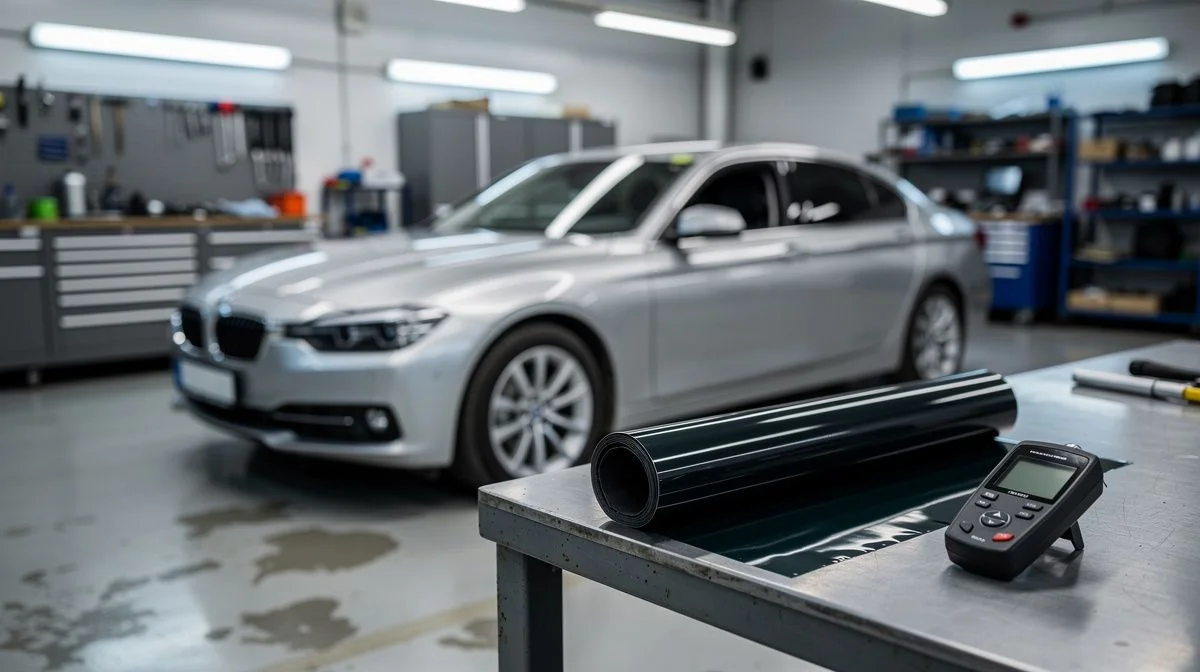
- The existing glass is measured with a light meter, so the installer knows what the film will produce rather than guessing.
- The windows are cleaned, and the film is cut to shape from a plotter template or by hand.
- The film is applied wet, squeegeed flat and trimmed at the edges.
- The car is left to cure, which means keeping the windows up for a period afterwards.
- Small water blisters and light hazing in the first weeks are normal and clear as the film dries.
Queenstown-Specific Risks — What Your Tinter Should Know
Alpine UV and glare bouncing off snow
Ultraviolet intensity increases with altitude and is reflected off snow, so a vehicle here takes a dose that a coastal one never does. A film that blocks UV also protects the dashboard, trim, and seats from cracking and fading, which is worth considering for a vehicle kept outside through a southern winter.
Hard frosts and heavy defrosting
Winter here means serious defrosting and demisting, and a poor install shows up fastest under that treatment. Edges lift when a scraper catches them, and film applied over a cold window bonds less well. It is worth having tint fitted in a warm workshop, and asking when the glass can be scraped again.
A cabin that bakes on a sunny day
A parked car in the sun here gets genuinely hot, and heat rejection is the practical reason most people tint. A dyed film reduces glare and looks darker but rejects less heat. If the goal is a cooler cabin, ask for the heat-rejection figure rather than the shade, because the two are not the same value.
Questions You Might Have
Is tinting legal, and will it pass a warrant?
Tinting is legal within the limits. The front-side windows must maintain at least 35% overall light transmission, and no film may be applied to the windscreen. A tint within those limits passes an inspection. A darker one means a failed warrant and a removal bill, so ask for the final reading before the film goes on.
Can I tint the rear windows as dark as I like?
On many vehicles, the rear side windows and the rear screen have different limits from the front, so a full-car tint is often legitimately darker behind the driver. The exact figure depends on the vehicle's class and what the inspection standard allows. Ask the installer which rule applies to your car.
How long does a tint last?
A quality ceramic film carries a warranty measured in years, and often for the life of the vehicle. A cheap dyed film typically fades, turns purple and starts lifting within a few summers. How a car is parked matters too, because a vehicle that lives outside takes far more ultraviolet exposure than one in a garage.
What Matters Most
Tint is one of the few vehicle jobs where a small extra spend can completely change the result. The film grade determines whether the cabin stays cooler, whether the colour holds, and whether the edges stay flat after a few summers.
Check the finished light reading against the legal limit before applying anything, and ask what the warranty actually covers.

The ValueHub Team built this site because finding clear, unbiased financial information in New Zealand was harder than it should be. Every guide is based on real research — we compare the actual fees, terms, and fine print so you don't have to. Our tip: shop around every year, read the policy docs, and never assume loyalty gets you the best deal.— The ValueHub Team
Try our Calculators
Use these free tools to crunch the numbers:
KiwiSaver Fund Comparison
Compare fees, returns, and risk levels across every KiwiSaver fund — the most up to date data in New Zealand.
Currency Converter — USD to NZD
Convert US Dollars to New Zealand Dollars instantly. See the latest exchange rate and 30-day trend.
Mortgage Repayment Calculator
Calculate your weekly, fortnightly, or monthly mortgage repayments. Free NZ mortgage calculator — try different rates, terms, and repayment frequencies.
Compound Interest Calculator
See how your savings grow with compound interest over time. Free NZ compound interest calculator with yearly, monthly, and weekly compounding options.
Term Deposit Calculator
Calculate your term deposit returns before you lock in. Compare interest earned across different terms and rates with ValueHub's free calculator.
Savings Goal Calculator
Calculate how long it will take to reach your savings goal — and what monthly deposit you need to get there. Free NZ savings planner.
Window Tinting Specialists in Other Cities
Latest Guides & Reviews
KiwiSaver and Tax — PIR, ESCT and What You Actually Pay
KiwiSaver is taxed twice — ESCT on your employer's contribution and your PIR on the fund's returns. How each rate is set, and the two most members never check.
reviewInvestNow KiwiSaver Scheme Review
InvestNow KiwiSaver review: 45 open funds, fund charges from 0.03 to 1.38 per cent, and net returns to 30 June 2026.
reviewKernel KiwiSaver Scheme Review
Kernel KiwiSaver review: 25 open funds, fund charges from 0.25 to 0.45 per cent, and net returns to 30 June 2026.
guideTax Debt in New Zealand — The Numbers
Official figures on New Zealand's overdue tax debt: the total, the collectable share, which customer groups hold it, and how much is repaid or written off.