Drainlayers in NZ — When You Need One and How to Choose
Published 15 April 2026 · Updated 14 May 2026 · Written by the ValueHub team · Reviewed by Steve Baron

Drainlayers in NZ — When You Need One and How to Choose
Drainlaying is the trade where the quality of the work is invisible the moment the trench is backfilled. A tidy driveway over a badly laid drain looks identical to a tidy driveway over a good one — until it fails, and someone has to dig it up again.
That's why the licence matters more here than in almost any other trade. Drainlayers in New Zealand are licensed by the Plumbers, Gasfitters and Drainlayers Board, and the public register is free to search. It shows registration and licence history, any conditions on the licence, supervision arrangements, and any disciplinary decisions the Board has issued.
We've written this guide around the things that actually protect you: a checked licence, a written scope, and an inspection before the evidence disappears under the ground.
How We Researched This Guide
We built this from the primary sources rather than from trade advertising. The licensing detail comes from the Plumbers, Gasfitters and Drainlayers Board's public register guidance, and the consumer rights material comes from the Consumer Guarantees Act 1993 and the Fair Trading Act 1986, both set out in full on legislation.govt.nz.
One thing worth flagging: the Disputes Tribunal can now hear claims up to $60,000, up from $30,000 on 24 January 2026. Plenty of older trade guides still quote the old figure. We also noticed the Ministry of Justice and the Tribunal's own fees page disagree on one filing fee band — we've used the Tribunal's page, which was updated more recently. And we deliberately haven't published price ranges, because there is no authoritative NZ data behind them.
ValueHub's Trusted Providers
We've researched the providers below — here are our picks for this category.
Looking for reliable Tauranga plumbers, drainlayers or gas fitters? Book now and experience the JT Plumbing difference. We love what we do and it shows. Residential & Commercial plumbing, drainage & gas solutions. Responsive service All your plumbing needs covered Quality assured. plumbing is not something you think ab
The Quick Summary (60-Second Version)
If you read nothing else, read these six points.
- Drainlaying is licensed work. Ask for the registration number and check it on the Board's public register before anyone starts digging.
- Check the class, not just the licence. A licensed practitioner in the wrong class is effectively unlicensed for that job.
- Ask who will physically be on site — the licensed drainlayer, or a supervised employee.
- Insist that any required inspection happens before backfilling. Once it's buried, your leverage is gone.
- Get a written quote, not an estimate, and confirm whether the price includes GST, disposal and reinstatement.
- Photograph the installation before backfill. It costs nothing and settles a whole class of arguments later.
Why Drainlaying Is a Licensed Trade — and Why That Matters
New Zealand has separate official registers for each licensed trade, and drainlaying sits with plumbing and gasfitting under the Plumbers, Gasfitters and Drainlayers Board. The register is searchable by a person's name or part of it, by town, city or postcode, by company name, or by class of registration — restricted, plumber/gasfitter/drainlayer, or certifier.
What it shows is genuinely useful. You can see whether someone is registered, their licence history, whether there are conditions on the licence, whether they supervise anyone or are supervised themselves, and whether the Board has disciplined them. That's a lot of signal for a few minutes of checking.
One caveat on the register itself: it has stated purposes, and searching it for anything outside those purposes may be an interference with privacy and is prohibited. Use it to check the person you're hiring, not for anything else.
The Invisibility Problem
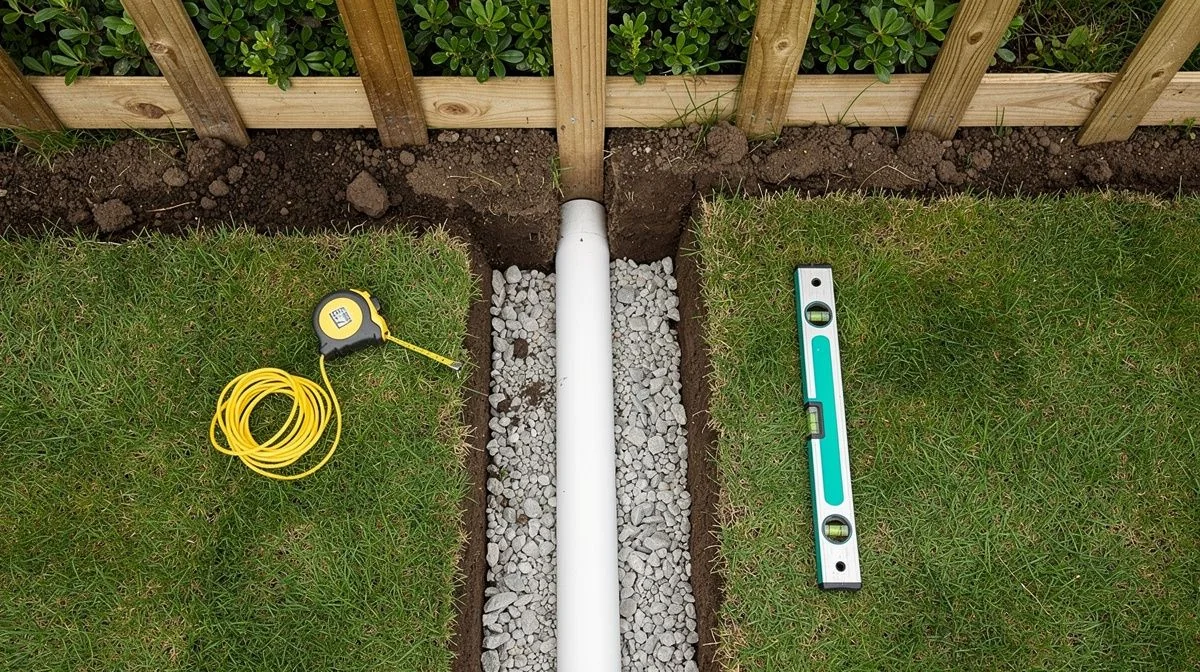
Drains are the clearest case of work whose quality you cannot assess by looking. Wrong falls cause repeated blockages. Badly made joints let roots in. Poor trench and bedding work leads to ground movement and settlement. Water ponds in the wrong place. Every one of those faults is invisible until it isn't, and fixing it means excavation.
That's the whole argument for doing the checks up front. There is no second chance to inspect a drain once the driveway is back.
What Good Practice Looks Like
What Drives the Cost, and How the Quote Should Be Built
We're not going to give you price ranges, because there is no authoritative New Zealand data behind them and inventing figures would be worse than useless. What we can tell you is what drives the number, and how to make sure two quotes are actually comparable.
The big variables are access and excavation, the length and depth of the run, whether the ground is stable or needs support, whether the work is a repair or a replacement, whether a consent is needed, and how much reinstatement is included afterwards. A quote that fills the hole back in is not the same as one that restores paving or lawn.
Quote Versus Estimate — the Distinction That Costs People Money
A quote is a fixed price for defined work. An estimate is an approximation and can legitimately be exceeded. Ask for a quote. The difference between the two is one of the most common sources of dispute in trade work.
A good written quote identifies the scope in enough detail to show what is and isn't included, states whether the price is fixed or an estimate, lists exclusions such as disposal, materials, permits and GST, says who supplies materials, gives a timeframe and start date, sets out the payment schedule, and explains what happens if extra work is discovered.
The GST Trap
Quotes may be written excluding or including GST, and a consumer comparing two of them needs to confirm which basis each uses. A gap that looks like a price difference can be entirely an accounting difference. This is the same trap that shows up in property and utility comparisons.
Variations and Payment
| What to confirm | Why it matters |
|---|---|
| Fixed quote or estimate | An estimate can be exceeded; a quote for defined work cannot |
| GST included or excluded | Changes the real comparison between two quotes |
| Reinstatement scope | Filling the hole and restoring paving are different jobs |
| Who does the work | Licensed drainlayer or supervised employee changes your risk |
| Inspection before backfill | Once covered, the evidence is gone |
| Workmanship warranty | Sits on top of your Consumer Guarantees Act rights, not instead of them |
When Things Go Wrong — Your Actual Rights
Drainlaying is a service, so the Consumer Guarantees Act 1993 applies. Services must be carried out with reasonable care and skill, fit for any purpose you made known, charged at a reasonable price if the price wasn't set beforehand, and completed within a reasonable time if no timeframe was agreed.
The standard for reasonable care and skill is what a competent person with average skills and experience would do, applied with technical know-how. It applies regardless of what the contract says and regardless of whether the drainlayer tried hard. A poor job is a breach even if nobody was careless.
The Trap Almost Everyone Falls Into
If the problem is minor, you must give the supplier the chance to fix it first. If you complain only after getting the fault fixed elsewhere, the original supplier is not liable to pay that repair bill and does not have to refund or replace. By going elsewhere first, you've lost the remedy.
It's counter-intuitive, because when a drain is backing up you just want it gone. But the sequence matters: put the request in writing, give them a reasonable time, and only then consider your options.
If It Can't Be Fixed, or the Failure Is Substantial
Where the failure is substantial — the service wouldn't have been acquired by a reasonable consumer who knew about it, the result is substantially unfit for purpose and can't easily be remedied, or the result is unsafe — you can cancel the contract and get a refund, or claim damages for the reduction in value. If you haven't paid, you can refuse to pay or pay less.
Questions You Might Have
How do I check a drainlayer's licence?
Ask for their registration or licence number, then search the Plumbers, Gasfitters and Drainlayers Board's public register by name, company, town or class. It shows registration and licence history, any conditions, supervision arrangements and disciplinary decisions. Then confirm the class covers the specific work — a licensed practitioner in the wrong class is effectively unlicensed for that job.
Does drainage work need a building consent?
Much of it does, and the drainlayer should be able to tell you which parts of your job trigger one. The critical timing question is always the same: has everything that needs to be inspected been inspected before it is buried? Ask who is arranging the consent and who is booking the inspection.
What should I do if the drain fails after the work is done?
Contact the drainlayer first, in writing, and give them a reasonable opportunity to remedy it. If you skip that step and get someone else to fix it, you lose your right to recover the cost from the original trader. Keep the quote, contract, messages and photographs.
Is a workmanship warranty the same as my consumer rights?
No. A warranty is a contractual promise and sits on top of your Consumer Guarantees Act rights, not instead of them. A trader cannot contract out of the Act's guarantees for consumer work, so a short warranty period doesn't limit your statutory rights where a failure is substantial.
What if the drainlayer won't fix the problem?
Put the complaint in writing, dated, stating what was agreed, what was delivered, what you want and by when. If that fails, the Disputes Tribunal can hear claims up to $60,000. Free help with making a claim is available from the Citizens Advice Bureau and Community Law Centres.
What Matters Most
Drainlaying is one of the few trades where you genuinely cannot inspect the quality of the finished work, because the finished work is underground. That makes the pre-work checks carry more weight here than almost anywhere else.
So do three things. Check the licence and the class on the Board's register. Get a written quote that separates labour, materials, exclusions and GST, and agree a variation process before anyone starts. And make sure the inspection happens before backfill, with photographs as a record.
Everything else — the price, the timeline, the reinstatement — is negotiable. Those three aren't.

The ValueHub Team built this site because finding clear, unbiased financial information in New Zealand was harder than it should be. Every guide is based on real research — we compare the actual fees, terms, and fine print so you don't have to. Our tip: shop around every year, read the policy docs, and never assume loyalty gets you the best deal.— The ValueHub Team
Try our Calculators
Use these free tools to crunch the numbers:
KiwiSaver Fund Comparison
Compare fees, returns, and risk levels across every KiwiSaver fund — the most up to date data in New Zealand.
Currency Converter — USD to NZD
Convert US Dollars to New Zealand Dollars instantly. See the latest exchange rate and 30-day trend.
Mortgage Repayment Calculator
Calculate your weekly, fortnightly, or monthly mortgage repayments. Free NZ mortgage calculator — try different rates, terms, and repayment frequencies.
Compound Interest Calculator
See how your savings grow with compound interest over time. Free NZ compound interest calculator with yearly, monthly, and weekly compounding options.
Term Deposit Calculator
Calculate your term deposit returns before you lock in. Compare interest earned across different terms and rates with ValueHub's free calculator.
Savings Goal Calculator
Calculate how long it will take to reach your savings goal — and what monthly deposit you need to get there. Free NZ savings planner.
Related Articles
Gas Fitters in NZ — A Guide to Licenced Gas Work
Learn what a licensed gas fitter does in NZ, how to check credentials, costs, and why DIY gas work risks your insurance and compliance.
guideCounsellors and Therapists in NZ
Find the right counsellor or therapist in NZ without breaking the bank with this step-by-step guide to affordable mental health support.