Best Plumbers in Auckland
Published 08 August 2026 · Updated 18 August 2026
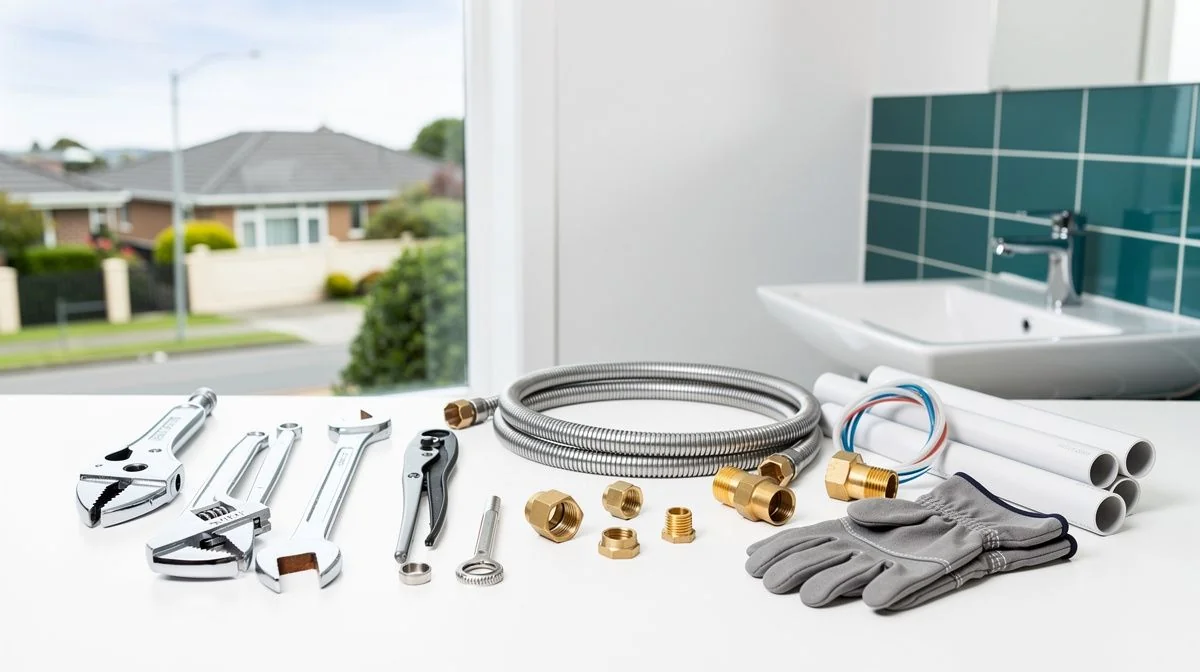
Why a Good Plumber Matters in Auckland
New Zealand does have mandatory licensing for plumbers — unlike some trades, you cannot legally carry out sanitary plumbing, gasfitting, or drainlaying work without a current practising licence from the Plumbers, Gasfitters, and Drainlayers Board (PGDB). That is the good news. The bad news is that licensing establishes a floor, not a ceiling, and the gap between a plumber who meets the minimum legal standard and one who does consistently excellent work is wide.
Auckland is a high-stakes market for plumbing. The city has the highest concentration of Dux Quest-era homes in the country — an estimated 20,000 to 40,000 New Zealand homes still have this black polybutylene pipe running through their walls and ceilings, and a disproportionate number of them are in Auckland suburbs built during the late-1970s and 1980s construction boom. The pipe material chemically reacts with chlorine in the town water supply, becoming brittle over decades until it splits without warning — often in the ceiling at 2 am.
Add to that Auckland's expansive clay soils (which shrink and swell through wet winters and dry summers, stressing underground pipes), mature tree roots invading aging earthenware drains, coastal salt corrosion on external fittings in eastern suburbs, infill development pushing stormwater systems beyond their original design capacity, and a housing stock spanning everything from 1920s bungalows with original galvanised steel plumbing to brand-new terraces, and you have a market where the plumber you choose matters enormously.
A standard callout in Auckland costs somewhere between $80 and $280 for the first hour during business hours, with hourly rates after that typically running $90 to $180 plus GST. After-hours emergency callouts can push to $250 to $400 for the first hour. That callout fee is modest compared to the cost of a burst Dux Quest pipe flooding your ceiling while you are asleep, or a blocked sewer backing up through the ground floor.
How We Researched This Guide
We spent time on the websites of Auckland plumbing companies to understand how they structure their pricing, what they specialise in, and how they communicate with customers. We reviewed the Plumbers, Gasfitters, and Drainlayers Act 2006 to confirm legal licensing requirements, checked the PGDB public register to understand licence types, and researched Master Plumbers membership standards including the $20,000 residential guarantee. We also read Watercare's backflow prevention requirements and Auckland Council's Water Supply and Wastewater Network Bylaw to make sure we were not passing on anything unverified about compliance obligations.
Our Trusted Plumbers
We feature businesses that demonstrate strong performance, proven experience, and consistently positive customer feedback. Some of the providers listed may have commercial relationships with us, but all are selected based on quality and reliability.
To begin, reach out to them and speak with them directly — this helps you explain your job, ask questions, and confirm whether they're the right fit.
JG Plumbing is your certified, Auckland-wide plumber and gas fitter. With 30+ years’ experience, we deliver quality workmanship, 24/7 service, and a 100% satisfaction guarantee. J G Plumbing, your trusted and reliable plumber and gasfitter ______________. Professional Service & Quality Workmanship Guaranteed.
NZ Plumbing Licences — What Actually Matters
Plumbing is one of the most tightly regulated trades in New Zealand, and the licensing system is worth understanding before you pick up the phone. It is governed by the Plumbers, Gasfitters, and Drainlayers Act 2006 and enforced by the PGDB.
| Licence Type | What It Allows |
|---|---|
| Certifying Plumber | The highest level. Has completed the NZ Certificate in Plumbing (Level 4), held a practising licence for at least 24 months, and passed the certifying examination. Can supervise other plumbers and certify their own work. This is the licence you want for anything beyond basic maintenance. |
| Registered Plumber (non-certifying) | Has completed the Level 4 qualification but not yet the certifying exam (or has chosen not to sit it). Can do plumbing work but must operate under a certifying plumber's supervision. Many experienced plumbers sit here — the work is legally compliant, but they cannot certify it themselves. |
| Limited Certificate (trainee/apprentice) | Issued to people actively completing their Level 4 apprenticeship. Must work under direct supervision of a certifying plumber. Their authorisation is specific — they can do the work their training covers and nothing else. |
Certifying Gasfitter and Certifying Drainlayer are separate licences issued by the same Board. Many plumbers hold multiple — a plumber who is also a certifying gasfitter can handle your hot water cylinder swap, gas cooktop installation, and issue the legally required gas compliance certificate all in the same visit. A plumber who holds only a plumbing licence cannot legally touch gas pipework — they would need to subcontract that portion. Always check exactly which licences the person arriving at your door actually holds.
Annual CPD is mandatory. Every licensed plumber must complete continuing professional development each year to renew their practising licence. If a plumber's licence has lapsed, they cannot legally do any restricted plumbing work. You can verify any plumber's current licence status, licence type, and disciplinary history on the PGDB public register at pgdb.co.nz — it takes 30 seconds, and it is free.
Master Plumbers — the industry body, not a regulator. Master Plumbers is a membership organisation, not a government body. To join, a business must employ a certifying plumber, gasfitter, or drainlayer who has been running their own business for at least six months. Members go through a quality assurance process — an interview and a business review — and must adhere to a code of conduct.
The key consumer protection is the 12-month residential Master Plumbers Guarantee, which covers up to $20,000 for substandard workmanship and protects advance payments if the contractor goes into liquidation. Master Plumbers members must also hold public liability insurance. It is a useful quality signal, but it is not a government licence — plenty of excellent non-member plumbers do outstanding work.
Auckland Plumbing Pricing — What You Can Expect to Pay
Plumbing prices in Auckland sit at the upper end of the national range. Demand is consistently high, traffic adds travel time between jobs, and the mix of property types — from compact apartments to sprawling character homes on sloping sites — means no two jobs are identical. The figures below are for standard business hours (generally Monday to Friday, 7 am to 5 pm). After-hours, weekend, and public holiday rates are significantly higher.
| Job | Typical Price Range (ex GST unless stated) |
|---|---|
| Standard callout (first hour) | $80–$280 |
| Hourly rate (after first hour) | $90–$180 |
| After-hours emergency callout (first hour) | $250–$400 |
| Tap washer or cartridge replacement | $150–$400 |
| Blocked drain (high-pressure jetting) | $200–$500 |
| Toilet replacement (supply + install) | $650–$1,100 |
| Electric hot water cylinder replacement (like-for-like) | $2,000–$3,500 |
| Gas continuous flow hot water system (supply + install) | $2,500–$5,500 |
| Hot water heat pump (supply + install) | $6,399–$10,000 |
| Gas cooktop installation | $300–$600 |
| Gas compliance certificate (standalone) | $150–$300 |
| Full house replumb (standard 3BR) | $7,000–$18,000 |
| CCTV drain inspection | $200–$500 |
Price ranges verified from multiple Auckland plumbing provider websites and industry cost guides as of August 2026. Final quotes depend on property access, job complexity, materials required, and whether the work falls within standard business hours.
What drives the price. The biggest variables are job complexity, access difficulty, and parts. A tap washer replacement in an easily accessible vanity is a 20-minute job. A hot water cylinder in a tight cupboard with a rusted valve and a tray that needs replacing is a half-day job. Plumbers on the North Shore or in outer areas like Orewa and Warkworth may charge slightly higher callout fees to cover travel distances. After-hours callouts — particularly on weekends and public holidays — can push to double the standard rate.
Fixed price versus hourly. Some plumbers quote fixed prices for common jobs (hot water cylinder replacements, toilet installs, gas cooktop connections). Others charge time and materials. A fixed-price quote gives you certainty — the price is the price regardless of how long the job takes. An hourly rate can work in your favour for small, straightforward tasks but carries an open-ended risk for more complex work. Always ask which pricing model applies and get the quote in writing before work begins.
GST is usually additional. Most plumbing quotes exclude GST. A $2,500 hot water cylinder replacement is actually $2,875 including GST. Check whether the quote is GST-inclusive or exclusive before comparing prices.
How to Choose a Plumber — What Actually Matters
Licensing gets a plumber through the door legally. Beyond that, what separates a plumber you would call again from one you would not comes down to a few specific things.
Check their licence — actually check it
The PGDB public register at pgdb.co.nz lets you verify a plumber's current licence status, licence type, and any disciplinary history in 30 seconds. You need their licence number or full name. Look for a certifying licence (not just a limited certificate), confirm the licence is current (not expired), and check for any disciplinary action. If a plumber hesitates to give you their licence number, that tells you everything you need to know.
Experience with older Auckland housing stock
A plumber who has worked across Auckland for years understands what is hiding in different eras of construction. A 1920s bungalow in Mt Eden may still have sections of original galvanised steel pipe that have corroded to half their internal diameter. A 1970s-80s home in Howick or Papakura is a strong candidate for Dux Quest plumbing. A 1990s plaster home on the North Shore may have had its plumbing roughed in during the same rushed construction boom that created the leaky building crisis. A plumber who has seen these patterns hundreds of times spots things a less experienced plumber misses.
Whether they do both plumbing and gasfitting
Many Auckland plumbing companies also hold gasfitting licences. If you need a gas cooktop installed, a gas hot water system replaced, or a gas compliance certificate for a property sale, a plumber who holds both licences means one callout instead of two. The PGDB register shows both licence types. Look for "Certifying Plumber" and "Certifying Gasfitter" on the same person or company.
Emergency availability
A burst pipe at 10 pm on a Saturday night does not wait until Monday morning. Ask what the plumber's after-hours policy is before you need it. Some companies offer genuine 24/7 emergency response — someone answers the phone, a plumber is dispatched, and they arrive within the hour. Others have an answering service that takes a message and calls back the next morning. The price difference on the actual callout is steep (after-hours rates are 1.5 to 2 times the standard rate), but knowing who to call and that they will actually come is worth more than saving $100 on an emergency rate you hope you never need.
Insurance and guarantees
Every reputable plumbing company carries public liability insurance. Ask to see the certificate — any plumber who deflects or hesitates is not worth your time. Master Plumbers members offer the $20,000 residential guarantee as an additional layer. Even if a plumber is not a Master Plumbers member, they should stand behind their work with a written workmanship warranty — at minimum 12 months on new installations. A plumber who will not put a warranty in writing is one you should not hire.
Red flags
- They will not give you their licence number. Walk away. This is not optional — it is a legal requirement to be licensed, and verifying their licence takes you 30 seconds.
- They quote a price over the phone without seeing the job. A blocked drain might be a simple hair clog or a collapsed sewer line. Unless it is a genuinely straightforward job (replacing a known hot water cylinder model like-for-like), a plumber who quotes sight-unseen is guessing.
- They cannot or will not provide a written quote. Verbal estimates are not quotes. If the plumber will not put numbers on paper, assume the final bill will be higher than what they told you on the phone.
- They do not issue a gas compliance certificate after gas work. This is a legal requirement under the Gas (Safety and Measurement) Regulations 2010. A gasfitter who does not issue a certificate is breaking the law, and your insurance may be void if something goes wrong.
- They have no online presence — no Google reviews, no website, nothing. In 2026, a service business with zero digital footprint is a gamble. One or two bad reviews among many good ones is normal. Zero reviews at all is not.
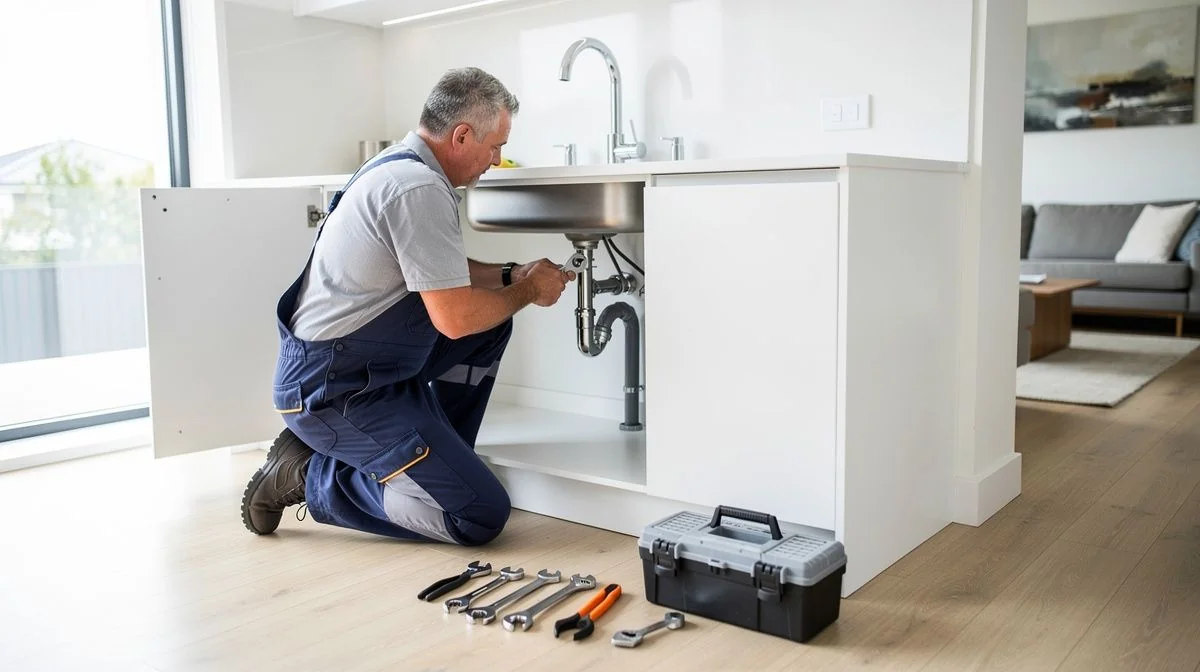
What to Expect When You Call a Plumber
Before they arrive. When you call to book, describe the problem as clearly as you can. If it is a leak, say where it is coming from, how fast the water is running, and whether you have turned the water off at the mains. If it is a blocked drain, say which drain is blocked and whether multiple fixtures are affected (a toilet and shower both backing up suggests a main sewer blockage, not a localised clog). The more detail you give, the better prepared the plumber will be — they will bring the right parts and the right equipment, which means fewer callbacks and a faster resolution.
When they arrive. The plumber assesses the situation, explains what they have found, and gives you a price before starting — either a fixed quote for the job or an estimate with a clear explanation of what could push the cost higher. For simple jobs (tap washer replacement, toilet cistern repair, basic drain clearing), they will usually get straight into it. For larger jobs (hot water cylinder replacement, gas appliance installation, major drain repairs), they may need to assess and return with parts, or quote and book a separate installation day.
How long common jobs take.
- Tap washer or cartridge replacement: 20–45 minutes
- Blocked drain (jetting or electric eel): 30 minutes to 2 hours depending on access and root severity
- Toilet replacement: 2–4 hours including removal, new pan installation, and testing
- Electric hot water cylinder swap (like-for-like): 3–5 hours including draining, removal, installation, and refill
- Gas continuous flow unit installation: 4–8 hours depending on whether new gas pipe runs are needed
- Full house replumb: 3–10 days depending on house size, access, and whether you are living in the house during the work
After the job. The plumber tests their work, cleans up, and explains what they did. If the job involved gas work, they must issue a Gas Safety Certificate (confirming the installation is safe to use) and may also issue a Certificate of Compliance (confirming the work meets the Gas Regulations). If the work required a building consent — which some major plumbing alterations do — they should also issue a Record of Work. Keep all certificates — you will need them if you ever sell the property.
Auckland-Specific Risks — What Your Plumber Should Know
Dux Quest and ageing pipe materials
The single biggest plumbing risk in Auckland is Dux Quest — black polybutylene pipe installed in an estimated 20,000 to 40,000 New Zealand homes between roughly 1978 and 1987. It was pulled from the market nearly four decades ago. The material reacts with chlorine in the town water supply, becoming brittle from the inside out. Hairline cracks form, joints fail at the acetal elbows, and the pipe eventually splits — often suddenly, often in the ceiling cavity where Auckland's summer heat accelerates the degradation.
If your home was built or substantially renovated during the late 1970s or 1980s and the plumbing has not been fully replaced, a plumber should flag it immediately during any inspection or repair visit. Suburbs with high concentrations of this-era housing — Papakura, Manurewa, Howick, parts of the North Shore, West Auckland — are the most affected. The standard professional recommendation is a full replumb, not spot repairs.
Fixing one burst section of Dux Quest simply moves the pressure to the next weakest point. A full replumb on a standard three-bedroom Auckland home typically costs $7,000 to $18,000, and many insurers now limit coverage to the first Dux Quest leak or exclude claims entirely.
Beyond Dux Quest, Auckland homes built before the 1980s may still have:
- Galvanised steel pipes that corrode from the inside out, progressively reducing water flow and eventually pinholing
- Earthenware or concrete drainage pipes with cracked joints that allow tree roots to enter
- Copper pipes (common in mid-century homes) that can develop pinhole leaks from internal corrosion over decades
Clay soils and drain stress
Much of Auckland sits on expansive clay soils — particularly West Auckland (Henderson, Titirangi, Waitakere) and parts of the North Shore. These soils swell in winter when saturated and shrink in summer when dry. Over years and decades, this seasonal movement stresses underground pipes, loosening joints, creating small cracks, and eventually causing sections of drain to sag or collapse.
Tree roots — drawn to the moisture and nutrients in sewer lines — exploit these cracks aggressively. Once roots are inside a pipe, they expand, widen the crack, and create a blockage that gets worse with every rainfall.
If you are buying a property in an established Auckland suburb with mature trees, a CCTV drain inspection before settlement is one of the most valuable few hundred dollars you can spend. The inspection camera shows exactly what is happening underground — cracks, root intrusion, pipe collapse, or sagging sections — before you own the problem.
Water pressure variation
Auckland's hilly terrain creates significant water pressure differences between suburbs. Properties at the bottom of a hill can experience high incoming water pressure that stresses pipe joints, valves, and appliances over time. Properties at the top of a hill may struggle with low pressure, particularly during peak demand periods.
A good plumber checks incoming water pressure before installing anything — a pressure-limiting valve may be needed on high-pressure properties, and a pressure-boosting pump may be needed on low-pressure ones. If a plumber installs a new hot water cylinder or appliance without checking pressure first, they are skipping a basic step.
Infill development and stormwater load
Auckland's ongoing infill housing boom adds bathrooms, kitchens, and laundries to subdivided sections — often connected to drainage systems originally designed for a single dwelling. The result is stormwater and sewer systems operating beyond their design capacity, with surface flooding during heavy rain becoming more common. A plumber working in suburbs with high infill density — Onehunga, Mount Roskill, Glen Innes, large parts of West Auckland — should understand the downstream implications of adding fixtures to an already-stressed drain network.
Coastal corrosion
Properties within a few kilometres of the coast — Mission Bay, St Heliers, Devonport, the eastern bays — get salt-laden air that accelerates corrosion on external plumbing fittings, copper pipework, and gas appliance flues. A plumber who primarily works inland may not give these the attention they deserve. If you live near the coast, ask whether the plumber has experience with coastal properties and whether they use marine-grade fittings where appropriate.
Backflow prevention
Under Auckland's Water Supply and Wastewater Network Bylaw 2015, every property owner must prevent backflow — the reverse flow of water from private plumbing back into the public water supply. High and medium-risk properties (commercial buildings, multi-unit residential, properties with irrigation systems, swimming pools, or certain industrial activities) require a testable backflow prevention device.
These devices must be tested annually by an Independently Qualified Person (IQP). Watercare oversees boundary devices; Auckland Council oversees devices within the property. A plumber should check what backflow protection you have and whether it complies — and if they are installing anything that changes your property's risk profile, they should flag the potential need for a backflow upgrade.
Questions You Might Have
What should I do if a pipe bursts at night?
Turn the water off at the mains toby — the valve is usually at the front boundary near the water meter. If you do not know where it is, find it now, before you need it. Once the water is off, open the lowest tap in the house (usually an outside tap or laundry tub) to drain the remaining water from the pipes and reduce pressure. Then call an emergency plumber. Most Auckland plumbing companies offer after-hours emergency callouts. Expect to pay $250 to $400 for the first hour rather than the standard $80 to $280.
Do I need a gas compliance certificate when selling my house?
Yes. If your property has any gas appliances or gas pipework — a cooktop, a hot water system, a gas fireplace, or even just a disconnected gas bayonet — you will likely need a Gas Safety Certificate before settlement. Solicitors routinely ask for gas certification as part of the sale and purchase process, and insurers increasingly require it.
A standalone gas safety inspection and certificate typically costs $200 to $350 depending on the number of gas appliances. If gas work was done during your ownership and no certificate was issued at the time, you may need the full system inspected and certified retrospectively. Do this well before settlement — discovering missing gas certificates a week before the buyer takes possession is avoidable stress.
Should I replace my hot water cylinder before it fails?
Hot water cylinders in New Zealand typically last 15 to 20 years. If yours is approaching or past that age, replacing it pre-emptively is usually cheaper and far less disruptive than waiting for it to fail — which it will do at the worst possible time, usually on a winter Sunday night when after-hours callout rates apply.
Signs a cylinder is nearing the end of its life include rusty or discoloured water (indicating internal tank corrosion), moisture or puddles around the base, running out of hot water noticeably faster than you used to, and rising power bills with no other explanation.
If you are replacing an electric cylinder, consider a heat pump hot water system — the upfront cost is higher ($6,399 to $10,000 versus $2,000 to $3,500 for a standard electric cylinder), but running costs are roughly a quarter of a standard cylinder ($200 to $400 per year versus $800 to $1,200), which means most Auckland households see payback in 4 to 7 years.
What if I am buying a house and the plumbing worries me?
A standard building inspection includes a visual plumbing check — the inspector will look for obvious leaks, check water pressure at taps, and note the visible pipe materials. But a building inspector is not a plumber. If the property is from the Dux Quest era (late 1970s to late 1980s), if the drains are original earthenware, or if there are signs of water damage anywhere, get a licensed plumber to do a dedicated plumbing inspection.
A CCTV drain inspection ($200 to $500) shows you the condition of the underground drains before you own the problem. A plumber can also check for Dux Quest by inspecting accessible pipework in the ceiling and under the floor — this is specifically worth doing on any property built between 1978 and 1987 that has not had a documented replumb.
Can a plumber install a gas appliance or does it need a separate gasfitter?
It depends on the plumber's specific licences. Many Auckland plumbers hold both a Certifying Plumber licence and a Certifying Gasfitter licence — the PGDB public register shows both. If your plumber holds both, they can handle the water connections, the gas connections, and issue the legally required Gas Safety Certificate all in the same visit. If they only hold a plumbing licence, they cannot legally touch gas pipework — they would need to bring in (or have you separately engage) a licensed gasfitter.
Always confirm this before booking. A plumber who says they can "sort the gas too" without holding a gasfitting licence is breaking the law.
What Matters Most
Plumbing is not a trade where you should buy on price. The cheapest quote on a hot water cylinder installation or a drain repair often means corners were cut — an apprentice doing certifying-level work unsupervised, a certificate that was never issued, a material that meets the minimum standard but will not last, or a problem that was temporarily cleared rather than permanently fixed.
In a city with an estimated 20,000 to 40,000 homes still running Dux Quest plumbing, clay soils that stress underground pipes through every wet-dry seasonal cycle, mature trees whose roots have been exploiting aging drains for decades, and a housing stock that spans a century of building practices, a good plumber is not a luxury — they are the person who stops a small problem from becoming a major one.
Check the licence. Get the quote in writing. Ask about their experience with Auckland's specific plumbing challenges. Keep the certificates. And if your home was built between 1978 and 1987, ask about Dux Quest — even if you called them for something else entirely. A plumber who spots it during a routine job and tells you about it is a plumber worth keeping.

The ValueHub Team built this site because finding clear, unbiased financial information in New Zealand was harder than it should be. Every guide is based on real research — we compare the actual fees, terms, and fine print so you don't have to. Our tip: shop around every year, read the policy docs, and never assume loyalty gets you the best deal.— The ValueHub Team
More Plumbers in Auckland
These businesses also operate in this area.
Call Pipe Fix Plumbing for trusted plumbers in Auckland. We handle urgent repairs, drain unblocking, and all plumbing services 24/7. Book your job now. Get i n touch 0212172782 info@pipefixplumbing.co.nz. At Pipefix Plumbing , we provide trusted plumbing solutions for homes and businesses across the region.
Plumber West Auckland - Allpoints plumbing is a small west Auckland Plumbing business located in Glen Eden. Run by Paul McCallum a Certifying plumber/gas fitter for 15 years. We specialize in new light commercial, residential work and renovations.
Try our Calculators
Use these free tools to crunch the numbers:
KiwiSaver Fund Comparison
Compare fees, returns, and risk levels across every KiwiSaver fund from all 31 NZ providers.
Currency Converter — USD to NZD
Convert US Dollars to New Zealand Dollars instantly. See the latest exchange rate and 30-day trend.
Mortgage Repayment Calculator
Calculate your weekly, fortnightly, or monthly mortgage repayments. Free NZ mortgage calculator — try different rates, terms, and repayment frequencies.
Compound Interest Calculator
See how your savings grow with compound interest over time. Free NZ compound interest calculator with yearly, monthly, and weekly compounding options.
Term Deposit Calculator
Calculate your term deposit returns before you lock in. Compare interest earned across different terms and rates with ValueHub's free calculator.
Savings Goal Calculator
Calculate how long it will take to reach your savings goal — and what monthly deposit you need to get there. Free NZ savings planner.
Plumbers in Other Cities
Latest Guides & Reviews
New Zealand Financial Markets Authority Guide: Investor Protection in NZ
Protect your investments with this practical guide to the FMA — how to check licences, spot scams, and what to do if a provider fails. Verified against...
comparisonEV Home Charger NZ: Costs & Buying Guide
Compare EV home charger costs in NZ — verified prices from $1,299, installation fees, smart features, and what actually matters for your home's power supply.
guideThe Most Popular EVs in New Zealand
The best-selling electric cars in New Zealand, ranked by official registration data. Top BEV and PHEV models and brands, updated monthly.
guideEV Market Stats
New Zealand's EV market in numbers — market share, fleet size, top-selling models and used imports, updated with the latest NZTA and MIA data.