Wedding Photographers in NZ
Published 12 March 2026 · Updated 05 April 2026 · Written by the ValueHub team · Reviewed by Steve Baron

Wedding Photographers in NZ
A wedding cannot be reshot. That single fact is what separates a wedding photographer from every other photography commission you will ever pay for. If the portraits at a family reunion go wrong, you can gather everyone again. If the ceremony photographs go wrong, there is no second take.
That is why the things worth agreeing before the day are the timeline, the shot list and the delivery date — not the price. Most couples spend their energy comparing packages and almost none on the question that actually decides what they receive: what period of time does this price cover, and who is standing there with a camera during it.
There is also a copyright wrinkle most couples never ask about. Where you commission and pay for a photograph, you are the first owner of the copyright in it — unless the photographer's terms contract out of that rule. We covered the full explanation in our general photographers guide, so we will keep it short here and spend our words on what is genuinely wedding-specific.
How We Researched This Guide
We worked from the Copyright Act 1994, the Privacy Act 2020, the Consumer Guarantees Act 1993 and the Fair Trading Act 1986 — the statutes that sit behind any photography commission in New Zealand. The commissioning rule in section 21(3), and the requirement that any assignment of copyright be in writing and signed, are set out in full on legislation.govt.nz if you want to read the wording yourself.
Two things surprised us. First, a change to information privacy principle 3A came into force on 1 May 2026, altering what an agency must do when it collects personal information indirectly — from someone other than the individual. Second, we kept running into the same myth: that the Privacy Act requires a business to publish a privacy officer on its website. It does not. The Act requires an agency to appoint one or more privacy officers. That distinction matters when you are reading a photographer's terms.
The Quick Summary (60-Second Version)
Here is the short version before we get into the detail.
- Ask what period of time the price covers. A ceremony-only package and a full-day package are different products, and the speeches are usually the first thing dropped.
- Agree a shot list in advance, with names. Your photographer does not know your family, and a long list of posed groups eats the day.
- Ask whether a second photographer is included. It is what makes it possible to cover the preparation and the ceremony at the same time.
- Get the delivery date in writing, and ask what "edited" means — a thousand unedited frames and three hundred finished images are not the same product.
- Ask how the images are backed up from the moment they are taken. A single card is a single point of failure on a day you cannot repeat.
- Decide the portfolio and social media question before the day, including whether the photographer may name you or publish images of guests and children.
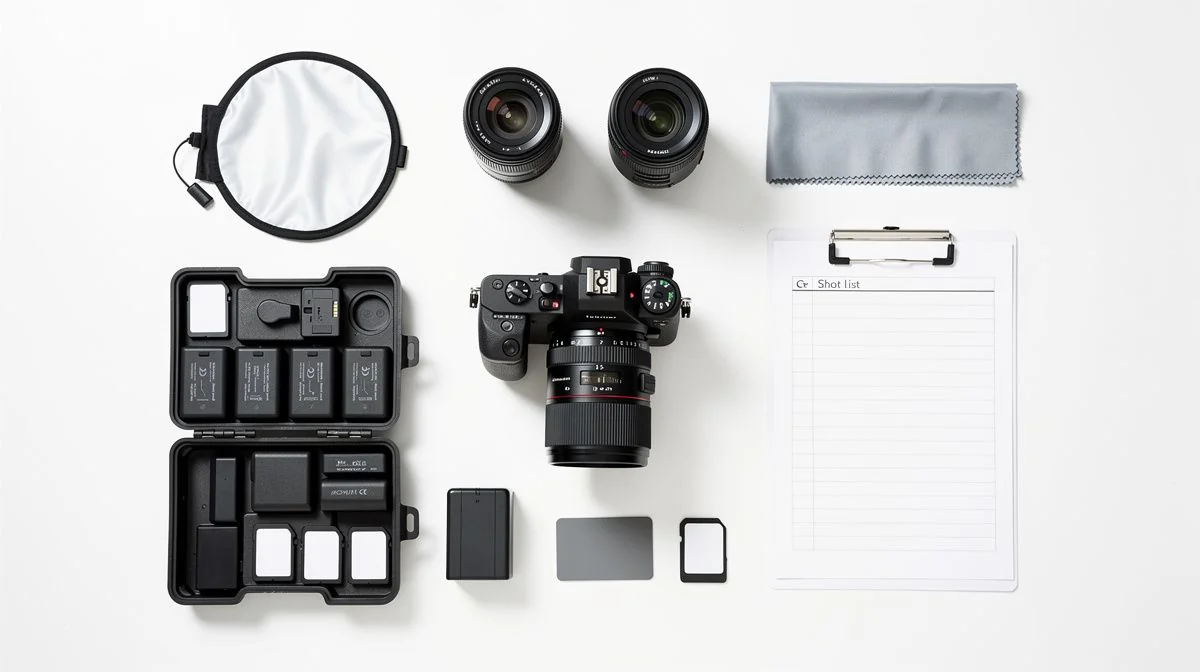
Why the Coverage Window Decides Everything
The most useful question you can ask a wedding photographer is what period of time the price covers. A wedding day commonly spans getting ready, the ceremony, the congratulations, the group and couple photographs, the reception and the first dances. Those phases run across many hours, and the difference between a package that covers the ceremony and one that covers the whole day is the difference between having no photograph of the speeches and having all of them.
The hours that get forgotten are the preparation — the details, the dress, the flowers, the letters — and the reception's key moments at the far end of a long day. Preparation photographs often require a photographer in two places at once, which is the practical argument for a second shooter. And photographers need to eat and take a break, so ask what the arrangement is. An unbroken stretch is not realistic for anyone.
The shot list and the light
The Delivery Timeline and the Contract
Ask when the photographs will be delivered, in writing, and whether that is a fixed period or an estimate. Ask how many images you will receive, and ask what "edited" means in that photographer's process. Ask whether you receive full-resolution files, whether there is a print release, and how long the files are kept and where. Many photographers deliver a small selection quickly for announcing and thanking people, which is worth asking about and worth valuing.
If an album is included, ask how many images it holds, who selects them, whether you get to proof it, and how long after the wedding it is produced. The album is often the item that stretches longest past the wedding, and the item couples most often have to chase.
The backup question they must ask
Ask how the photographs are backed up, from the moment they are taken to the moment they are delivered. A photographer who shoots onto a single card with no backup has a single point of failure on the one day that cannot be repeated. Ask what their insurance covers if the images are lost. This is the question that separates a professional from someone with a good camera.
Copyright, Privacy and the Portfolio Question
Under section 21(3) of the Copyright Act 1994, where a person commissions and pays or agrees to pay for the making of a photograph, that person is the first owner of any copyright in it. The rule can be contracted out of by the photographer's terms, and an assignment of copyright must be in writing and signed. Our general photographers guide carries the full explanation, including the case law, so we will not repeat it here.
The wedding-specific point is the portfolio and social media question. Most photographers want to publish the images on their own channels and in their portfolio, and most couples are happy for them to. But the couple should decide it in advance and have it in writing, including whether the photographer may name them and whether they may publish images of guests and children. Where a couple wants privacy — a public role, a blended family, a child who must not be identifiable, a religious or cultural reason — that needs agreeing before the day, not after.
A short note on privacy
The Privacy Act 2020 treats a photographic image of an identifiable person as personal information, and a photographer holding client images is an agency for those images. Information privacy principle 3A, inserted by the Privacy Amendment Act 2025, came into force on 1 May 2026 and changes an agency's obligations when it collects personal information indirectly. Section 25A provides it does not apply to information collected before that date.
What drives the price
| What you are comparing | Why it changes what you receive |
|---|---|
| Coverage window | Decides whether you have photographs of the preparation and the speeches |
| Second photographer | Makes simultaneous coverage of two locations possible |
| Number of edited images | A curated set and a bulk export are different products |
| Album and prints | Usually arrive after the wedding and need budgeting separately |
Questions You Might Have
How far ahead should we book?
Popular photographers book out well ahead of peak season, so start early and be ready with your date, venue, approximate guest count and budget range. Ask directly what their availability looks like across your month rather than your single date — it gives you room to move the ceremony time if the light or the photographer's schedule demands it.
Do we really need a second photographer?
It is not a luxury. A second photographer is what makes it possible to cover the preparation and the ceremony simultaneously, and to get both the formal and the candid coverage. Ask whether the price already includes one, and if not, ask what changes if you add one — then decide whether the coverage you lose without it matters to you.
Who owns the photographs?
Under the commissioning rule you are the first owner of copyright unless the photographer's terms contract out of it. Ask the question plainly and get the answer in writing. Then ask separately about portfolio and social media use, because permission to publish is a different thing from ownership, and it is the part most couples forget to discuss.
What if it rains?
An outdoor ceremony or portrait session needs a plan for rain, and the plan should be agreed before the day rather than improvised on it. Ask what the photographer does in bad weather, whether the venue has an indoor or covered arrangement, and whether they have photographed at your venue before. A photographer who has worked the venue knows where the light and the shelter are.
What should the contract cover?
It should set out the coverage window, the number of images, the delivery date, the deposit and payment terms, the cancellation and postponement position, and what happens if the photographer is ill or unavailable. Ask whether they carry insurance, including public liability. Keep a copy of everything, and read the terms before you pay the deposit rather than after.
What Matters Most
Most couples compare photographers on price and then discover the price was never the variable that mattered. The coverage window, the second photographer and the delivery date decide what you actually receive. Two photographers quoting similar numbers can be selling very different products, and the difference only becomes visible after the wedding, when it is far too late to change anything.
So ask the boring questions early. What period does this cover? Who is the second photographer? When will the images arrive, and how are they backed up? May you publish them, and may you name us? Get the answers in writing before the deposit goes anywhere.
A wedding cannot be reshot. Everything worth agreeing follows from that one sentence.

The ValueHub Team built this site because finding clear, unbiased financial information in New Zealand was harder than it should be. Every guide is based on real research — we compare the actual fees, terms, and fine print so you don't have to. Our tip: shop around every year, read the policy docs, and never assume loyalty gets you the best deal.— The ValueHub Team
Try our Calculators
Use these free tools to crunch the numbers:
KiwiSaver Fund Comparison
Compare fees, returns, and risk levels across every KiwiSaver fund — the most up to date data in New Zealand.
Currency Converter — USD to NZD
Convert US Dollars to New Zealand Dollars instantly. See the latest exchange rate and 30-day trend.
Mortgage Repayment Calculator
Calculate your weekly, fortnightly, or monthly mortgage repayments. Free NZ mortgage calculator — try different rates, terms, and repayment frequencies.
Compound Interest Calculator
See how your savings grow with compound interest over time. Free NZ compound interest calculator with yearly, monthly, and weekly compounding options.
Term Deposit Calculator
Calculate your term deposit returns before you lock in. Compare interest earned across different terms and rates with ValueHub's free calculator.
Savings Goal Calculator
Calculate how long it will take to reach your savings goal — and what monthly deposit you need to get there. Free NZ savings planner.
Related Articles
Wedding Videographers in NZ — A Complete Guide
Find the best NZ wedding videographer for your budget. Compare styles, costs, and key features to treasure your day forever.
guideWedding Dress Shops in NZ
Find your dream wedding dress in NZ without overspending. This budget-friendly guide covers gown costs, alterations, and top bridal shops.