Tower Insurance Review
Published 24 July 2025 · Updated 01 April 2026 · Written by the ValueHub team · Reviewed by Steve Baron

Tower Insurance Review
Tower is a New Zealand listed insurer that writes car, home, contents, boat and landlord cover, and it leans hard into risk-based pricing — the idea that what you pay should reflect the actual likelihood of a claim rather than a flat rate for everyone. That approach, plus a strong app and a digital claims process, is the core of the Tower pitch.
Here is the part that matters more than any brand comparison. Tower sells you a policy on top of two public schemes that quietly shape what your private cover actually does. The Natural Hazards Commission pays first on earthquake damage, up to a cap, and ACC covers personal injury but not illness. Get those two wrong in your head and you can be fully insured on paper and badly underinsured in practice.
We have kept this guide to what we can point to in Tower's own material, the Reserve Bank, ACC, the Commission and legislation, rather than premium estimates that change weekly.
How We Researched This Guide
We worked from provider pages and published policy documents, then checked the public schemes against their own sources — naturalhazards.govt.nz, acc.co.nz and the Treasury. The Natural Hazards Insurance Act 2023, which replaced the Earthquake Commission Act 1993 and took effect on 1 July 2024, is set out in full on legislation.govt.nz, and it is the reason older guides still talk about EQCover.
Two things surprised us. First, the Commission's building cap of $300,000 plus GST can be lower than that if your own sum insured is lower — the cap is not a guarantee, it is a ceiling. Second, Treasury has advised that the levy rate is not enough to meet the scheme's long-term costs and recommended lifting it, but the Minister of Finance paused that review pending an affordability review. So the rate is unchanged for now, and nobody should plan around a figure that has not been set.
ValueHub's Trusted Providers
We've researched the providers below — here are our picks for this category.
Buildings, Business, Advice. Everyday Covered. We provide guidance to business owners, taking the stress and uncertainty out of the insurance process. Thanks for taking the time to submit your message, we’ll be in touch within 2 working days. Oops! Something went wrong while submitting the form. Insurance for the important things in life.
The Quick Summary (60-Second Version)
If you only read one part of this guide, read this.
- Tower is a NZX-listed insurer using data-driven risk pricing, with a strong app and digital claims — good for straightforward household cover.
- Its car policies sit in the same three-tier market as everyone else: comprehensive, third party fire and theft, and third party only.
- Car insurance is not legally required here. ACC covers injuries, not vehicles, so an at-fault driver is personally liable for the damage they cause.
- On earthquake damage, the Natural Hazards Commission pays first, up to $300,000 plus GST per dwelling per event, and your policy responds above that.
- The maximum Natural Hazards Insurance levy is $480 plus GST a year, about $552 including GST, and it is built into your premium.
- Tower's real advantage is speed and price on simple risks. Complex properties and high-value items still reward a broker.
Where Tower Sits in the Market
New Zealand general insurance is dominated by a handful of large groups. AMI and State are both owned by Insurance Australia Group but price differently, which is why getting both quotes is worth the ten minutes. AA Insurance, Vero and NZI are the other names you will meet, alongside newer direct players like Cove.
Tower's differentiation is not the product wording — a comprehensive car policy is broadly a comprehensive car policy. It is the pricing model and the service channel. Risk-based pricing means your age, driving history, where the car is parked overnight and the make and model all feed the quote. That can work in your favour if you are a low-risk driver in a low-risk suburb, and against you if you are not.
The trade-off is the absence of branches. Everything runs through the app, the website or the phone. For most households that is fine, because insurance is a product you touch twice a year. If you want someone to sit down with you and walk through a complex rebuild assessment, that is a different kind of insurer.
Car cover: the three levels, plainly
| Level | What it covers | Who it suits |
|---|---|---|
| Comprehensive | Your car plus damage you cause to others, including weather, vandalism, hail and falling trees | Anyone who could not comfortably replace the car from savings |
| Third party, fire and theft | Other people's property, plus your car if stolen or fire-damaged | Lower-value cars you could replace, but where theft is a real risk |
| Third party only | Only the damage you cause to others | Cheap cars where the vehicle itself is the least of your worries |
The honest test is whether a write-off would wreck your finances. If it would, price comprehensive even on an older car. If it would not, third party only is a fair bet, not a reckless one.
The Public Schemes Behind Your Policy
Two schemes sit underneath every private policy in New Zealand, and misunderstanding either one is how people end up underinsured.
The Natural Hazards Commission
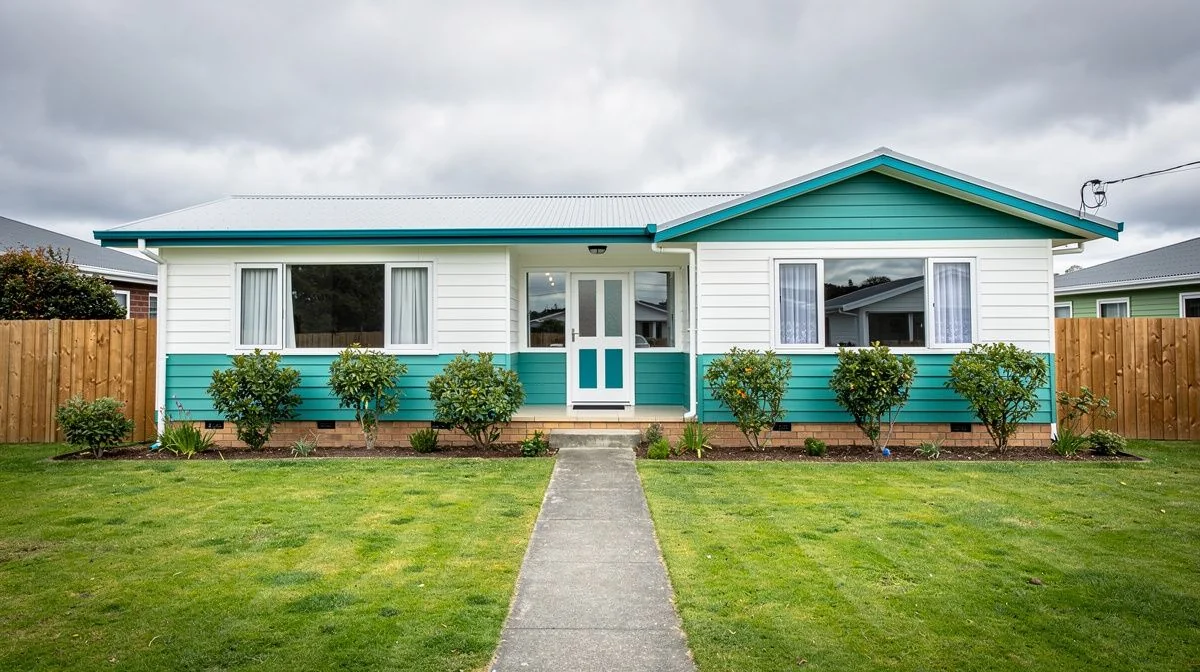
Cover is automatic if you hold a home policy that includes fire insurance, which most do. You do not buy it separately and you cannot buy extra from the Commission. The cap is $300,000 plus GST per dwelling, per event, paid towards rebuilding or repairing your home after a natural hazard event. Limited land cover is included, based mainly on market value, focused on the land under and around the home and driveway. Bare land is not covered.
Here is the trap. The Commission pays first, but only up to the cap — and your cap can be lower than $300,000 plus GST if your own replacement sum insured is lower. Anything above the cap comes from your own policy, subject to your sum insured. A homeowner who insures the house for less than it would cost to rebuild is underinsured no matter how the cap is described.
The scheme targets earthquakes, volcanic eruptions and tsunamis, and to a much lesser degree storm and flood, where only limited land damage is covered. Driveway surfaces and landscaping are not covered by the Commission, though your private insurer may offer that.
ACC, and the gap it leaves
ACC covers everyone in New Zealand, including children, students, the retired and visitors. It is no-fault, funded by levies on wages, fuel and businesses, and in exchange you give up the right to sue for personal injury in most circumstances. It covers physical injury from accidents, gradual process conditions caused by your work, treatment injuries, and maternal birth injuries from 1 October 2022.
Home, Contents and the Sum Insured Question
Home cover responds to the standard set of risks, with the sum insured based on estimated rebuild cost. That number is yours to get right, and it is the one figure where a rough guess costs real money. Construction cost inflation gets applied automatically each year, but automatic adjustment does not fix a starting figure that was too low.
Contents cover handles household items against loss, theft and damage, including items temporarily outside the home up to set limits. Valuable pieces — jewellery, watches, cameras — generally need to be specified separately to be covered at full value rather than the standard sub-limit. Most contents calculators walk room by room, which is tedious and also the only reliable way to land on a sensible number.
For earthquake damage, your Tower policy sits above the Commission's cap. That is the whole structure: public scheme first, private policy above it. Temporary accommodation cover typically applies if the home is uninhabitable after a covered event.
Questions You Might Have
Is car insurance compulsory in New Zealand?
No. It is not legally required. ACC covers personal injuries, not vehicles or property, so an at-fault driver is personally liable for the damage they cause to someone else's car or property. That liability is the real reason to hold at least third party cover.
Do I need separate earthquake insurance?
No, and you cannot buy it separately from the Commission. Cover is automatic if your home policy includes fire insurance, which most do. What you control is your sum insured, because that determines how much sits above the cap.
What is the maximum Natural Hazards Insurance levy?
The levy is 16 cents per $100 of cover, and the maximum is $480 plus GST a year — about $552 including GST. It is collected through your insurer's premium. Treasury has recommended raising the rate, but that review is paused, so the rate is unchanged for now.
Is it cheaper to buy direct than through a broker?
Usually yes on simple, standard risks like a single car or a standard house, because there is no commission or fee inside the price. A broker earns their place on complex or unusual risks, commercial cover, and when a claim turns difficult and needs arguing.
What should I check before switching insurers?
Compare the definitions and exclusions, not just the premium. Check the excess, whether glass is included, how agreed value versus market value is handled, and whether the new policy carries over your claim-free years. A cheaper premium with a narrower definition is not a saving.
What Matters Most
Tower is a reasonable choice for a standard New Zealand household: a car, a house, some contents, nothing exotic. The pricing model rewards low-risk customers, the digital process is genuinely quick, and the product wording is in line with the market.
But the insurer is not the decision that matters most. Your sum insured is. The Commission pays first and only up to $300,000 plus GST, and your own policy has to carry everything above that. Insure the rebuild for less than it costs and no brand, discount or app will save you at claim time.
Get that number right, then let price decide between insurers.

The ValueHub Team built this site because finding clear, unbiased financial information in New Zealand was harder than it should be. Every guide is based on real research — we compare the actual fees, terms, and fine print so you don't have to. Our tip: shop around every year, read the policy docs, and never assume loyalty gets you the best deal.— The ValueHub Team
Try our Calculators
Use these free tools to crunch the numbers:
KiwiSaver Fund Comparison
Compare fees, returns, and risk levels across every KiwiSaver fund — the most up to date data in New Zealand.
Currency Converter — USD to NZD
Convert US Dollars to New Zealand Dollars instantly. See the latest exchange rate and 30-day trend.
Mortgage Repayment Calculator
Calculate your weekly, fortnightly, or monthly mortgage repayments. Free NZ mortgage calculator — try different rates, terms, and repayment frequencies.
Compound Interest Calculator
See how your savings grow with compound interest over time. Free NZ compound interest calculator with yearly, monthly, and weekly compounding options.
Term Deposit Calculator
Calculate your term deposit returns before you lock in. Compare interest earned across different terms and rates with ValueHub's free calculator.
Savings Goal Calculator
Calculate how long it will take to reach your savings goal — and what monthly deposit you need to get there. Free NZ savings planner.
Related Articles
State Insurance Review — What You Need to Know
State Insurance review: Compare car, home, and contents cover, optional extras, and claims service for New Zealanders.
comparisonContents Insurance in NZ — A Side-by-Side Comparison
Compare NZ contents insurance policies side by side, covering standard risks, portable item limits, and specified items to ensure your valuables are fully...