House Insurance in New Zealand: What You Pay and What You Get
Published 20 October 2026 · Written by the ValueHub team · Reviewed by Steve Baron
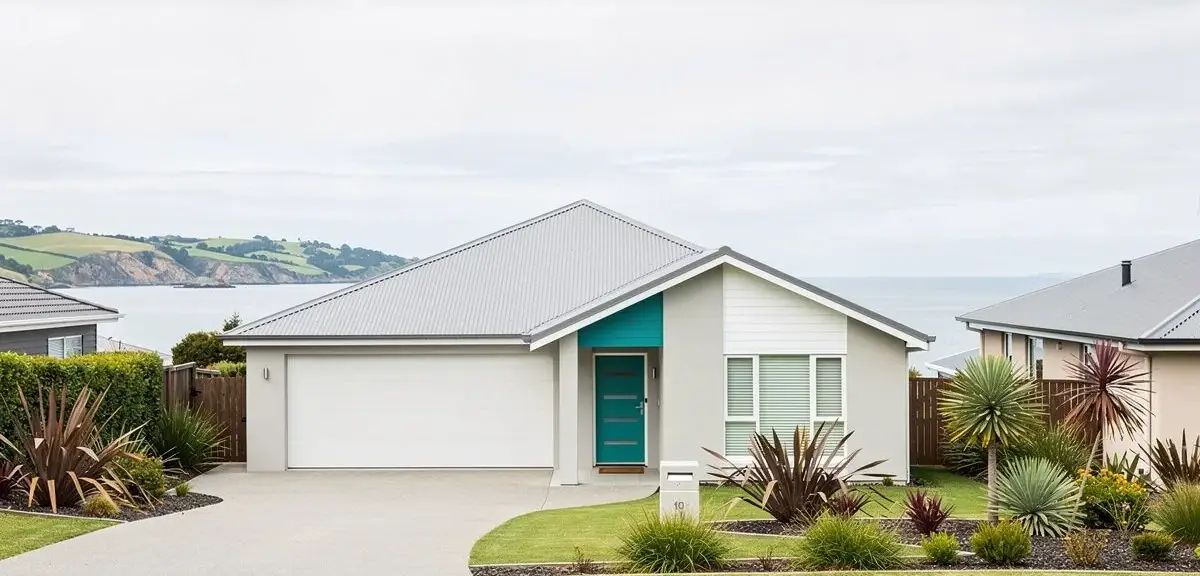
House Insurance in New Zealand: What You Pay and What You Get
What Is House Insurance?
House insurance covers the building — walls, roof, floors, fixtures and the structures attached to them. It does not cover anything inside, which is what a contents policy is for. That split matters, but it is not where most people lose money.
The expensive mistake is quieter. Most New Zealand house policies are written on a sum insured basis: you name a figure, the insurer agrees to it, and that figure is normally the ceiling on what you get back. Get it wrong, and the shortfall is yours.
There is a second layer under every policy, run by the Natural Hazards Commission. Knowing where that layer stops, and where the risk passes back to you, is most of what comparing house insurance involves.
ValueHub's Trusted Providers
We've researched the providers below — here are our picks for this category.
Buildings, Business, Advice. Everyday Covered. We provide guidance to business owners, taking the stress and uncertainty out of the insurance process. Thanks for taking the time to submit your message, we’ll be in touch within 2 working days. Oops! Something went wrong while submitting the form. Insurance for the important things in life.
How We Researched This Guide
We started with the contracts rather than the marketing pages. Every limit in the comparison table below was read from the insurer's own policy summary or policy document — AA Insurance, AMI, State, Tower and Initio — and nothing has been carried across on the assumption that it is industry standard. Where an insurer publishes no figure, the cell is blank.
For the market numbers, we used the Treasury's insurance data collection, in which an actuarial practice prices 3,510 real addresses against seven insurers on a like-for-like basis, plus the Natural Hazards Commission's insurer guide and the Fire and Emergency levy regulations on legislation.govt.nz. Anything we could not trace to a primary source was excluded from the draft.
The Quick Summary (60-Second Version)
If you read nothing else, read this.
- The Natural Hazards Commission pays the first $345,000 (including GST) per dwelling, per event, for building damage caused by an earthquake, landslide, volcanic or hydrothermal activity, tsunami, or a fire caused by any of those. For storm and flood it covers the land only — the house is your insurer's from the first dollar.
- About $676 of a typical house premium is two statutory levies at their maximum, before any risk is priced.
- The Treasury's October 2025 collection put the national average cheapest online premium at $1,886, down 5.7 per cent on the year before.
- Replacement cover above the sum insured applies to fire and accidental damage, rarely to natural hazard claims.
- MAS is the main insurer still writing full area replacement, where the rebuild is measured in square metres rather than dollars.
- Raising your excess is the fastest lever on the premium, and the only one nobody else controls.
What a House Policy Actually Covers
Two layers, and only one of them sits with your insurer
NHCover is the Government's natural hazard insurance, and it attaches automatically to any house with fire insurance. What it pays for depends on the peril. For an earthquake, landslide, volcanic or hydrothermal activity, tsunami, or a fire caused by any of these, the Commission pays the first $345,000, including GST, per dwelling, per event, and your insurer covers the rest.
Storms and floods are natural hazards as well, but the cover splits differently. The Commission insures only the land, and the house is insured by your insurer from the first dollar. Fire, theft, a burst pipe, and accidental damage are covered by your insurer too. There are also two excesses of the Commission's own, whatever the peril: $500 per dwelling for a building claim and $500 for a land claim, both including GST.
On a $700,000 rebuild after an earthquake, the Commission's $345,000 is paid first, and your insurer meets the balance. That balance is not all your premium buys — the insurer is on the whole rebuild and the Commission simply settles part of it first. Where no natural hazard is involved, the insurer carries the lot. Contents are not part of any of it, and neither are driveways, fences or pools.
What Makes Up the Premium
The fixed part: about $676 before your address is priced
Two levies ride on every house policy, and neither cares how risky your property is. The Natural Hazards levy is 16 cents for every $100 of building cover cap, capped at $480 plus GST — $552 including GST. The Fire and Emergency levy, at the rates applying from 1 July 2026, is 10.74 cents for every $100 of sum insured, capped at $107.40 plus GST — $123.51 including GST.
Together, that is about $676 a year, which is not an insurance judgment at all. Both caps also bite early — at $300,000 of cover and $100,000 of sum insured — so nearly every house pays the full amount on both.
The part your address decides
The rest is priced off the property. Insurers model earthquake shaking, flood, landslip, and, in some cases, sea surge, then add construction type, age, rebuild cost, and claims history. Some price at the address; others fall back to community-level data where they have nothing better.
The Treasury's collection shows how wide that gets. A $1 million house in Haumoana drew online premiums of roughly $5,000 to $13,000 depending on which insurer quoted it — same house, same cover, same postcode.
The part you choose: the excess
Your excess is the amount you pay on each claim, and it is the only part of the price you can change without changing insurers. Tower's standard house excess starts at $400, and raising it lowers the premium. The catch is that it applies per claim, not per year: one event, one excess, but three separate incidents is three.
Insurers also apply excesses to situations rather than to events. Tower adds $1,000 where a home is left empty for more than 90 consecutive days, and narrows what it covers from day 91. AA Insurance adds $1,000 from day 61. Both are additional to the excess on your schedule, and both fall away where the schedule records the property as a holiday home — which is the line to check before you sign.
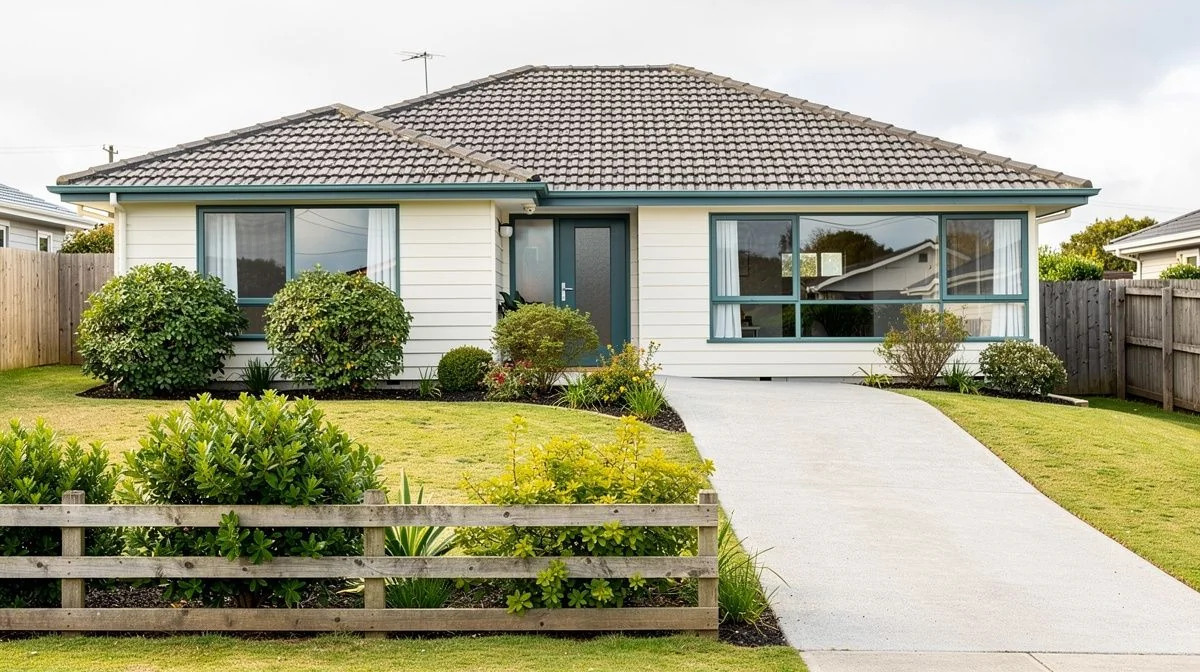
How Much Does House Insurance Cost in New Zealand?
No insurer publishes a price list, so third-party estimates circulate freely. The most defensible numbers come from the Treasury, which has an actuarial practice price the same 3,510 addresses against seven insurers each year — not a survey of what people pay, but what the cheapest and dearest online quotes came to for identical risks.
The October 2025 collection put the national average cheapest premium at $1,886, down $114 or 5.7 per cent from the $1,999 recorded a year earlier. That is a gross figure. Net of the change in sums insured it is $99, or 8.7 per cent.
It is also the first fall since monitoring began in 2022, and it sits alongside a moving sum insured: the sample's sums insured have risen 27 per cent on average since that year, 1.9 per cent in the latest collection alone. So the fall is a real price cut, not a quiet reduction in cover.
Quotes from at least three underwriters rose from 81 per cent to 95 per cent of profiles, largely because insurers resumed online underwriting in high seismic areas.
Sum Insured or Full Area Replacement
A sum-insured policy asks a question only a quantity surveyor can answer properly: what would it cost to demolish and rebuild this house at today's prices, including fees, levies, and GST? Insurers provide calculators, usually built on Cotality's Sum Sure data, and several make the replacement benefit conditional on your figure meeting the estimate.
MAS takes a different route. Its Area Replacement option is measured in square metres: the policy records the floor area and agrees to rebuild to that area, with no fixed dollar cap. It is closer to what most people think they have bought, and it is not available on every property — underwriting criteria apply, and MAS requires a Sum Sure estimate or a valuation to support the area.
Here is the asymmetry worth understanding. Replacement benefits generally stop at the sum insured once a natural hazard is involved. AA Insurance settles on replacement cost for any event other than a natural hazard, but only if the sum insured and the floor area on the policy are accurate — otherwise it drops to sum insured cover. Tower extends the sum insured by 20 per cent for fire, and only where the house is uneconomic to repair. The figure on your schedule is the one that matters when the ground moves.
How to Calculate Your Sum Insured
Start with the insurer's calculator rather than a gut feel. AA Insurance, AMI, State, and Initio all work from Cotality's Sum Sure model, and several of them make the rebuild-above-sum-insured benefit conditional on your figure meeting the amount it returns. Enter the address, floor area, and construction type, and note the number it gives you before you shop.
The figure has to cover more than the house. Demolition, debris removal, professional fees, council fees, and GST are all included in a rebuild cost, and a number based only on materials and labour will come up short on the day. That is the gap policyholders tend to discover after a total loss rather than before one.
The area method, if you are measuring it yourself
MAS sets out how it wants floor area measured, and the method is a useful cross-check whatever policy you buy. Measure the external perimeter of the building on every storey, include decks and covered pergolas, and add any garage or outbuilding. Do not rely on a council or property-data floor area — MAS warns those figures are sometimes wrong, and an understated area is an understated rebuild.
Then review it. Renovations, additions, and a converted garage all affect the rebuild cost, and a sum insured set at purchase and never adjusted again is the most common way a house ends up underinsured. Set a reminder for renewal and read the figure carefully.
How the Main House Policies Compare
The table sets out the limits that most often decide a claim. Nothing in it is a judgement about quality — it is where the money stops.
| Benefit | AA Insurance | AMI | State | Tower | Initio |
|---|---|---|---|---|---|
| Rebuild above sum insured | Accidental damage, if sum insured is accurate | Fire, if Sum Insured met | Fire, if Sum Insured met | Fire only, up to 20% | Up to 10%, cost inflation |
| Hidden gradual water | $5,000 | $3,000 | $3,000 | $1,000 to $3,000 | $3,000 |
| Temp accommodation | $40,000 | $30,000 | $30,000 | $15,000 to $30,000 | $20,000 |
| Glass-only claim | Optional no excess | Optional no excess | Optional no excess | $200 excess | $250 excess |
| Keys and locks | If security at risk | No excess | No excess | $500 to $1,000 | No excess, $1,000 |
Limits read from each insurer's own policy summary or policy document as of October 2026. Tower offers three tiers of cover, and its limits vary by tier.
Where the Policies Genuinely Differ
Temporary accommodation
Rebuilds take time, and rent does not pause. AA Insurance pays up to $40,000; AMI and State, $30,000; Initio, $20,000; and Tower, $15,000, on its standard tier. For a household out of its home for a year, that range is a real monthly cost.
Hidden gradual water damage
This is the leak inside a wall that you notice when the carpet squelches. Every policy here covers it, but the ceiling varies: $5,000 at AA Insurance, $3,000 at AMI, State and Initio, and $1,000 on Tower's standard tier. Glass excesses split the same way — optional at three insurers, $200 at Tower and $250 at Initio.
What happens after a fire
AA Insurance, AMI, and State all offer to rebuild beyond the sum insured after a fire, though AMI and State make it conditional on your sum insured meeting the Sum Sure estimate. Tower pays up to 20 per cent more and Initio up to 10 per cent where cost inflation bites. Read the condition, not the headline.
Who Insures Houses in New Zealand
New Zealand has more insurance brands than insurance companies, and which is which is on the public record. The Reserve Bank keeps the register of licensed insurers — the legal list of the companies allowed to carry insurance risk here. It holds 79 entries. Most are irrelevant to a household: the reinsurers sit at the top of it, the captives insure their own parent company, and the rest are life, health, marine, credit, title and commercial underwriters.
The register lists legal names rather than brands, and some brands are not on it at all. AMI and State appear as IAG New Zealand Limited, and MAS as Medical Insurance Society Limited. Ando is an underwriting agency, so the licence behind its policies belongs to Hollard. The table below includes two columns: the brand you deal with and the licensed insurer whose balance sheet backs the policy.
Ten brands, seven licensed insurers — and that is the point of showing it. Two of these brands can quote the same house thousands apart, because they price independently even when they share an owner. Reading the names is interesting; getting a quote from each is still what saves money.
| Brand | Licensed insurer | How you buy | Phone | Website |
|---|---|---|---|---|
| AA Insurance | AA Insurance Limited | Direct | 0800 500 231 | aainsurance.co.nz |
| AMI | IAG New Zealand Limited | Direct | 0800 100 200 | ami.co.nz |
| State | IAG New Zealand Limited | Direct | 0800 80 24 24 | state.co.nz |
| Tower | Tower Limited | Direct | 0800 379 372 | tower.co.nz |
| Initio | IAG New Zealand Limited | Online | 0800 763 929 | initio.co.nz |
| MAS | Medical Insurance Society Limited | Direct | 0800 800 627 | mas.co.nz |
| FMG | FMG Insurance Limited | Direct | 0800 366 466 | fmg.co.nz |
| Cove | Vero Insurance New Zealand Limited | Online | 0800 268 347 | coveinsurance.co.nz |
| Vero | Vero Insurance New Zealand Limited | Through brokers | 0800 505 905 | vero.co.nz |
| Ando | The Hollard Insurance Company Pty Ltd | Through brokers | 0800 222 491 | ando.co.nz |
Phones and websites are as published by each company in October 2026. The licensed insurer names come from the Reserve Bank register, read the same week. Bank-branded policies work like any other brand: the bank sells the policy, and the document names the insurer carrying the risk — so a bank quote is worth comparing against the insurer's own, not instead of it.
Checklist Before Buying House Insurance
Five things to settle before you sign, whether you are switching or buying cover for the first time.
- A sum insured below the calculator's estimate, with no replacement benefit. That leaves the shortfall on you twice over.
- A hidden water limit of $1,000 or nothing at all. One of the most common claims in the country, and among the cheapest limits to lift.
- A schedule that says market value rather than replacement. Different products, and the premium gap is the reason.
- The unoccupied clause, if the house is ever empty. Check the day count and the excess, not the marketing line.
- Retaining walls on a sloping section. NHCover does cover walls needed to support or protect the house within 60 metres, capped at $50,000 per dwelling, and AA Insurance adds $50,000 on top. Fences are outside both.
Questions You Might Have
Is house insurance compulsory in New Zealand?
Not by law, but almost always by the lender. A mortgage agreement normally requires cover for the life of the loan, with the bank named as an interested party. Turning up without it can be treated as a default.
What sum insured should I choose?
The cost to rebuild, not what the house would sell for. Land is not insured, so the two numbers are unrelated. Include demolition, debris removal, council fees and professional fees, and check the figure at every renewal.
Does my house policy cover the land?
Only narrowly, and through NHCover rather than your insurer. The Commission covers the land under the building, the land within 8 metres of it, and the land under or supporting the main access way up to 60 metres from the house — and it covers that land after a storm or flood, as well as after an earthquake. What it does not cover is the house itself in a storm. Driveway surfaces sit outside it, and most policies apply an excess to them.
What if no insurer will quote my address?
It occurs most often in coastal and high-flood-risk locations. Start with an insurance broker, who can approach underwriters that do not sell direct, and expect the premium to reflect the risk. Quoting a lower sum insured to make the price look better fixes the premium, not the problem.
What do I do if a claim is declined?
Complain to the insurer first. Under the Insurance and Financial Services Ombudsman scheme, they have two months to resolve it, and you then have three months from the deadlock letter to refer it. The service is free and covers claims up to $500,000 plus GST.
What Matters Most
The provider comparison gets the attention, and it is the least important decision on the page. Every policy here responds to fire and natural hazards; the tiers differ in how much else they pick up. What decides an outcome is the limits, and limits only matter on the day you claim.
So set the sum insured appropriately, read the four limits that determine most house claims, and choose an excess you can actually pay. Do that, and the choice of insurer becomes a much smaller decision than it looks. Skip it, and the cheapest quote can end up being the most expensive policy you ever buy.

The ValueHub Team built this site because finding clear, unbiased financial information in New Zealand was harder than it should be. Every guide is based on real research — we compare the actual fees, terms, and fine print so you don't have to. Our tip: shop around every year, read the policy docs, and never assume loyalty gets you the best deal.— The ValueHub Team
Try our Calculators
Use these free tools to crunch the numbers:

KiwiSaver Fund Comparison
Compare fees, returns, and risk levels across every KiwiSaver fund — the most up to date data in New Zealand.

Currency Converter — USD to NZD
Convert US Dollars to New Zealand Dollars instantly. See the latest exchange rate and 30-day trend.

Mortgage Repayment Calculator
Calculate your weekly, fortnightly, or monthly mortgage repayments. Free NZ mortgage calculator — try different rates, terms, and repayment frequencies.

Compound Interest Calculator
See how your savings grow with compound interest over time. Free NZ compound interest calculator with yearly, monthly, and weekly compounding options.

Term Deposit Calculator
Calculate your term deposit returns before you lock in. Compare interest earned across different terms and rates with ValueHub's free calculator.

Savings Goal Calculator
Calculate how long it will take to reach your savings goal — and what monthly deposit you need to get there. Free NZ savings planner.
Related Articles
NZ Life Insurance Explained
Only a third of NZ adults hold life insurance. Learn if you need it, how group schemes can trap you, and how to choose the right policy.

Health Insurance in NZ — Is It Worth the Cost?
NZ public healthcare is free but slow. Discover if private health insurance is worth it for faster specialist visits and elective surgery.