Best Dentists in Tauranga
Published 11 September 2026 · Written by the ValueHub team · Reviewed by Steve Baron
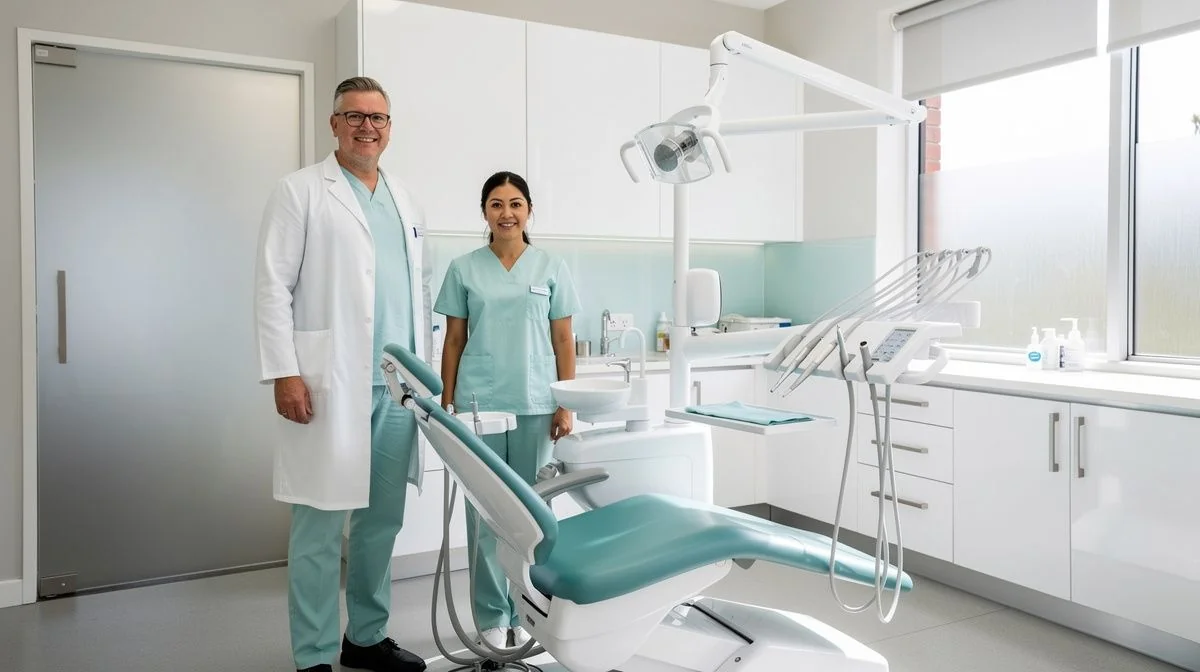
Tauranga Dental Costs and What Actually Drives Them
What a Tauranga dentist charges comes down to wages, equipment and the cost of running a practice, not to how the city is doing overall. The same crown can be quoted at noticeably different prices within a few kilometres, so it's worth asking about the fee before treatment starts rather than after.
Age shapes demand here. Tauranga's population is older than the national average, and restorative work such as crowns, bridges, and dentures is more common among older adults than in younger cities. Practices are also spread from the central city out through Mount Maunganui and Pāpāmoa, so travel counts when treatment runs over several visits.
How We Researched This Guide
We compared published fee schedules and price guides from New Zealand dental practices against national ranges, so the figures below reflect what clinics actually charge, not one practice's list.
We then separated the three questions patients really ask: what treatment costs, what the public system pays for, and what happens when something goes wrong outside normal hours.
Our Trusted Dentists
We feature businesses that demonstrate strong performance, proven experience, and consistently positive customer feedback. Some of the providers listed may have commercial relationships with us, but all are selected based on quality and reliability.
To begin, reach out to them and speak with them directly — this helps you explain your job, ask questions, and confirm whether they're the right fit.
Team Dental Tauranga have affordable Dental Care at three branches open Monday to Sunday and most public holidays. Give us a call, we’re here to help. Team Dental's highly experienced, friendly dentists and hygienists provide affordable and accessible dental care right across The Bay of Plenty – Rotorua, Papamoa, Tauranga, Te Puna and Katikati.
The 60-Second Version
If you read only one section, read this.
- A check-up and clean usually costs about $85 to $200. A one-surface composite filling runs $180 to $300.
- A porcelain-fused-to-metal crown is $1,400 to $2,200 and a zirconia crown $1,600 to $2,600. An implant with its crown reaches $4,000 to $7,000.
- Two practices can quote 50 per cent apart for identical treatment. Get a written treatment plan and quote first.
- A central address typically adds 20 to 30 per cent to a dental bill compared with a suburban or rural practice.
- Adolescents aged 13 to 17 receive free basic care. Adults do not receive publicly funded routine dentistry.
What Dental Treatment Costs
A dental invoice is itemised. One visit can carry an examination fee, a separate charge for each X-ray, a price per filling surface, and a laboratory fee for anything made outside the practice.
| Treatment | Typical range |
|---|---|
| Initial examination | $80–$150 |
| Check-up and clean | $85–$200 |
| Composite filling, one surface | $180–$300 |
| Simple extraction | $180–$350 |
| Root canal, molar | $1,200–$2,000 |
| Crown, porcelain-fused-to-metal | $1,400–$2,200 |
| Implant including crown | $4,000–$7,000 |
Indicative ranges compiled from published New Zealand dental fee schedules. Figures vary by practice and exclude any item not listed. Always ask for a written quote.

Because every component is billed separately, two quotes for the same treatment can diverge sharply. Ask what is included. X-rays, the temporary restoration, laboratory work and follow-up appointments are the items most often assumed rather than stated.
Why a Check-Up, a Filling and a Crown Cost So Differently
A check-up is a short appointment that uses almost no material, and practices often price it low because it brings patients through the door. That is why it sits at the bottom of the list.
A filling sits in the middle, and the price depends on how much of the tooth it covers. A single-surface composite is $180 to $300, and each extra surface adds roughly $50 to $100, because there is more material to place and a tighter space to work in.
A crown is as much a manufacturing job as a clinical one: the tooth is prepared, an impression is taken, a temporary is fitted, a laboratory builds the restoration, and a second appointment cements it in place. An implant goes further, adding a surgical fixture in the jaw, which is how the total arrives at $4,000 to $7,000.
What Shapes Prices Around Tauranga
Three local factors explain most of the difference between two quotes for the same work.
City-Centre or Suburban
City-centre practices typically charge 20 to 30 per cent more than suburban or rural ones, because rent and overheads are higher. For routine care, a practice a short drive from the centre can be materially cheaper for the same procedure.
An Older Population
With a population older than the national average, Tauranga sees more restorative work such as crowns and dentures. If you expect a run of treatment rather than one filling, ask about staging it across appointments so the cost is spread.
Specialist Referrals
Not every practice does every procedure. Difficult root canals, surgical extractions and implant placement are sometimes referred to a specialist, adding a second fee and possibly travel. Ask whether the work is done in-house, because the answer changes the total.
Private Practices and Publicly Funded Care
Most adults pay privately, and public funding is limited. Children through Year 8, to about age 13, receive free care through the school dental service. Adolescents aged 13 to 17 receive free basic care through the adolescent dental subsidy, which covers check-ups, X-rays, fillings, and extractions.
That subsidy does not cover orthodontics or complex restorative work, and it ends at 18. A practice that treats adolescents is not therefore cheaper for adults. The two are separate arrangements, and worth keeping separate when you compare fees. Not every private practice participates in the subsidy, so if you are booking for a 13- to 17-year-old, confirm that the clinic accepts publicly funded adolescents first.
For adults in difficulty, Work and Income can pay up to $1,000 in any 52 weeks toward immediate and essential treatment: extractions, fillings for restoration, root canal treatment except molars, and treating infection. It excludes check-ups, cosmetic work, cleaning unless needed for gum infection, cast restorations, orthodontics, molar root canals and dentures. The first $1,000 is a grant, not a loan.
Payment Plans and Larger Treatment
For a crown, a root canal or an implant, the total builds quickly. Some practices offer instalment arrangements for larger work, but there is no standard, so ask before treatment begins.
Ask whether the practice runs its own payment plan or works with a finance provider, what deposit is required, and whether interest or an administration fee applies. Put the arrangement in writing alongside the treatment plan.
Dental Emergencies and After-Hours Cover
Severe toothache, a broken tooth, a lost filling or a knocked-out tooth are the problems people most often need help with outside normal hours. Practices handle this differently, and it's worth knowing before you need it.
Cover differs from practice to practice. Some keep their own weekend roster, some take turns with neighbouring clinics, and some pass patients straight to a regional urgent service. Find out which applies at your next routine visit, not in the middle of a Saturday night. If you have facial swelling, heavy bleeding, or a tooth that has been knocked out, contact a dentist or after-hours service without waiting for a routine appointment.
How to Compare Tauranga Practices Fairly
Comparing on the examination fee alone can be misleading because packages differ. A cheap check-up may exclude X-rays, and a clean may be charged separately.
Ask each practice for a written treatment plan and quote listing every item and its charge, then compare totals for the same list of work. Check whether the examination fee is credited against treatment, and whether the quote includes the laboratory component.
Warning Signs
- A quote given over the phone without an examination.
- A total price with no itemised charges.
- Pressure to begin extensive work at the first appointment.
- No clear answer on whether the work is done in-house or referred.
- No written information about fees or payment options.
Questions You Might Have
Do I need a check-up if nothing hurts?
That decision is yours and your dentist's. Some dental problems cause no discomfort until they are advanced, which is why practices recommend examinations at intervals suited to your circumstances.
Does dental insurance help with a crown?
Often it does. Most private health policies that include a major dental benefit will contribute to a crown, because a crown is restorative rather than cosmetic. Compare the annual premium with what you would realistically claim.
Why does the same filling cost different amounts?
The number of surfaces, material, and whether X-rays are included all change the total. Amalgam is usually cheaper than composite. Which is appropriate for you is a clinical question, not a pricing one.
What Matters Most
Dental bills feel unpredictable because they are itemised, not because they are random. Once you understand a check-up, a filling, and a crown as three different kinds of jobs, the numbers make far more sense.
Get a written plan and quote before treatment, ask about payment options for larger work, and know where you would go at the weekend if something breaks. You can compare practices around the country through theDentists Trade Hub.

The ValueHub Team built this site because finding clear, unbiased financial information in New Zealand was harder than it should be. Every guide is based on real research — we compare the actual fees, terms, and fine print so you don't have to. Our tip: shop around every year, read the policy docs, and never assume loyalty gets you the best deal.— The ValueHub Team
More Dentists in Tauranga
These businesses also operate in this area.
ER Dental: Expert dental care in Tauranga & Omokoroa. From check-ups to emergencies, we've got you covered. Book now.
Welcome to Holmes Dental Tauranga We look forward to providing the highest level of dental care to all patients and hope to keep your experience with us as relaxed and enjoyable as possible! Tauranga Dentist If you live in Tauranga and are looking for a friendly female dentist, we warmly welcome you to stop by and introduce yourself.
Try our Calculators
Use these free tools to crunch the numbers:
KiwiSaver Fund Comparison
Compare fees, returns, and risk levels across every KiwiSaver fund — the most up to date data in New Zealand.
Currency Converter — USD to NZD
Convert US Dollars to New Zealand Dollars instantly. See the latest exchange rate and 30-day trend.
Mortgage Repayment Calculator
Calculate your weekly, fortnightly, or monthly mortgage repayments. Free NZ mortgage calculator — try different rates, terms, and repayment frequencies.
Compound Interest Calculator
See how your savings grow with compound interest over time. Free NZ compound interest calculator with yearly, monthly, and weekly compounding options.
Term Deposit Calculator
Calculate your term deposit returns before you lock in. Compare interest earned across different terms and rates with ValueHub's free calculator.
Savings Goal Calculator
Calculate how long it will take to reach your savings goal — and what monthly deposit you need to get there. Free NZ savings planner.
Dentists in Other Cities
Latest Guides & Reviews
Kōura KiwiSaver Scheme Review
Kōura KiwiSaver review: 13 open funds, fund charges from 0.63 to 1.10 per cent, and net returns to 30 June 2026.
reviewMaritime KiwiSaver Scheme Review
Maritime KiwiSaver review: 3 open funds, fund charges from 0.61 to 0.76 per cent, and net returns to 31 March 2026.
reviewMAS KiwiSaver Scheme Review
MAS KiwiSaver review: 7 open funds, fund charges from 0.25 to 0.98 per cent, and net returns to 30 June 2026.
reviewArotahi KiwiSaver Scheme Review
Arotahi KiwiSaver review: 1 open fund, a 0.77 per cent fund charge, and net returns to 31 March 2026. What the Government register shows you pay and get back.