Best Electricians in Lower Hutt
Published 11 September 2026 · Written by the ValueHub team · Reviewed by Steve Baron

A Valley of Old Villas With Original Wiring
The valley's electrical character comes from its housing. The inner suburbs hold a large stock of timber-framed villas with suspended floors and uninsulated roof voids, and many still run on wiring installed when rubber and fabric insulation was standard. Those cavities are harsh on old cable, and the limited subfloor access makes fault-finding slower than it looks from the street.
Two local hazards shape the work. Parts of the valley are exposed to river flooding, and any cable, socket or switchgear that has been submerged needs assessment and usually replacement, because water sits inside the insulation long after everything looks dry. The Wellington fault also runs through the valley, so switchboards and hot water cylinders should be properly restrained against movement in a shake.
A large share of local employment sits in the industrial estates along the harbour at Petone, Seaview and Gracefield, which keeps commercial work running alongside the residential market, and many households commute, so Saturday appointments are in demand. Wellington region electricians charge about $95 to $130 plus GST an hour, with a call-out fee of $75 to $150 that usually covers the first hour.
How We Researched This Guide
We began with the legal framework because electrical work sits in a restricted occupation, and the certification requirement separates a proper job from a risky one. That means the registration classes managed by the Electrical Workers Registration Board and the narrow scope of the homeowner exemption.
Pricing bands come from comparing published New Zealand electrical trade pricing guides, so they describe the market rather than one company's price list. Where the age or condition of a house changes the scope, we say so rather than quoting a single figure.
Our Trusted Electricians
We feature businesses that demonstrate strong performance, proven experience, and consistently positive customer feedback. Some of the providers listed may have commercial relationships with us, but all are selected based on quality and reliability.
To begin, reach out to them and speak with them directly — this helps you explain your job, ask questions, and confirm whether they're the right fit.
Wiretec Electrical | Your professional local electricians, experts in Solar Installations, EV Chargers, Home Electrical, Switchboard upgrades, Testing and Tagging, Heat Pump Installation, Commercial Electrical. For all your Servicing and Maintenance requirements please call us. We are based in Petone, Lower Hutt. Maste
The 60-Second Version
Here is the short Version, for anyone weighing up a call.
- Wellington region electricians charge about $95–$130 plus GST an hour, at the top of the national range alongside Auckland.
- Allowing for GST, residential work commonly lands between $90 and $140 an hour.
- A call-out fee of $75–$150 plus GST generally covers the first hour, travel and small fittings.
- Original wiring in pre-war villas is the most common hidden fault, and it fails from the inside.
- Only a registered electrician with a current practising licence can do prescribed electrical work, and the job needs to be certified.
What the Work Costs in Lower Hutt
The Wellington region sits near the top of the national pricing range with Auckland. Expect quotes in the upper half of the bands below, particularly in older homes where wiring has been added to over decades, and subfloor access is tight.
| Work | Typical cost |
|---|---|
| Wellington region hourly rate | $95–$130 plus GST |
| General residential range | $85–$125 plus GST, most commonly $90–$105 |
| Including GST | $90–$140 an hour |
| Call-out or service fee | $75–$150 plus GST, usually covering the first hour |
| Emergency or after-hours | Standard rate plus 50–100 per cent |
| Certificate of Compliance | $30–$60, or $50–$150 at the higher end |
| Electrical Safety Certificate | Same range as the Certificate of Compliance |
Ranges drawn from published New Zealand electrical trade pricing guides and provider quotes. Confirm whether the call-out covers the first hour or sits on top of the hourly rate.
What Only a Licensed Electrician Can Do
Prescribed electrical work is controlled by the Electricity Act and the Electricity (Safety) Regulations. Only someone registered with the Electrical Workers Registration Board who holds a current practising licence may carry it out, and the work must comply with AS/NZS 3000.
That covers all fixed wiring essentially: new circuits, extra socket outlets, switchboard changes, mains work, cylinder connections, and repairs inside a wall or ceiling. It does not cover changing a lamp, swapping a plug-in appliance, or replacing a fitting that plugs in rather than being wired.
The exception is deliberately tight. Section 79 of the Electricity Act allows owner-occupiers to do limited prescribed work on their own home, but only if it is tested and certified before being connected to the supply. In practice, the inspection and certification often cost more than having a licensed electrician do the whole job.
A failed inspection means paying to correct the work and then paying for a second inspection. On a house with old wiring, the risk of disturbing brittle cable is too high.
Certificates, and Why They Follow the House
The Certificate of Compliance is the legal record that prescribed work has been done and tested to the required standard. The licensed electrician who performed the work issues it and records their registration details, the address, and the circuits involved.
For lower-risk but still prescribed work, the equivalent document is an Electrical Safety Certificate. Both are formal certifications, and both belong to you when the electrician packs up.
These documents travel with the property. At sale, a buyer's inspector will ask whether recent electrical work is certified, and an uncertified addition can delay settlement. If you rent the house out, a certificate is your defence if the installation causes a fault.
Certification typically costs $30–$60, reaching $50–$150 on a larger job, and is never optional.
Why Old Switchboards Cause Most of the Trouble
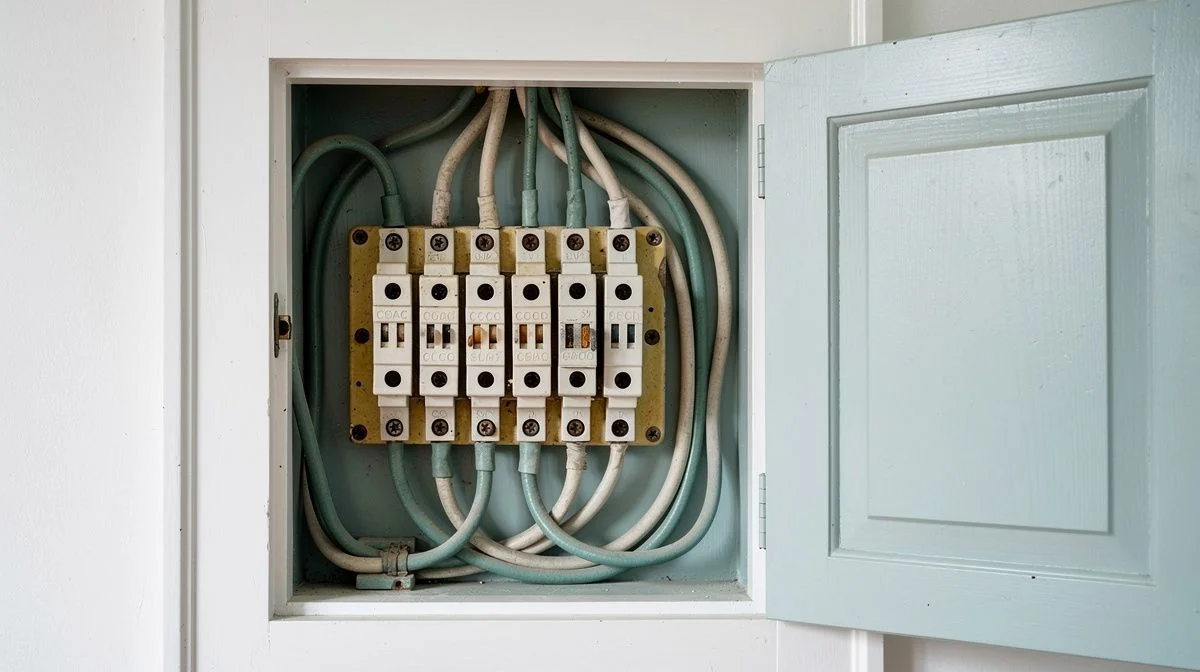
Ask an electrician working in the valley what actually worries them, and the answer is rarely glamorous. It is a switchboard in a pre-1970s house that has never been touched, still fitted with fuse wire, feeding circuits extended one cable at a time over sixty or seventy years.
The protection those boards offer is limited. They may have no RCD at all, so a fault to earth through a person is not detected quickly enough to prevent harm. Fuse carriers can also allow the wrong fuse-wire gauge to be fitted, removing the protection the original design intended.
Behind the board, the insulation matters as much. Rubber and fabric-covered cable hardens with age and heat, becoming brittle in roof spaces. It tests fine one day and crumbles in your hand the next, which is why a simple addition can reveal a larger problem.
The highest-risk element is often the board itself. An upgrade to modern circuit breakers with RCD protection is a contained job at a predictable cost, while a full rewire is a far bigger undertaking. Never confuse the two in a quote.
Local Factors That Shape the Work
Villas, Bungalows and Damp
The inner suburbs hold a large stock of timber-framed villas with suspended floors and uninsulated roof voids. Those cavities are harsh on old cable, and limited subfloor access slows fault-finding.
Flood Exposure Along the River
Parts of the valley are exposed to river flooding, and any water that reaches socket outlets, wiring or a switchboard changes the job completely. Inundated cable and fittings usually need replacing rather than drying out.
Seismic Considerations
The Wellington fault runs through the valley. In a shake, anything unsecured can move, including switchboards and hot water cylinders with cabling that isn't properly restrained.
Petone, Seaview and Gracefield
A large share of local employment sits in the industrial estates along the harbour, which keeps commercial work running alongside the residential market. Many households also commute, so Saturday appointments are in demand.
Choosing an Electrician in Lower Hutt
Check the registration first. The Electrical Workers Registration Board keeps a public register, and confirming a licence takes a couple of minutes.
Then get the fee structure in writing. There is a real difference between a service fee that absorbs the first hour of labour and one charged purely for the van arriving. On an old villa, the first hour is often spent finding the fault, not fixing it, so this can change the bill more than the headline rate.
Ask what happens if the job uncovers more. With fabric-insulated cable, that is a genuine possibility rather than a scare tactic, and a firm that explains its approach up front is easier to deal with.
Warning Signs
- A quote that does not mention certification. The certificate is the point of the licence. Its absence is a red flag.
- An electrician who won't provide a licence number. There is no legitimate reason to withhold one.
- New cable joined to old with tape. This is the signature of unconsented work, and it is a fire risk.
- A price that ignores the age of the house. Subfloor access adds time, so a suspiciously low quote usually means the installer didn't consider it.
- No written scope for a switchboard job. You should know how many circuits are covered and what protection is being fitted.
Questions You Might Have
How can I tell whether my wiring is original?
Look at the cables where they enter the switchboard or a ceiling rose. Old rubber or fabric-covered cores, black and crumbling, are the giveaway, as is porcelain fuse gear. If the board has never been upgraded, assume the wiring behind it has not been either.
What happens to wiring after a flood?
Any cable, socket or switchgear that was submerged needs assessment before the power goes back on, and in most cases replacement. Water sits inside the insulation and drives corrosion long after everything looks dry.
Can I run a new circuit to a garage or sleepout?
You can, and it is prescribed work from start to finish. It needs a licensed electrician, compliance with the wiring standard, and a Certificate of Compliance when it is finished. On a valley property with an old board, you may need to upgrade the board first.
What Matters Most
Lower Hutt's electrical risks are inherited ones. A century-old villa, original cabling, and a fuse board that has outlived its design are behind most genuine incidents here, and many owners are choosing to fix what they already have rather than move.
Ask for the licence, ask for the certificate, and make sure you understand whether the call-out fee includes the first hour. For a wider view of the trade, see our guide to electricians in New Zealand.

The ValueHub Team built this site because finding clear, unbiased financial information in New Zealand was harder than it should be. Every guide is based on real research — we compare the actual fees, terms, and fine print so you don't have to. Our tip: shop around every year, read the policy docs, and never assume loyalty gets you the best deal.— The ValueHub Team
More Electricians in Lower Hutt
These businesses also operate in this area.
Welcome to NME. Wellington’s largest electrical, mechanical and service solution providers, we are proud of our place in the industry and community. New Zealand’s Electrical & Mechanical Contracting experts. Providing tailored electrical and mechanical solutions from concept to consent for over 30 years.
Try our Calculators
Use these free tools to crunch the numbers:
KiwiSaver Fund Comparison
Compare fees, returns, and risk levels across every KiwiSaver fund — the most up to date data in New Zealand.
Currency Converter — USD to NZD
Convert US Dollars to New Zealand Dollars instantly. See the latest exchange rate and 30-day trend.
Mortgage Repayment Calculator
Calculate your weekly, fortnightly, or monthly mortgage repayments. Free NZ mortgage calculator — try different rates, terms, and repayment frequencies.
Compound Interest Calculator
See how your savings grow with compound interest over time. Free NZ compound interest calculator with yearly, monthly, and weekly compounding options.
Term Deposit Calculator
Calculate your term deposit returns before you lock in. Compare interest earned across different terms and rates with ValueHub's free calculator.
Savings Goal Calculator
Calculate how long it will take to reach your savings goal — and what monthly deposit you need to get there. Free NZ savings planner.
Electricians in Other Cities
Latest Guides & Reviews
Kōura KiwiSaver Scheme Review
Kōura KiwiSaver review: 13 open funds, fund charges from 0.63 to 1.10 per cent, and net returns to 30 June 2026.
reviewMaritime KiwiSaver Scheme Review
Maritime KiwiSaver review: 3 open funds, fund charges from 0.61 to 0.76 per cent, and net returns to 31 March 2026.
reviewMAS KiwiSaver Scheme Review
MAS KiwiSaver review: 7 open funds, fund charges from 0.25 to 0.98 per cent, and net returns to 30 June 2026.
reviewArotahi KiwiSaver Scheme Review
Arotahi KiwiSaver review: 1 open fund, a 0.77 per cent fund charge, and net returns to 31 March 2026. What the Government register shows you pay and get back.