Best Fencing Contractors in Blenheim
Published 05 February 2025 · Updated 18 August 2026
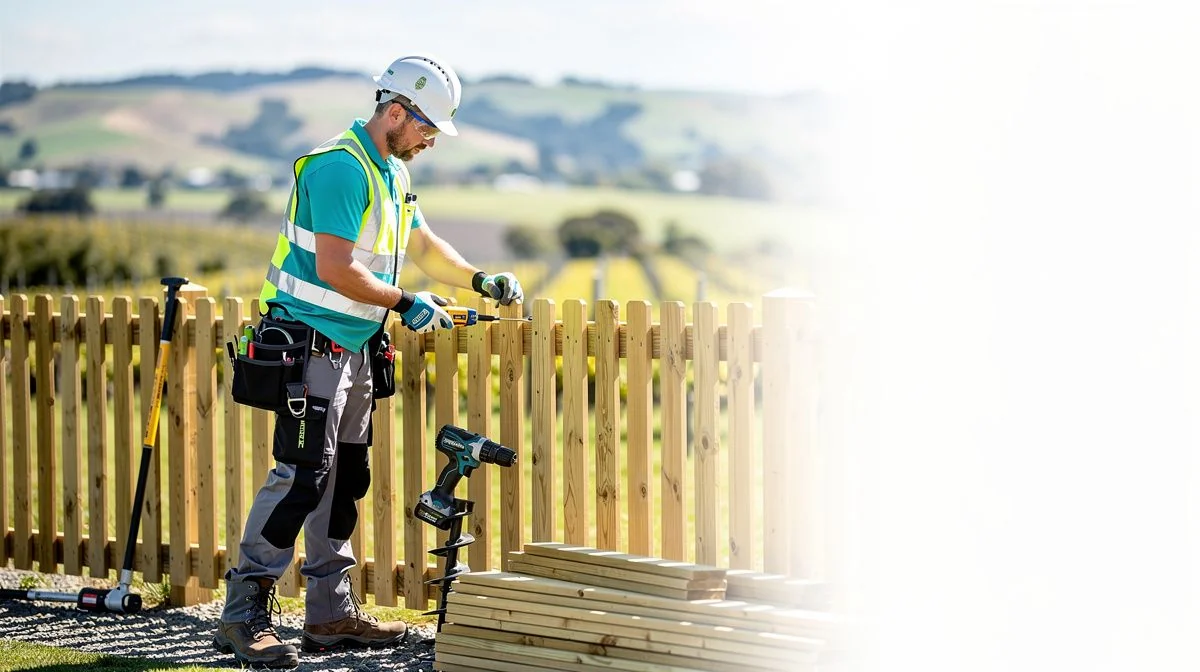
Best Fencing Contractors in Blenheim – Your Guide to Getting It Right
Whether you're securing a lifestyle block in the Wither Hills, adding privacy to a Riverside subdivision home, or replacing a boundary fence in Renwick, finding the right fencing contractor in Blenheim can make all the difference. Blenheim’s mix of coastal weather, fertile soils, and working vineyards means your fence needs to handle more than just Kiwi standards – it’s got to stand up to Marlborough’s sun, wind, and occasional frost.
But with dozens of contractors advertising across the region, how do you separate the reliable tradies from the cowboys? This guide will walk you through what to look for, what to ask, and how to get a fence that works for your property – and your budget.
What to look for when hiring a fencing contractor in Blenheim
Not every fencing job is the same, and not every contractor is the right fit for yours. Here’s what to check before you book anyone in.
Local knowledge matters
Blenheim sits in Marlborough – a region with specific soil types, drainage patterns, and council rules. A contractor who knows the area will understand how posts perform in different ground conditions, which timber suppliers have the best stock locally, and whether you need consent under the Marlborough District Council’s rules.
- Ask if they’ve worked on properties similar to yours – vineyard fencing, residential boundary lines, rural stock fencing.
- Check they’re familiar with the Marlborough District Plan – especially earthworks and setback rules near waterways or roads.
Licensing and insurance
In New Zealand, fencing contractors don’t need a specific licence to operate, but that doesn’t mean you should skip the checks. Always ask for:
- Public liability insurance (typical cover is $1 million to $2 million).
- Evidence of any trade qualifications – such as a National Certificate in Fencing or membership of the Fencing Association of New Zealand.
- A current site-specific health and safety plan, especially if your job is near power lines or public footpaths.
If the fence is part of a larger building project, your contractor may need to be a Licensed Building Practitioner (LBP) for certain structural retaining walls. Check with your local council about what applies to your job.
Materials and workmanship guarantees
Good contractors stand behind their work. Ask upfront:
- What warranty do they offer on materials? (Timber treatments, for example, should meet NZS 3640 standards.)
- Do they guarantee workmanship for at least 12 months?
- Will they rectify issues like posts lifting or gates sagging within that period?
References and recent work
Don’t rely on star ratings alone. Ask for photos of recent jobs in Blenheim – ideally from the past six months. If possible, drive past a completed fence they’ve built (with the owner’s permission) to see how it’s holding up.
Key questions to ask before hiring
You’re about to spend real money – so ask these questions before you sign anything.
- “Can you provide a written quote that itemises materials, labour, and disposal?” A vague estimate can blow out. You want to see exactly what you’re paying for – posts, rails, paling, concrete, post caps, gates, hinges, and freight.
- “Who is responsible for obtaining any required consents?” In Marlborough, fences over 2.5 metres high or those that alter drainage may need resource consent. Make sure your contractor handles the paperwork, or at least tells you what you need.
- “How will you handle underground services?” Gas, water, power, fibre – striking a buried service is expensive and dangerous. A reliable contractor will request a Before You Dig plan from BeforeUDig or check with Chorus, PowerCo, and the Marlborough District Council.
- “What’s your policy on weather delays?” Marlborough’s weather can be fickle. A good contractor will build in a few buffer days and won’t charge extra for a day lost to heavy rain.
- “Do you subcontract any of the work?” If they bring in a specialist for concrete mixing or post-hole drilling, check that subcontractor is also insured and competent.
Tips for getting the best results
You can help the process run smoothly with a bit of preparation upfront.
Check your boundary lines first
Nothing kills neighbourly relations like a fence built on the wrong side of the boundary. Before your contractor arrives, confirm your property boundaries – either from your title plan or by hiring a surveyor. The cost of a survey (typically $800 to $2,000 in Blenheim) is well worth avoiding a legal headache.
Talk to your neighbours early
Under the Fencing Act 1978, you can require your neighbour to contribute to the cost of a “adequately fenced” boundary. But it pays to have a friendly chat before you start. Discuss the style, height, and shared cost – and get agreement in writing. A contractor who has built fences in the region can often help mediate if needed.
Match the fence to the environment
Blenheim has distinct microclimates. In the dry, stony parts of Springlands, timber posts need adequate concrete footings. Near the Wairau River, you might need more durable materials like steel or treated hardwood to resist moisture. A local contractor will advise you on this, but you can help by noting the conditions on your property.
Think about future maintenance
A painted paling fence looks great but needs repainting every three to five years. A well-oiled timber fence lasts longer with less fuss. If you don’t want to re-coat every few summers, consider coloursteel, aluminium slats, or durable composite materials – though these cost more upfront.
Plan for access and clean-up
Tell your contractor about any access restrictions – narrow driveways, locked gates, or steep sections. Also agree on who removes old fencing material. Many contractors include removal in their quote, but some charge extra. Make sure the site is left clean and safe, especially if you have children or pets.
A note about costs and getting quotes
Fencing costs in Blenheim vary widely depending on materials, height, length, ground conditions, and access. While we can’t give you exact prices (they change with timber prices and freight costs), you can expect the following general patterns:
- Basic timber paling fence – typically the most affordable option for standard residential boundaries.
- Post-and-rail with wire – common for lifestyle blocks and rural properties, often cheaper per metre than close-boarded timber.
- Coloursteel or aluminium slat fences – mid to high range, but with low ongoing maintenance.
- Vineyard or deer fencing – specialised and usually quoted on a per-metre basis with heavy-duty posts and high-tensile wire.
Always get at least three written quotes from different contractors. Compare not just the total price, but the materials specified, the warranty offered, and the estimated timeline. A very cheap quote may mean inferior materials or rushed work – and a fence that won’t last a Blenheim summer.
Remember that the cheapest quote isn’t always the best value. A slightly higher price from a contractor with proven local experience, good reviews, and a solid warranty often saves you money in the long run.
Also factor in the cost of any consents or survey work – your contractor should be upfront about whether these are included or separate. Ask for a breakdown in the quote so there are no surprises.
Finally, check whether GST is included in the quoted price. In New Zealand, most trade quotes include GST, but it’s worth confirming so you know the final number you’ll pay.
Once you have your quotes, take your time.

The ValueHub Team built this site because finding clear, unbiased financial information in New Zealand was harder than it should be. Every guide is based on real research — we compare the actual fees, terms, and fine print so you don't have to. Our tip: shop around every year, read the policy docs, and never assume loyalty gets you the best deal.— The ValueHub Team
Try our Calculators
Use these free tools to crunch the numbers:
KiwiSaver Fund Comparison
Compare fees, returns, and risk levels across every KiwiSaver fund from all 31 NZ providers.
Currency Converter — USD to NZD
Convert US Dollars to New Zealand Dollars instantly. See the latest exchange rate and 30-day trend.
Mortgage Repayment Calculator
Calculate your weekly, fortnightly, or monthly mortgage repayments. Free NZ mortgage calculator — try different rates, terms, and repayment frequencies.
Compound Interest Calculator
See how your savings grow with compound interest over time. Free NZ compound interest calculator with yearly, monthly, and weekly compounding options.
Term Deposit Calculator
Calculate your term deposit returns before you lock in. Compare interest earned across different terms and rates with ValueHub's free calculator.
Savings Goal Calculator
Calculate how long it will take to reach your savings goal — and what monthly deposit you need to get there. Free NZ savings planner.
Fencing Contractors in Other Cities
Latest Guides & Reviews
New Zealand Financial Markets Authority Guide: Investor Protection in NZ
Protect your investments with this practical guide to the FMA — how to check licences, spot scams, and what to do if a provider fails. Verified against...
comparisonEV Home Charger NZ: Costs & Buying Guide
Compare EV home charger costs in NZ — verified prices from $1,299, installation fees, smart features, and what actually matters for your home's power supply.
guideThe Most Popular EVs in New Zealand
The best-selling electric cars in New Zealand, ranked by official registration data. Top BEV and PHEV models and brands, updated monthly.
guideEV Market Stats
New Zealand's EV market in numbers — market share, fleet size, top-selling models and used imports, updated with the latest NZTA and MIA data.