Best Fencing Contractors in Wellington
Published 11 September 2026 · Written by the ValueHub team · Reviewed by Steve Baron
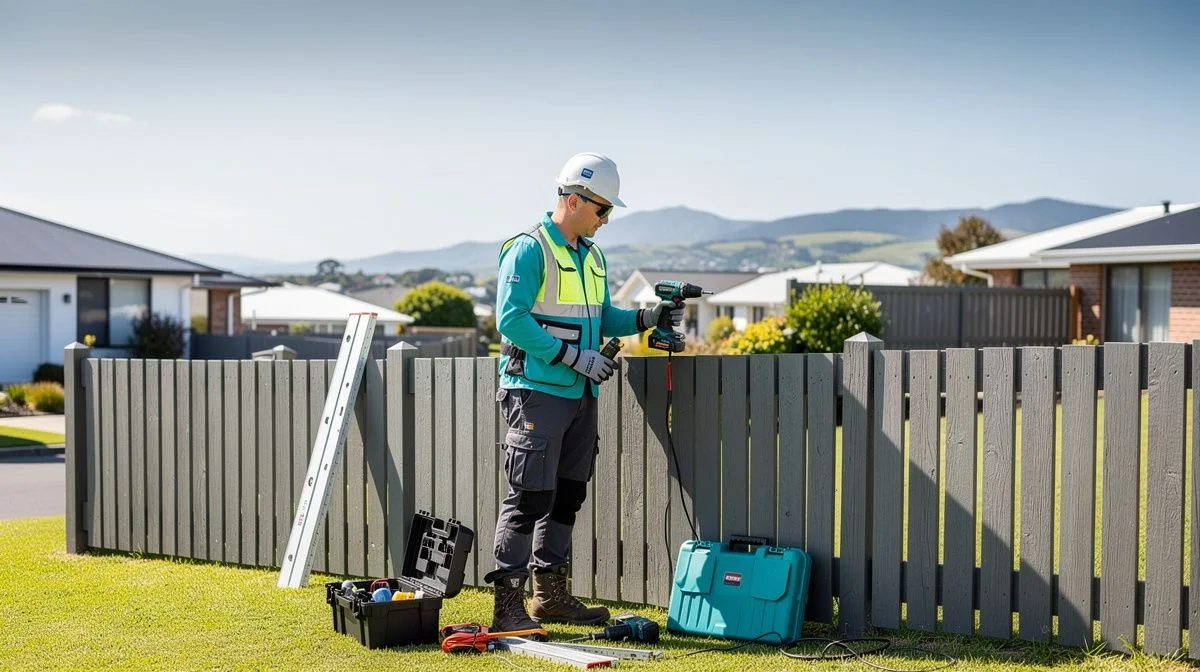
Fencing in Wellington: Wind, Slopes and Salt
A fence in Wellington is a sail, and the city will test it. Posts, rails, footings, and fixings must be specified for the site rather than chosen from a standard list, because the difference between a fence that lasts and one that leans shows up in the first decent southerly. When you compare quotes, ask what wind loading each contractor has allowed for on your ridge or valley.
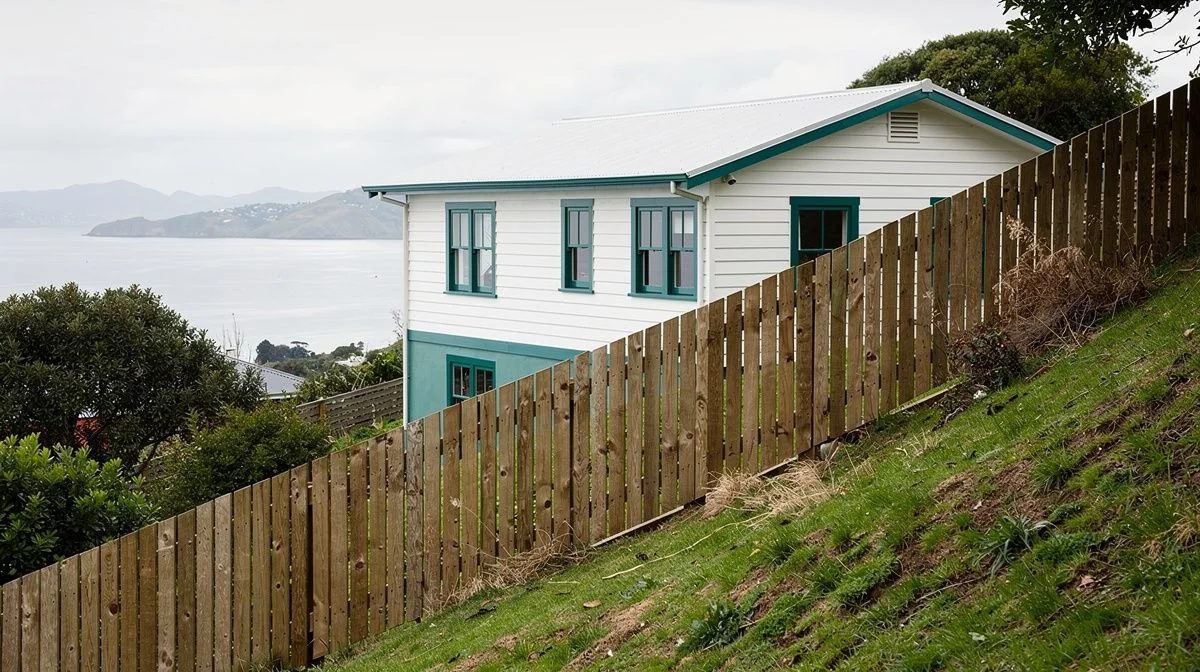
Much of the city is built on hills, and a boundary running up a slope cannot simply be built level. The line gets stepped or raked, footings on the low side go deeper, and every panel is carried up by hand. That is real cost, and it is the main reason two fences of the same length can be priced very differently. Ask how the line will be set out before you compare the totals.
Wellington also carries the highest seismic risk in the country, and old brick or block boundary walls are the fencing feature most likely to fail in a shake. A toppling masonry wall is a hazard and a repair bill, so replacing it with a lighter timber or steel fence is often the sensible move. Salt air near the coast adds to the case for galvanised fixings and a stain system on timber.
How We Researched This Guide
We started with the Fencing Act, which sets out who pays for a boundary fence and what happens when an adjoining owner will not co-operate. We then worked through the price bands contractors publish for the standard New Zealand fencing materials, from treated pine through to aluminium slat.
For local context, we focused on the practical constraints that dominate hillside building here, and on how wind and slope change what a fence has to withstand. Where a source gives a range, we have kept the range rather than quoting a single figure as though it were fixed.
Our Trusted Fencing Contractors
We feature businesses that demonstrate strong performance, proven experience, and consistently positive customer feedback. Some of the providers listed may have commercial relationships with us, but all are selected based on quality and reliability.
To begin, reach out to them and speak with them directly — this helps you explain your job, ask questions, and confirm whether they're the right fit.
We’re a locally owned business that specialises in gardening and landscaping services in the Wellington region. We are your local Gardening and Landscaping company based in the heart of Wellington. We operate throughout the Greater Wellington, Hutt Valley & Wairarapa regions, bringing expertise, creativity, and a commi
Bet big on DIY with Mitre 10 — New Zealand’s home of quality tools, smart home solutions, garden gear, and building essentials. From weekend projects to major renos, get trusted brands, sharp prices, and friendly expert advice. Make it happen with Mitre 10, your local Kiwi hardware powerhouse.
The 60-Second Version
If you read only one section, read this.
- A standard 1.8m treated-pine paling fence runs $150–$270 per lineal metre supplied and installed. Exposed Wellington sites usually quote toward the top of that band.
- Colorsteel or corrugated fencing is $180–$300 per metre, PVC is $200–$350, and aluminium slat is $250–$400.
- A full boundary of 50–80m in paling typically costs $10,000–$21,600. A single side boundary of 15–25m runs $3,000–$6,750.
- Steep sites mean stepped or raked fence lines, deeper footings and more labour. Budget for it rather than being surprised.
- The Fencing Act normally splits the cost of a sufficient boundary fence equally between adjoining owners, but only with written agreement.
- Wind is the design driver here. Specify posts, rails, and fixings for the site, not from a standard list.
What Fencing Costs
These are the materials most Wellington contractors quote for. Prices include supply and installation and exclude removing an existing fence.
| Fence type | Typical cost per lineal metre |
|---|---|
| Treated-pine paling, 1.8m | $150–$270 |
| Colorsteel or corrugated | $180–$300 |
| PVC or vinyl | $200–$350 |
| Aluminium slat | $250–$400 |
| Rural post-and-rail | $80–$120 |
| Glass pool fencing | $320–$800 |
Ranges drawn from published pricing for standard New Zealand residential fencing work. Quotes vary with access, ground conditions and material choice.
Removing an old fence costs $25–$50 per metre. Gates are priced separately: a pedestrian gate is $400–$900, and a driveway gate is $800–$1,500. On a steep section, expect the groundwork share of any quote to be larger than it would be on the flat.
Local Factors That Change a Wellington Quote
Wind Loading Is the Main Design Question
A fence is a sail. In a city with this much wind, the difference between a fence that lasts and one that leans comes down to post size, footing depth and how often posts are spaced. Cutting corners here shows up in the first decent southerly, usually within a couple of seasons.
Steep Sections and Stepped Lines
Much of the city is built on hills, and a boundary running up a slope cannot simply be built level. The fence is stepped or raked, footings on the low side need to be deeper, and materials have to be carried up. All of that is legitimate cost, and it is the single biggest reason two identically sized Wellington fences can differ sharply in price.
Seismic Risk and Old Boundary Walls
Wellington carries the highest seismic risk in the country. Old brick or block boundary walls are the part most likely to fail in a shake, and a heavy masonry wall that topples onto a footpath is a hazard as well as a repair bill. Replacing one with a lighter timber or steel fence is often the sensible option.
Public Sector Budgets and Deferred Work
A large share of Wellington employment sits in the public sector, and restructuring rounds have made household income less predictable than it once was. Fencing work isn't going away, but more owners are repairing fences than replacing them, and they're comparing quotes carefully.
Choosing a Fencing Contractor in Wellington
Ask what wind the fence has been specified for, then ask what changes on an exposed ridge compared with a sheltered valley. A contractor who cannot answer that is quoting from habit. Request the post spacing, the footing depth and the fixing type in writing, because these are the parts you cannot inspect once the job is finished.
Fencing is not a licensed trade, so there is no register to check. Local references are the substitute. Ask for two recent jobs on steep or exposed sites, since those are a builder's judgement.
Warning Signs
- A quote that is not clear about footing depth on a sloping or exposed site.
- Timber described only as "treated" with no treatment level given.
- Galvanised fixings replaced by bright steel or staples to save money.
- No allowance for access, even though the section is steep or narrow.
- A start date offered before the neighbour has agreed to the shared cost.
Gates, Retaining and Other Extras
Gates are the detail most people leave too late. A pedestrian gate at $400–$900 or a driveway gate at $800–$1,500 is much easier to plan into the run than to cut into a finished panel afterwards. On a sloping driveway, the gate also has to clear the ground as it swings.
Where a fence sits on top of a retaining wall, the two are separate structures with separate engineering questions. Mixing them into one verbal agreement is how boundary disputes start. Keep the fence quote and the retaining quote apart, even if the same firm does both.
Does the Fencing Act Apply to You?
Boundary fences fall under the Fencing Act. Where the fence is sufficient for the purpose — and that does not mean the most expensive fence available — adjoining owners normally share the cost equally. If a neighbour will not engage, the Act provides a formal notice process instead of leaving you to argue over the fence line.
Put the agreement in writing before ordering anything, covering the height, material, design, and cost split. That single step prevents most disputes.
Pool fencing is governed separately. It must meet safety standard NZS 8500 and the gate must be self-latching, with glass pool fencing at $320–$800 per metre. The Ministry of Business, Innovation and Employment publishes the pool safety guidance that applies nationwide.
Questions You Might Have
How long will a fence last in this wind?
Well-built and properly specified, a treated-pine paling fence on a sheltered Wellington section should give fifteen to twenty years. On an exposed ridge it will be less. Steel posts, deeper footings and more frequent posts are the three things that buy you additional life.
Is Colorsteel worth it here?
More often than in most cities, yes. Colorsteel handles wind and salt better than untreated timber and needs almost no upkeep. It costs more up front at $180–$300 per metre, but on an exposed site that premium is often recovered in avoided maintenance.
Who pays for the fence if my neighbour refuses?
The Act assumes an equal split for a sufficient fence, but it relies on a process rather than force. Serve notice properly, keep records, and get advice if the response is a flat refusal. Building the fence unilaterally and then invoicing your neighbour rarely ends well.
What Matters Most in Wellington
Specification matters more than price here than almost anywhere else in the country. The wind will find every shortcut in the footings, the fixings and the post spacing, and it will find them faster than you expect.
Read our national fencing contractors guide for the full picture on materials and costs, then take it to three local firms. Ask each of them the same question about wind loading, and the quotes will tell you a great deal about who knows their trade.

The ValueHub Team built this site because finding clear, unbiased financial information in New Zealand was harder than it should be. Every guide is based on real research — we compare the actual fees, terms, and fine print so you don't have to. Our tip: shop around every year, read the policy docs, and never assume loyalty gets you the best deal.— The ValueHub Team
More Fencing Contractors in Wellington
These businesses also operate in this area.
Quality Auckland Fence, Gate, Retaining Walls & Deck Builders! The region's expert and affordable Auckland Fencing Contractors. Fence Installation, Fence Repair, Wooden Decks, Gates. The City’s Leading Fencing Contractors and Fence Repair Specialists. Quality Fencing Auckland are your premium fence repair and new fence
Fencing Wellington offers various fencing design such as security fence, iron fence, trellis fence, and more. Contact us for a quote. Protecting Your Property in Style ProGuard Fencing Wellington We build durable, stylish, and secure fencing solutions tailored to your property.
Try our Calculators
Use these free tools to crunch the numbers:
KiwiSaver Fund Comparison
Compare fees, returns, and risk levels across every KiwiSaver fund — the most up to date data in New Zealand.
Currency Converter — USD to NZD
Convert US Dollars to New Zealand Dollars instantly. See the latest exchange rate and 30-day trend.
Mortgage Repayment Calculator
Calculate your weekly, fortnightly, or monthly mortgage repayments. Free NZ mortgage calculator — try different rates, terms, and repayment frequencies.
Compound Interest Calculator
See how your savings grow with compound interest over time. Free NZ compound interest calculator with yearly, monthly, and weekly compounding options.
Term Deposit Calculator
Calculate your term deposit returns before you lock in. Compare interest earned across different terms and rates with ValueHub's free calculator.
Savings Goal Calculator
Calculate how long it will take to reach your savings goal — and what monthly deposit you need to get there. Free NZ savings planner.
Fencing Contractors in Other Cities
Latest Guides & Reviews
Kōura KiwiSaver Scheme Review
Kōura KiwiSaver review: 13 open funds, fund charges from 0.63 to 1.10 per cent, and net returns to 30 June 2026.
reviewMaritime KiwiSaver Scheme Review
Maritime KiwiSaver review: 3 open funds, fund charges from 0.61 to 0.76 per cent, and net returns to 31 March 2026.
reviewMAS KiwiSaver Scheme Review
MAS KiwiSaver review: 7 open funds, fund charges from 0.25 to 0.98 per cent, and net returns to 30 June 2026.
reviewArotahi KiwiSaver Scheme Review
Arotahi KiwiSaver review: 1 open fund, a 0.77 per cent fund charge, and net returns to 31 March 2026. What the Government register shows you pay and get back.