Best Gas Fitters in Upper Hutt
Published 14 February 2025 · Updated 08 October 2026 · Written by the ValueHub team · Reviewed by Steve Baron

Best Gas Fitters in Upper Hutt
A lot of homes here still run gas for hot water and cooking, and plenty have added a gas fire or a bottle station at the side of the house over the years. Each of those additions is gasfitting work, and each one produced a certificate that follows the property.
That certificate is the thing most people only think about at the wrong moment, usually when a house is being sold or a tenancy is changing hands. We have set out what the common jobs cost, what the licence actually covers, and how to check it in about thirty seconds.
How We Researched This Guide
We read the regulations that govern gasfitting and the fees schedule the Plumbers, Gasfitters and Drainlayers Board publishes, because the licensing side is a matter of public record rather than opinion. We also checked the installation standard that gasfitting work has to comply with.
For the job prices, we used published price lists from gasfitting businesses and compared them across the main centres. Appliance installation is normally quoted as a fixed price while servicing is charged as a call-out plus time, so the two are not directly comparable, and we have kept them apart rather than blending them.
Our Trusted Gas Fitters
We feature businesses that demonstrate strong performance, proven experience, and consistently positive customer feedback. Some of the providers listed may have commercial relationships with us, but all are selected based on quality and reliability.
To begin, reach out to them and speak with them directly — this helps you explain your job, ask questions, and confirm whether they're the right fit.
Central Heating Specialists from Wellington, New Zealand. Premiere designers, installers, and service technicians for hydronic/warm water central heating systems. Our premium radiator and underfloor central heating systems are custom-designed to your new or existing home. An energy-efficient and low-emissions technolog
The Quick Summary (60-Second Version)
If you want the short version before you ring anyone, this is it.
- Gasfitters charge about $90 to $140 an hour plus GST, with a call-out of $150 to $250 that usually includes the first half hour.
- Replacing an existing gas hob costs $350 to $500, and switching from electric to gas costs $600 to $1,200 or more.
- Servicing a gas appliance costs about $290 to $330, including GST, and includes the Gas Safety Certificate.
- A Gas Safety Certificate on its own costs $150 to $300 and proves the work was done properly.
- Only a gasfitter registered with the Board and holding a current practising licence may do the work.
- The mistake to avoid is buying the appliance first, because the flue, ventilation, and pipe size may rule out the location you wanted.
Who Is Allowed to Do Gasfitting Work
Gasfitting is a restricted occupation. Under the Gas Act 1992, only someone registered with the Plumbers, Gasfitters and Drainlayers Board and holding a current annual practising licence may carry out gasfitting work or assist with it. That covers connecting, disconnecting, testing and certifying anything that carries gas.
Two levels matter to a homeowner. A gasfitter can do the work. A certifying gasfitter can also certify it, which produces the Gas Safety Certificate and makes the job compliant for insurance and a future sale. Many firms employ both, and the person quoting is not always the person who signs the certificate.
The Board keeps a public register, and searching it takes about thirty seconds. You need the person's name and licence number. Ask for the certificate when the job is finished and keep it, as it is the document a buyer's solicitor will ask to see.
Upper Hutt Pricing — What You Can Expect to Pay
Gasfitting is quoted in two different ways. Appliance installation is a fixed-price job, because the work is predictable once the pipe run is known. Servicing and fault-finding are charged as a call-out plus time, and the call-out usually includes the first half hour on site.
The variables that most affect a quote are the length of the pipe run, whether the appliance is a like-for-like swap or a change of fuel, and whether the ventilation or flue needs to be altered. A hob swapped for the same type is a short job. The same hob fitted where an electric one used to be is a very different job.
| Item | Typical cost |
|---|---|
| Hourly rate | $90-$140 plus GST |
| Call-out, including the first 30 to 60 minutes | $150-$250 |
| Gas hob or cooktop installation | $300-$600 |
| Gas hob replacement, like-for-like | $350-$500 |
| Changing from electric to gas, new hob | $600-$1,200 or more |
| Appliance service, including the certificate | About $290-$330, GST included |
| Gas Safety Certificate on its own | $150-$300 |
| Gas leak detection and repair | $200-$600 |
| Gas pipe run or extension | $500-$2,000 |
| LPG bottle installation, 45kg bottle | $300-$700 |
| Gas heater removed and capped off | $200-$400 |
| Gas hot water system installed | $2,000-$5,000 |
Appliance prices include labour and the certificate but not the appliance itself, and any electrical work for an ignition or a fan is charged separately. Ask for the certificate as a named line on the quote, because a job that does not produce one has not been certified.
How to Choose a Gasfitter — What Actually Matters
Check the licence number before the work starts
Ask for the licence number and look it up on the Board's register. It takes less time than making a cup of tea, and it tells you whether the person is registered and currently licensed. A practising licence must be renewed every year, so registration alone is not enough.
Ask what the certificate will cover
The Gas Safety Certificate records what was installed or serviced and that it complies. Ask whether it will cover only the appliance or the pipework as well, and confirm that it lists your address. A certificate issued for somebody else's property is no use when you come to sell.
Buy the appliance after the gasfitter has seen the space
The most expensive mistake in gasfitting is choosing the appliance first. A larger hob, a different flue, or a different style of gas fire may require a larger pipe, more ventilation, or a different flue position. Have the gasfitter look at the space, then buy to suit what is possible.
What the Job Involves
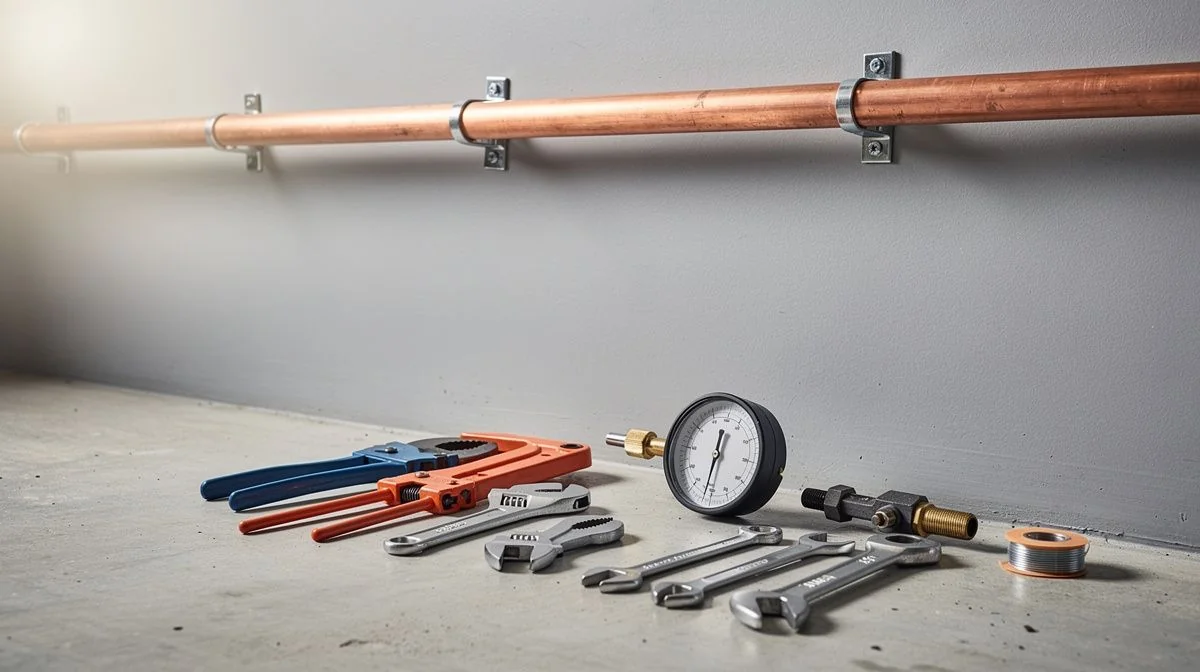
Whether it is a swap or a new installation, the order is similar, and the first step decides the rest.
- The gasfitter checks the existing supply, the pipe size, and the ventilation before quoting, because these determine whether the appliance can go where you want it.
- You receive a written quote that separates the appliance, the labour and any electrical work.
- The supply is isolated, and the work is carried out, which for a swap is often an hour and for a new installation most of a day.
- The installation is pressure-tested and the appliance commissioned, including the flue and ventilation checks.
- The Gas Safety Certificate is issued, and you are shown how to operate and how to isolate the appliance.
Upper Hutt-Specific Risks — What Your Gasfitter Should Know
Older pipework in homes that have been added to
Many houses here have had a gas fire, a bottle station and a hob added at different times, and the pipework reflects that history. A new appliance can expose a run that was always slightly undersized. It is worth asking the gasfitter to check the whole run rather than only the appliance you called about.
Bottle stations and the weather they sit in
The valley gets frosts, and a lot of rain, and an LPG bottle station sits outside through it all. Regulators, hoses and changeover valves age in that weather, and a hose that has hardened should not be kept in service. A service is a cheap way to have somebody look at the parts you never see.
Ventilation in a modern airtight house
Newer homes are far more airtight than the houses gas appliances were originally designed around. A gas fire or an unflued heater needs air to burn safely, and new joinery can starve it of air. Ventilation is part of the installation rather than an optional extra, and the commissioning check exists to confirm this.
Questions You Might Have
Do I need a certificate when I sell?
A Gas Safety Certificate is evidence that gas work was carried out and certified, and buyers and their solicitors routinely request it. If work was done without one, a gasfitter can inspect and certify what is there. That is cheaper than it sounds, and far easier to arrange before the property is listed than during settlement.
Can I install my own gas appliance?
No. Connecting and disconnecting gas appliances is restricted work under the Gas Act 1992, and only a licensed gasfitter may do it or assist with it. Even the parts that look simple, such as a hose and regulator, are exactly where leaks happen. This is not a trade to attempt at home.
How often should gas appliances be serviced?
Once a year is the usual advice for a gas fire, heater or hot water unit, and more often for one that runs constantly. A service covers the burners, the flue, the ventilation and the connections, and it produces a current certificate. It costs a fraction of the cost of replacing an appliance that failed early.
What Matters Most
Gas is the one service in a house where a mistake is not merely expensive but dangerous, and the certificate is how you know the work was done properly. It also travels with the property, which is why it is worth more than the paper it is printed on.
Check the licence before the work starts, keep the certificate afterwards, and choose the appliance after the gasfitter has seen the space.

The ValueHub Team built this site because finding clear, unbiased financial information in New Zealand was harder than it should be. Every guide is based on real research — we compare the actual fees, terms, and fine print so you don't have to. Our tip: shop around every year, read the policy docs, and never assume loyalty gets you the best deal.— The ValueHub Team
Try our Calculators
Use these free tools to crunch the numbers:
KiwiSaver Fund Comparison
Compare fees, returns, and risk levels across every KiwiSaver fund — the most up to date data in New Zealand.
Currency Converter — USD to NZD
Convert US Dollars to New Zealand Dollars instantly. See the latest exchange rate and 30-day trend.
Mortgage Repayment Calculator
Calculate your weekly, fortnightly, or monthly mortgage repayments. Free NZ mortgage calculator — try different rates, terms, and repayment frequencies.
Compound Interest Calculator
See how your savings grow with compound interest over time. Free NZ compound interest calculator with yearly, monthly, and weekly compounding options.
Term Deposit Calculator
Calculate your term deposit returns before you lock in. Compare interest earned across different terms and rates with ValueHub's free calculator.
Savings Goal Calculator
Calculate how long it will take to reach your savings goal — and what monthly deposit you need to get there. Free NZ savings planner.
Gas Fitters in Other Cities
Latest Guides & Reviews
SuperLife KiwiSaver Scheme Review
SuperLife KiwiSaver review: 65 open funds, fund charges from 0.20 to 1.30 per cent, and net returns to 30 June 2026.
reviewSuperEasy KiwiSaver Scheme Review
SuperEasy KiwiSaver review: 8 open funds, a 0.32 per cent fund charge, and net returns to 31 March 2026.
reviewWestpac KiwiSaver Scheme Review
Westpac KiwiSaver review: 8 open funds, fund charges from 0.25 to 0.70 per cent, and net returns to 30 June 2026.
reviewANZ KiwiSaver Scheme Review
Review of ANZ KiwiSaver. Three schemes, fees from 0.22 per cent, the closed Default scheme, OneAnswer and the Lifetimes option.